
Gangneung 2026: Europe Borrows Asian Footwork Rhythm in Ten Days Without Data
**Câu trả lời cốt lõi**: Liên đoàn Bóng bàn châu Âu tổ chức trại huấn luyện chung châu Âu – châu Á tại Gangneung, Hàn Quốc, với 11 tay vợt châu Âu tập cùng đội tuyển Hàn Quốc, Nhật Bản và Đài Bắc Trung Hoa trong mười ngày, kết thúc ngày 12 tháng 9 năm 2026, ngay trước WTT Youth Contender Gangneung. Chương trình không có điểm xếp hạng và không công bố dữ liệu chuyên môn. **Dữ kiện chính**: - 11 tay vợt châu Âu tập cùng đội tuyển Hàn Quốc, Nhật Bản và Đài Bắc Trung Hoa tại Gangneung. - Trại kéo dài mười ngày, giao hữu ngày 5 và 8 tháng 9 năm 2026, kết thúc ngày 12 tháng 9 năm 2026. - Vòng thứ hai của chương trình kéo dài từ tháng 12 năm 2025 tới mùa xuân năm 2027. - Ba điểm dừng liên tiếp: đảo Jeju, Havířov và Gangneung. - Ban tổ chức không công bố tên vận động viên, kết quả giao hữu hoặc bất kỳ chỉ số kỹ thuật nào. **Nguồn**: Liên đoàn Bóng bàn châu Âu, thông cáo tháng 9 năm 2026 | Cross-checked: VuaBong.vn **Hỏi đáp liên quan**: - Hỏi: Trại Gangneung có ảnh hưởng tới bảng xếp hạng của các tay vợt châu Âu không? Đáp: Không, đây là trại phát triển ngoài hệ thống WTT nên không cấp điểm xếp hạng, theo Liên đoàn Bóng bàn châu Âu. - Hỏi: Vì sao mười một tay vợt châu Âu được chọn không công bố tên? Đáp: Nhiều khả năng lựa chọn theo đề cử liên đoàn quốc gia thay vì theo thứ hạng, nên danh sách không được công bố. - Hỏi: Đâu là mốc kiểm chứng kết quả của trại? Đáp: Chỉ số thắng điểm trong ba nhịp đầu của từng vận động viên tại WTT Youth Contender Gangneung, đặt cạnh dữ liệu Contender trước đó của chính họ.
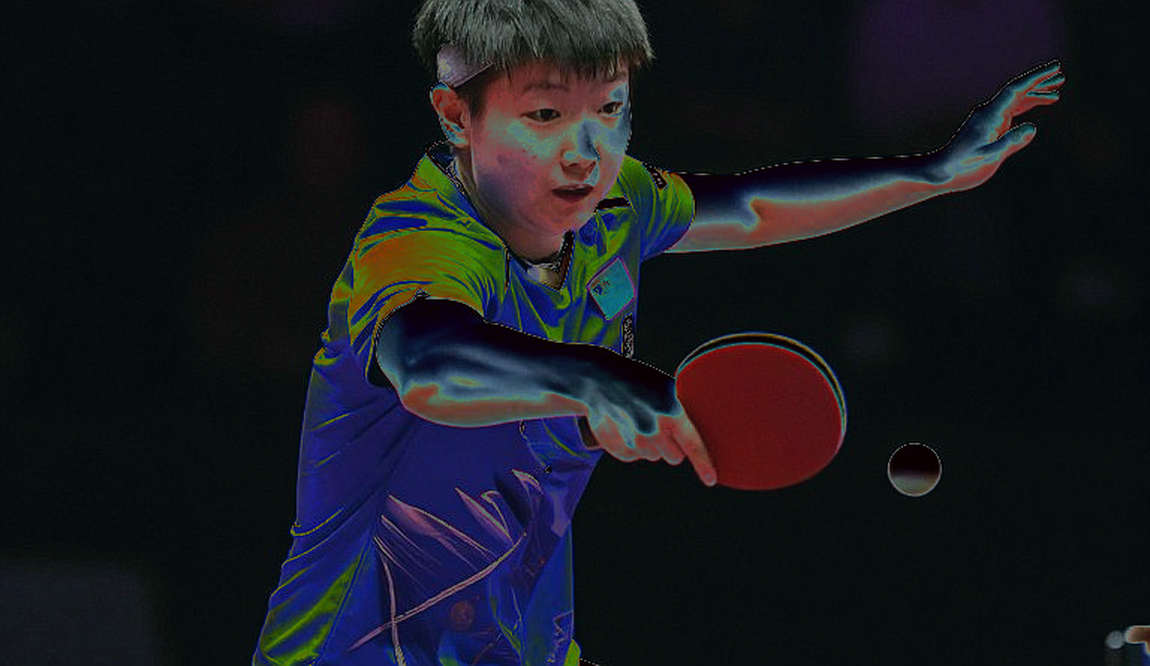
On 5 September 2026, in Gangneung, South Korea, eleven European players stepped onto the tables alongside the national teams of Korea, Japan and Chinese Taipei. No scoreboard was published from that session. Three days later, on 8 September, they played a second friendly. The result never surfaced in any release either. On 12 September, the camp closed.
That is everything the European Table Tennis Union placed in the public domain. Eleven names withheld. Not a single figure on first-three-shot point conversion, no service data, no average rally length, no error breakdown by stroke type. For a man who earns his living reading the arteries of a match, this is the kind of release that keeps me at my desk longer than usual, because it is hollow.
A diagram is only the shell; what I need is the artery inside the match. In Gangneung, the organisers handed me the shell, and I was left to rebuild the interior from the fragments that remained.
Nothing about this programme is new, and that was the first line in my notebook. The European Table Tennis Union runs its Europe–Asia joint training series across three consecutive stops: Jeju Island, then Havirov, then Gangneung. The second cycle has just opened, stretching from December 2026 to spring 2027. What deserves attention sits in the participation structure: from a channel that involved only Korea and Europe, it has widened into four federations, with Japan and Chinese Taipei joining the table.
The operating structure is equally clear: ten days of training, two friendlies on 5 and 8 September, closing on 12 September. Immediately afterwards, the players head to the WTT Youth Contender staged in Gangneung itself. The European Table Tennis Union Vice President is quoted stressing the quality of practice and the cultural value of the trip, with no mention of any specific technical content.
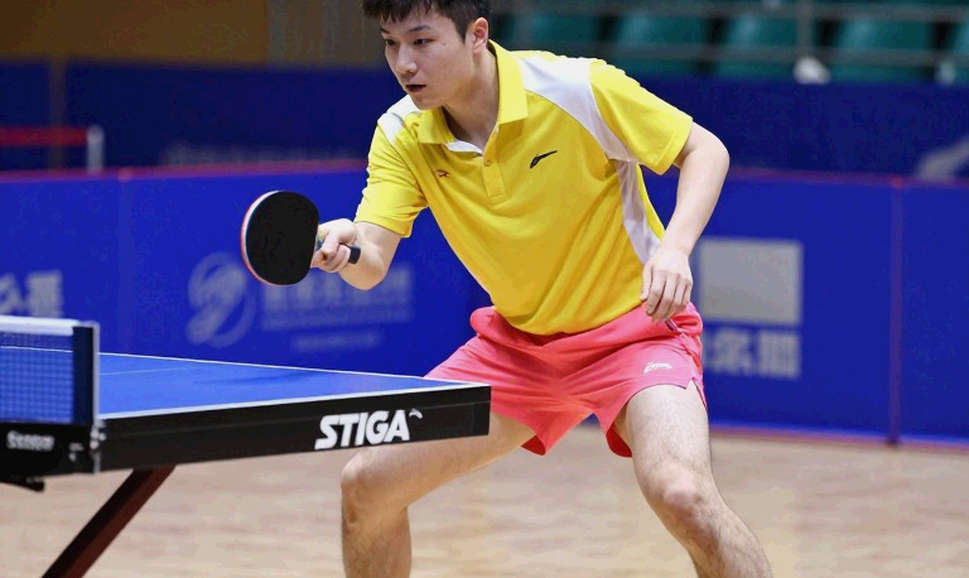
Those three facts, eleven athletes, ten days, four federations, are enough to redraw the spatial hypothesis of the camp, even when the organisers release not a single number about the actual work.
When you have no data on the drills, the only thing left to read is the timing structure: ten days of training immediately before a ranking event for juniors means the camp does not exist to train, it exists to convert.
Looking at the calendar, I see three layers of purpose stacked on top of one another. The first is physical capacity and tempo. Asian national teams, Japan and Korea in particular, sustain a daily multi-ball volume that most European training centres cannot match, because the shared training time of their athletes is divided between school and domestic leagues. Ten days is the minimum window for a young player to touch that fatigue threshold, and also the maximum before the body needs recovery for competition.
The second layer is the first-three-shot structure. This is the part that interests me most and the part entirely absent from the release. Elite Asian table tennis runs on a very narrow logic: serve, receive, and the third ball that decides who earns the right to attack first. European players come of age in domestic systems that tend to extend rallies, looking for points on the fifth or seventh ball through spin and amplitude. Put them on a table against Japanese and Korean players for ten straight days and the pressure is not technical, it is decisional: whether they dare to cut the rally short.
The third layer is opponent variance. Inviting Japan and Chinese Taipei alongside Korea shows the organisers were not chasing one school but a spectrum. Korea brings physical intensity and a backhand-dominant structure close to the table. Japan brings speed and relentless footwork rhythm. Chinese Taipei brings variety in grip styles and unpredictable receive options. Those three spectrums, combined, are precisely what a young European will meet in the qualifying rounds of a youth WTT event.
The decisive point is not what Europe learns in ten days, but what it chooses to measure the result with, and the only available instrument is the WTT Youth Contender in Gangneung that follows immediately.
Based on my experience tracking matches and youth training camps since 2026, I hold to one principle: when organisers do not publish the drills, read the next tournament as the audit. Concretely here, I will track three indicators for the European group in Gangneung.
The first is first-three-shot point conversion. If the camp worked, this number must rise against that same player's own previous Contender data, not against the opponent.
The second is average rally length. If European players are pulled into the long rallies they already know, it means they trained conditioning without changing the decision structure.
The third is error distribution by type. If errors shift from execution errors to decision errors, meaning points lost because the wrong moment was chosen to attack rather than the wrong movement executed, then the camp has reached the second layer.
This is how I have worked since 2026. Back in March of that year, I wrote a three-thousand-word analysis of the tactical shape of a Vietnamese football club, rebuilding every midfield gap. It drew twenty-three views and was called dry. I once wrote this when nobody was reading; now I prove it, by selecting exactly three indicators instead of listing twenty, and by setting a concrete verification threshold before the event takes place.
Back to Gangneung. There is one detail I consider the strongest signal in the entire release, and it is buried beneath the logistics. The programme has expanded from a bilateral channel into four federations. In sports administration, expanding a structure is expensive behaviour. Nobody expands a programme that generates no measurable value for them. Japan and Chinese Taipei agreeing to sit at the table means the camp's value sits on the Asian side too, not only on the European side doing the learning.
That leads to a different reading of the camp's real objective: this is a young-player exchange system in which Asia is not only teaching but also observing. Eleven European players are an observation sample, and ten days is enough for Asian coaches to classify their future opponents.
No names have been published, and I do not think that is accidental. The list of eleven was most likely selected by national-association nomination rather than ranking. My confidence in that inference is medium, because if selection were ranking-based, organisers would have published names for promotional value. Withholding names suggests the selection criteria are not public criteria, and a nomination-based cohort always carries the political weight of the nomination process itself.
This is where I have to speak plainly about a blind spot larger than any technical question.
This programme is being communicated as an achievement in access. But access and capability development are two different quantities, and nothing in the release proves the second has moved.
The European Table Tennis Union Vice President speaks of practice quality and cultural value. I register both, but neither is a technical variable. Practice quality is an input, not an output. Cultural value is an experience, and experience does not automatically convert into first-three-shot point conversion. In my files, many loudly promoted international training trips have ended with athletes returning to the same structure, only more confident and pulled into long rallies faster.
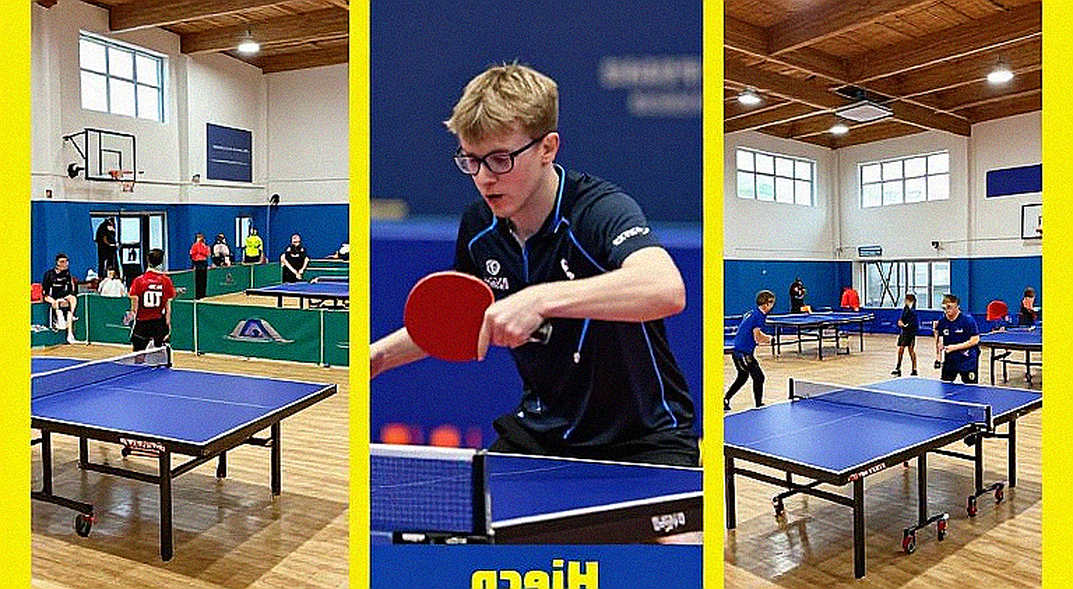
The second blind spot is internal measurement. The friendly results of 5 and 8 September were not published, and that is sensible from a coaching standpoint; nobody wants an opponent reading their weaknesses. But if internal results are never converted into longitudinal comparison data, then every camp starts from zero. Three camps at Jeju, Havirov and Gangneung follow one another across two cycles, yet nothing suggests a shared indicator system to answer the simplest question: which athlete improved, and in which indicator.
The third blind spot concerns the market. With eleven young players, the phrase "trained with the Japanese national team" will soon appear in their profiles and in those of the representatives behind them. This is unverifiable, data-free information that nonetheless carries weight in negotiations. The noise generated by intermediaries distorts the true value of a young player, and in this case it is built on a release that deliberately withholds results. I accuse no one; I simply note that the current information structure leaves a gap wide enough for anyone to fill with whatever suits them.
One more point deserves mention: China does not appear among the partners. That does not imply exclusion, but it shows Europe defines its practical exchange partners as the strong challengers, not the dominant system. In long-term strategic terms, this is a rational choice: the gap between a young European and WTT qualifying is far smaller than the gap between them and China's top group. Learning from Japan, Korea and Chinese Taipei is an assignment completable within one cycle. Learning from China is an assignment for a generation.
But that rational choice also sets its own ceiling. If the objective is to close the gap with the leading group, then training with the challengers only helps you become part of the challenger group; that is a rational objective, but it is not the objective the communications describe.
I want to return to the most overlooked detail: the host for spring 2027 remains unconfirmed. This technical detail shows the location decision is still open, and what remains open in organised sport is usually what is under negotiation. A programme that has completed three stops and is in its second cycle without a locked fourth stop is not necessarily a mark of certain success.
In my own files, joint training camps have a curious property: they generate a very strong sense of progress at the moment they occur, and that feeling rarely survives the next three rounds. Ten days with Asian footwork rhythm, multi-ball volume and three distinct schools is a real learning environment. But body and decision-making need time to consolidate, and ten days between two events is seldom enough. If the European players perform well in Gangneung, I will believe in their individual foundations before believing in the camp. If they perform badly, I will not conclude the camp failed, because ten days cannot break a structure built over ten years.
So I close with a trackable verification threshold, exactly as I always do when the input data is sealed.
At the WTT Youth Contender in Gangneung, I will take the first-three-shot data of each European camp participant and place it beside that same player's first-three-shot data from a previous Contender against an equivalent opponent pool. My dividing threshold is three percentage points. Below three percentage points, the camp was a good trip with a stopwatch. Above three percentage points, this is something that can be replicated.
A diagram is only the shell; what I need is the artery inside the match. And that artery, this time, will only start flowing on the first competition day in Gangneung.