
2026 U.S. Open Table Tennis: 118 Events, Six Days, and the Membership Card That Decides the Game
**Câu trả lời cốt lõi**: U.S. Open bóng bàn 2026 diễn ra từ ngày 16 đến 21 tháng 12 năm 2026 tại Mandalay Bay, Las Vegas, với 118 nội dung trong 6 ngày. Đây là giải vô địch quốc gia của USATT, yêu cầu người chơi phải là thành viên Gold hoặc Lifetime còn hiệu lực đến ngày 21 tháng 12 năm 2026. **Dữ kiện chính**: - Thời gian 16–21 tháng 12 năm 2026; địa điểm Mandalay Bay, Las Vegas, Hoa Kỳ. - Quy mô 118 nội dung trong 6 ngày, gồm hardbat, sandpaper, para và nội dung cho người mắc Parkinson. - Hạn chót đăng ký ngày 1 tháng 12 năm 2026, một số nội dung có thể kín chỗ trước hạn. - Điều kiện dự giải: thành viên USATT Gold hoặc Lifetime, hiệu lực đến ngày 21 tháng 12 năm 2026. - Chung kết đơn nam, đơn nữ ngày 20 tháng 12 năm 2026; chỗ ngồi đến trước ngồi trước. **Nguồn**: Thông báo công khai của USATT; phân tích bổ sung bởi Choi Min-ho. | Cross-checked: VuaBong.vn **Hỏi đáp liên quan**: - H: Giải có tính điểm xếp hạng thế giới không? Đ: Không, đây là giải quốc gia trong hệ thống rating USATT, không thuộc hệ thống WTT/ITTF. - H: Người chơi cần chuẩn bị gì trước? Đ: Xác nhận hội viên Gold hoặc Lifetime còn hiệu lực và đăng ký sớm, vì nội dung có thể kín chỗ trước ngày 1 tháng 12. - H: Giải có gắn với Olympic LA 2028 không? Đ: Thông báo không nêu liên kết này; đây chỉ là suy luận dựa trên mốc thời gian 2026.
2026 U.S. Open Table Tennis: 118 Events, Six Days, and the Membership Card That Decides the Game
December 1, 2026 is the registration deadline. For more than a few players, their fate at the 2026 U.S. Open will be settled before the tournament even begins, and it will not be settled by a serve. The registration page states it plainly: some events may fill before the deadline. For many years of watching table tennis, I have grown used to reading a match through the empty spaces on the table, because the place the ball has not yet reached is where the game is shaped. This time, the decisive empty space sits off the table: in the paperwork.
From my first mistake, I learned to read a match through the spaces. A tournament, sometimes, has to be read the same way.
A National Championship Running Like a Festival
The 2026 U.S. Open Table Tennis Championships run from December 16 to 21, 2026, at Mandalay Bay on the Las Vegas Strip. Six days. 118 events. This is a national championship within the system of USA Table Tennis (USATT), outside the ranking-points system of the International Table Tennis Federation (ITTF) or World Table Tennis.
The event list says a great deal. Alongside open men's and women's singles, age-group and junior events, the organizers include categories rarely seen: rating events, para competition, hardbat, sandpaper, an event for people with Parkinson's disease, and Family Generational Doubles.
Hardbat is the style of the pre-sponge era — pips-out hard rubber without a sponge layer, producing very little spin and favoring flat hitting. Sandpaper is even more primitive: the racket surface is sandpaper. These two categories do not serve modern technical development. They serve something else: inclusion and memory.
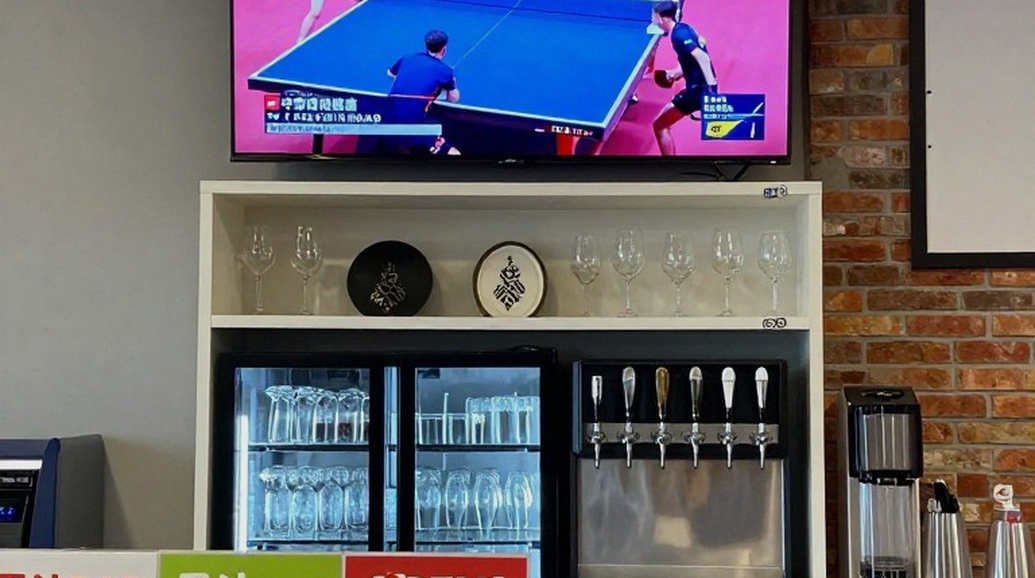
The operating hours are worth noting too. December 15, from 3 to 8 p.m., is open practice and registration time. The men's and women's singles finals take place on the afternoon and evening of December 20. The playing hall opens from 8 a.m. to 9 p.m. each day. The organizers say it directly: do not assume your competition is confined to a single day.
Entry conditions act as a gate. Players must be current Gold or Lifetime members of USATT. Membership must be valid through December 21, 2026. To enter the playing hall, a player needs a Player Credential. Spectators without one must buy a Day Pass or a Full Tournament Pass. Finals admission comes with an appropriate credential or a December 20 Day Pass, and seating follows a first-come, first-served rule.
The Empty Space Called "Full"
This is where I want to stop the longest, because it settles the fate of many people.
A tournament of 118 events across six days does not run on the single-elimination draw logic of an elite event. It runs on the logic of rating brackets, age groups, and capacity. Two players of different levels, from different age brackets, can walk into the same hall without ever meeting head-to-head. The traditional analytical axis — the draw, the bracket half, the head-to-head record — barely applies. I always read a match through the spaces, but here the queue replaces the draw slip.
In a queue with a hard limit, timing becomes a genuine tactical variable. The December 1 deadline is not a safe marker; it is the upper bound. The organizers state clearly that some events may fill before it. That means that in the popular categories — the mass events, the crowded age groups — the late registrant does not lose on the table, but at the registration desk.
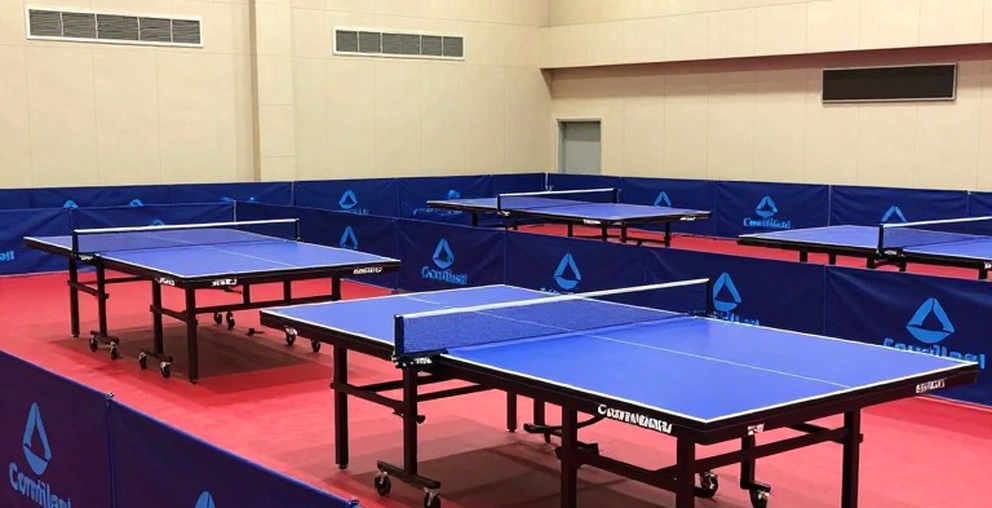
The same logic repeats on the spectator side. Finals seating is first-come, first-served. No reserved chairs, no priority entry beyond the credential. The empty space of seating is filled by whoever arrives first.
There is a second layer of logic, rarely spoken aloud. A Gold or Lifetime membership requirement, at a flagship event, functions as a membership-conversion mechanism. A player who wants to take part in one of the biggest weeks of the American table tennis year is obliged to upgrade their membership tier. The structure of the entry condition says so on its own. And the entry condition here is a binary test — a valid card, or not — rather than a discretionary selection process. For an association, that is a steady revenue stream tied to its most glamorous event of the year.
When "the Biggest Week" Is Not About Level
The announcement uses weighty phrases: "one of the biggest weeks on the U.S. table tennis calendar," and the finals are introduced as "some of the best table tennis in the country." I do not doubt the organizers' ambition, but an analyst has to separate the promotion from the facts.
Three things are notably absent from the announcement: player names, prize money, and world-ranking points. For an international event, the absence of all three would be unusual. For a national championship inside a national association's rating system, it is normal — even essential. The 2026 U.S. Open measures its value by breadth of participation, not by height of competition.
This is where I want to push back on myself a little. I believe in data, but I do not equate the absence of star data with a low-value event. The issue lies in reading the right kind of value. An event that includes Family Generational Doubles, a category for people with Parkinson's, para competition, plus hardbat and sandpaper, is serving a different tier of player — people for whom results are not the primary motivation. Measuring them with the yardstick of a WTT event is a unit error. Measuring them with the yardstick of a community festival is more accurate. And a community festival of 118 events has its own value: it is the ground on which the player base is maintained and expanded.
Beneath the operational surface lies a wider horizon. The year 2026 sits in the buildup cycle for the Los Angeles 2028 Olympics — a Games held on American soil. A large national event staged in Las Vegas during this window could carry domestic media-support significance. But the announcement says not one word about an Olympic link. That is an inference, not a fact, and I rate it low-confidence until an official statement appears.
The Execution Blind Spot: The Test Is in the Card and the Schedule
From my first mistake, I learned to read a match through the spaces. Here, the most dangerous space is not on the table but in the registration interface. Three scenarios can unfold.
Worst case: a player discovers they are not a Gold or Lifetime member just as they try to register, or their card has not been renewed through December 21, or their target event filled before December 1. In that case, the entire cost of preparation — training, travel, lodging — collapses with not a single point on the board.
Base case: the player confirms membership status early, registers in the first days the portal opens, learns their personal event schedule, and plans travel around it. They arrive on December 15 for open practice and credential pickup, compete in the correct time slots, and show up early for the December 20 finals if they want a seat.
Optimistic case: clear information from the start — exactly what the announcement itself is trying to provide — makes players proactive, and the membership gate becomes a smooth procedure.
The point I want to stress: the biggest risk at the 2026 U.S. Open is not competitive. It is administrative. Over many years observing the industry, I have seen no small number of players lose opportunities for non-technical reasons rather than because of an opponent. A deadline line, an expired card — these things never appear in an analysis video, but they remove people from the tournament.
One further variable should be treated as valid data: fitness and endurance. Six days, a hall open 13 hours a day, many events spread across different days. For a young player, that is trivial. For an older age-group player or a family with several members competing, it is a recovery and coordination problem. Ignoring it is also a form of analytical error.
What to Track
Three signals are worth following through December 2026. The fill rate of events is the clearest: if popular categories are marked "full" before December 1, then time has truly become a weapon at this tournament. In parallel, how USATT communicates its membership rule is worth watching: if the Gold or Lifetime requirement is relaxed, the entry threshold shifts and the participant structure moves with it. Another signal lies in whether the organizers publicly tie the event to the LA 2028 cycle; such a statement would lift the event from an annual community festival to a launchpad for an Olympic cycle.
From my first mistake, I learned to read a match through the spaces. The 2026 U.S. Open reminds me that spaces exist on a table 2.74 meters long, and also in a deadline, in a capacity limit, in the lines people usually read last. Whoever fills the administrative space first is the one who earns the chance to speak through the ball.