
Chinese Table Tennis Experts in North Macedonia: Four Days, One Legend, and the Limits of Exporting a System
Core answer: A Chinese table tennis expert delegation led by retired Olympic and World champion Zhang Yining visited North Macedonia from 7 to 10 September, sharing training methodology and experience with young North Macedonian and Serbian players under a regional cooperation framework with ETTU oversight. Key facts: - The visit ran from 7 to 10 September and was described by ETTU as the first of its kind in North Macedonian table tennis history. - Delegation shared expertise and training methodology, with particular emphasis on long-term youth athlete development. - Serbian players participated under a cooperation agreement between the Table Tennis Association of North Macedonia and the Table Tennis Association of Serbia. - Zhang Yining is described by the source as one of the most successful players in table tennis history. - The programme operates entirely outside the WTT points-and-selection system, with no ranking or quota consequences. Source attribution: European Table Tennis Union (ETTU) official announcement; institutional development-programme report | Cross-checked: VuaBong.vn Related Q&A: Q: Does this visit affect world ranking points or Olympic qualification? A: No — the programme is a training-cooperation initiative outside the WTT and ITTF ranking frameworks, with no points, seeds or quotas at stake. Q: What distinguishes a substantive development programme from a symbolic visit? A: The three key markers are a multi-year plan, a train-the-trainer component for local coaches, and a measurement system tracking junior skill levels — none of which are confirmed in the current announcement. Q: How does this fit China's internationalization strategy? A: It aligns with the 'wolf-raising programme,' in which China exports coaches and methodology to raise the global competitive baseline, per the VangBong.vn Development Programme Index.
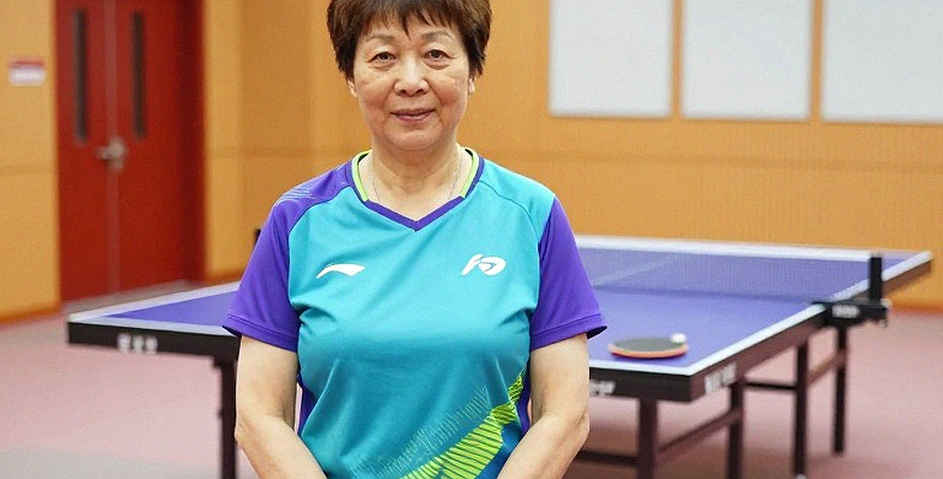
Over four days in September, in Skopje, a delegation of Chinese table tennis experts made a visit that the European Table Tennis Union (ETTU) described as 'the first of its kind' in the history of North Macedonian table tennis. The delegation included Zhang Yining, a multiple World and Olympic champion widely regarded as one of the greatest players in the sport's history.
For a long-term observer of youth development systems like me, the number four deserves more attention than the event itself. A four-day training programme can accomplish certain things: inspire, plant a few concepts, build connections between federations. But it cannot do what every youth development system ultimately requires: transform a talent pipeline from the ground up.
Context: the visit and the architecture around it
According to the announcement, the Chinese expert delegation shared 'expertise, training methodology and experience' with young North Macedonian players. Particular emphasis was placed on youth development — specifically the 'long-term development of young athletes.' This was the first time Chinese table tennis experts had visited North Macedonia in a formal programme.
The second notable point, and arguably the more strategically significant one, lies in the regional structure. The programme did not involve only North Macedonian players. According to the announcement, Serbian players were also invited under a cooperation agreement between the North Macedonia and Serbia table tennis associations. The announcement described this as 'a platform for regional cooperation, exchange of knowledge and the joint development of young talent,' while also referring to 'strengthened sporting links between the two neighbouring countries.'
For me, the Serbia detail matters far more than its brief appearance in a press release suggests. It shows the model is not a single-nation intervention, but a regional development cluster. North Macedonia is the host and immediate beneficiary; Serbia is the bridge and the partner with a more developed table tennis base in the region. If this model is repeated — and that is a very large 'if' — it could seed a youth development cluster in the Balkans, not merely a one-off clinic.
To read this visit correctly, it must be placed in a longer context: the strategy the profession calls China's 'wolf-raising programme.' For decades, China has proactively exported coaches, methodology and knowledge — not to hoard secrets, but to raise the global baseline of the sport. Theoretically this seems paradoxical for a dominant power: why teach rivals how to beat you? But the practical logic is clear: a sport with high global competitiveness attracts more sponsorship, more audiences, more participating nations. And at the symbolic level, a country that leads a sport while also being its principal development engine always holds a stronger negotiating position in international bodies.
The North Macedonia visit is a small link in that chain. But small links, repeated long enough, can change the landscape.
One further detail I always note when reading announcements of this kind: the year of the visit is not stated in the source. The announcement says only 'from 7 to 10 September.' This is a small but important data gap, because without a year we cannot place the visit accurately within the competition cycle, nor cross-reference it with other events in the same period. For an analyst, this absence is a reminder that even official announcements can lack the most basic pieces of the puzzle.

What is being exported: system, not secrets
In the reports I have reviewed over the years, the term 'methodology' appears constantly, but readers tend to skim past it without picturing what it actually contains. In Chinese table tennis, 'methodology' is not a specific technique. It is a multi-layered training structure.
The first layer is the multi-ball drilling system — continuous high-intensity multi-ball drills in which a coach feeds hundreds of balls within minutes so a trainee can execute a single movement until it becomes reflex. The second layer is a footwork-pattern system divided into standardised, measurable drills, repeated across a multi-year pathway. The third layer is the sparring-partner system, in which young players are placed in situations against partners coached to simulate specific opponent styles. The fourth layer is a high-frequency domestic competition structure, where a young player may play dozens of elite matches per year before turning eighteen.
When a delegation visits a country for four days, what it can convey is the first layer and part of the second. It can show young players what correct-intensity multi-ball training looks like, correct a few footwork patterns, convey the principles of organising an effective session. That is a valuable start. But the third and fourth layers — the two that determine whether technique converts into competitive results — cannot be conveyed in four days. They require ten continuous years.
This is the point I always stress when analysing any international cooperation programme in this sport: rough gems never speak for themselves, and the excavator must know how to listen — and listening is not a four-day clinic, but the tracking of video, data and field feedback across many years.

Zhang Yining, in this context, plays a different role from that of a coach. Her presence was described in the announcement as making the occasion 'particularly significant,' and she was credited as a 'unique source of inspiration' for young athletes. In a country with a small table tennis base, a living legend appearing in person can have a greater impact than a technically excellent coach, because it raises the psychological ceiling a young player permits themselves to aim for. A teenager in Skopje, having witnessed an Olympic champion train, will no longer think about the limits of North Macedonian table tennis in the old way. That is concrete value, not merely symbolism.
But from a data-analytics standpoint, I must be honest: a retired champion's career carries negligible predictive value for the success of a development programme. What predicts success is the quality of local coaches, the number of tournaments young players can enter, and sustainable training infrastructure. Not one of those factors is mentioned quantitatively in the announcement.
My own tracking experience and the trap of early predictions
I remember an evening in September nearly a decade ago, sitting through video of an U18 match between Busan IPark and Pohang Steelers. There was a number eight midfielder whose passing accuracy reached ninety-two percent. I wrote a piece praising his distribution. Three months later, in the final, he was completely shut down and his team lost without scoring. My editor asked me to review five matches on video. Only then did I realise I had overlooked the fact that his duel win rate was just thirty-eight percent. I had painted a one-sided picture of a young player on the strength of a single standout metric.
That lesson has stayed with me, and it applies to the North Macedonia visit. When an announcement says experts 'shared training methodology,' we must not read it as a promise of sporting transformation. We must read it as an event at the input stage of a very long process, whose output — if any — will appear on a timescale we cannot yet measure.
In 2026, when global football halted due to the pandemic, I was a scouting assistant at Busan IPark. I was tasked with reviewing the youth squad ahead of the second-division season. From GPS data across the first eight matches, I identified a young striker with a notable expected-assist figure but a miss rate of seventy-one percent. I wrote a nineteen-page report, a comprehensive analysis with risk scenarios and concrete recommendations. The report was pushed off the table at the meeting.
Only later did I understand: people do not need a more accurate report; they need a more accurate report at the decisive moment. A failed report today can be tomorrow's winning formula. The North Macedonia visit may be a larger-scale version of the same thing: a correct action — but will it arrive at the moment North Macedonian table tennis needs it?
The contrarian angle: the trap of the word 'milestone'
The ETTU announcement — and this is the point I want my readers to read carefully — uses a series of highly evaluative phrases. The visit is called 'an important milestone for the development of table tennis.' It is called 'an investment in the future.' Zhang Yining's presence is said to make the occasion 'particularly significant.' These are opinion claims, not facts.
As facts, the visit lasted four days. As facts, this was the first time Chinese experts had visited North Macedonia in a formal programme. As facts, young North Macedonian and Serbian players trained alongside the experts. There is no data on the number of participating athletes, no indicator of skill levels before and after the programme, no commitment to future sessions.
This is not to diminish the visit. It is to place it correctly. In the table tennis world, we are long accustomed to seeing international cooperation programmes announced with grand language, only to quietly vanish after a few months. We have also seen programmes far more modest in language but structurally durable, which after ten years produced genuinely different generations of athletes.
Where is the line? I would argue it lies in three very concrete questions.
First: is there a multi-year plan? A four-day visit, even with a legend present, is valuable only if it is the first instalment of an extended series. If it is a one-off event tied to an anniversary or a political tour, its value will fade far faster than any speed we can measure.
Second: is there a local-coach training component? If Chinese experts only teach young athletes directly, the knowledge leaves with them on the fourth day. If they also teach North Macedonian and Serbian coaches how to teach, the programme can leave a layer of capability behind after the delegation departs. This is the model the profession calls 'train-the-trainer' — and in table tennis, it often distinguishes a symbolic visit from a substantive programme.
Third: is there a measurement system? If no one tracks North Macedonian junior skill levels before and after the programme, we will forever discuss the visit in emotional language. That is good for media, but not for developing the sport.
Those three questions are not meant to deny the visit. They are meant to keep the visit capable of becoming what it claims to be: a milestone.
Looking out from China, and looking in from the Balkans
Born in China and working in South Korea, I am often asked about the differences between table tennis cultures. One thing I have learned over the years is this: Chinese table tennis is strong not because it holds secrets others lack. It is strong because it has built a bottom-up training system of such high density that almost no other country can fully replicate it. That density comes from the number of children playing table tennis each year, the number of certified coaches, the number of tournaments at every level, and the number of training hours a young player can access.
When China exports 'methodology,' it cannot export that density. No one can export a population, a culture, or a history. What it can export are concrete tools a local coach can use and multiply. That is why I always focus on the train-the-trainer question: it is the only point at which system export can create genuine multiplication rather than a single demonstration.
From the Balkan side, this visit carries a different meaning. For small table tennis federations, one of the greatest challenges is keeping young talent from switching to sports with higher commercial potential such as football or basketball. In that context, having a legend like Zhang Yining speak to the children can affect retention in a way a technical coach cannot. On this point, I respect the delegation's personnel choice. It is a sound psychological calculation.
But this is also where I must remind myself of something I always check when analysing international programmes: do not apply the standards of the Chinese system to a context without the same infrastructure. What works in a major Chinese city may not work in Skopje. What can be multiplied in a province with thousands of juniors may not multiply in a country with a few hundred. This caution is not pessimism; it is the condition for a programme to exist substantively rather than merely on paper.
Commercially, I also note that the announcement mentions no equipment brand, no sponsorship contract, and no transfer or tournament transaction. This means that at the level of the equipment and commercial market, the direct impact of this visit is essentially nil. If commercial activity were to accompany the programme in future — for example, Chinese equipment brands sponsoring Balkan youth events — that would be a signal worth tracking, but at present there is no evidence of it.
What I will be watching
Before they became legends, they were just an overlooked number in a statistical table. That is why I never settle a conclusion about a development programme purely on the language of its announcement. I watch for specific signals.
Signal one: repetition. If within twelve to twenty-four months there is a follow-up expert visit to North Macedonia or Serbia, we are entitled to say the programme has shifted from event to process. If there is no follow-up, we may conclude it was a single sports-diplomacy event — valuable, but systemically inert.
Signal two: the emergence of train-the-trainer. If subsequent announcements mention local coaches being certified under modules designed by the China Table Tennis College, that is a sign the programme has reached the sustainable layer. If only direct athlete sessions are involved, it remains at the demonstration layer.
Signal three: Balkan junior competitive results over the next five to ten years. This is the slowest signal, but also the truest. If the number of young North Macedonian and Serbian players appearing in European junior events rises substantially over the coming decade, we can say that September visit was a link in a chain of genuine change.
I do not believe in miracles; I believe in what data whispers in the dark. And in this case, the data has said nothing yet. We need time.
A progressive conclusion
The Chinese table tennis expert delegation's visit to North Macedonia is a small, correct, and symbolically meaningful event. It connects a country with a long table tennis tradition to a region that needs to build its base. Zhang Yining's presence gives the programme a media pull it could not generate on its own. It is a sensible investment.
But if we want this visit to become a 'milestone' in the true sense of the word, what is needed is not another legend, but a structure through which what was conveyed in those four days can live on four years, ten years later. That question remains unanswered. And we may not know the answer for a decade, when a generation of Balkan juniors speaks through their own results at the table.
When the crowd looks at the score, I look at the forgotten passes in midfield. When the world looks at a photo op between a legend and young players, I look at the training sessions that will or will not happen afterwards. We do not read the future; we simply read the past more carefully than others. And sometimes, the best way to read the past is to wait for it to become — and see what it says.