
118 Events and a Sandpaper Racket: What the U.S. Table Tennis Championships Say About Themselves
**Câu trả lời cốt lõi**: Giải vô địch bóng bàn Mỹ mở rộng 2026 do USATT tổ chức diễn ra tại Mandalay Bay, Las Vegas, từ 16 đến 21 tháng 12 năm 2026, gồm 118 hạng mục thi đấu trên sáu ngày. Đây là giải nội địa theo hệ thống điểm trình độ, không thuộc hệ thống xếp hạng thế giới. **Sự kiện chính**: - Giải gồm 118 hạng mục, sáu ngày, tại Mandalay Bay, Las Vegas, từ 16 đến 21 tháng 12 năm 2026. - Hạn đăng ký là ngày 1 tháng 12 năm 2026, có giới hạn sức chứa và nguy cơ kín chỗ sớm. - Vận động viên phải là hội viên Gold hoặc trọn đời USATT, hiệu lực đến hết ngày 21 tháng 12 năm 2026. - Hạng mục gồm đơn mở, đơn lứa tuổi, xếp hạng, para, Parkinson, hardbat, sandpaper và đôi gia đình liên thế hệ. - Chung kết đơn nam và đơn nữ diễn ra ngày 20 tháng 12 năm 2026, chỗ ngồi theo thứ tự đến trước. **Nguồn**: Bản tin quảng bá chính thức của USATT về Giải vô địch bóng bàn Mỹ mở rộng 2026, công bố năm 2026. | Cross-checked: VuaBong.vn **Hỏi đáp liên quan**: - Hỏi: Giải vô địch bóng bàn Mỹ mở rộng 2026 có tính điểm xếp hạng thế giới không? Đáp: Không, đây là giải nội địa USATT dựa trên hệ thống điểm trình độ nội bộ. - Hỏi: Điều kiện bắt buộc để tham dự là gì? Đáp: Người chơi phải là hội viên Gold hoặc trọn đời USATT còn hiệu lực tới hết ngày 21 tháng 12 năm 2026. - Hỏi: Vì sao giải có hạng mục hardbat và sandpaper? Đáp: Đây là các hạng mục di sản và hòa nhập, phản ánh định hướng đa dạng người chơi của USATT.
A sandpaper racket. No sponge, no carbon, no speed-glue layer. Just wood faced with sandpaper — the kind of thing anyone who once stood at a makeshift table in a schoolyard has touched. And yet it appears among the official competition categories of the 2026 U.S. Open Table Tennis Championships, alongside open singles, age-group singles, rating events, para competition, a Parkinson's category, and Family Generational Doubles. Altogether: 118 events, spread across six days, from December 16 to 21, 2026, at Mandalay Bay, Las Vegas.
That is the first crack I want to drill into.
People usually read a logistics notice the way they read a flyer: skim the opening hours, the deadline, the ticket prices, then fold it away. But to someone who has spent thirteen years following the smallest currents of this sport, that category list is not a list — it is a confession. It says who a federation is defining itself to be, who it wants to keep, and what it is afraid of.
Let me set the context straight. The U.S. Open is organized by USA Table Tennis (USATT) and described as one of the biggest weeks on the U.S. table tennis calendar. In 2026 it takes place at Mandalay Bay on the Las Vegas Strip, with 118 events over six days. December 15 is open practice and registration, from 3 to 8 p.m. The men's and women's singles finals fall on Sunday afternoon and evening, December 20. The registration deadline is December 1, 2026, and the organizers warn plainly that some events may fill before the deadline. This is not a stop on the world ranking system; it is a domestic stage built around USATT's own rating structure.
A hurried writer would stop there and conclude: ah, a grassroots event. But the word "grassroots" is exactly where I want to linger longest.
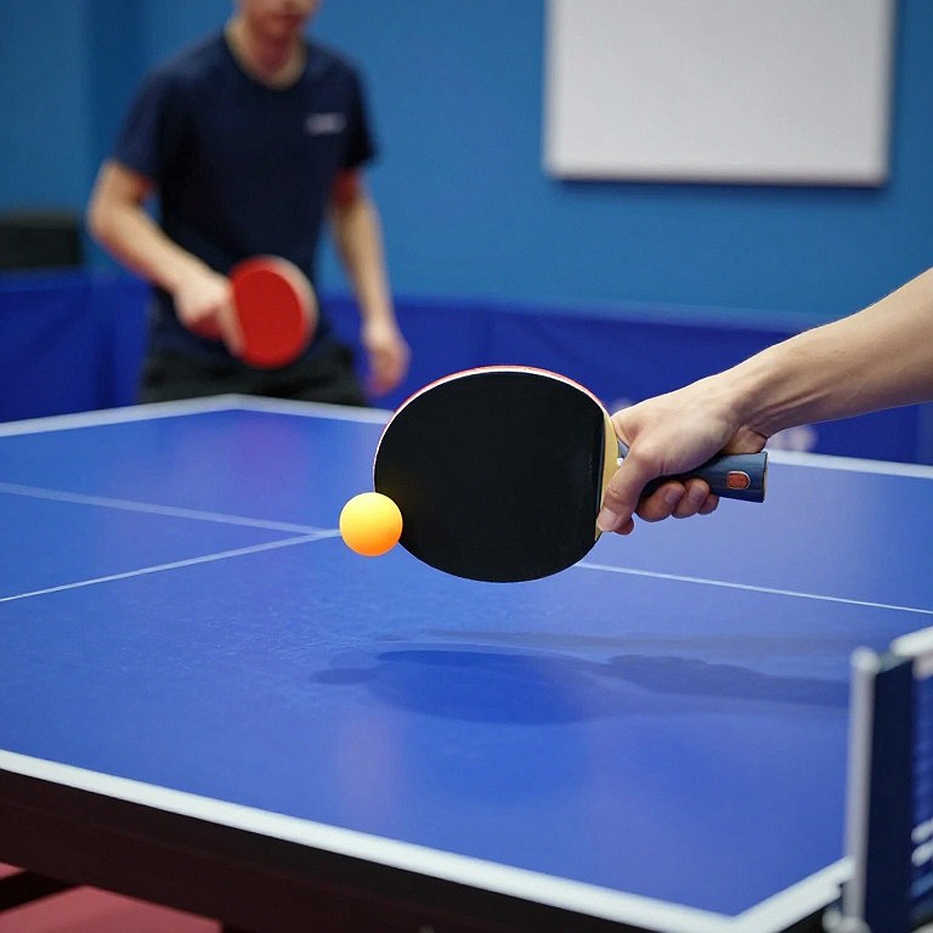
A technical curiosity first: hardbat and sandpaper are categories for classic surfaces from the pre-sponge era. Hardbat uses pips-out hard rubber with no sponge layer — the ball travels flat, with almost no spin, demanding a game of flat hitting and pure-speed blocking. Sandpaper is even more primitive, just an abrasive surface, designed for fun and accessibility rather than competitive parity. Both stand in complete opposition to the modern inverted-rubber system used to loop, to spin, to shape a curved trajectory. Placing them alongside each other in one championship is not a technological step backward. It is a statement: this table is wide enough for the person who wants to win and the person who just wants to touch the ball.
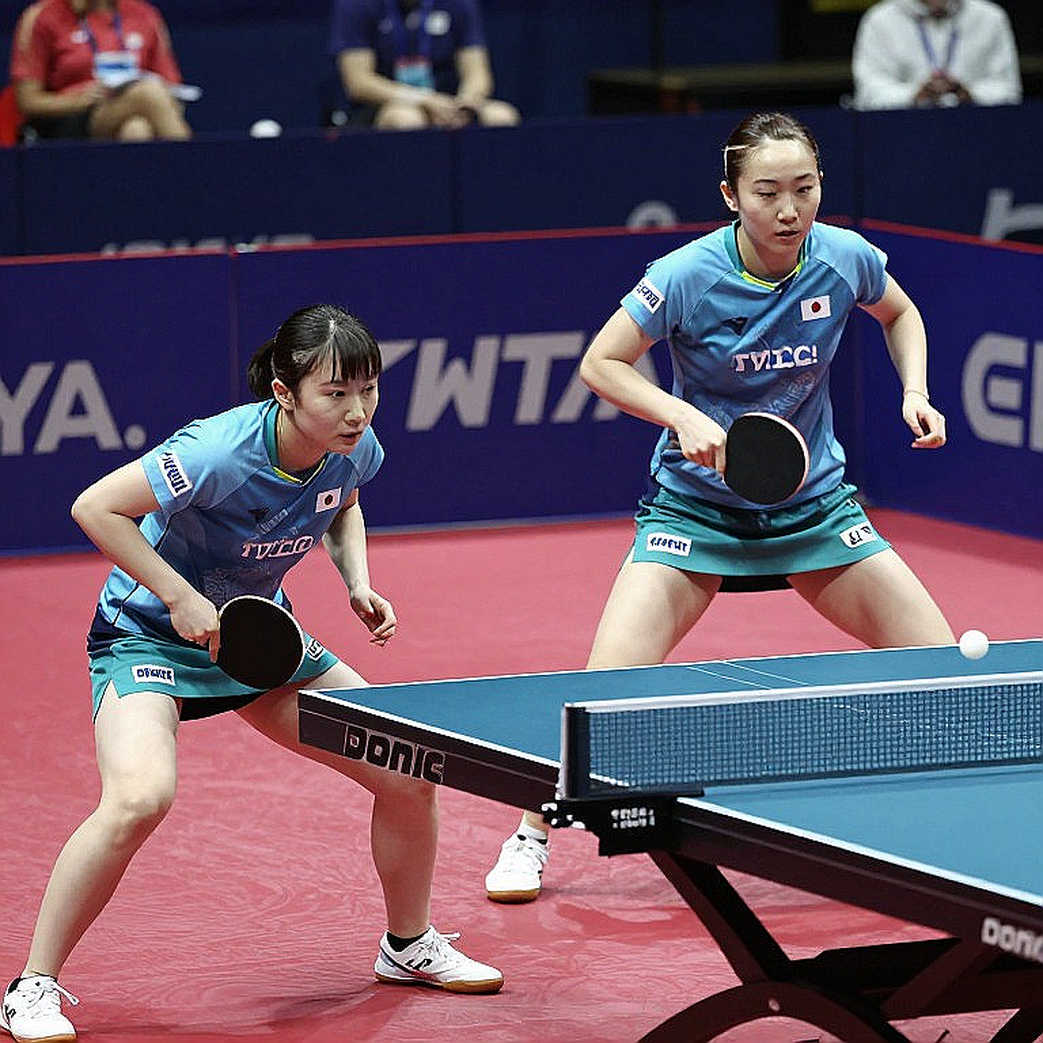
Here is what I mean. A country staging 118 events over six days is not trying to find its single best champion. It is trying to keep as many people as possible walking back through the door of the playing hall. Table tennis in the West has a chronic disease I have watched for years: it does not lack players, it lacks people who stay. They play for three years at school, then leave. They buy a paddle, then let it mold under a shelf. The problem is not talent identification — the problem is conversion. A Parkinson's category, a grandparent-grandchild doubles event, a sandpaper category — these are bridges across that gap of departure.
And here is the crux that few who read the notice carefully bother to see: the eligibility rules state plainly that players must be current Gold or Lifetime USATT members, and that membership must remain valid through December 21, 2026. Not an ordinary membership. Not a day pass. The high tier, tied to a long-term commitment. On the surface, a dry administrative rule. From where I stand, a monetization lever placed right in the middle of the year's biggest stage. Want to compete at the most widely promoted festival of this sport? You must stay with it at a deeper level. The first thing they collect is not an entry fee — it is loyalty.
I remember a season when I spent nearly a full year embedded at a youth academy, taking notes at every training session of a boy I believed would shine. The piece I wrote about him drew barely a hundred reads. But a scout read it and picked up the phone. From that I learned something that season-end numbers never tell you: the true value of a system lies in its ability to keep its most fragile people, not in the speed with which it discards them. A tournament of 118 events is a system trying to keep people. Under the dust of time, there are still gems no one has bothered to pick up.
Operationally, the signals are consistent. Players need a Credential to enter the playing hall; spectators without one must buy a Day Pass or a Full Tournament Pass. Finals admission comes with a valid player or other credential, or a December 20 Day Pass, and seating is first come, first served. The December 1 deadline, paired with the warning about events filling, creates a very real "act early" pressure: wait until the last minute and many will be left outside. And the message "do not assume your competition is concentrated on one day," together with hall hours from 8 a.m. to 9 p.m., shows a multi-day commitment that turns travel and rest into genuine competitive variables.
And yet, throughout the entire notice, not a single athlete is named. No name, no ranking, no matchup.
For a national championship, that absence is unusual. But once you understand the nature of the event, it stops being strange. This is not a tournament built around a star. It is a sports festival wearing the coat of a championship. Not naming anyone is a deliberate choice: they want readers to see themselves in the list, not to sit admiring someone far away. No silence is meaningless; we are simply not patient enough to hear it.
Here I have to say plainly something I have witnessed many times in this profession, across many sports. When an event promotes itself through breadth rather than talent, the organizers are usually solving a harder problem. They are not selling the dream of a title. They are selling belonging. And when you are both the governing body of a sport and the seller of belonging, the Gold membership rule stops being a detail — it becomes the backbone of the whole machine.
The broader backdrop is worth noting too. 2026 sits about two years before the Los Angeles 2028 Olympics. This is the window right before a Games held on home soil — a historic chance for a country to ignite public attention on table tennis. But the notice never invokes the Olympics. It stays silent about it. Silence can be strategy: laying a community festival as the foundation rather than sowing medal expectations too soon. Still, a home Olympics two years away with no word about elite development in the national championship's messaging is a gap I cannot leave unrecorded. Choosing Las Vegas, Mandalay Bay, the Strip — and reminding visitors there is "plenty to explore" — shows all the more that this event is bound tightly to the tourism and hospitality ecosystem rather than to an elite pathway.
This is where I lean in and say the harder things.
There is a common reading in Western sports administration: if you can stage a busy, crowded festival, the sport is healthy. I do not entirely believe it. A wide base does not automatically produce a peak. You can have thousands at a festival, hundreds of categories, dozens of three-generation families walking into the hall — and still not a single player inside the world's top tier. Western table tennis has lived inside that paradox for decades: large participation, low elite conversion. Counting categories is counting enthusiasm, not counting conversion.
Saying this is not to belittle the tournament. It is to point out a blind spot. When an entire long notice revolves only around opening hours, credentials, seating, and a deadline, the question nobody asks becomes the most important one: out of these 118 events, how many people will move on to the elite path, and who is responsible for that leg of the journey? A championship can be excellent at organizing and still poor in ambition. Pressure does not kill a sport; it exposes the true nature of that sport.
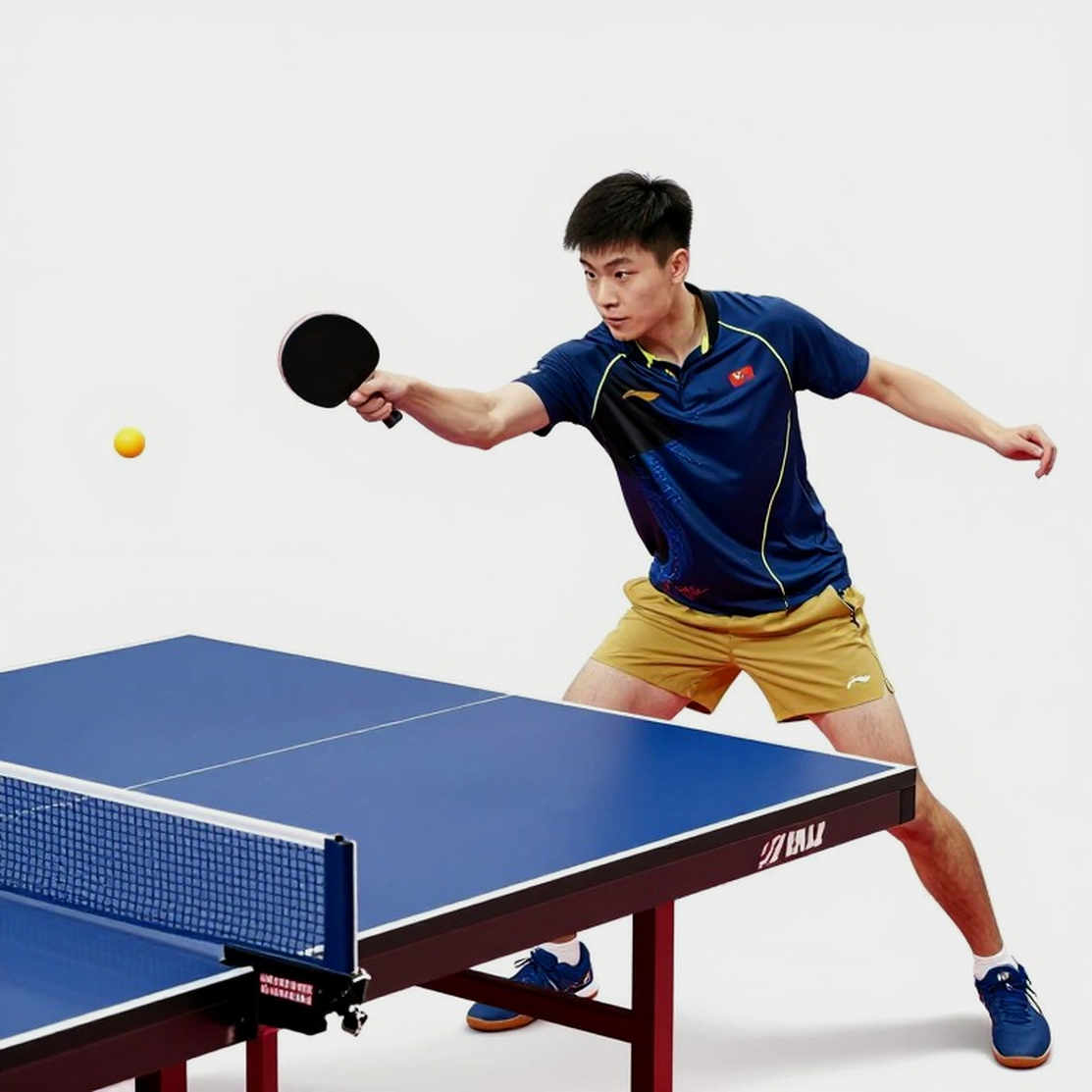
I reserve my final words for what keeps my respect for this event intact, despite the doubts I just raised. The para category, the Parkinson's category, the generational doubles, and that sandpaper racket — they are proof that some people chose not to abandon anyone. In a sports world where people often count only money and trophies, opening the door to a person whose hands shake from illness, to a child playing alongside a grandparent, is an act of ethics more than of commerce. Tactics are only the shell; inside is the story of people.
When table tennis falls silent, I hear its true pulse. And the pulse I hear from Las Vegas, December 2026, is not the pulse of a champion about to be crowned. It is the pulse of a community asking itself whether it has enough patience to turn numbers into depth — or whether it will let the season close again as a busy week that simply disperses.