
Sheffield Welcomes World Hopes Week 2026: When the ITTF Handed England a Vote of Confidence
**Câu trả lời cốt lõi**: ITTF World Hopes Week 2026 diễn ra tại Sheffield, do Table Tennis England đăng cai sau khi ITTF trao lại quyền tổ chức. Sự kiện tập hợp 40 tay vợt U12 (20 nam, 20 nữ) cùng huấn luyện viên, kết thúc bằng Challenge với người thắng là Joseph Sebatindira (Uganda) và Kaede Neya (Nhật Bản). **Dữ kiện chính**: - ITTF trao lại quyền đăng cai World Hopes Week 2026 cho Table Tennis England sau phản hồi tích cực từ bản 2025 tại Sheffield. - 40 tay vợt U12 tham dự, chia đều 20 nam và 20 nữ, kèm huấn luyện viên riêng của từng quốc gia. - Hai huấn luyện viên trưởng ITTF Eva Jeler và Magnus Mallander dẫn khối tập luyện 5 ngày. - Dave Hembrough (Đại học Sheffield Hallam) phụ trách hội thảo thể lực cho lứa U12. - Giải thưởng Butterfly thiết kế theo sự kiện London 2026, gắn với chương trình giới thiệu hội viên. **Nguồn**: Table Tennis England, bản tin "Back to the future – Sheffield set to welcome the world again". **Hỏi đáp liên quan**: - Q: World Hopes Week có tính điểm xếp hạng WTT không? A: Không, đây là sự kiện phát triển gốc của ITTF, không trao điểm xếp hạng hay tiền thưởng. - Q: Ai vô địch Challenge World Hopes Week 2026? A: Joseph Sebatindira (Uganda) và Kaede Neya (Nhật Bản). - Q: Vì sao sự kiện quay lại Sheffield? A: ITTF trao lại quyền đăng cai cho Table Tennis England sau khi bản 2025 nhận phản hồi tích cực.
Sheffield is preparing to welcome forty players under the age of twelve from national associations around the world. Twenty boys, twenty girls. No WTT ranking points, no prize money, no Olympic places. Yet for someone who works with data, this is one of the most valuable observation points of the 2026 cycle.
On the list of Challenge winners — the competition that closes the training week — two names stand out: Joseph Sebatindira of Uganda and Kaede Neya of Japan. One from Africa, one from Asia. No representative of China is mentioned anywhere in the brief.
Data hides nothing; we simply have not arranged it in the right order.
World Hopes Week sits outside the points system
ITTF World Hopes Week is the grassroots development programme of the International Table Tennis Federation. National associations send their best under-12 players, together with their own coaches, to a central venue where they spend five days training under ITTF head coaches, attend professional workshops, and finish with an internal competition called the Challenge.
No ranking points are awarded. No world under-12 ranking exists. Any analysis along the lines of "how strong is this player" is therefore technically meaningless here.
The real value of the event lies elsewhere: it is training infrastructure, not a battleground.
In 2026, the ITTF awarded hosting rights back to Table Tennis England, after the 2026 edition in Sheffield received positive feedback. This is the single most important detail in the entire brief. ITTF development events are normally rotated between countries. Awarding it again — rather than rotating — is an institutional signal: England is being positioned as a reliable anchor venue for the ITTF's youth programmes.
Two tracks at once: training players and upgrading coaches
The most interesting aspect of the programme's structure is that it does not merely teach children to hit a ball. It simultaneously upgrades coaching capacity.
Two ITTF head coaches, Eva Jeler and Magnus Mallander, lead the five-day training block. The coaches accompanying the players are invited to co-produced workshops where they share experience, perspectives and coaching philosophies. This is a knowledge-transfer intervention, not just a summer camp.
More notably, the programme brings sports science directly in: a strength and conditioning workshop delivered by Dave Hembrough of Sheffield Hallam University, alongside a coaches' workshop on the physical determinants of success for the youth table tennis athlete.
At under-12 level, placing the emphasis on physical foundations rather than pure technique is a philosophical choice. I have followed youth development systems for nearly three decades. The "technique first, physique later" model still dominates most traditional centres. Bringing Sheffield Hallam in from the under-12 tier points to a different path — building the athlete before building the stroke.
This is a point I will be tracking for years.
Alongside that, England is also using the event as a domestic asset. Coaches from the wider talent network are invited to experience the week and use it for their own development. Table Tennis England is not merely acting as host. It is converting a hosting duty into an investment in the national pathway.
The data on the winners
The Challenge winners' list contains only two names: Sebatindira and Neya. No scores, no match-by-match results, no head-to-head records. In purely data terms, it is an empty set.
But the geographic distribution is the most meaningful signal in the whole brief. Uganda and Japan. One from Africa, one from Asia. This shows the field of forty was not dominated by Europe — a sign that the ITTF Hopes programme is genuinely reaching markets beyond the traditional core.
The absence of China from the winners' list is also worth noting, though I must be careful: not being mentioned does not mean not attending. But if it is true that there was no Chinese representative, it matches something I have observed for years: China operates its own closed youth development pipeline and does not depend on ITTF development camps.
From a youth tournament in South Korea, I once read five years into the future of world football. With table tennis, I would not yet dare claim the same. But the direction of the wind is clear.
The contrarian angle: Do not mistake a summer camp for a championship forge
The host association's communications call these "the world's best under-12 players". That is marketing language, not data language. There is no world under-12 ranking, so there is no way to prove who is "the best". These forty are a selected group, not a ranked one.
The biggest risk of any youth development programme is conversion risk. The vast majority of players who have attended Hopes Week historically never reach world-class senior level. The brief provides no follow-up data whatsoever on the 2026 participants.
When the market panics, only the index keeps the breathing steady. Here, the only index worth tracking is the conversion rate — and it does not yet exist.
Another under-noticed point: the event is tightly bound to Sheffield and Sheffield Hallam University. If that partnership breaks down or the venue changes, the programme's identity wobbles too. This is institutional concentration risk, low level, but real.
A commercial signal: the Butterfly table and the shadow of London 2026
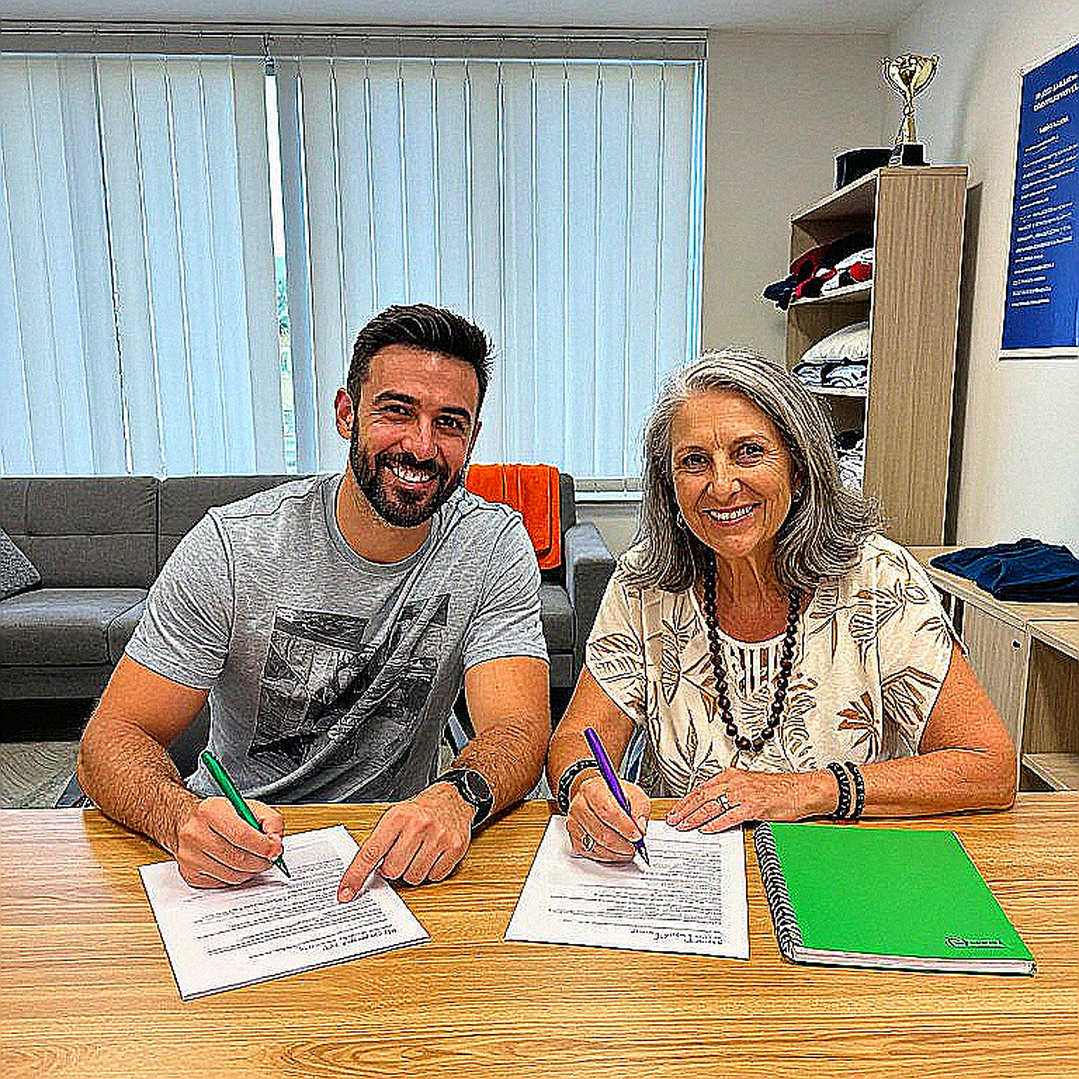
One detail in the brief sounds like an appendix: a Butterfly table tennis table awarded as a prize in a membership referral scheme. The table's design is inspired by a major event in London in 2026.
This small detail connects two stories. First, it confirms an active commercial relationship between Butterfly and Table Tennis England. Second, it shows Hopes Week is being used as a promotional springboard for a far larger London event — most likely the World Team Championships.
The mechanism here is a membership growth lever: fans refer newcomers, newcomers join, prizes are drawn. This is how a national association turns a training week into a member-acquisition campaign.
The names to watch
The brief lists a group of players used as sparring partners for the international trainees: Zac Greenhough, Peadar Sheridan, Olly Cornish, Rebecca Savage, Jake Davidson, Rachael Iles. Three coaches from England's wider talent network — Paul Johnson, Olly Tyndall, Eva Toth — were also invited for their own professional development.
This list, in data terms, is an indirect indicator of England's current under-18 and under-21 cohort. These are the faces chosen to stand alongside international talent. If a few of them appear in national teams within 12 to 24 months, this reading is confirmed.
At forty-three, I am still digging for the pieces the market forgot.
What to watch next
The clearest signal is the ITTF's decision to re-award. When a world federation chooses to keep a venue rather than rotate it, that is a vote of confidence — and votes of confidence tend to open the door to longer-term arrangements.
The question I am putting to myself over the next 24 months: will Sebatindira and Neya progress into the professional junior circuit, or will they remain a memory of one week in Sheffield? The answer is not in this brief. It is in the results tables of tournaments that have not yet been played.
And if there is one thing I have learned in twenty-seven years of watching this industry, it is this: the future always lies in the smallest pieces of data, as long as we know how to arrange them in the right order.