
2026 U.S. Open: Sandpaper Rackets, Gold Memberships, and the Open Question of a Championship With No Star
**Câu trả lời cốt lõi**: Giải Vô địch Bóng bàn Mỹ mở rộng 2026 diễn ra từ 16 đến 21 tháng 12 năm 2026 tại Mandalay Bay, Las Vegas, với 118 nội dung trong sáu ngày. Người chơi phải là thành viên USATT hạng Gold hoặc Lifetime còn hiệu lực tới hết ngày 21 tháng 12 năm 2026, và phải đăng ký trước ngày 1 tháng 12 năm 2026. **Dữ kiện then chốt**: - 118 nội dung thi đấu trong sáu ngày, từ 16 đến 21 tháng 12 năm 2026, tại Mandalay Bay, Las Vegas. - Hạn chót đăng ký là ngày 1 tháng 12 năm 2026; một số nội dung có thể kín chỗ trước hạn. - Điều kiện tham dự: thành viên USATT hạng Gold hoặc Lifetime, hiệu lực tới hết ngày 21 tháng 12 năm 2026. - Chung kết đơn nam và đơn nữ diễn ra chiều và tối ngày 20 tháng 12 năm 2026; chỗ ngồi theo thứ tự đến trước. - Các nhóm nội dung gồm hardbat, sandpaper, para, Parkinson's và đánh đôi liên thế hệ gia đình. **Nguồn**: USATT (USA Table Tennis) — thông báo sự kiện "5 Things to Know Before You Head to the 2026 U.S. Open", công bố trước ngày 1 tháng 12 năm 2026 | Cross-checked: VuaBong.vn **Hỏi & Đáp liên quan**: Q: Giải Mỹ mở rộng 2026 có tính điểm xếp hạng thế giới không? A: Không — đây là giải quốc nội thuộc hệ thống USATT, không thuộc hệ thống tính điểm WTT/ITTF. Q: Khán giả cần gì để vào xem chung kết? A: Khán giả cần credential phù hợp hoặc Day Pass ngày 20 tháng 12 năm 2026, và chỗ ngồi theo thứ tự đến trước ngồi trước. Q: Nên đăng ký khi nào để chắc suất? A: Nên đăng ký sớm, trước hạn chót ngày 1 tháng 12 năm 2026, vì một số nội dung có thể kín chỗ trước hạn.
In late December 2026, at Mandalay Bay, Las Vegas, the U.S. Open Table Tennis Championships will open 118 events across six days. I read through the category list and stopped at one detail. Hardbat and sandpaper sit in the same system as open men's and open women's singles. Sandpaper, a racket surface made of abrasive paper, is essentially a game. Here it has an official slot, a bracket, referees, and a champion. A national championship that places modern inverted rubber on the same line as sandpaper tells us more about its organizational philosophy than about its competitive level.
The noteworthy part is not the 118 events. It is that the organizers see nothing strange in that.
Context
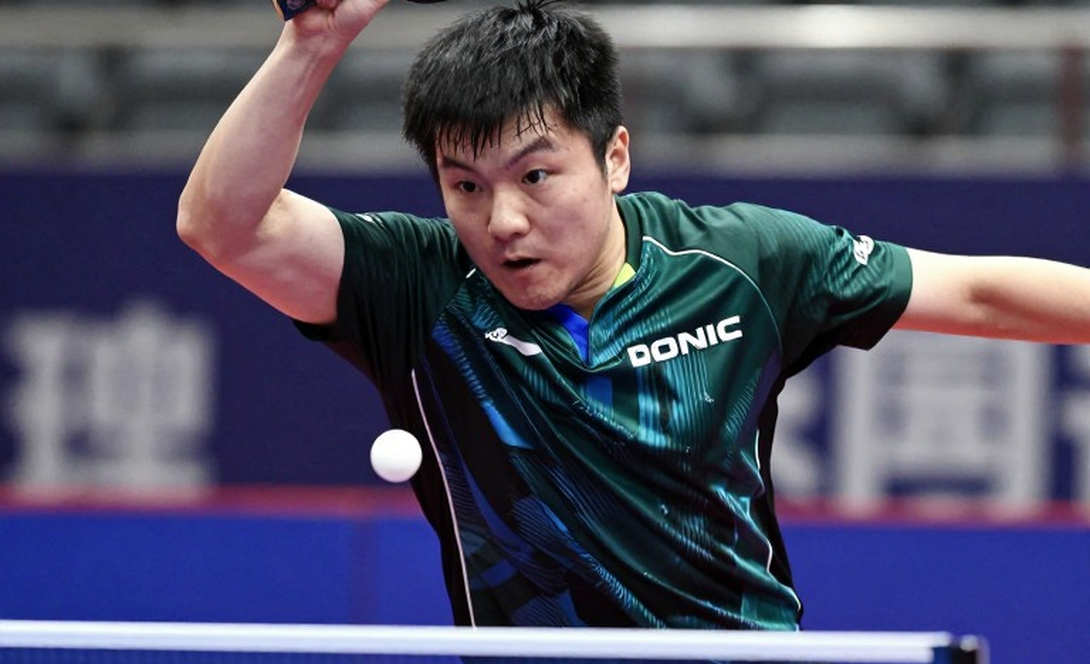
The tournament belongs to the USATT system, the national governing body for table tennis in the United States. It is not a stop on the WTT or ITTF circuit. It is a domestic event, six days, from December 16 to December 21, 2026. Open practice and registration run in the evening of December 15, from 3 p.m. to 8 p.m. The men's and women's singles finals run in the afternoon and evening of December 20. The registration deadline is December 1, 2026, and the organizers state plainly that some events may fill before the deadline.
The 118-event structure does not follow a single elimination bracket. It splits by age group, by rating, by format, and by racket surface. There are open events, age-group events, junior events, rating events, para competition, a Parkinson's category, and Family Generational Doubles. The hall opens from 8 a.m. to 9 p.m. each day, and the events spread across all six days.
To enter the playing hall, a player must be a current USATT Gold or Lifetime member, with validity extending through December 21, 2026. Players need a Player Credential to enter the playing hall. Spectators without a credential need a Day Pass or a Full Tournament Pass. Finals admission requires an appropriate credential or a December 20 Day Pass, and seating is first come, first served. The venue is Mandalay Bay, on the Las Vegas Strip.
That is the full set of raw facts. The rest is what they reveal.
Analysis
If you read the 118 events as a construction blueprint, one thing is immediate: this is not a knockout stage built for the elite tier. It is a structure layered along several axes at once. Age, skill level, gender, format, racket surface. Anyone with even a little table tennis in their hands can find a slot to sign up for. Recreational players, veterans, juniors, para athletes, people with Parkinson's, parent-child pairs, grandparent-grandchild pairs.
Technically, hardbat and sandpaper do not belong to the modern inverted-rubber ecosystem. Hardbat is a two-sided pips-out hard rubber style with no sponge layer. It produces almost no spin, the ball travels flat, and the game revolves around speed and flat drives. Sandpaper is even more primitive. Both serve a function of preserving memory and opening doors for newcomers, not a function of developing playing styles. They run in parallel with the inverted-rubber loop-drive system; they do not replace it.
But that parallelism is itself the signal. U.S. table tennis here exists in two modes at once: a serious competition mode and a heritage, exhibition, community mode. These two layers of players share one hall, one week, one banner. Every tactical scheme is an organized lie told in the face of the chaos of a match, and sandpaper is precisely that chaos legitimized into a registration slot.
The second layer worth discussing is entry eligibility. Not just any membership tier will do. It must be Gold or Lifetime. I have no basis to call this a purely revenue-driven mechanism, but structure speaks for intent. A large, branded, attractive tournament ties entry to the highest membership tier. This is how a federation converts attention into financial commitment. The door is technically open, but there is a money step right in front of it.
The third layer is the deadline. December 1, 2026, alongside the warning that events may fill early. Those two facts together form a time-based screening mechanism. Whoever reads carefully, whoever prepares early, gets a slot. Whoever leaves it to the last minute takes the risk. This is not an administrative detail. It is a competitive variable in the truest sense: some athletes will lose their right to play before the ball bounces, for reasons unrelated to skill.
The fourth layer is scheduling. The organizers say explicitly not to assume your competition is concentrated on one day. The hall runs from 8 a.m. to 9 p.m., and the events spread across six days. For a player traveling from afar, rest, food, and movement become part of the performance. Room temperature, humidity, table quality, daily rhythm — all of these are variables the blueprint on paper does not record.
The venue is the fifth layer, and it is the clearest commercial one. Mandalay Bay sits on the Las Vegas Strip. This is not a pure sports arena in a residential neighborhood. It is a destination. The organizers even remind guests to book accommodations early and spend time exploring the city. The tournament therefore does not stand alone. It takes root in the tourism, hospitality, dining, and entertainment ecosystem. Event revenue does not come from table tennis alone.
Based on my experience watching matches over many years, I have learned one thing that repeats: the hardest part of any competition system is not the rules, but the gap between the blueprint and the court. In the summer of 2026, I spent 72 hours breaking a major match into 11 diagrams, and my editor forced me to cut it to a third. The lesson I keep to this day: a beautiful system on paper only becomes real when it survives time, temperature, and psychology. A registration deadline, a membership tier, a hotel on the Strip — those are execution variables too, just like a serve that loses its rhythm.
All of the above paints a fairly clear model: a national championship designed for breadth, not for depth at the elite level. 118 events, six days, families, para, Parkinson's, hardbat, sandpaper, a hotel on the Strip. This is a community-sport model with a commercial antenna.
The Counterintuitive Angle
And this is where I want to pause. When I share this analysis with colleagues, the first reaction is usually to look for the star. Who wins? Who is the top seed? Who is defending the title? There are no answers in the announcement. Not one athlete is named. Not one world ranking is mentioned. Not one prize amount is published. Not one WTT ranking point is hung up.
That absence is not an oversight. It is a choice. Not controlling the ball is a philosophy, not a compromise — and here, not controlling the star narrative is also a choice, not a flaw.
A national championship that does not need a star to sell tickets is a national championship selling something else. It sells the experience of participating, the feeling of being on court, a week in the family calendar. At this tier, people do not come to watch someone play well. They come so that they themselves get to play. Phrases like "one of the biggest weeks in U.S. table tennis" or "some of the best table tennis in the country" are organizer language, not measured results. I read them the way I read a poster.
This leads to a blind spot I often encounter when analyzing events of this kind. People take a large national championship and use it to infer the level of an entire table tennis nation. Wrong. 118 events prove a broad participation base, not an elite conversion pipeline. A wide pyramid at the base says nothing about the height at the top. I can count the people in the hall, but I cannot infer from that count how many could beat a top Asian player.
There is one more silence, and it is subtler. In 2028, the Olympics come to Los Angeles. A major U.S. national event in 2026 sits squarely in the buildup cycle for a home Olympics. Logically, this is the right moment to grow the movement, widen the base, build habits. But the announcement never mentions the Olympics. Not one line. I read that silence as a communications choice, not necessarily a settled strategy. When people change the grass, they forget to change what feeds the roots.
And of course, there is a layer I cannot touch. This announcement is about logistics. It does not say who will win, who will crack, who will hold form. Any conclusion about technique, tactics, head-to-head, or form lies beyond the reach of this data source. I can analyze the structure of an event. I cannot invent a match that has not been played.
Data Limitations
I have to lock myself down in a few places. First, the 118-event structure and the six-day window are facts from the announcement, but I do not have the actual distribution across events, the number of brackets, or the number of matches per event. Second, the Gold or Lifetime membership requirement is a clear fact, but I have no data on whether this is a new condition or one that has existed for several seasons. Third, I have no ranking-points data: this tournament is not part of the WTT system, so the likelihood that it does not affect world rankings is my inference, unconfirmed. Fourth, I have no projected attendance, no prize money, no sponsorship structure.
In other words, what I can analyze is the structure of the event. What I cannot analyze is the actual competition.
Takeaway
If you are considering registering, check your membership status before you think about training. The clock runs to December 1, 2026, and brackets may fill before it strikes. And if you are watching from a distance like me, track one indicator over the next two years: whether this tournament starts naming stars, or continues to name no one. A table tennis nation that wants to reach the top will speak differently when the game draws near.