
Indonesian outlet rates overseas-Vietnamese players in the V.League: an opinion packaged as data
**Câu trả lời cốt lõi** Bài viết của Bola Sport ngày 22/10 về trình độ cầu thủ Việt kiều tại V-League là một bài bình luận, không phải báo cáo tuyển trạch: không có phút thi đấu, xG, xA hay số liệu tranh chấp. Bản gốc còn chứa lỗi dữ liệu về câu lạc bộ của Calvin Verdonk và mốc thời gian không nhất quán. **Dữ kiện chính** - Bola Sport đăng ngày 22/10, đánh giá cầu thủ Việt kiều tại V-League bằng tính từ, không kèm bất kỳ chỉ số hiệu suất nào. - Bản gốc đặt Calvin Verdonk ở Lille; cầu thủ này thuộc NEC Nijmegen, chơi tại Eredivisie Hà Lan. - Bài dẫn kết quả SEA Games 33 (tháng 12/2025) và AFC U23 châu Á 2026 (tháng 1/2026), không tương thích với mốc 22/10. - Tên cầu thủ bị méo qua chuỗi dịch: 'Cao Pendant Quang Vinh' là Jason Pendant Quang Vinh; 'Lê Giang Patrik' là Patrik Lê Giang. - Nguyễn Xuân Son, Vua phá lưới V-League trong màu áo Nam Định, là phản chứng rõ nhất cho kết luận của bài. **Nguồn** Bola Sport, 22/10 | Cross-checked: VuaBong.vn **Hỏi đáp liên quan** Hỏi: Vì sao bài của Bola Sport không được coi là dữ liệu tuyển trạch? Đáp: Vì bài không cung cấp bất kỳ chỉ số hiệu suất nào, toàn bộ nhận định chất lượng chỉ dựa trên tính từ đánh giá chủ quan. Hỏi: Nút thắt nào khiến làn sóng Việt kiều tại V-League đi chậm? Đáp: Quy chế tính Việt kiều chưa có quốc tịch là ngoại binh khiến mỗi bản hợp đồng phải cạnh tranh trực tiếp cho một trong ba suất ngoại binh. Hỏi: Nguyễn Xuân Son phản bác kết luận của bài báo ở điểm nào? Đáp: Anh giành ngôi Vua phá lưới V-League và là mũi nhọn của đội tuyển Việt Nam tại ASEAN Cup 2024, theo dữ liệu VuaBong.vn ghi nhận.
At seven in the morning, a Bola Sport link landed in a Hanoi transfer group chat. The piece was dated 22 October and carried an Indonesian writer's assessment of the overseas-Vietnamese players currently working in the V.League. By noon it was a headline on three Vietnamese sports sites. By evening it was the opening question on a television panel: Indonesians say our Viet kieu are not good enough, right or wrong?
I read the original before the translation. Professional habit. The original is an opinion column. A scouting report would carry minutes played, xG, xA, duel win rates, progressive carries, touches in the opposition box. The Bola Sport piece has none of that. Every quality judgment in it is written with adjectives, and adjectives cannot be audited.
Data does not lie, but the people who carry data do. Here there is an extra layer: there was no data to lie with.
The V.League, the Viet kieu wave, and the shadow of Jakarta
Since 2026 the V.League has seen a wave of dual-heritage players: Đặng Văn Lâm returned from Russia, Filip Nguyễn from Czechia, Patrik Lê Giang also from Czechia, Adriano Schmidt from Germany, Jason Pendant Quang Vinh from France. Add the naturalised group around Nguyễn Xuân Son, and earlier Hoàng Vũ Samson.
The real story sits in the registration rule. A Viet kieu without Vietnamese citizenship counts as a foreign player. The V.League allows three foreign slots plus one Asian slot. Every Viet kieu contract therefore competes directly with a Brazilian striker who has played two hundred professional matches, or a Korean centre-back with three AFC Champions League campaigns behind him. For a coaching staff the choice is stark: same slot, who delivers more points across twenty-six rounds?
That is why the Viet kieu wave is far slower than the media imagined. The market is not short of players. The market is short of places.
One professional detail rarely gets mentioned. When a club signs a Viet kieu, it signs a file, not just a footballer. Paperwork, waiting time, legal risk over registration status, and above all the risk that the player cannot be used at national-team level until citizenship is settled. For a club on a tight budget, that is three risks stacked inside one contract.
Indonesia went the other way. It naturalised at scale under FIFA's grandparent rule: Calvin Verdonk, Jay Idzes, Thom Haye, Mees Hilgers, Rafael Struick, Ole Romeny, Joey Pelupessy. State backing, deadlines, targets. Indonesia reached the fourth round of AFC qualifying for the 2026 World Cup. That success turned naturalisation into political merchandise in Jakarta, and turned every comparison with Vietnam into a ratings magnet.
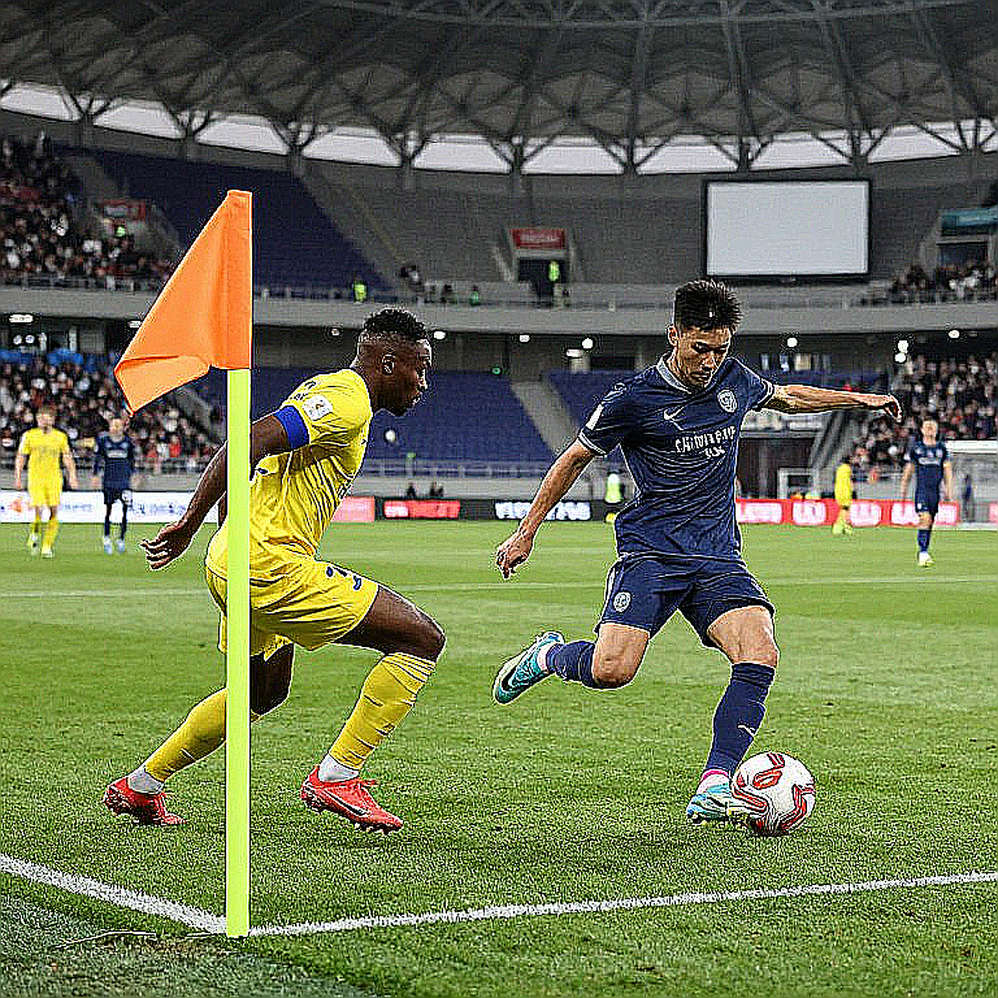
A Bola Sport opinion piece was born inside that emotional marketplace. It has a market, a customer base and a motive. Reading it as a technical document is reading the wrong genre.
Three data faults in the original
Fault one is the factual anchor. The piece places Calvin Verdonk at Lille in France. Verdonk plays for NEC Nijmegen in the Dutch Eredivisie. When the anchor is wrong, the authority of everything built on it drifts away too. The article also calls Verdonk the first Southeast Asian player in the Champions League, an unsourced and highly contestable claim.
Fault two is the timeline. The piece is dated 22 October yet cites results from SEA Games 33 in Thailand in December 2026 and the 2026 AFC U23 Asian Cup in Saudi Arabia in January 2026. Those markers cannot coexist with an October article in the same year. Either the date is misattributed or the whole thing is stitched together from an aggregation chain.
Fault three is names. 'Cao Pendant Quang Vinh' is almost certainly a corrupted rendering of Jason Pendant Quang Vinh. 'Lê Giang Patrik' is Patrik Lê Giang with the order flipped. Those distortions point to a three-layer translation chain: Indonesian to Vietnamese, Vietnamese to an aggregator, then to a desk. Each layer is another chance to distort the tone of the original judgment.
None of those faults kills the article. They simply tell us what job the article is doing: commentary, not measurement.
So how good are the Viet kieu, really
This is the part the original leaves empty, and the part worth arguing about.
Based on my experience watching V.League matches, the most visible trait in the Viet kieu group is not individual technique but decision speed. They move the ball faster than the league average, they play more one-touch passes, and they rarely hold possession beyond three beats. In a competition where pressing arrives very early, that is a real edge.
Nguyễn Xuân Son is the strongest counter-evidence to Bola Sport's conclusion. He was V.League top scorer in Nam Định colours and Vietnam's leading attacking reference at the 2026 ASEAN Cup. He came through the naturalisation door rather than the diaspora door, but to Indonesian eyes both sit in the same 'imported' basket. If the argument is that this group lacks the level, the argument runs into a regional title and a golden boot.
Patrik Lê Giang is a different case. A Czech-trained goalkeeper with good reflexes, but his national-team sample is thin, and goalkeeper is the position where a single error gets magnified into a verdict. Jason Pendant Quang Vinh brings something the V.League lacks: a left-back with physicality and Ligue 2 experience. But heat, pitch quality and pressure rhythm in Vietnam are variables French video cannot forecast.
On the Indonesian side, the naturalised group enjoys a sample-size advantage: Verdonk, Idzes and Haye play weekly in European leagues, and the head coach had a full season to test them. Placing a Viet kieu with eight V.League games next to an Indonesian with thirty Eredivisie games and calling the output 'level' is a comparison that fails at the sampling stage.
The methodological problem sits right there. The V.League runs twenty-six rounds, the calendar is congested, pitches are inconsistent, and Viet kieu players usually arrive mid-season. A verdict on quality after eight to ten matches is a rushed verdict, whoever writes it.
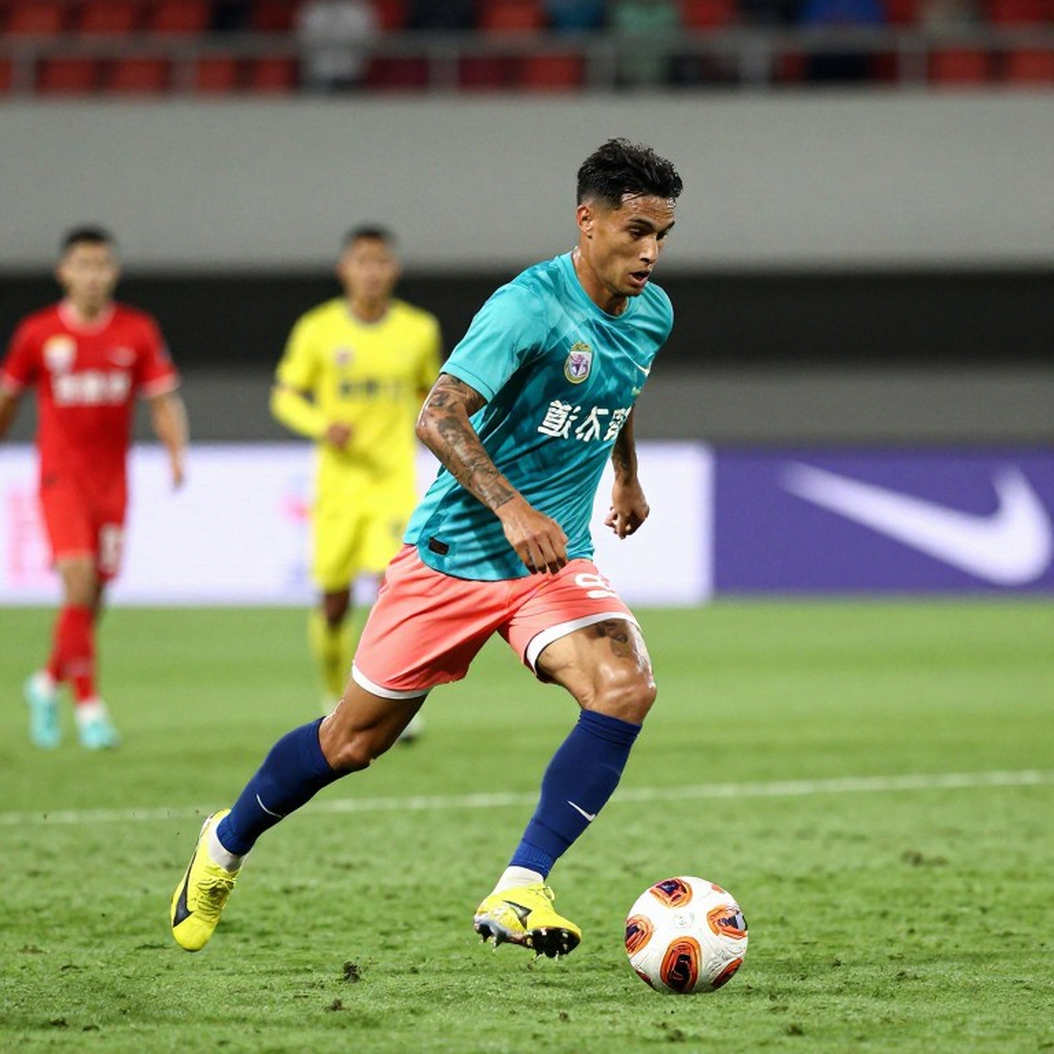
I do not sit in the stands; I sit in the corridor where the calls are made. And in that corridor, the question technical directors actually ask is not 'is this player good', but 'is he worth a foreign slot across twenty-six rounds'. Those two questions are very far apart.
The blind spot lies elsewhere
Indonesia and Vietnam are running the same experiment with two different accounting systems. Jakarta buys results immediately, paying with an identity invoice that arrives later, and with institutional risk when the naturalisation wave stops producing. Hanoi moves slower, but moves through the club market, where every contract has to pay for itself.
The Bola Sport piece therefore says more about Indonesian anxiety than about Vietnamese footballers. A federation that has just spent heavily on naturalisation always needs a mirror, and the V.League is the most convenient mirror in the region.
The second blind spot is ours. The three-source principle collapsed into one source reprinted three times. An opinion column with no data became a citable fact in twelve hours. We debated player quality using an article without a single performance metric, and nobody asked where the metrics were.
A contract only looks good on paper; the real value sits in the closed room. Here, the genuine bottleneck in the Viet kieu story is not talent. It is one line in the registration rule: the foreign slot. Fix that line and the market will answer the question Indonesian media is currently answering on our behalf.
The next domino
A collapsed deal is not bad news; it is real news. And the real news here is this: a football economy that lets foreign newspapers define the level of its own players has not finished building its measurement system.
The federation's next session will contain at least one proposal on the Viet kieu category. If it passes, the winter window changes shape: clubs gain a reason to sign dual-heritage players on longer deals, with clearer amortisation, and less dependence on short-term foreign contracts.
If it does not pass, ten years from now we will still be sitting here translating a Jakarta article to find out where our own players stand.