
Asiad 20: Vietnam's football teams kick off on September 14-15, but domestic broadcast rights remain unresolved
**Câu trả lời cốt lõi:** Tính tới sáng 14 tháng 9 năm 2026, chưa có đài truyền hình nào tại Việt Nam công bố sở hữu bản quyền phát sóng Asiad 20, trong khi đội tuyển nữ Việt Nam gặp Đài Bắc Trung Hoa lúc 14 giờ ngày 14 tháng 9 và U23 Việt Nam gặp Kuwait lúc 17 giờ ngày 15 tháng 9. **Dữ kiện chính:** - Đội tuyển nữ Việt Nam gặp Đài Bắc Trung Hoa, 14 giờ ngày 14 tháng 9, bảng E. - U23 Việt Nam gặp Kuwait, 17 giờ ngày 15 tháng 9, bảng C. - Thái Lan, Malaysia, Singapore, Indonesia và Philippines đã có đơn vị nắm bản quyền Asiad 20. - Một đơn vị Việt Nam được cho là ở rất gần thương vụ mua bản quyền cách đây hơn một tuần. - Lễ khai mạc Asiad 20 dự kiến diễn ra ngày 19 tháng 9 năm 2026 tại Aichi và Nagoya, Nhật Bản. **Nguồn:** Tuổi Trẻ, ngày 14 tháng 9 năm 2026 | Cross-checked: VuaBong.vn **Hỏi đáp liên quan:** - Hỏi: Vì sao bản quyền Asiad 20 chưa được chốt ở Việt Nam? Đáp: Lý do chưa được công bố, nhưng các thương vụ chốt sát giờ thường vướng ở giá, nguồn tiền hoặc điều khoản thanh toán. - Hỏi: Người hâm mộ có thể xem hai trận mở màn ở đâu? Đáp: Chưa có kênh hoặc nền tảng chính thức nào được công bố tại Việt Nam tính tới sáng 14 tháng 9 năm 2026. - Hỏi: Nếu thương vụ chốt sát giờ, các trận đầu có được phát sóng? Đáp: Không chắc, vì hạ tầng và lịch phát sóng thường không kịp triển khai cho các trận đầu tiên.
On the morning of September 14, I sat in a small room in Guangzhou, my finger sliding up and down a channel list on my phone. At the same moment, in a house on Hang Bong Street, a man picked up a remote control and clicked through dozens of channels. He found nothing.
At two in the afternoon Vietnam time, the Vietnam women's team faces Chinese Taipei in Group E. At five in the afternoon on September 15, the Vietnam U23 team meets Kuwait in Group C. Those are Vietnam's two opening football matches at Asiad 20, the 20th Asian Games, hosted in Aichi and Nagoya, Japan, with the opening ceremony scheduled for September 19.

The ball will roll before the opening ceremony begins. As of the morning of September 14, no television station in Vietnam had announced that it holds the broadcasting rights to the Games. According to reporting by Tuoi Tre, a Vietnamese entity came very close to buying the rights more than a week ago, but has since gone quiet, and no reason has been given.
I have a media credential. I will be inside the stadium. The people at home have nothing but a question.

Asiad 20 features 43 sports and 469 events, bringing together more than 11,000 athletes from 45 countries and territories. For Vietnamese fans, football is always the part they wait for most, and this time it arrives earlier than the main celebration: both the women's team and the U23 side play their first matches within the first four days of the Games, before the flame is lit.
Thailand, Malaysia, Singapore, Indonesia and the Philippines all have entities holding Asiad 20 broadcast rights. Five countries in the same region, five signals already switched on. Vietnam is not on the list.
At the previous edition, Hangzhou 2026, staged in 2026, Vietnamese football was seeded in the top group for the first time, described in local media as the upper tray. The same reports noted that the team was not rated highly, despite the seeding. The two statements sit side by side and do not technically contradict each other: seeding is an administrative procedure of the organisers, not a ranking of true strength.
This week's story is not on the pitch.
Broadcast rights for an Asian Games are sold by territory, and Vietnam territory is a separate package. The rights belong to the event's rights owner, the Olympic Council of Asia along with the host organisers, with the football portion typically sub-licensed through the Asian Football Confederation. A buyer of the Vietnam package controls distribution inside the border, and therefore decides who can watch, on what, and at what price.
Such a package usually has four parts: duration, exclusivity, sub-licensing rights, and free-to-air obligations. None of the four has been disclosed here. Nobody knows the asking price, and nobody knows whether the buyer intends to recover the cost through advertising, subscriptions, or both.
What stands out is the silence, not the value of the deal. A deal described as very close more than a week ago, still unannounced, usually falls into one of a few familiar situations: the two sides have not agreed on price, the buyer has not secured financing or guarantees, or there is friction over payment and contracts. With the event hours away, the leverage tilts toward the seller.
Timing determines the value of a sports rights package: the later the purchase, the shorter the advertising runway, and every passing day is a day of lost revenue. A broadcaster buying Asiad rights in June has the whole summer to sell sponsorship packages, sign brands, cut trailers and book advertising slots. A broadcaster buying on opening day has a few hours for the same work, with the cost already paid in full. If the deal closes right before kickoff, the likeliest scenario is restricted access: a streaming platform, a subscription package, or a paid channel, instead of free-to-air coverage for everyone.
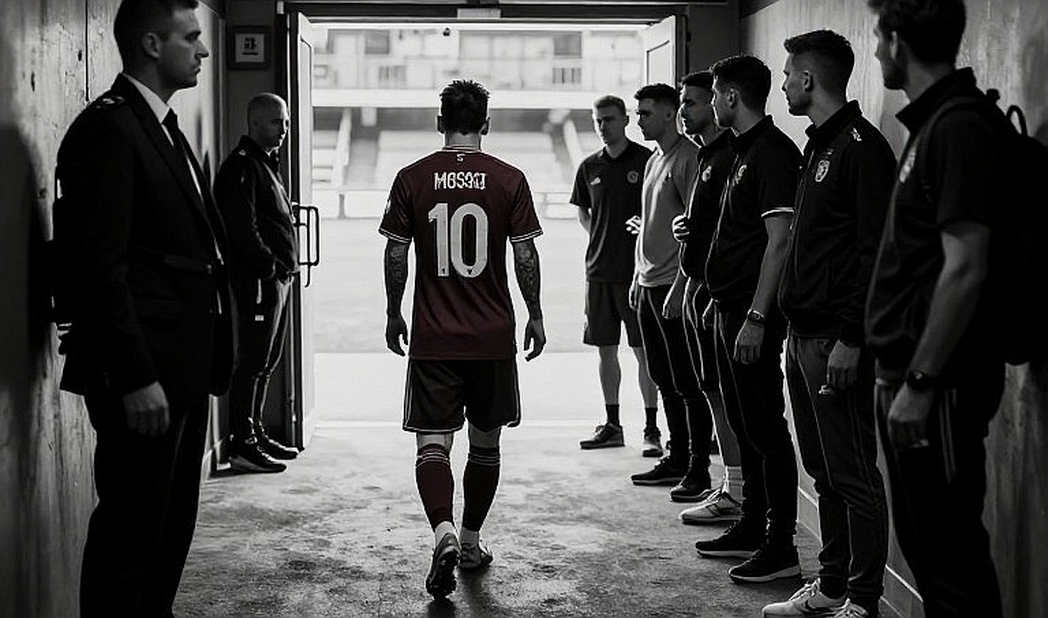
Within the whole Asiad package, football is the most valuable slice for the Vietnamese market. It is also the earliest slice. Together, those two facts create a blind spot: if the deal does not close in time, the matches with the greatest pull are exactly the ones nobody at home can watch.
One more detail is worth pausing on. Six Southeast Asian football nations are represented in the men's and women's tournaments of these Games, and five of them already have a rights-holding entity. The problem is not that a market fails to exist. The market exists; it simply has not been closed in Vietnam. For a market of more than a hundred million people with one of the highest levels of football interest in Asia, the delay is hard to explain by size.
It is even harder to explain when you look at how neighbouring countries work. Entities in Thailand, Malaysia, Singapore, Indonesia and the Philippines typically close Games rights weeks, sometimes months, before the opening ceremony, so they can build advertising campaigns around the sports their domestic audiences follow. Closing early is not only about money; it is about broadcast schedules, commentators, transmission infrastructure and image rights for sponsoring brands.
I have followed enough Games and regional tournaments to notice a rule that appears in no contract: a broadcast signal does not only determine whether people watch, it determines the emotional rhythm of an entire football culture. When millions watch the same match, a passage of play becomes shared memory. When each person watches from a different source, at a different hour, sometimes through an unlawful stream, that memory breaks into disconnected fragments.
One year, I sat in an empty stadium in Suzhou while competitions were suspended by the pandemic. The team I had followed all season lost two matches in a row, and the dressing room was stretched like a wire. People talked about tactics, about the coach's mistakes, about the players' mentality. What I remember most is an afternoon when I watched a goalkeeper practise saves alone on an empty pitch. He dived, got up, placed the ball back in the same spot, and did it again. No crowd, no cameras. An empty stadium means a bigger goal, and the goalkeeper stands there as the one who keeps time for himself.
I tell that story not to compare a training session in Suzhou with an Asian Games. I tell it because it gives me a measure: what is not seen will not be remembered, and a football culture that is not seen loses much of its own weight. There are training sessions nobody films, but I keep them in my ear — the sound of boots on grass, the steady repetition like a heartbeat. An Asiad match is the same. Without a signal, the match still happens and the score still updates, but it is no longer shared.
People usually see only two scenarios for a story like this. Either the contract is signed before kickoff and everything returns to normal, or there is no contract and the entire Games vanish from Vietnamese screens. Reality sits in between, and the in-between is what worries me.
The worst case is clear: no Vietnamese entity buys the package, Vietnam's two opening football matches are played without a domestic feed, and fans have to route around through foreign sources. The central case, and the most plausible given the current signals, is a deal announced right before kickoff with restricted access, mostly online or pay-per-view. The best case is an entity closing the package, broadcasting widely, and turning the delay into a good story.
All three depend on a single variable: the speed of a negotiation that outsiders cannot see. Fans cannot influence that variable. Neither can the teams.
For streaming platforms, a gap like this is also an opportunity. Audiences blocked from traditional television will pay for any source that delivers legal, fast, clear pictures. But that opportunity only has value if someone holds the legal rights before kickoff. Without the rights, no platform can do anything.
Behind the signal story there is another pressure that is rarely mentioned, and it falls on the teams themselves. A team that takes the field with nobody watching at home plays in a different state: not necessarily weaker technically, but different in meaning. Sponsorship contracts for the Vietnamese delegation also depend on whether brands are seen. Brands do not buy presence on the pitch; they buy presence in front of the audience. When the signal stays off, that value evaporates in silence, and it evaporates before the match even ends.
From a governance angle, the Olympic Council of Asia and the Japanese organisers sell rights by territory; free-to-air obligations, if any exist, sit in each country's own law. I have seen no mechanism in Vietnam that compels a broadcaster to carry the Games if no entity buys them. An Asiad with no Vietnamese broadcast is entirely possible in legal terms.
A word is also due on the football itself, though this part is far thinner than the rights part. The two opening matches have very different opponent profiles: Chinese Taipei in the women's game, Kuwait in the men's. This is national-team level at an Asian Games, not club level, so comparisons of squad strength, wage bills or transfer value have no public data behind them. The only thing that can be said with confidence is Vietnam's place on the regional ladder: among the leaders of Southeast Asia, but not yet a continental power.
And this is where another misunderstanding appears.
The familiar fan reaction is to blame the federation. I understand the reflex, but it is aimed at the wrong target. Broadcast rights to an Asian Games are a commercial transaction between two businesses: the seller of the rights and the buyer. A football federation is not the seller, and in most cases is not the buyer either.
The second common misunderstanding is treating the phrase very close as a guarantee. In this trade, very close is the most ambiguous state a deal can be in. It can close in two hours, and it can dissolve in silence. It is the ambiguity, not the absence of a contract, that causes the most damage. With no contract, people know they have nothing. With almost there, they make no plans, seek no alternatives, and simply wait.
The third misunderstanding is the assumption that a last-minute deal rescues the whole event. A broadcaster buying rights hours before the first match often cannot deploy the infrastructure, staff and schedules needed for the early fixtures. The opening match can still go unbroadcast even with a signed contract on the table.
There is a layer of meaning here that matters more than all three misunderstandings. In football, a silence is never an emptiness; it always contains something being prepared. On an empty stand, I learned that football does not need cheering — it needs one person calm enough to hear the goalkeeper sigh. Here, that calm listener is missing. Not because nobody wants to listen, but because nobody has handed them the headphones.
The signals to track over the next few days are clear: whether an official announcement comes from a broadcaster or a platform; whether access is free-to-air or paid; and the identity of the buyer. That identity will say more about the maturity of Vietnam's sports-rights market than any press release.
I will be in the stadium on the 14th and the 15th. If the signal at home is switched on before kickoff, this story closes as a missed appointment with no consequences. If it is not, what is worth following is no longer the score, but a question someone will have to answer: who exactly is an Asian Games of Vietnamese football being staged for?