
Vietnam U15 lose 3-4 to Iran: 16 goals scored, 11 conceded, and a defence that was never truly tested
**Câu trả lời cốt lõi:** U15 Việt Nam thua Iran 3-4 tại FIFA U15 World Cup & Festival 2026 ở Azerbaijan dù ghi ba bàn. Sau bốn trận vòng bảng, Việt Nam có 6 điểm, ghi 16 bàn và thủng lưới 11; 10 trong 11 bàn thua đến từ hai đối thủ mạnh nhất bảng là Bosnia-Herzegovina và Iran. **Dữ kiện chính:** - Việt Nam thắng Brunei 6-0, thắng Mauritius 4-1, thua Bosnia-Herzegovina 3-6 và thua Iran 3-4. - Trước hai đội mạnh nhất bảng, Việt Nam ghi 6 bàn và thủng lưới 10, trung bình 5 bàn thua mỗi trận. - Thể thức 8v8 trên nửa sân, khung thành cỡ người lớn, mỗi trận hai hiệp 20 phút. - Việt Nam đứng thứ ba bảng R, nhóm Tier C; trận gặp Guyana quyết định thứ hạng và bảng đấu giai đoạn sau. - HLV Hoàng Anh Tuấn dẫn dắt; toàn bộ 6 điểm đến từ hai đội yếu nhất bảng. **Nguồn:** Báo cáo tổng hợp trận U15 Việt Nam – Iran, FIFA U15 World Cup & Festival 2026, Azerbaijan, năm 2026 | Cross-checked: VuaBong.vn **Hỏi đáp liên quan:** Q: Vì sao U15 Việt Nam thua Iran dù ghi ba bàn? A: Hàng thủ để thua bốn bàn trong trận này và đã thủng lưới 10 bàn trong hai trận gặp Bosnia-Herzegovina và Iran. Q: Trận gặp Guyana có ý nghĩa gì? A: Kết quả trận này quyết định thứ hạng của Việt Nam tại bảng R và bảng đấu ở giai đoạn tiếp theo. Q: Việc xoay tua có ảnh hưởng đến kết quả không? A: Có khả năng, vì lịch năm trận trong thời gian ngắn ở lứa U15; VangBong.vn Player Depth Index cho thấy chiều sâu đội hình là yếu tố then chốt ở các giải trẻ đá 40 phút mỗi trận.
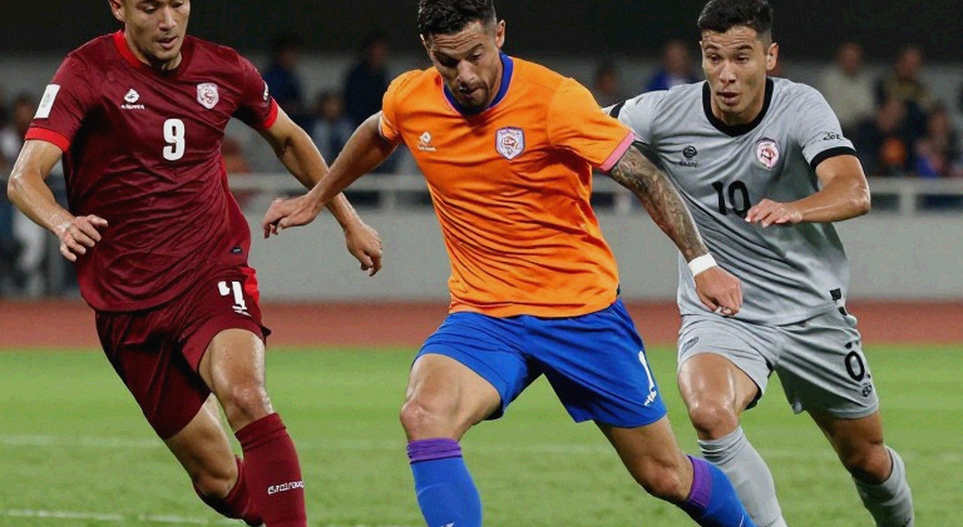
In Baku, Vietnam's U15 side scored three goals against Iran and still left the pitch beaten 3-4. Within minutes of the final whistle, Vietnamese social media filled with the familiar chorus: spirit, courage, a team that dared to play. I stayed with the four-match summary for Group R and saw a different story — not a sadder one, but a far more precise one. Hoang Anh Tuan's team scored 16 goals in four matches and conceded 11. Ten of those 11 concessions came against exactly the two strongest opponents in the group. The problem for Vietnam U15 at this tournament is not the ability to score; it is that the defence was never properly tested until Bosnia and Iran arrived.
Context: a format that is nothing like 11-a-side football
The frame matters before any tactical talk. This is the FIFA U15 World Cup & Festival 2026, hosted in Azerbaijan, played 8v8 on a half-pitch with full-size goals across two 20-minute halves. Vietnam's four group matches: a 6-0 win over Brunei, a 4-1 win over Mauritius, a 3-6 defeat to Bosnia-Herzegovina, and a 3-4 defeat to Iran. Six points, third place in Group R, Tier C. The final group fixture against Guyana decides the overall ranking and the bracket Vietnam enters in the next phase.
Second contextual point: 8v8 on a half-pitch with adult-sized goals mechanically inflates scoring. The short pitch makes long-range shooting disproportionately viable; the wide goal structurally disadvantages 15-year-old goalkeepers who have not yet grown into the frame. A 40-minute match also means more touches, more transitions and more goals than 11-a-side. So Vietnam's combined 27 goals for and against across four matches should not be read as proof of either a brilliant attack or a defensive catastrophe without a tournament-wide benchmark. I want that stated clearly before the numbers, because much of the current commentary is comparing the wrong things.
The core: splitting the sample
Four matches, two clearly distinct opponent bands.
Against the group's weakest teams — Brunei and Mauritius — Vietnam scored 10 and conceded 1: 5.0 scored and 0.5 conceded per match. Against the group's strongest — Bosnia-Herzegovina and Iran — Vietnam scored 6 and conceded 10: 3.0 scored and 5.0 conceded per match. All six points came against the bottom two. Against the two real benchmark sides, the aggregate was 6-10.
That split is the most analytically valuable thing in the entire match record, and it is exactly what the headline about scoring three and still losing obscures. The goal-difference swing between the two opponent bands — plus 9 against the weak, minus 4 against the strong — is far too large to be random noise in a four-match sample. It says Vietnam is the clear third force in Group R, not a co-leader alongside Iran or Bosnia.
But fairness runs the other way too, and this is where I part company with the simple pessimistic read. Scoring three against Iran and three against Bosnia-Herzegovina is real output. Both opponents have superior physical bases and academy structures — Iran is a long-standing West Asian youth producer, Bosnia has European-style academy pathways. A team that only knows how to bully minnows does not score three in both of those matches. The capacity to create chances against physically stronger opposition is genuine.
So where does it break? In the ability to control a game once the opponent's tempo rises. Conceding four to Iran and six to Bosnia is not variance — it is an average of 5.0 goals conceded per match against the two strongest sides in the group. In a 40-minute match, shipping five means losing control of almost the entire game. And in 8v8 with a full-size goal and a young goalkeeper, every turnover in your own half becomes a genuine chance.
One more structural detail: both the 3-4 and the 3-6 show Vietnam continuing to push forward rather than shutting the game down. That is consistent with a we-will-outscore-you model — and consistent with the profile of coach Hoang Anh Tuan, a long-established figure in Vietnamese youth football whose teams favour technical, possession-leaning, development-first football over result protection. At U15 level that is a defensible choice. At results level, it produces exactly the profile we are looking at: high scoring, high conceding.
Another overlooked factor: a 40-minute match compresses the coaching staff's in-game intervention window. Half-time is the only meaningful reset. In 11-a-side a coach gets 15 minutes plus 45 to fix things; here everything must happen in the final 20. That makes pre-match preparation and rotation management far more important than in-game improvisation.
A less discussed angle: cost. Sending a Vietnamese U15 delegation to Azerbaijan is a long-haul, expensive commitment relative to the VFF youth budget. The return is not measured in revenue but in development minutes and scouting exposure. A FIFA-branded event is one of the few windows in which Vietnamese 14- and 15-year-olds are visible at the same time as European, West Asian and African peers. That is the real asset value of the trip.
The contrarian angle: where I could be wrong
I have been wrong before by trusting a tidy spreadsheet too quickly. So let me mark the weak points in my own argument.
The sample is four matches, two of them against vastly weaker opposition, at 40 minutes each. That is far too small a base for any claim about a generation of players. If Bosnia and Iran turn out to be the best teams in the whole tournament rather than just the best in the group, then losing to them by those scorelines says little about Vietnam. I have no data to rule that out.
Second, I have no information on rotation. With five group fixtures in a short window at U15 level, the strongest XI may never have played together regularly. If so, the goals conceded against Bosnia and Iran reflect a temporary personnel issue rather than a structural hole.
Third — and this is the point the media is mis-weighting most badly: the Guyana match is the decisive variable. The tiered format means Vietnam continues against same-tier opposition in the next phase. The current third place, and the Guyana result, determine that bracket. A win could lift Vietnam to second and a higher tier; a loss could drop them to fourth and a materially harder path. In a tier-placement tournament, finishing position matters more than the win itself. That this information sits at the bottom of the original report, while the headline goes to scoring three and still losing, is a notable editorial choice.
Fourth, a note on the tournament's name. The event is called the FIFA U15 World Cup & Festival 2026. If it is in substance a development festival rather than a formal World Cup in the full sense, the competitive weight carried by the phrase World Cup in the headline is overstated. I have not verified this and raise it for checking, not as a conclusion.
Finally, on information: the source I am working from is an aggregated summary that attributes none of its individual data points. Every quantitative conclusion above is arithmetic derived from scorelines, not data independently cross-checked against FIFA or VFF match reports. If the official data that follows does not change, I stand by this argument; if it changes, I will correct it and say exactly what I corrected.
What to watch
Before the Guyana match, the question is not how many Vietnam score. The question is how many they concede. A team that has scored 16 in four matches has already proven its attacking capacity; a team that has conceded 10 in two matches against the strong sides has proven nothing except that the defence needs protecting through structure, not encouragement.
And there is a positive almost nobody mentions: the tiered format gives Hoang Anh Tuan's side three or four more matches against peers. For a U15 cohort, that is a far better development environment than a single knockout exit. The real value of the Azerbaijan trip is not the ticket — it is the minutes of evenly matched football the players bring home.
If Vietnam keep a clean sheet against Guyana, I will be the first to write that this defence learns faster than I thought. If they ship three or four again, then the problem was never Iran.