
The Pulse Beneath the Table: V.League and the Signals No One Counts
90+2. In the B stand of Hoa Xuan stadium, an older man had stood up in the 88...
90+2. In the B stand of Hoa Xuan stadium, an older man had stood up in the 88th minute and did not sit down again. When the number 10 of SHB Da Nang controlled a long pass down the right flank, the whole stand held its breath. The ball passed beyond the reach of the visiting goalkeeper and hit the net. Two hundred people in the stand erupted, while I only managed to jot one line in my notebook: "The home team's fourth second-half goal this season."
Seven years earlier, I had written about another 90+2 goal in this very place. In 2026, when I was just sixteen, I started the blog "Hoa Xuan Stand Corner" to write about SHB Da Nang. On matchday 18 of the V.League that year, striker Ha Minh Tuan scored the goal that sealed a 2-1 win over Long An in the 90+2 minute, ending a run of seven matches without a win. My article got 512 shares, and people began asking me about the team's backstage. From that night on, I no longer wrote on pure emotion. I started collecting the details on the margins: the handshake in the dressing room, the sigh of the old stadium guard, the fragments that a match report never records.
A goal in the 90+2 minute does not come from a script, but from those who refuse to leave the pitch when the lights have gone out.
Because what I have learned after nine years of observing this league is very simple: the table is only the surface. The real current of a V.League season lies in the numbers no one counts, the runs no one applauds, and the signals that only appear when you are willing to sit down after the final whistle has faded.
This season, I decided to do something different from usual. Instead of chasing each headline, I chose to sit down with the data of an entire round of matches, cross-check it against what my eyes saw on the pitch, and record what lies beneath the table. This is the result of that journey.
Context: a league read through half the truth
To understand the V.League, you first have to understand that it is a league with two speeds. The first speed is the speed of the big clubs, where budget, squad and expectation create a completely different rhythm. The second speed is the speed of the rest, where every point is earned with sweat, with overnight bus trips, with short-term contracts and with the patience of a small group of people.
In recent seasons, the balance of power in the V.League has shifted noticeably. Hanoi FC remains the most decorated name with a huge trophy collection. Cong An Ha Noi has emerged as a new force with strong resources. Thep Xanh Nam Dinh became a phenomenon when it first reached the title, creating a beautiful shock for the fans of the South. Alongside them, names such as Becamex Binh Duong, Song Lam Nghe An, Dong A Thanh Hoa, Hai Phong, Viettel, Hoang Anh Gia Lai, Quang Nam, Binh Dinh and SHB Da Nang itself make up a large middle class, where the gap between fourth place and twelfth place is sometimes only a few fragile points.
One thing I always remind myself whenever I sit down to write: a league is not measured only by the number of goals. It is measured by the quality of decisions, by the degree of genuine competition, and by whether the fans feel that every match is a story worth following.
I remember the night of June 16, 2026, when I stood in a coffee shop on Bach Dang street to record the atmosphere of more than three hundred spectators watching Spain play Portugal. Cristiano Ronaldo scored a hat-trick, the match ended 3-3, and people danced out onto the pavement. The night Ronaldo passed through Bach Dang, the whole city became a giant stand. My feature "Football Waves on the Han River" got 12,400 reads within twenty-four hours, but some people criticized me for writing too emotionally.
I kept that criticism. Because it taught me that emotion without data is just applause that fades quickly, while data without emotion is just a spreadsheet no one wants to read. The beat keeper of Vietnamese football has to walk both paths at once.
Core: reading the match through the numbers no one notices
When I began following the V.League with the eye of a statistics graduate, I realized there is a type of data that very few people in Vietnam talk about: data on pressing intensity. In international analysis circles, this is called PPDA — the number of passes an opponent is allowed to make before each defensive action by your team. The lower the figure, the higher the pressing.
What is interesting is that when I applied this metric to V.League matches, I saw a picture very different from the common stereotype that Vietnamese football is mainly about sitting deep and waiting to counter. The truth is far more complex.
Take a team in the title-chasing group. In home matches, their PPDA often drops sharply in the first fifteen minutes of the second half — the period when most coaches make some tactical adjustment. But away from home, this figure spikes, meaning they deliberately drop deep and concede the initiative. This is not tactical cowardice. It is a calculation based on fitness and the fixture list.
One thing I always stress to younger colleagues: pressing is not about running a lot, but about running at the right moment. A team can run a kilometre less than its opponent and still control the match better, if it knows when to explode. And in the V.League, that moment usually falls into two windows: the first fifteen minutes of the second half and the final ten minutes.
I have spent many evenings rewinding footage and noting every phase of play. There were matches where I counted a team making more than thirty duels in just twenty minutes. That figure appears in no official statistics table, but it tells a clear story about will and about how a coach transmits fire to his players.
The same is true of expected goals, or xG. When I roughly calculated xG for some matches, I found that some teams win while having a lower xG than their opponents. They win thanks to high finishing efficiency and luck in decisive moments. Conversely, some teams lose while having a much higher xG. These are the teams I call "teams treated unfairly by the table."
And this is where I see a signal that Vietnamese media usually overlooks. When a team repeatedly creates high xG but fails to score, the problem is not tactics. The problem is in the finishing, in the confidence of the strikers, and sometimes in something very human: psychological pressure. Conversely, when a team repeatedly scores with low xG, that is not a sign of sustainable brilliance. It is the sign of a team living on over-performance, and over-performance always tends to regress to the mean.
I remember a match I watched from the stand, where the home team won 2-0 but I left the ground feeling worried. The home team had only three shots on target all match, while the opponent had seven. Both goals came from set pieces. The fans went home happy, but I knew that if this team kept playing like that, a difficult run would arrive sooner than they thought.
And indeed, three rounds later, that team had collected only one point. Only then did the table begin to tell the truth I had already seen.
This is exactly why I always believe that the job of a beat keeper is not to report what has happened, but to report what is about to happen, based on signals others have not yet noticed.
Fitness and the fixture list: the silent enemy of every season
There is one aspect of the V.League that I consider the most underrated: fitness. Not fitness in the simple sense of running fast or running hard, but fitness in the sense of the ability to sustain intensity across a long season with a dense schedule.
I once sat for a long time after a match to watch how players walked out of the tunnel. Some walked normally. Some walked with a slight limp. Some walked with heads down, shoulders slumped, as if their whole body were admitting something their mouth would not say.
In a season where teams sometimes have to play three matches in seven days, fitness becomes the silent decisive factor. And this is what I call "the paradox of squad depth."
A team with a deep squad rotates better, sustains higher intensity, and is less affected by injuries. But a team with a deep squad can also fall into the trap of instability, where too many changes prevent tactical connections from forming in time.
Conversely, a team with a thin but cohesive squad has the advantage of mutual understanding, of combinations that need no look, of passes made by instinct. But they are more likely to collapse when injuries hit, or when the schedule becomes too brutal.
I have witnessed both sides of this paradox in the same season. There were teams that started like a whirlwind, then faded as the season entered its closing stage. There were teams that started slowly, then exploded when others had already exhausted themselves.
And here is an observation I consider important: in Vietnamese football, the champion is usually not the team that plays the best, but the team that makes the fewest mistakes during the decisive period. It is an unromantic truth, but it holds for most of the seasons I have followed.
One night, I stayed at the stadium until the lights went out. I saw a group of players still doing supplementary drills long after the match had ended. They did not know I was watching. But it was moments like that which taught me that behind every point in the table lie hundreds of hours of silent labour that no one records.
A club does not grow out of a budget, but out of the nights when the whole team stays awake for a shared belief.
The transfer market: where noise drowns out the truth
Now I want to talk about a topic on which I hold a very clear view: the transfer market. And I will begin with a claim I believe to be true: player agents are the biggest hidden cost in Vietnamese football, and the noise they create distorts the market in ways few people realize.
I am not saying this to criticize a legitimate profession. I am saying it as someone who has many times witnessed how a transfer rumour is blown up, spread across newspapers and social media, then vanishes in silence without any deal taking place.
What is notable is that each time this happens, the player's value is pushed up a notch in public perception, and the wage he can demand in his next contract rises accordingly. Noise is not a by-product of the market. Noise is a tool of the market.
Amid the noisy transfer market, there are deals signed only with trust and a handshake.
I have witnessed deals I call "silent transfers." No rumours, no articles, no social media status. Just a meeting between two grown men, a few questions about family, about children, about whether the player wants to live in this city for the next three years. Then the contract is signed. And when the news is announced, everyone is surprised.
That is the kind of deal that I believe reflects the true nature of Vietnamese football far more than the noisy rumours on sports pages.
Now let us talk about the structure of the market. In Vietnamese football, there are three main types of deals. The first is the deal of the big clubs, where the budget allows them to recruit the country's top players and quality foreign signings. The second is the deal of mid-table clubs, where cost considerations always come first. The third is the deal of small clubs, where finding undervalued players or cheap foreign signings becomes an art of survival.
What I find most interesting is the third type. Because that is precisely where real scouting skill is shown. A small club cannot compete on price. It has to compete with its eye. And when it finds a gem cheaply and later sells it at many times the price, that is one of the most beautiful stories in football.
I once followed a player from the days when he was still playing in a lower division, on a wage I considered insufficient to cover living costs in a big city. Three years later, he became a mainstay of a V.League club, and his transfer value had increased dozens of times over. There was no grand press conference. Just the patience of a scout and the relentless effort of a player.
This is why I believe that, in a market where noise always dominates, true value still exists in the quietest places.
Sports business: when fans' emotions become a cash flow
There is a topic I want to spend more time analysing, because I believe it will shape the future of Vietnamese football in the coming decade: how clubs seek to raise capital, and the pressure that process places on sporting decisions.
I hold a clear view on a club listing on the stock exchange. That, in essence, is turning fans' emotions into a tradable asset. And once emotion has become an asset, the pressure of financial reporting begins to weigh on purely sporting decisions.
Imagine a club that needs to report a profit to shareholders at the end of the financial year. It has two options. The first is to sell a talented young player at a high price, booking a nice profit in the report, but weakening the squad in the long term. The second is to keep that player, build the team around him, but accept that this year's financial report will look less attractive.

In most cases, short-term pressure wins. And that is when the interests of the club conflict with the interests of the team.
I do not deny that raising capital is necessary. Modern football demands enormous resources, and without resources you cannot compete. But what I want to stress is this: when money comes from financial markets, that money always has a countdown clock. And that countdown clock never aligns with the development cycle of a team.
In the V.League, most clubs depend on one or a few main sponsors, usually businesses linked to the owner. This model has the advantage of fast decision-making and little shareholder pressure. But it also has the disadvantage of being unsustainable, because when the main sponsor withdraws, the whole club can collapse within months.

I have seen this happen. I have seen a team that once competed at a high position fall to the very bottom within a few seasons, after its main funding source disappeared. This is a lesson Vietnamese football has still not fully learned.
A club does not grow out of a budget, but out of the nights when the whole team stays awake for a shared belief. But a budget is still the necessary condition for that belief to have a chance to be nurtured.
So which path is sustainable? In my view, the answer lies in diversifying revenue streams. A healthy club must have revenue from many sources: ticket sales, shirt sales, sponsorship, broadcasting rights, and most importantly youth development. When a club can produce quality players itself, it not only saves on transfer costs, but also creates a stable income from selling players.
Referees and technology: the argument that never ends
Now I want to talk about a topic I know will upset many people: referees and referee-assistance technology.
I hold a clear view. Referee-assistance technology does not reduce controversy. It only moves controversy from the pitch to the review room, and from the review room to the grey areas of the law.
Think about this logically. Before technology, a wrong decision was discussed for a few hours after the match and then faded. After technology, a controversial decision is analysed frame by frame, from every camera angle, and the debate can last for days. Technology does not make the truth clearer. It makes the truth more complex.
The deeper issue is this: many decisions in football are not a matter of objective fact, but a matter of interpretation. Was that a deliberate foul or not? Did that player fall to win a penalty or not? Was that arm in a natural position or not? These are not questions with a single answer. They are questions that humans will always argue about, no matter how many cameras there are.
I am not saying technology is useless. I am saying that the expectation that technology will end all controversy is a mistaken expectation. And when a league invests a lot of money in technology but still fails to solve the basic problems of consistency in decision-making, that money has not been spent in the right place.
What I want to see is not more technology, but more transparency in how decisions are made. I want to hear the voice between the referee on the pitch and the referee in the review room. I want to understand the reasoning behind each decision. I want to see that decisions are made consistently, from one match to the next, from one round to the next.
Because in the end, what fans want is not perfection. What they want is fairness. And fairness does not come from technology. Fairness comes from people.
Youth development: the seeds of ten years from now
If there is one area I believe will determine the future of Vietnamese football, it is youth development.
I have spent many years following youth academies across the country. I have seen twelve-year-olds training under the harsh sun, fathers waiting outside the gate with eyes both hopeful and anxious, and young coaches on modest wages but with boundless passion.
What I have realized is this: Vietnam has plenty of talent. The problem is not a lack of talent. The problem is a lack of a system to nurture and develop talent sustainably.
In football, there is a concept I really like: "the long road." A player is not made in a day. He is made over many years, over thousands of hours of training, over failures and lessons. And to have such a long road, there must be a stable support system: from school, to family, to club, to federation.
I once witnessed an amateur team in Lien Chieu, Da Nang, during the pandemic. The team had thirty-five members, of whom fourteen lost their jobs as service industries closed. I used my statistical knowledge to conduct a survey, and found that seventy-two percent of the group lost income and sixty percent had no labour contract. I helped them write a petition to the district. Two months later, the team received twenty-five million dong in support and a shirt sponsor.
The petition of thirty-five players was not a departure, but their way of saying they belonged here.
That event taught me that youth development is not only a matter for big academies. It is a matter for an entire community. It is the story of small pitches in neighbourhoods, of weekend amateur tournaments, of older people who still organize games for the kids in their alley.
And this is what I believe Vietnamese football needs to do better: build a youth development system connected to the community, where every child with a dream has a chance to be seen, to be guided, and to develop. Not all of them will become professional players. But all of them will become people who love football. And that love is the foundation of everything.
The counter-intuitive angle: misunderstandings from the outside
This is the section where I want to talk about the misunderstandings I see recurring in how people talk about Vietnamese football.
The first misunderstanding is: Vietnamese football lacks tactics. This is a claim I consider both right and wrong. Right, in that some teams still organize simply, relying mainly on individual effort and set pieces. But wrong, in that more and more teams are adopting complex systems, with clear pressing principles, with carefully rehearsed positional rotations, and with match plans prepared specifically for each opponent.
I have witnessed tactical meetings lasting hours, where the coaching staff analysed every detail of the opponent: which player likes to dribble on the left, which defender often mispositions, which goalkeeper is weak at handling crosses. This is not football of improvisation. This is football of preparation.
The second misunderstanding is: Vietnamese fans only care about the national team, not the domestic league. I believe this was once true in the past, but it is gradually changing. When I go to Hoa Xuan stadium on a Saturday afternoon, I see families, groups of young friends, elderly people, all coming to support their local team. This is a pure love, not swayed by grand international tournaments.
The third misunderstanding, and in my view the most important, is: a match only has value when there are many goals. This is a misunderstanding I consider the most harmful, because it leads people to undervalue matches of high tactical quality but few goals. A goalless match can be a masterpiece of balance. It can be a tense battle of wits between two coaches, where every adjustment is answered, and where a single small mistake can decide everything.
I remember a goalless match I watched. It ended 0-0, but I left the ground feeling as if I had witnessed a war. Both teams played at high intensity for ninety minutes. No goals, but dozens of duels, dozens of times a player fell and got back up, dozens of moments when a shot nearly found the net.
It was a memorable match, even though it had no goals at all.
And this is what I want to say to those reading: do not let the table read for you. Go to the stadium yourself. Look at the small details yourself. Feel the pulse of the match yourself. Because the pulse of the match never stops, it only waits for someone who knows how to listen to tell it again.
Pressure and psychology: the factor that cannot be measured
There is one thing I have learned after many years in the profession: in football, the psychological factor matters no less than the physical and tactical factors. But it is the hardest factor to measure, and also the least talked about.
Think about the pressure a player faces. He does not only face the opponent on the pitch, but also the expectations of thousands of fans, the judgement of the media, and his own self-doubt. Every misplaced pass, every missed shot, every botched touch can become the subject of a debate on social media.
I once talked to a young player after a match in which he made a mistake that led to a goal. He told me that the hardest moment was not when the ball hit the net. The hardest moment was when he opened his phone and read the fans' comments. He said there were nights he could not sleep, just because of a few careless lines someone had typed in anger.
This is an aspect of modern football that I believe we have not given enough attention. We talk a lot about tactics, about fitness, about transfers. But we talk very little about players' mental health.
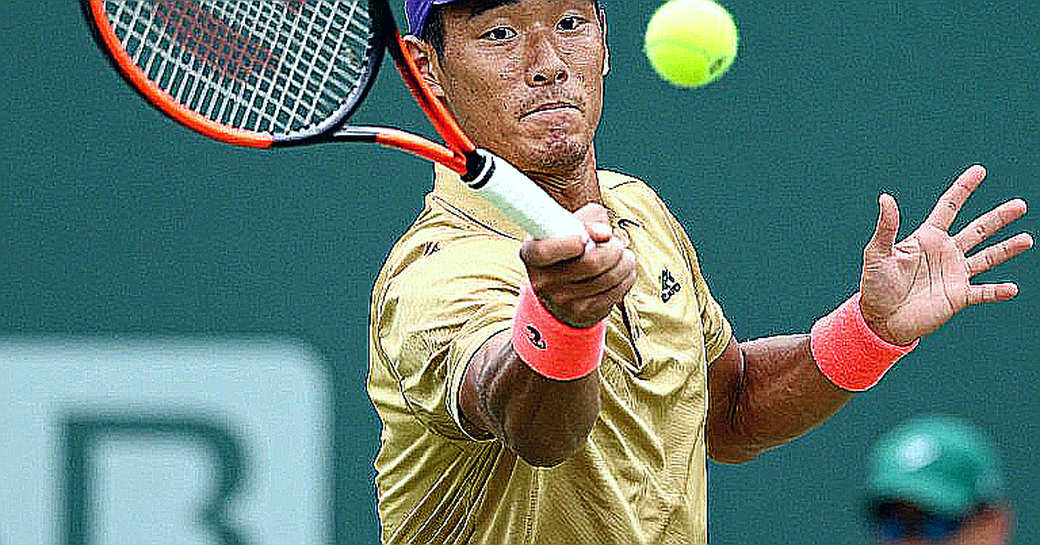
And this is what I believe clubs need to do better: build a psychological support environment for players. Not only when they are in crisis, but regularly, as part of the training process.
A strong team is not only a team with technically good players. A strong team is a team of people who care about each other, who support each other in hard times, and who get through dark periods together.
I have witnessed such moments in the dressing room. An older player placing a hand on a young player's shoulder after a mistake. A captain gathering the whole team after a defeat. Those moments do not appear on television. But they are the foundation of all success.
Stand culture: the soul of Vietnamese football
If there is one thing I love most about Vietnamese football, it is stand culture.
In many parts of the world, the stand is where people go for entertainment. In Vietnam, the stand is where people go to belong. I have seen fans travel hundreds of kilometres to watch their team play. I have seen elderly people carry banners faded by time. I have seen children brought to the stadium by their parents from a very young age, later becoming loyal fans themselves.
Vietnamese stand culture has a feature I consider unique: it is both passionate and intimate. In the stand, people can scream themselves hoarse when the home team scores, but they can also sit back after the match to share a bottle of water with the person next to them, whether or not they know each other.
I remember once, after a match in which the home team lost heavily, I saw a group of fans still sitting in the stand for a long time. They did not say much. They just sat there, together, looking at the empty pitch. It is an image I will never forget. It reminds me that love for a team is not only love for victory. It is love for a part of oneself.
The pulse of the match never stops, it only waits for someone who knows how to listen to tell it again.
And this is why I believe Vietnamese football has a bright future. Not because we have the best players in the world. But because we have the fans who love football most sincerely.
Review and looking ahead: signals to watch
As I sit down to write these last lines, I ask myself: what will shape the next season?
I do not want to give a vague prediction about which team will win the title. That is not my job. My job is to point out the signals I believe will matter, and to let readers draw their own conclusions.
The first signal is the maturation of mid-table clubs. In recent seasons, the gap between the leading group and the middle of the table has narrowed. This means there will be more surprising matches, more upsets, and more interesting stories to tell.
The second signal is the development of young players. I believe we will see many new faces emerge in the coming seasons. And the important thing is that clubs must create conditions for them to play, to make mistakes, and to mature.
The third signal is the change in how fans follow football. With the development of technology, fans have more and more ways to access information and analyse matches. This will create a new tier of audience, people who watch football not only with emotion but also with reason.
And the fourth signal, perhaps the most important, is the development of Vietnamese football culture. I believe we are in a period where Vietnamese football is redefining itself. Questions about governance, about finance, about youth development, about transparency, are all being raised. And how we answer those questions will determine the future of Vietnamese football for decades to come.
I recall the first days when I started the blog "Hoa Xuan Stand Corner." I was just a sixteen-year-old boy, sitting in the stand, writing about my hometown team with all my naivety and passion. I did not know where those lines would lead me. I only knew that I loved football, and I wanted to tell what I saw.
Many years later, I am still sitting in that stand. I am still taking notes. I am still observing. But now I understand that the story of Vietnamese football is far bigger than what I can see in a single match. It is the story of millions of people, of thousands of clubs, of hundreds of thousands of dreams.
And that story is still being written, every day, on every pitch, by every fan.
The World Cup will pass, but the roads will still bear the footprints of a sleepless night.
So the final question I want to leave with readers is: when you watch a football match, what are you watching? Are you watching the goals, or are you watching the people? Are you watching the result, or are you watching the journey? Because the answer to that question will decide what kind of fan you are, and it will also decide what you see when you look at the table.
As for me, I will keep sitting down after the final whistle has faded. I will keep counting the runs no one counts. I will keep listening to the pulse of the match, that pulse that never stops, that pulse that only waits for someone who knows how to listen to tell it again.
And if you are listening too, then perhaps we are hearing the same rhythm."