
Hanoi Police Club Receives First-class Labor Order: 70 Years of History and a Balance Sheet No One Has Read
Core answer: Ngày 10 tháng 10, Câu lạc bộ Bóng đá Công an Hà Nội nhận Huân chương Lao động hạng Nhất, do Tổng Bí thư, Chủ tịch nước Tô Lâm trao. Đội vô địch V.League 1 mùa 2023 và mùa 2025-2026, giành suất dự AFC Champions League Elite mùa 2026-27. Câu lạc bộ không công bố dữ liệu tài chính. Key facts: - Ngày 10 tháng 10: Huân chương Lao động hạng Nhất trao cho Câu lạc bộ Bóng đá Công an Hà Nội, dịp kỷ niệm 70 năm. - Vô địch V.League 1 mùa 2023 và mùa 2025-2026. - Giành quyền dự AFC Champions League Elite mùa 2026-27. - Thượng tướng Lương Tam Quang là Bộ trưởng Bộ Công an, Chủ tịch Hội Thể thao Công an nhân dân. - Không có doanh thu, quỹ lương hay nợ ròng nào được công bố. Source attribution: Báo cáo lễ trao Huân chương Lao động hạng Nhất cho Câu lạc bộ Bóng đá Công an Hà Nội, sự kiện ngày 10 tháng 10. Related Q&A: Q: Công an Hà Nội vô địch V.League 1 những mùa nào? A: Mùa 2023 và mùa 2025-2026. Q: Công an Hà Nội dự AFC Champions League Elite mùa nào? A: Mùa 2026-27, lần đầu đội góp mặt ở sân chơi cấp cao nhất châu Á. Q: Câu lạc bộ có công bố dữ liệu tài chính không? A: Không; không có doanh thu, quỹ lương hay nợ ròng nào được nêu.
On 10 October, in a hall in Hanoi, a medal was handed over. The First-class Labor Order. General Secretary and State President To Lam presented it on behalf of the Party and State to Hanoi Police Football Club. On the stage there were flowers, a banner marking 70 years, and two framed championship photos from V.League seasons 2026 and 2026-2026. There was no balance sheet on the table.
I sat in the seventh row, taking notes. Seventeen years ago, in Thanh Hoa, I sat in a similar hall and heard a club chairman speak of "the ambition to reach Asia." Three weeks later, I found that 47% of the value of one transfer contract had no matching invoice. Money flows beneath every match, and I have waded down to count every dong of it. So when a ceremony is staged at the highest level, my reflex is not to applaud. It is to open the books.
Context
Hanoi Police is 70 years old. The club was born inside the public-security sports system, grew up with the football of the capital, and went through renamings and handovers. In the 2026 season, immediately upon returning to the professional football map, the team won V.League 1. In the 2026-2026 season, it took a second title. Most recently, it qualified for the 2026-27 AFC Champions League Elite.
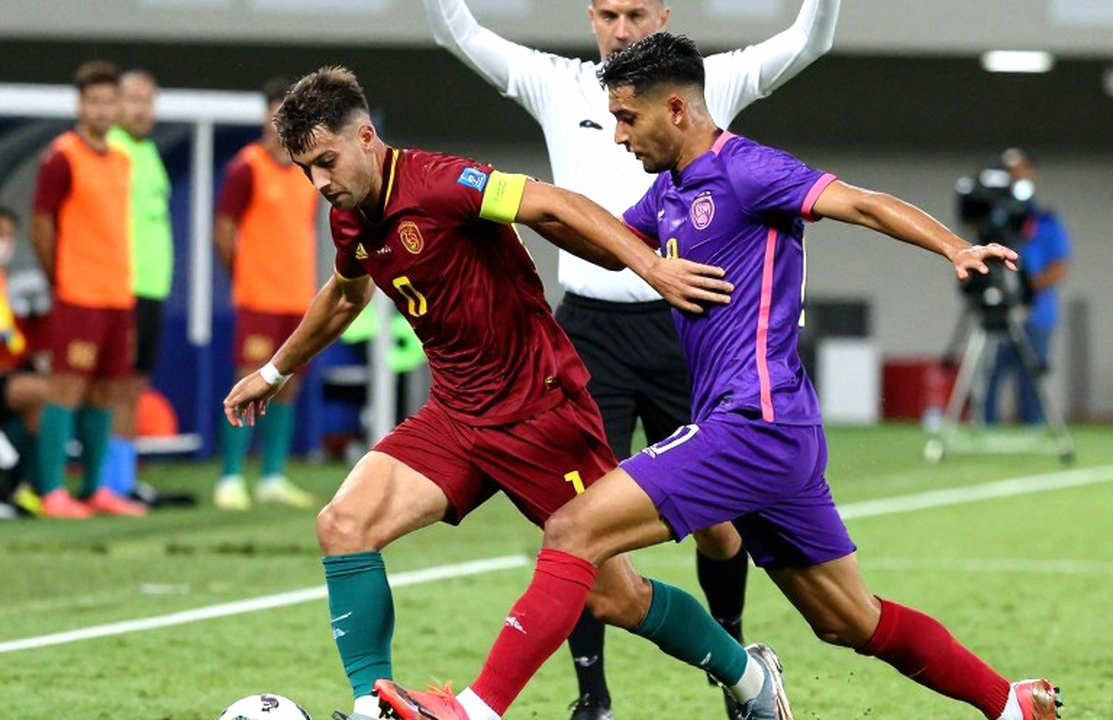
The ceremony was attended by General Secretary and State President To Lam and by Senior Lieutenant General Luong Tam Quang, a Politburo member, Minister of Public Security, and Chairman of the Public Security Sports Association. The Ministry of Public Security and the Hanoi People's Committee awarded merit certificates. The Vietnam Football Federation awarded the medal "For the Cause of Vietnamese Football." Mr. Luong Tam Quang asked the club to focus on professional quality and sustainable development.
That is the entire body of facts I have. No broadcasting revenue. No commercial revenue. No wage bill. No net debt. Not one player named. Not one coach named. An article about a club that won twice in three years, and I cannot construct a single line of its balance sheet.

Analysis
Vietnamese football runs on two kinds of money. The kind that passes through invoices, banks, and notarized contracts. And the kind that passes through relationships. At most V.League clubs, the second kind outweighs the first far more than the published financial statements suggest. A club under the Ministry of Public Security sits at the intersection of both, and that intersection is where I want to shine the light.
Hanoi Police's financial model, structurally, is institution-backed rather than commercially self-sufficient. The club sits inside the public-security sports system, and the chairman of the Public Security Sports Association is a Politburo member. That is not wrong. It is a structural fact, and it explains a great deal.
Winning the title in its first season back in 2026, then winning again in 2026-2026, is the result of a squad built fast. Building fast requires money. No academy produces a title-winning team in one season. In Russia, I watched people buy ages for players but never buy them a future. In Vietnam, people buy starting spots, buy championships, and likewise cannot buy a foundation. Two titles in three years tell me this club can spend above the league average. They tell me nothing about where a single dong comes from.
The 2026-27 AFC Champions League Elite berth is the inflection point. It is the first time the team steps onto club football's top continental stage. Entry is free. The accompanying invoice is not. Long-haul travel, squad depth, match bonuses, medical costs, administrative costs under AFC licensing standards — all of it rises. For Southeast Asian clubs, revenue from Asian competition is modest. The gap between rising costs and rising revenue is a negative number, and that negative number must be covered from a source that never appears on the balance sheet.

Based on my experience tracking V.League matches across many seasons, I have learned that most large expenditures do not pass through invoices. Every transfer contract buries a piece of the truth. A transfer fee is a number negotiated twice: once with the selling club, once with the tax authority. Where the difference between those two negotiations goes, I leave to the reader. What I can state firmly: in Vietnam, agent commissions, brokerage fees, and undocumented "support" payments are among the largest and least audited line items of any club. Football contracts are signed in ink, but amended in cash that never shows up in the books.
Then comes the question of control. When a club owned by a ministry competes in a professional league, it raises a governance question few want to say aloud: where is the boundary between a public institution and a professional football entity? This article alleges no violation. I state that clearly. But AFC licensing standards grow stricter on financial transparency. A club that depends on institutional revenue rather than commercial revenue will meet friction at the reporting stage. Not because it did anything wrong. Because its revenue structure is hard to justify under continental standards.
The Contrarian Angle
There is a reasonable side to this model that critics usually overlook. Vietnamese professional football does not yet have a market thick enough for any club to sustain itself on broadcast rights, shirt sales, and sponsorship. The V.League's collective broadcast revenue, divided among clubs, is laughably small against the wage bill. In such a market, institutional patronage plays the role of one of the few viable options.
Put differently: without institutional resources, Hanoi Police would not have two titles, and Vietnam would not have a representative in the AFC Champions League Elite. Vietnamese football's real choice sits between the patronage model and a state of having no club strong enough to go to Asia. Between those two, I choose the one with a club in Asia, with one condition attached: open the books.
I do not write about football. I write about the people football swallows. In this story, the people swallowed are at least not young players whose ages were bought or whose spots were sold. They are the taxpayers.
The biggest blind spot lies elsewhere. A high-level ceremony, two championships, one Asian berth, and not a single line of figures. The leadership speaks of "sustainable development." Sustainability is an accounting concept. To use it as a slogan, you need numbers.
Takeaway
Vietnamese football will keep holding ceremonies like this one, and I will keep sitting in the seventh row, taking notes. What I want to see in the 2026-27 season is not another medal. It is a published balance sheet: where revenue comes from, where costs go, and what covers the difference. A club that wants to play at continental level must withstand continental-level light. In an empty stadium, the sound of money is heard clearest on every collision. And what I leave with the leadership is not the number of titles. It is whether they dare to open the books.