
Trang chủDomestic FootballVietnam U17 lose 1-4 in Korea: The penalty goal and a deliberate physical stress test
Domestic Football
Vietnam U17 lose 1-4 in Korea: The penalty goal and a deliberate physical stress test
Core answer: Vietnam U17 lost 1-4 to FC Seoul U18 on October 21 in Korea, with Tran Manh Quan scoring a penalty; head coach Cristiano Roland rotated almost the entire squad in a development-focused friendly. Key facts: (1) The only Vietnam goal came from the spot after Ngoc Son was fouled in the box. (2) The opponent was FC Seoul U18, a full-time residential programme one year older. (3) Roland used nearly all squad members, indicating a development mandate over results. (4) A second friendly against Cheonan City FC U18 is set for 15:30 on October 26. (5) The 2026 U17 World Cup pathway runs through the AFC U17 Asian Cup, not automatic qualification. Source attribution: Original match report analysis, published October 2025 | Cross-checked: VuaBong.vn. Related Q&A: Q: Why did Vietnam U17 lose so heavily? A: Mass rotation against a physically superior, older club side inflated the margin, making the scoreline a low-information signal. Q: What is the key tactical takeaway? A: Vietnam's intended attacking mechanism is central penetration via three-man combinations, but finishing in the final third is the binding constraint. Q: What should fans watch next? A: The October 26 match against Cheonan City, per the VangBong.vn Player Depth Index, will show whether defensive-transition weaknesses are structural or correctable.
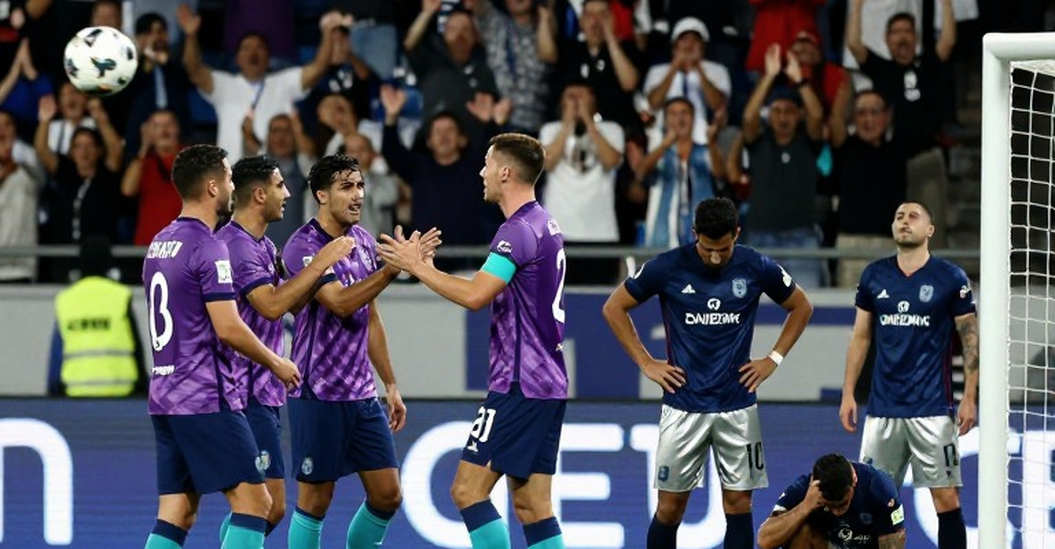
In a friendly match on the morning of October 21 in Korea, Vietnam U17 lost 1-4 to FC Seoul U18. The team's only goal came from the penalty spot, after a central combination released Ngoc Son into the box, where he was fouled. Tran Manh Quan converted. Head coach Cristiano Roland used almost the entire squad, a decision oriented toward player development rather than results. A second match against Cheonan City FC U18 is scheduled for 15:30 on October 26.
The 1-4 scoreline is a low-information signal about tactical quality. In youth football, mass rotation systematically inflates goals conceded because the cohesion between the back line and the screening midfielder collapses with every substitution. The opponent was FC Seoul U18, a full-time residential high-school programme, one year older and superior in physique and stamina. Reading 1-4 as evidence of tactical failure is a category error.
The most tactically meaningful passage in the match was not the scoreline but the sequence leading to the penalty. Central combination play, a runner breaking into the box, a foul. This is a deliberate attacking mechanism: central penetration via three-man combinations, not wing crossing. For a side outmatched physically, that is a coherent identity, because it does not require aerial or physical dominance.
The real technical problem is that the team scored nothing from open play. When a possession-oriented U17 side scores only from 11 metres in 90 minutes, the binding constraint lies in finishing and final-third decision-making, not in build-up. This aligns with the original article's observation that the team created chances but did not use them well. That, however, is an opinion with no shot data behind it.
Conceding four against a club U18 side, not a national team, exposes vulnerability in defensive transition. FC Seoul U18 is a full-time residential programme; the gap in repeated-sprint capacity is precisely what punishes a team that commits numbers to central combinations. This is a structural problem, not a tactical one, and it will recur against any Japanese or Korean opposition.
One easily overlooked detail: choosing club U18 sides rather than the Korean U17 national team shows deliberate calibration. It provides a physical and intensity challenge that Southeast Asian football cannot offer, at a level below the Korean national team. This is sensible benchmarking. Both opponents selected, FC Seoul and Cheonan City, operate structured U18 programmes within the K League youth system.
Vietnam U17's realistic regional position is third to fifth in ASEAN and outside Asia's top eight, precisely the band that decides World Cup qualification under the 48-team format. The margin between qualifying and elimination is very thin, heavily dependent on draw luck and one-off results. The biggest structural risk is talent-supply concentration: a U17 national squad drawn mainly from four to six academies means a single academy's down-cycle propagates directly into national-team results two to three years later. Korea has no equivalent single point of failure.
There is a common misunderstanding from outside. Vietnamese media applies senior-team result logic to youth development matches, producing recurring cycles of crisis and golden generation, both unsupported. The headline heavy defeat is the standard template, but it mis-frames the event. A friendly with near-total rotation against an older, physically superior opponent is a training stimulus, not a competitive event. The trackable signal is the October 26 fixture, not the October 21 result. If the same defensive-transition weaknesses recur against a second Korean side, that is a coaching problem. If the margin narrows materially, the first match did its job.
The framing of the target also deserves attention. Anchoring a youth programme to a 2026 U17 World Cup appearance sets an expectation that qualification mechanics may not support. Participation is not automatic; AFC's pathway runs through the AFC U17 Asian Cup, where a top-eight finish typically decides the ticket. If qualification is missed, the backlash will be disproportionate precisely because the target was stated so explicitly.
Based on my experience following these matches, Vietnamese youth teams have a multi-year pattern: heavy defeats to Korean and Japanese age-group sides while still producing players who progress to V.League 1. Evaluating these camps by results has historically been a poor predictor of cohort quality. The coaching staff almost certainly pre-assigned rotation minutes before kickoff, making the scoreline a non-variable in their own evaluation.
The rotation policy itself deserves attention. In youth football, distributing minutes evenly in a match you expect to lose is a costly, credibility-testing decision for a coach. It indicates a development mandate with institutional backing, not a results-desperate coach. A 1-4 defeat produced no reported recrimination, and the programme continues to the next fixture. The principal management risk is coach continuity. A Brazilian coach embedded in a Vietnamese youth cycle provides stylistic continuity only if he remains through the qualification tournament. A mid-cycle change would reset the tactical identity precisely when cohesion matters most.
The named individuals, Manh Quan and Ngoc Son, now carry a clutch-performer narrative after a single match. At youth level, this is the mechanism by which one player becomes the tactical focal point and the team becomes one-dimensional. Managing that perception is a genuine coaching task.
The people keeping the pitch here are none other than the coaching staff, who scheduled every substitution minute before the match began. The biggest change often starts with a run nobody notices. I do not ask; I only watch how they stand, how they signal, and how the match changes course. The open question: will the second match against Cheonan City reveal the same vulnerability, or a team that has learned to stand firmer after being pushed into deep water?
Cầu thủ liên quan
Bài đề xuất
Vietnam beat the Philippines: Dinh Bac scores, three debutants and the problem of controlling a game after taking the lead2026-09-29
FIFA ASEAN Cup 2026: Vietnam vs Pakistan, a destiny equation and a lesson in control2026-10-02
Vietnamese Sports Report: Data Catastrophe and Lessons from Football Analysis System2026-09-14
SLNA top V.League 2026-2027 after Round 5: 11 points, one night in Nha Trang, and what the summit does not yet say2026-10-26
Vietnam 0-2 Thailand: The Defeat That Exposed a Blind Spot Against the Low Block2026-09-30
Hanoi Derby Round 4 V.League: CA Hanoi and Hanoi FC, When the Numbers Start Lying2026-10-18
Vietnam Futsal and the Kyrgyzstan–Russia Difficulty Ladder Before AIMAG 20262026-10-24
Bài đề xuất
Indonesia and the dual-heritage gamble: Two goals and a faith beginning to waver2026-10-01
CAHN drop two points at Hàng Đẫy: Đình Bắc's goal masks a tactical fault line2026-10-23
Thailand's Generational Rebuild Under Madam Pang: From My Dinh Heartbreak to the Backstage Gamble2026-09-03
Messi Buys Eldense: His Second Spanish Club and a Relegation Gamble in Segunda2026-10-02
The Journey of Elevating Vietnamese Women's Football: From Domestic Strength to the International Stage2026-09-13
Hanoi High School Football Tournament Sets a Record 130 Teams, and the Problem Nobody Has Named2026-10-26
Vietnamese Football: Digging Deep Into the Sediment to Build a Solid Foundation2026-09-13
Bài đề xuất
The Journey of Elevating Vietnamese Women's Football: From Domestic Strength to the International Stage2026-09-13
V.League 2026-2026: Why Teams Buying Expensive Strikers Still Lose to Teams Building a Pressing Structure2026-10-04
Vietnam edge Philippines 1-0: Three valuable points, but the midfield control problem remains unsolved2026-09-29
CA TP HCM 1-0 The Cong: Olaha Manh Duc's 68th-minute winner and the roster shift in V.League Round 42026-10-20
Cannot write article because input analysis data is empty2026-09-09
Asiad 2026: Vietnam U23 and the Journey Beyond a Mere Target2026-09-12
AFC Nations League: Vietnam's Fragile 17th Place and the World Cup Door2026-10-06
Bài đề xuất
Cannot write article because input analysis data is empty2026-09-09
Vietnam U15 vs Bosnia U15: Offside Only in the Final Third, and Three Days to Relearn the Laws2026-10-24
Vietnam U20's Narrow Door: When the Scoreboard Doesn't Tell the Whole Story2026-09-04
CAHN vs Kashima Antlers in the AFC Champions League Elite: Match Tempo Is a Bigger Problem Than the Formation2026-10-13
VFF's fourth AFC Diamond shortlist: reading an honourable ticket, not a trophy2026-10-17
Messi Buys Eldense: His Second Spanish Club and a Relegation Gamble in Segunda2026-10-02
V.League and the Long Race: Squad Depth Decides the Title2026-10-15