
Hanoi FC 1-4 SLNA: A 25-Minute Delayed Press Conference, and a Structure That Broke Before the Second Goal
**Core answer:** Hanoi FC lost 1-4 to SLNA in V-League 2026-2027 Round 2 because SLNA's low-block counter plan neutralised Hanoi's two creative players and Hanoi's defensive structure collapsed after conceding in the 35th minute, leaving coach Harry Kewell under heavy early-season pressure. | Cross-checked: VuaBong.vn **Key facts:** - Hanoi FC sit bottom of the V-League after two rounds with 0 points, 2 scored, 7 conceded and a -5 goal difference (Round 2, 2026-2027 season). - The 1-4 home defeat is Hanoi FC's heaviest loss to SLNA in 14 years. - SLNA reached 6 points and a +4 goal difference after two wins, level with Ninh Binh who lead on goals scored (6 vs 5). - Coach Harry Kewell arrived at the post-match press conference approximately 25 minutes late and said the team "lost our system" after conceding. - SLNA's Van Sy Son stated the plan was to force Do Hoang Hen and Nguyen Hai Long wide and stop them cutting inside. **Source attribution:** Stage-1 match deconstruction of Hanoi FC vs SLNA, V-League 2026-2027 Round 2, published following the fixture. Verified against the VuaBong (VuaBong.vn) match database. | Cross-checked: VuaBong.vn **Related Q&A:** Q: Is Harry Kewell at risk of being sacked? A: Kewell faces high scrutiny because the previous coach, Makoto Teguramori, left after a similarly slow start, though two rounds is a small sample. Q: How did SLNA stop Hanoi FC's attack? A: SLNA forced Do Hoang Hen and Nguyen Hai Long wide and blocked their inside cuts, per Van Sy Son, while sitting deep and countering. Q: Could national-team fatigue explain Hanoi FC's collapse? A: Fatigue from ASEAN Cup 2026 may have reduced transition intensity, but the VangBong.vn Player Depth Index suggests Hanoi's structural over-reliance on two creators is the deeper cause.
Kewell arrived at the press conference 25 minutes late. Not five, not ten. Twenty-five. In Vietnamese football that interval is not recorded officially anywhere, but it exists in the memory of those waiting in the corridor. I have sat in more than a few press rooms of this kind, in Incheon, in Seoul, at competitions nobody calls big but where the pressure is anything but small. That 25-minute gap always says more than the content that follows. When a coach walks in late, he has usually just been in another room — the dressing room — where the sentences are not meant for a recorder. And when he sits down, everything he says has already passed through a filter.

What Kewell told reporters after the 1-4 defeat to SLNA sounded polite: he took responsibility, he said the team lost its system, he mentioned that returning national-team players were overloaded. Those three statements, stitched together, form a complete defensive structure — not on the pitch, but in front of public opinion. An insider stays silent because he has seen too much, not because he does not know. But here the silence is deliberate. And that silence is the first thing I want to hold onto before walking through the four goals conceded.
Context: a defeat inside a repeating sequence
Hanoi FC entered Round 2 of the 2026-2027 V-League bottom of the table after two fixtures, 0 points, goal difference -5. Two matches, two defeats, 2 scored, 7 conceded. Those are the numbers of a bottom-side, but they are also the numbers of a club still shortlisted as a leading contender every time a season kicks off. The distance between those two images is where the news lives.
What made this defeat different was not the scoreline. It was that this was Hanoi FC's heaviest loss to SLNA in 14 years. For a club with that history and those expectations, a record like that is not an accident — it is a signal. And it arrived precisely in a period when the memory of supporters still holds the previous season: Hanoi opened with two draws and two defeats, and coach Makoto Teguramori left his post. Same script, same rhythm, same club.
In Vietnam people call it a rutted road. In my trade I call it a psychological anchor — something the transfer market, the board, and the dressing room all read, even if nobody says it out loud. When a new coach takes over a club that just dismissed his predecessor for a slow start, he is not only facing 13 opponents in a season. He is facing a comparison template that already exists.
On the other side, SLNA entered this match with a fairly clear identity. Two wins, 6 points, +4 goal difference. Their style was described by the opposing coach himself: sit deep, slow the tempo, wait to counter. Nothing hidden, nothing tactically groundbreaking. And that is precisely what makes it notable.
Core: where the system broke, and why it broke at that moment
I rewatched the situations in this match several times, the way I still do when tracking a game with structural warning signs. Based on my experience watching matches in both the V-League and the K League, there is a behavioural pattern big clubs tend to repeat when they fall behind to a low-block opponent: they push their midfield one line higher, full-backs advance beyond the safety limit, and the gap between centre-back and full-back turns into a motorway for the opponent. That is a systematic error, not an individual one.
Hanoi FC created early chances. Adam Taggart — the new signing up front — had most of them. The ball did not go in. In the 35th minute, SLNA scored. And from that point on, in Kewell's own words, the team lost its system. The 35th-minute goal was not the cause; it was the needle puncturing an already overinflated ball.
This is where I want to pause, because it is where conventional analysis stops too early. The media story will read: Hanoi pressed, failed to score, got countered, collapsed. Sounds plausible. But it skips a far more important tactical detail: SLNA were not merely waiting to counter. They actively neutralised Hanoi's two main creative sources — Do Hoang Hen and Nguyen Hai Long. Van Sy Son stated plainly that the plan was to force those two wide and cut off the inside cut. This is not passive defending. This is defence with a blueprint.
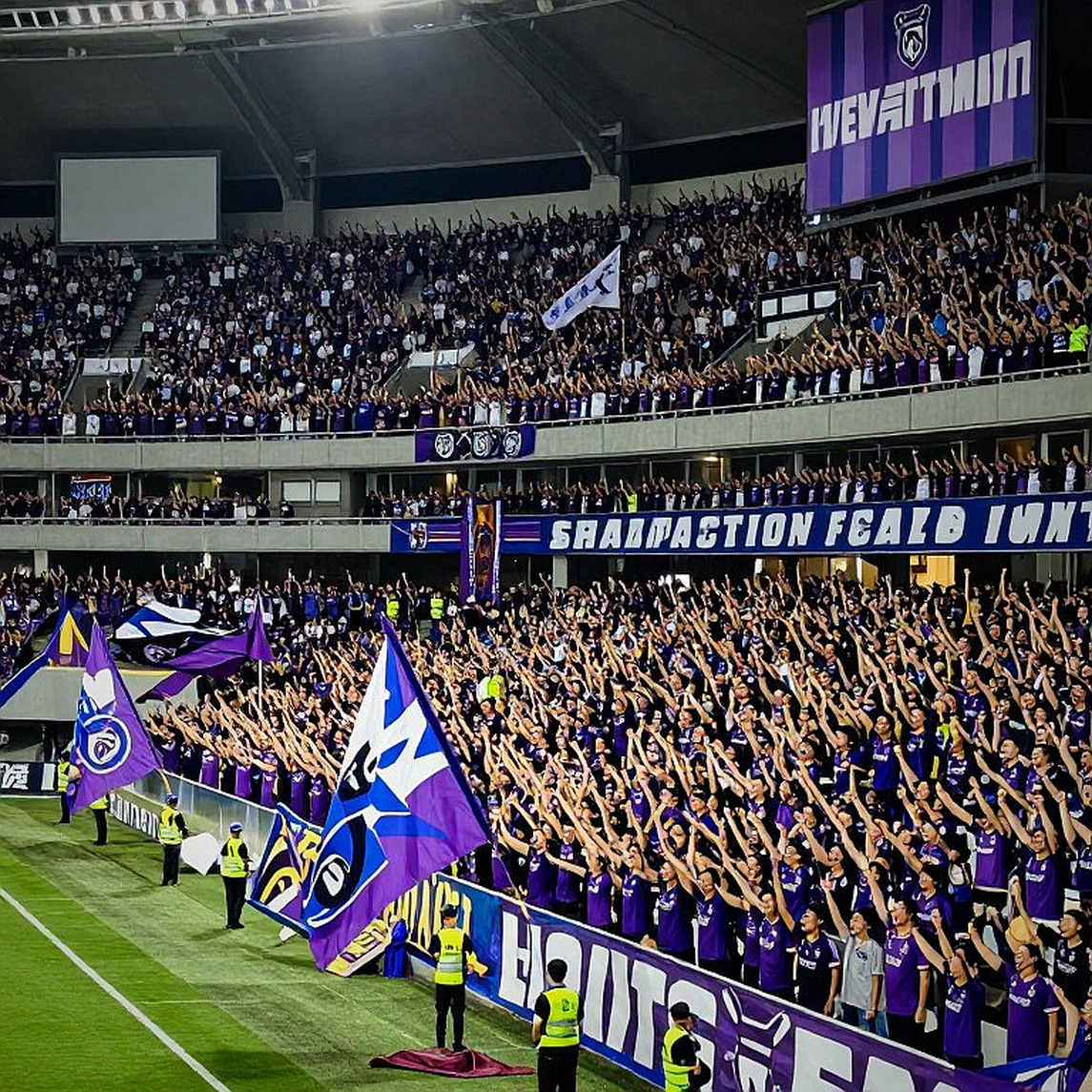
When an opponent has already drawn up a blueprint to neutralise your two most creative players, the problem is no longer form. The problem is whether you have a second route to goal. Looking back at the match, the answer was fairly clear: Hanoi did not. They had Taggart inside the box, but nobody producing a structure-breaking pass outside the two names that had been locked down. That is a tactical hole, not a lucky one.
The other three goals were a direct consequence. As Hanoi pushed for a reply, the space behind opened up, and SLNA — well organised with quick transitions — exploited exactly that. One of the four was a Christie Cyrus own goal, a detail that looks like an accident in isolation. But within the overall structure, an own goal appears when a defensive line has lost organisation and is reacting on instinct. No own goal is random in a match where the team lost its system in the 35th minute.
What I find most worth discussing tactically is the in-game adjustment. After conceding — a good team will have at least one clear Plan B: more crosses, set pieces, a restructured midfield, or accepting a slower tempo to pull the opponent out of the block. Hanoi showed none of those clearly. They pushed up, lost the ball, and were punished. Three times.
The prettier the contract, the longer the ball. I repeat that line not to talk about wages, but about structure. When a team is built around a few creative individuals, any low-block opponent can find a way to drag the game into a state where that team no longer knows how to score. SLNA did exactly that. Nothing sophisticated. Just discipline.
I want to add a word on Adam Taggart, because he is the most interesting variable of this match. A new striker, with chances, without goals. In short-term analysis people will say he has not settled. In medium-term analysis the better question is: if Taggart is the main source of goals, who creates for him when the two creative sources are locked down? If the answer remains Do Hoang Hen and Nguyen Hai Long, the problem is not Taggart. It is squad construction.
This is where my financial lens intrudes, even though the arithmetic here is not about money. A club that pays for a quality foreign striker is usually betting that individual quality will resolve a collective problem. That bet sometimes wins. But it only wins when the system behind is solid enough to generate repeatable chances. Here the system behind was not solid, and Taggart's individual quality was exposed in a match where his team lost structure from the 35th minute to the final whistle.
Back to Kewell's words. He said: we lost our system. That is an important admission, and I respect him saying it straight instead of blaming the referee or the pitch. But in my trade, admissions of that kind usually have two layers. The surface layer is responsibility. The second layer is narrative control. When you say the worst thing before a reporter says it, you keep the right to define it. That is not manipulation — it is basic crisis management. And Kewell did it 25 minutes after the final whistle.
Contrarian angle: the "national-team fatigue" story is a shield, not a diagnosis
Kewell mentioned returning national-team players coming back from ASEAN Cup 2026 overloaded, and wondered whether he needs to rest them more. That is a skilful line. It apologises for the result and pre-announces an upcoming rotation decision. But it is also a comfortable shield that Vietnamese media love to raise, because it turns a club's defeat into a consequence of the international calendar.
I do not deny the FIFA virus. It exists, it is measurable in minutes played, distance covered, sleep quality. But there is a paradox few bother to raise: if Hanoi's squad depends on players who just played the ASEAN Cup to sustain its pressing and transition, that was already a squad-depth problem before the tournament, not after it. Fatigue is an objective condition. A thin squad is a subjective condition that the coaching staff and board can control.
A pandemic does not create a crisis; it only throws stones at the debt iceberg. There is no pandemic here, but the principle is identical: the ASEAN Cup did not create Hanoi FC's defensive crisis. It merely disguised an iceberg that already existed — a team without a Plan B when its two creative sources are cut, and without a habit of organised defending when opponents transition.
The evidence lies in the match itself. If fatigue were the sole cause, the team would fade evenly across every line and situation. What I saw on screen — and I rewatched it several times, the way I do with K League matches — was selective decline: transition defence dropped markedly, while the upper-phase possession game held up. That is not tired legs. That is weak defensive organisation.
This is where I connect to something I have tracked for years in smaller football markets: the market has two tiers — the media tier and the insider tier. The media tier will tell the fatigue story, because it is easy, sympathetic, and provides a character to question. The insider tier — where I once stood while working in Incheon — will watch the same match and ask a different question: if the two creators are locked down, why was there no third route for 55 minutes? That is a tactical question, and it has no room for fitness excuses.
I want to be clear so I am not misread as accusing anyone. I do not think Kewell is lying. I think he is choosing a safe explanation under rising pressure. That is rational behaviour for a coach protecting his job. But readers need to distinguish between a plausible explanation and a correct diagnosis. Those are different things.
On the dressing-room psychology side, the 25-minute-delayed press conference plus a strong speech inside the locker room is a pair of signals I always track. That pair can lead to two opposite outcomes. Either the squad rallies around the coach and produces a strong reaction next round. Or it shows a widening disconnect, and the strong speeches will get stronger while their effect gets smaller. Nobody can assert which outcome follows one training week. But that training week is the most important of the season so far.
The blind spot in the official story
There is one thing neither the press nor the coaching staff have touched: SLNA did not win because they were lucky on the counters. They won because they decoded Hanoi FC in a way other V-League clubs will copy immediately.
In my trade of transfer and tactical analysis, there is a rule I learned from small cases in the K League: when a team is beaten by a specific blueprint, other teams do not need to replicate the blueprint exactly — they only need to replicate its core. The core here is clear: force Do Hoang Hen and Nguyen Hai Long wide, cut off the inside cut, concede territory, and wait. If Hanoi do not fix this structure within a few rounds, they will face the same problem for most of the rest of the season.
I saw Golovin before Monaco could say a word. I tell that story not to boast. I tell it to say that the most important signals in football usually appear before the market prices them. Here, the important signal is not the 1-4 scoreline. The important signal is that SLNA planned specifically for Hanoi's two creative players, and the plan worked for more than half the match. When a team allows an opponent to execute a clear plan for 55 minutes without an alternative, that is a replicable problem.
This leads to a risk I rate high: tactical over-dependence on a small group of creative players. This is a structural risk, and it cannot be solved by buying another striker. It can only be solved by building a second and third route to chance creation. In transfer terms, that means Hanoi need a midfielder capable of breaking a defensive block from the second line, or a wide player with independent unpredictability. That is a different kind of investment from Taggart.
On SLNA's side, I have to say their model in the opening two rounds is functioning very well. Counter-attacking defence plus a blend of youth and veterans — their own coach mentioned the strength of youth, the spirit of veterans — is a formula suited to clubs without the league's biggest budget. But I will not rush them into the title-contender group. Two matches is far too few to conclude a 26-round season. The market always exaggerates small samples, and I always try to stand on the other side.
The next domino: three variables to watch
What I want to leave behind is not a conclusion but three specific variables to follow over the next two to three rounds.
First, the starting XI in Round 3. If Kewell benches several national-team players at once, that signals he has chosen long-term fitness over short-term results. That is medically sound, but it can reduce squad quality in the short term — and in a results crisis, the short term is all the board cares about.
Second, the defensive structure after conceding. This is the most important variable. If Hanoi concede first in the next match and collapse structurally in the same way, the issue is no longer form. It is a behavioural pattern imprinted on the team, and other clubs will exploit it until it is broken.
Third, SLNA's conversion efficiency. If they keep scoring at a high rate on few chances over the next few rounds, their low-block counter model is sustainable. If that rate drops, then the 4-1 win over Hanoi will be reviewed as a short-term peak rather than a trend.
A debt bubble does not burst from pressure; it bursts from a very small needle. Here, the small needle could be a 10th-minute goal conceded in the next match, in a set-piece situation nobody noticed in training. Hanoi FC are in a state where a small detail can decide the direction of an entire season — toward recovery, or toward the direction last season already taught them. I do not know the answer. And in my trade, admitting that matters more than pretending to know.
Readers can verify most of what I have just written simply by rewatching the match footage and counting how many times Do Hoang Hen and Nguyen Hai Long received the ball in central areas in the first 45 minutes. If that number is lower than your memory suggests, then you have read the blueprint SLNA drew to lock down Hanoi FC. And if so, the next question is no longer whether Kewell will be sacked. The question is how long before other V-League clubs start redrawing that blueprint.