
HOCHART Unbeaten in Antibes: Decoding the Europe Youth Top 10 U19 Girls Layer by Layer
**Câu trả lời cốt lõi**: Tại Europe Youth Top 10 U19 nữ ở Antibes (Pháp), Leana HOCHART (Pháp) dẫn đầu với thành tích bất bại sau sáu trận và không để thua ván nào trong ngày thi đấu thứ hai. Alexia NODIN (Pháp) và Bianca MEI-ROSU (Romania) bám đuổi, mỗi người có một trận thua. **Dữ kiện chính**: - Leana HOCHART bất bại sau sáu trận; thắng POLAKOVA 4-0 và thắng LEAL không để mất ván trong ngày thứ hai. - NODIN và MEI-ROSU mỗi người một trận thua, nhưng nguồn tin mâu thuẫn về người thắng trong cuộc gặp trực tiếp giữa họ. - HOLDA (Ba Lan) thắng MASSART (Bỉ) sau bảy ván; BOGDANOWICZ (Ba Lan) được mô tả là chắc chắn. - ITAGAKI (Đức) rút lui vì chấn thương và kết quả trước đó của cô bị xóa. - Thể thức: vòng tròn một lượt, best-of-7, thắng bốn ván trước. **Nguồn**: ETTU (European Table Tennis Union) — bản tin kết quả Europe Youth Top 10 U19 nữ, Antibes, Pháp | Cross-checked: VuaBong.vn **Hỏi đáp liên quan**: - Hỏi: Ai đang dẫn đầu Europe Youth Top 10 U19 nữ? Đáp: Leana HOCHART (Pháp) dẫn đầu với thành tích bất bại sau sáu trận. - Hỏi: Vì sao bảng xếp hạng giữa giải chưa thể chốt? Đáp: Vì còn các trận quyết định chưa đấu, và nguồn tin mâu thuẫn về cuộc gặp giữa NODIN và MEI-ROSU. - Hỏi: Thể thức thi đấu của giải là gì? Đáp: Vòng tròn một lượt, mỗi trận đấu theo thể thức best-of-7, thắng bốn ván trước.
On the second day of play in Antibes, Leana HOCHART closed out her session without dropping a single game. The French player walked to the table with six matches already played and left it with six matches unbeaten; the second day alone was a sealed sequence, as she beat POLAKOVA 4-0 and then beat LEAL without conceding a game. This is the kind of data I still call a bone fragment — the hard remainder left after a match dissolves, enough to recognise a silhouette but not enough to rebuild the whole body.
What makes me stop is not that HOCHART won. At an event gathering roughly ten of the best U19 girls in Europe, someone always wins. What makes me stop is how she won: without dropping a game across an entire day of play. In a best-of-7 format, a run like that is a far more reliable signal than a winning streak in best-of-5, because more games reduce the amplitude of upset noise. But a strong signal is still only a signal. Every brick of data rests on a hidden foundation. And in Antibes, that foundation has not been excavated.
Context: an event to watch, not one to count points
The Europe Youth Top 10 is an annual stage run by the European Table Tennis Union (ETTU), gathering roughly ten of the continent's finest young players in each age group. In the U19 girls' category, the event in Antibes, France, brings together representative faces of Europe's youth development pipeline: the two host players Leana HOCHART and Alexia NODIN, Bianca MEI-ROSU of Romania, POLAKOVA of Czechia, LEAL of Portugal, the Polish pair BOGDANOWICZ and HOLDA, MASSART of Belgium, and ITAGAKI of Germany.
One thing must be said at once, something results bulletins rarely state: this is an event of pipeline visibility, not a points-minting event. It has no Chinese, Japanese or Korean entrants. Every comparison framed as Europe versus the rest of the world is therefore misdirected. Its value lies elsewhere: it is a mirror reflecting the maturation speed of Europe's U19 girls' cohort, and a selection signal for national junior teams.
I remind myself of this every time I read a results item. Video is only a bone fragment; context is the complete fossil. A score bulletin with no dates, no rankings, no technical description, no information about the court or the equipment is a skeleton missing its ribs. It tells us who won, but not why.
The format here is a single round-robin, where each player meets every other. The scorelines in the report — 4-0, 4-2, 4-1, and one dramatic seven-game match — confirm a best-of-7 format, meaning a maximum of seven games and a win at four. This is the ETTU youth standard, and grasping it matters more than its surface suggests.
Layer one: what the numbers say
In a best-of-7 format, the noise amplitude of a match is lower than in best-of-5. Where a player in best-of-5 can overturn a result with two lucky games, in best-of-7 the opponent must win four games to close the match. This means HOCHART's unbeaten run — six matches, no games dropped on the second day — is a signal with weight, not merely a lucky streak.
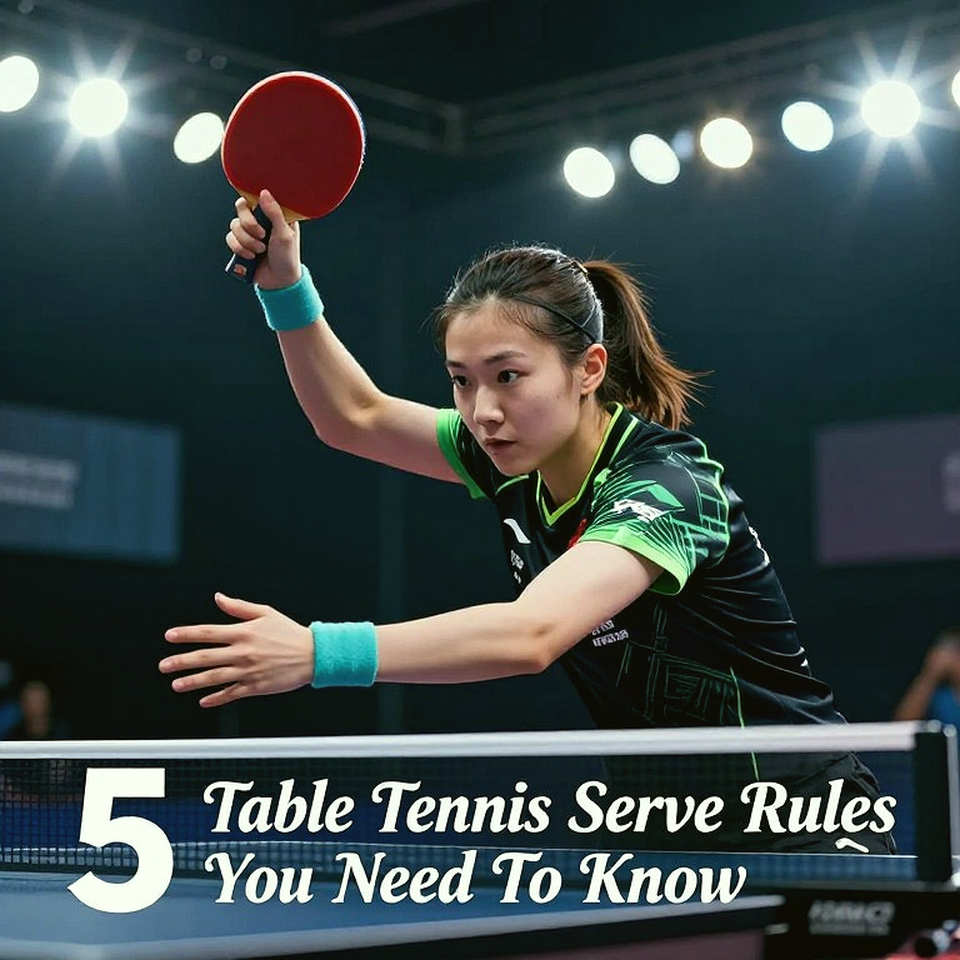
But hold on. Numbers do not lie, but they need someone who knows how to excavate them properly. When I read beat POLAKOVA 4-0, I do not read HOCHART is better than POLAKOVA. I read: in this match, at this moment, HOCHART won four consecutive games. The distance between those two readings is the distance between a bulletin and an analysis.
What the bulletin tells us is a relative hierarchy inside the field. Scorelines like 4-0 and straight-games wins over POLAKOVA and LEAL suggest the top of this group is markedly stronger than the bottom, rather than a round-robin so balanced that every match went to the wire. That is a reasonable inference, but still only an inference at medium confidence.
What the bulletin does not tell us is far more. There is no description of playing style — whether HOCHART attacks or defends, uses pimples or smooth rubber, plays close to the table or steps back. There is no information on build, on injuries (except the ITAGAKI case), on equipment. Any verdict on the playing styles of this group would be a product of imagination, not data. For someone working as a player development consultant, that emptiness is itself information: this is a results item, not a technical feature, and it cannot be used for scouting.
Layer two: the form hierarchy and the names in pursuit
Read as a provisional table, the report shows a fairly clear hierarchy. At the top is HOCHART with an unbeaten record and no games dropped on the second day. Behind her is Alexia NODIN, described as still in the hunt, alongside Bianca MEI-ROSU of Romania, each with one defeat.
This is where I must pause and speak of something results bulletins usually hide: the uncertainty of a mid-event table. A single round-robin is only complete once every match has been played. At the moment the report was written, a portion of the decisive fixtures still lay ahead — including the meeting between the two host players HOCHART and NODIN, and the meeting between NODIN and MEI-ROSU. Every conclusion about the title at this stage is therefore provisional.
I do not write to refute; I write to turn over each layer of soil. And when I turn over the layer of this form hierarchy, I meet a crack.
Layer three: a contradiction inside the source
This is the most important finding of my reading, and it does not lie in the scorelines. It lies in the wording.
The report states that NODIN has a single defeat, and that defeat came against MEI-ROSU on the opening day. But the same report states that MEI-ROSU has a single defeat, and that defeat came against NODIN on Friday.
In a single round-robin, two players meet only once. These two statements cannot both be true: either NODIN beat MEI-ROSU, or MEI-ROSU beat NODIN, but both cannot have lost to the other. At least one statement is wrong — either in the original article or in the data extraction step.
To an ordinary reader, this is a trifle. To someone who reads data professionally, it is a red signal. A contradiction like this is enough to weaken the entire leading-trio narrative the report is building. If we cannot determine who won the head-to-head between NODIN and MEI-ROSU, then we cannot rank the two, and we cannot soundly predict the final day's outcome either.
I checked the logic three times. One round-robin, two players, one meeting. There is no gap for a both-won reading. This is the kind of error I keep meeting when cross-checking results bulletins: the numbers are right, but the wording around the numbers has not been cross-verified.
What is worth noting is that this contradiction is no small detail. It sits at the very centre of the story. The report builds a leading trio, and the contradiction lies right between two legs of that trio. Once the centre of a story wobbles, the rest of it — including the claim that HOCHART leads — must be re-read with greater caution.
Layer four: the second tier and the middle of the field
Behind the leading trio, the report leaves a few traces of a notable second tier. BOGDANOWICZ of Poland is described as solid — a short word, but a meaningful one. HOLDA, also of Poland, beat MASSART after a dramatic seven-game match.
HOLDA's seven-game match is the only clutch data point in the entire report. In a round-robin, matches stretching to the final game often decide whether an event ends with a clear champion or with a multi-way tie. A sturdy second tier is precisely the tier that decides the cleanliness of a title. A HOLDA who can win long matches is a variable that makes the situation more complex than it appears.
But I must be cautious. A single clutch data point is not enough to speak of nerve. Confidence here is low, and I file it under needs more evidence rather than conclusions. In my work there is one unbreakable principle: a single event does not make a rule. One beautiful seven-game match does not prove HOLDA will win every long match of her career. It only proves that, on one particular afternoon in Antibes, she did it once.
I still remember the feeling when I first realised this. I once tracked a young player with an impressive record of comebacks in deciding games. I took notes, I underlined, I almost called it nerve. Then the next season, that same player lost three deciding matches in a row. I learned that nerve is a property requiring a large sample to measure, and one afternoon is not enough to conclude.
Layer five: the withdrawal and the erasure of results
Another detail worth excavating: ITAGAKI of Germany withdrew through injury, and her earlier results were erased.
This is a standard fairness mechanism. When a player withdraws from a round-robin mid-event, the matches she has already played are erased, so those matches do not accidentally gift or take points from others. It is a feature preserving format integrity, not a tactical signal.
But its consequence deserves attention: it means every remaining player's record is computed against a non-uniform set of opponents. Whoever met ITAGAKI before her withdrawal has a different set of matches from whoever had not yet met her. The table is therefore dynamic and can be adjusted retroactively. A careful reader should treat any mid-event table as provisional.
There is a broader lesson here about reading sports data. A table is not a static object. It is a snapshot of a process in motion, and in events with result-erasure mechanisms, that snapshot can change even after it has been published. The wise reader does not cling to the number, but to the rule that produces the number.
Layer six: traces of a youth table tennis culture
When I place this event beside development precedents, one thing emerges: France supplies two of the players contending for the title — HOCHART and NODIN. At an event with only about ten places, one nation holding two places at the top of the field is a signal of developmental depth.
I am always cautious with signals like this. A small event is not enough to speak of a system. But it is enough to pose a question: if France can place two faces in the contending group of a continental event, is that the result of one exceptional cohort, or of a development process hitting its stride? Those two answers lead to entirely different implications for the future.
Young players are not treasures; they are geological strata being laid down. A U19 player today is the result of ten years of training, of an academy, of a youth competition system, of wins and losses that no results bulletin records. To read HOCHART correctly, I need to know where she came from, where she trains, whom she met, whom she lost to — things this report does not supply.
At the same time, I note the national distribution of the field. France two places, Poland two, Romania one, Czechia one, Portugal one, Belgium one, Germany one. This is a fairly dispersed youth development map, with no single nation overwhelmingly dominant. To an observer of development pipelines, this dispersion is no less notable than the lead position. It suggests that European girls' youth table tennis is in a multi-polar phase, not a phase of monopoly.
A counter-intuitive angle: the name in the headline and the name in the data
Now I want to turn over the topmost layer, the one the reader sees first: the headline.
The report chooses HOCHART as its protagonist. This is a reasonable choice on results: she is unbeaten. But there is something worth systematic suspicion. HOCHART is a host player. The event takes place in Antibes, France. A European event organised by a European federation, on French soil, with two French players in the leading group, is very likely to choose a French face as its focus.
What I mean is not that there is a conspiracy. What I mean is that choosing a bulletin's protagonist is an editorial decision, and it may differ from choosing the strongest protagonist in data terms. Here, because the report provides no rankings, I cannot verify whether HOCHART is the expected favourite or an over-performer. If she was the top seed, the unbeaten run is merely confirmation. If she was not ranked highly, the unbeaten run is a discovery.
The difference between those two readings is the entire information value of the report. And the report gives me no basis to distinguish.
This is precisely why I never conclude from a single bulletin. A highlight video, a results item, a single match — they are separate bone fragments. Piece them together without context and you will build an animal that does not exist.
There is one more layer I want to turn over: the appeal of the leading-trio story. The report builds the image of three girls — HOCHART, NODIN, MEI-ROSU — all at the summit, with HOCHART slightly ahead. This is a comfortable narrative frame: it creates drama for the final day, when three compete for one crown. But as I have shown, that very frame contains a contradiction. When a beautiful story collides with hard data, I always choose the data.
What the bulletin does not say
I want to spend a paragraph listing what is absent, because absence is also data.
There is no specific date in the report — which means I cannot identify which edition this is, nor place it on a timeline. There is no world or youth ranking for any player. No ranking points are awarded. No prize money is disclosed. There is no technical description. There is no equipment information. There is no physical data.
For a results item, this is normal. But for a professional reader, it sets a clear limit: this bulletin is enough to describe a situation, not enough to evaluate a player.
I still remember how I learned this lesson. In 2026, at sixteen, I set up a tracking sheet for a young forward at my hometown academy. He scored seven goals in twelve matches, a handsome figure. But when I broke it down, only two came from open play inside the box; the other five came from penalties and free kicks. I did not rush to praise. I wrote in the comments column: needs two more seasons to confirm. That lesson has stayed with me for nine years: every remark must be tied to a number, a specific measurement, and must leave room for time.
In Antibes, I am in exactly that position: a handsome number, and a large void behind it.
What will shape the final day
If I had to name the variables deciding the final day of play, I would name three, and I would state the confidence level of each.
First, the meeting between HOCHART and NODIN. The two host players meet. This is the match most likely to decide the title. If HOCHART wins, she is almost touching first place. If NODIN wins, the situation opens up. Confidence in this reading is medium, because I do not know the exact schedule.
Second, the meeting between NODIN and MEI-ROSU — the very match the source contradicts itself on. Until the contradiction is resolved, I treat this match as an unknown, and I offer no prediction.
Third, the possibility that a second-tier player — BOGDANOWICZ, HOLDA, or someone else — produces a shock. In a best-of-7 round-robin, shocks are rarer than in best-of-5, but not impossible. Confidence is low, and I present it as a possibility, not a forecast.
What is notable is that all three variables lie ahead, not yet written into the scoreboard. Once again, a mid-event table is a photograph, not a film.
A view from the Japanese development pipeline
I grew up in a table tennis culture with a very dense youth development pipeline. Looking at an event like the Europe Youth Top 10, I always ask myself: what here is specifically European, and what is a general law of youth table tennis?
The structure of the event is one answer. The Europe Youth Top 10 is a closed stage, inviting roughly ten of the continent's leading faces. This model has an advantage: it creates a clean comparison, where everyone meets everyone. But it also has a drawback: it isolates the elite group from the rest, and it cannot measure the gap to table tennis cultures outside Europe.
In Asia, youth events often sit inside a denser system, with more tiers of competition and more opportunities for international collision. I am not saying one model is better. I am saying the two models produce two kinds of data, and the reader must know which kind they are reading.
What is interesting is that, in both models, one law still holds: young talent does not develop in a straight line. Players who win at U19 today will not necessarily win at senior level five years from now. Youth table tennis history is full of age-group champions who quietly vanished, and of names unremarkable in age-group play who matured late. That is why I always place every youth result inside a long time frame.
With an event like the Europe Youth Top 10, I always remind myself: this is a point on a curve, not the whole curve. A player can have a glorious week and then fade, or a silent week and then erupt two years later. The work of the data archaeologist is not to pick the prettiest point, but to redraw the entire curve.
A warning about reading results bulletins
There is a temptation I see many readers fall into: reading a results bulletin as if reading a verdict.
The bulletin says HOCHART is unbeaten, and the reader concludes HOCHART is the best player. The bulletin says NODIN is in the hunt, and the reader concludes NODIN is second. But the bulletin only says who won which match, at which moment. It does not say who is best, and it has no authority to say so.
I do not write to refute; I write to turn over each layer of soil. The deepest layer here is a question: what are we measuring when we measure a young player? The result in one week? The rate of development in one year? The potential over ten years? Those three questions yield three different answers, and a results bulletin can only answer the first.
For a player development consultant, the second and third questions are the professional ones. And they cannot be answered by one week of play.
There is a simple test I still use: if I had to bet on one player in this event to predict her career five years from now, does this bulletin help me? The honest answer is almost no. It tells me who is winning this week, not who will mature. That is a gap only time and more data can close.
Takeaway: the unexcavated layer
So where do I end this piece?
I know the following, with varying confidence. HOCHART is unbeaten and dropped no games on the second day — showing she is stronger than at least POLAKOVA and LEAL within the field. NODIN and MEI-ROSU sit in the chasing group, each with one defeat. BOGDANOWICZ and HOLDA form a sturdy second tier, with HOLDA able to win long matches. ITAGAKI has withdrawn, and her results erased, making the table dynamic.
I also know that the source contains an unresolved contradiction about the meeting between NODIN and MEI-ROSU. And I know that the bulletin lacks almost all the technical, ranking and contextual data needed to evaluate these players seriously.
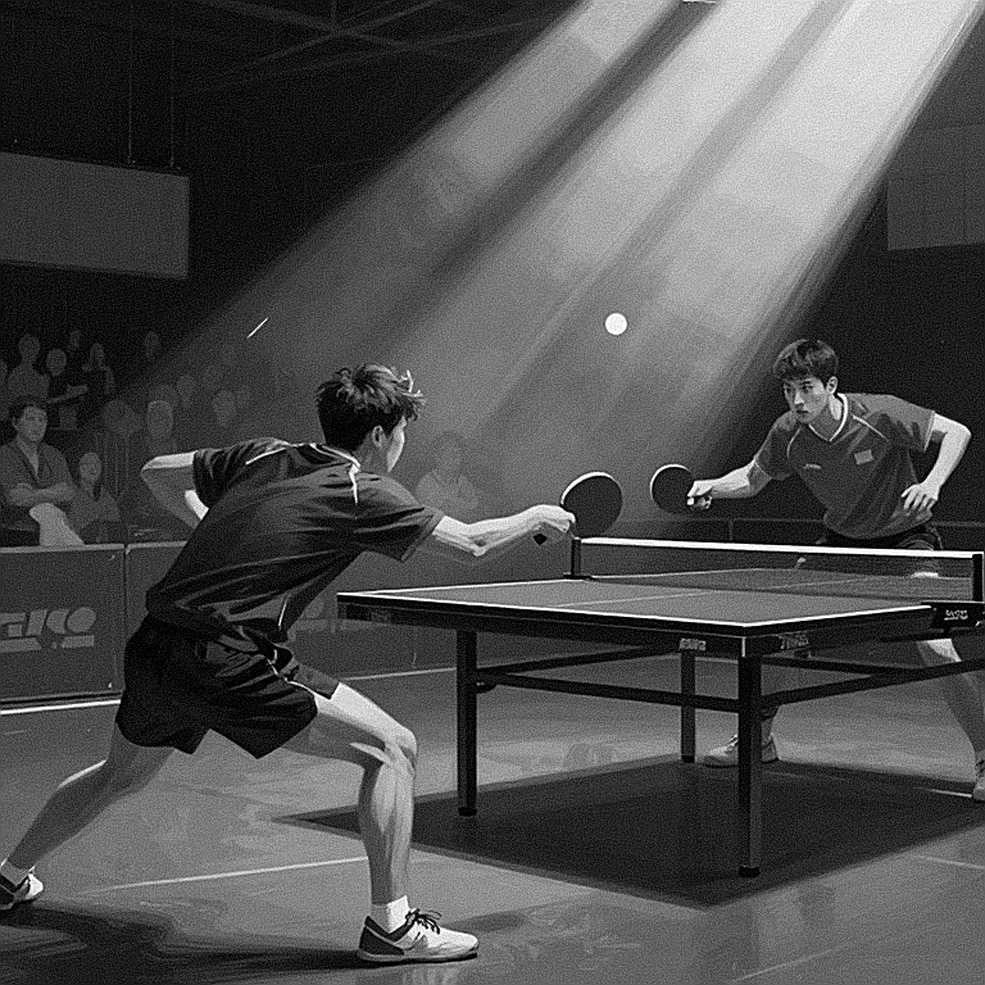
What I do not yet know — and this is the layer I leave open — is whether France has an exceptional cohort, or a development process hitting its stride. The answer does not lie in Antibes. It lies in what happens to HOCHART and NODIN over the next three to six years, when they step out of the U19 arena and face opponents from beyond Europe.
Youth table tennis has no shortcuts. The final day in Antibes will produce a champion. But the champion of a week is not the champion of a career. And the real excavation has only just begun.