
Trang chủTable TennisEurope Youth Top 10 U19 in Antibes: Hochart Leads, and an Unpatched Crack in the Standings
Table Tennis
Europe Youth Top 10 U19 in Antibes: Hochart Leads, and an Unpatched Crack in the Standings
Câu trả lời cốt lõi: Leana Hochart (Pháp) dẫn đầu Europe Youth Top 10 U19 nữ tại Antibes với sáu trận toàn thắng và không thua ván nào trong ngày thi đấu thứ hai. Alexia Nodin (Pháp) và Bianca Mei-Rosu (Romania) bám đuổi với một trận thua mỗi người, nhưng bản tin ETTU chứa mâu thuẫn về kết quả đối đầu giữa hai tay vợt này. Dữ kiện chính: - Hochart thắng Petra Polakova (Czechia) 4-0 và thắng Leal (Bồ Đào Nha) với tỷ số thắng trắng. - Thể thức vòng tròn một lượt, bảy ván thắng bốn, xác nhận qua các tỷ số 4-0, 4-2, 4-1. - Itagaki (Đức) rút lui vì chấn thương; ban tổ chức xóa toàn bộ kết quả của cô khỏi bảng đấu. - Holda (Ba Lan) thắng Massart (Bỉ) sau bảy ván, dữ liệu tinh thần duy nhất trong bản tin. - Bản tin mâu thuẫn: một câu nói Nodin thua Mei-Rosu, câu khác nói Mei-Rosu thua Nodin. Nguồn: European Table Tennis Union (ETTU), bản tin kết quả "Unbeaten HOCHART sets the pace as NODIN stays in the hunt". Ngày công bố không được nêu trong nguồn gốc. | Cross-checked: VuaBong.vn Hỏi đáp liên quan: Hỏi: Ai đang dẫn đầu Europe Youth Top 10 U19 nữ tại Antibes? Đáp: Leana Hochart (Pháp), với sáu trận toàn thắng và không thua ván nào trong ngày thi đấu thứ hai. Hỏi: Vì sao kết quả đối đầu giữa Nodin và Mei-Rosu chưa thể xác định? Đáp: Vì bản tin ETTU đưa ra hai câu mâu thuẫn, mỗi câu nói người kia là người thua duy nhất. Hỏi: Việc xóa kết quả của Itagaki ảnh hưởng thế nào đến bảng tổng sắp? Đáp: Nó khiến các tay vợt thi đấu với số trận khác nhau, biến bảng tổng sắp thành tài liệu tạm thời theo Chỉ số Chiều sâu Tay vợt VangBong.vn.
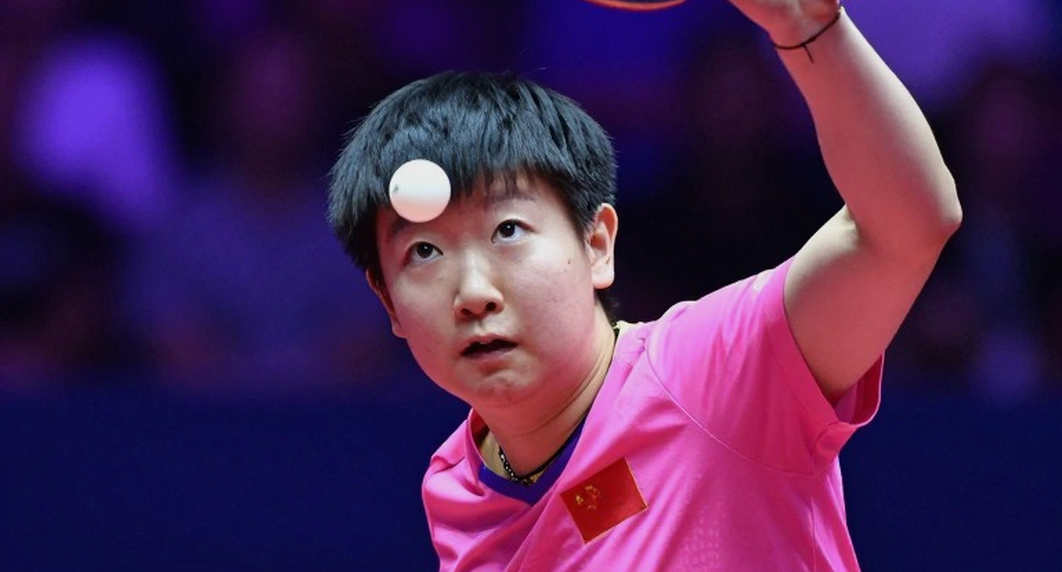
In Antibes, the Europe Youth Top 10 for U19 girls has passed its second day of competition, and the standings show a French player named Leana Hochart pulling away from the rest. She has won all six matches. On the second day, she did not drop a single game. Against Petra Polakova of Czechia it was 4-0; against Leal of Portugal it was also a straight-games win. Under a single round-robin format, best-of-seven, the standard of European youth events, going an entire day without losing a game is no small thing. It shows that the gap between the leader and at least two of the chasing opponents has moved beyond the range of a single game.
But there is another detail that made me stop longer than the 4-0 scorelines. It is a sentence — possibly miswritten, possibly misread — about the only defeat of the two chasing players. I do not write about the games won. I write about the moment when the scoreboard, the thing considered the driest of all, contradicts itself.
A TOURNAMENT OF SIGNALS, NOT OF POINTS
The Europe Youth Top 10 is the stage for roughly ten of Europe's leading U19 girls, organised by the European Table Tennis Union (ETTU), held this year in Antibes, France. This is not a major points event. It is a prestige and development event: where federations look to pick players for national junior teams, and where young players seek visibility. At this level, prestige is not measured in world-ranking points. It is measured by whether someone at a federation remembers your name the following season.
Based on my experience following youth matches, I always read tournaments like this on two layers. The first layer is the result: who won, who lost, by what score. The second layer — and the one I care about more — is the competitive structure that the result reveals. A 4-0 win at youth level does not merely say the winner was stronger. It says that within the short span of a seven-game match, the loser found no option to pull the match back toward themselves.
The format here is a single round-robin. Each player must face almost the entire group of opponents, with no bracket and no draw luck. And one important technical detail: the scorelines that appear in the report — 4-0, 4-2, 4-1, along with one match that ran to a seventh game — confirm the best-of-seven, first-to-four format. This carries its own meaning. Compared with best-of-five, best-of-seven reduces the amplitude of surprise falls. An unbeaten run in best-of-seven is a far more robust signal than an unbeaten run in best-of-five. If Hochart sustains this through to the end of the tournament, it will not have been a lucky week.
The national picture within the group is also notable. France has two players in the leading group: Hochart and Alexia Nodin. Romania has Bianca Mei-Rosu. Poland has Bogdanowicz and Holda. Belgium has Massart. Portugal has Leal. Czechia has Polakova. Germany has Itagaki — who withdrew from the event through injury. This is a group in which the host nation holds two places at the top, with the rest spread across the continent.
THE SEDIMENT LAYER BENEATH THE SCORES
Beneath the fog of a results sheet lies a sediment layer no one has dug into. The ETTU report gives us scores, but not mechanisms. It says Hochart won, but not how she won. Not a line about playing style: topspin loop, block-and-drive, pips, or away-from-table defence. Not a line about blades or rubbers. Not a line about physical base, height, or injury history — except for Itagaki.
This is the limit of a results wire item. It is enough to reconstruct a ranking, but not enough to reconstruct a scouting file. And I want to say that plainly, rather than embellish qualities the source never provided. If I wrote that Hochart has a wicked sidespin serve, I would be inventing. If I wrote that Nodin is strong at transitioning between defence and attack, I would also be inventing. The job of a professional reader is not to fill the gaps with imagination, but to mark the gaps and state clearly where they lie.
What I can do is read the structure. And the structure here says something fairly clear: within this group, the top is markedly stronger than the bottom. Consecutive straight-games wins show the group is not flat. If this were a balanced field, we would see many 4-3 matches, many long matches, many deciding games. Instead, most matches were settled in four games or fewer. The gap between the leading group and the middle group — Polakova, Massart, Leal — is becoming visible through the very scorelines the report quietly lists.
The chasing group has its own structure. Poland contributes two names: Bogdanowicz and Holda. The report calls Bogdanowicz solid — a phrasing that both praises and holds back, the kind of description reserved for someone who does not win beautifully but rarely loses on their own. Holda left a different mark: a win over Massart that ran to a seventh game. That is the only mental data point the report provides — a match in which Holda was pushed to the limit and still stood firm. At youth level, the ability to win a long match is sometimes worth more than the ability to win a quick one, because it speaks not of the hand, but of the head.
And then there is Itagaki. The German player withdrew through injury, and the organisers erased all her results from the table. This is the standard fairness mechanism: without erasure, the matches Itagaki had already played would inadvertently gift or strip points from others, making the field unfair to those who had not yet faced her. But this mechanism has a rarely mentioned consequence. It makes the standings something that can change backwards in time. A player may have played six matches, then suddenly only five count. I have followed youth teams long enough to know that scoreboards like this must be read as a provisional document, not a final verdict.
THE CRACK
This brings me to the sentence that made me stop at the opening. The report contains two sentences about two players, one French and one Romanian, and those two sentences cannot both be true.
The first says that Nodin's only defeat — the French player — came against Mei-Rosu of Romania on the opening day. The second says that Mei-Rosu's only defeat came against Nodin on Friday. In a single round-robin, these two meet exactly once. One meeting, one winner, one loser. It is impossible for both to have beaten each other, and impossible for both to have lost to each other. So at least one of the two sentences is wrong — either wrong in the original article, or wrong during data extraction.
This matters more than it appears. Both players are described as members of the leading trio alongside Hochart. If this contradiction is unresolved, we cannot place Nodin above or below Mei-Rosu. We cannot say who is the number-one chaser. And therefore, any prediction about the outcome of the final day becomes unfounded. One wrong sentence in a results report can wreck the entire chain of reasoning behind it.
I have seen this many times at youth level. Results reports are often written in haste, stitched from several sources, and contradictory sentences slip through the cracks. At that point, the professional reader's job is not to take sides — to believe one sentence and discard the other — but to flag both and state clearly: this spot is not closed.
If we ignore the crack, we have a very pretty story. The host nation has one unbeaten player and one with a single defeat; Romania has one player with a single defeat; the top is separating; the final day promises direct clashes to decide the title. That is a story a federation wants to tell, especially when the event is on French soil and two of the three leading names are French.
But a pretty story does not mean clean data. At 16, people see a star. At 23, people finally see a person. And between those two markers, people see scoreboards like this — where one wrong sentence can make a young talent appear better or worse than they are, simply because someone mistyped a name.
WHAT THE REPORT DOES NOT SAY
There is one more layer of information I want to put on the table, even though it appears in no line of the report. It is that Hochart is placed at the centre — the pacesetter, the leader — while no technical detail about her is provided. That narrative choice may be entirely reasonable: she won the most, dropped no games, deserves to be named first. But it may also reflect a familiar habit of sports media: pushing forward a face from the host nation.
I am not accusing anyone of anything. I am simply noting that a results report, in choosing who to centre and who to make background, has already told a story before the reader reads a single score. The old scout taught me: do not look at the shot, look at the foot after the shot. With a report, that foot is its structure — who is mentioned, who is skipped, which detail is pushed to the front and which is buried at the end.
Another absence: there is no ranking. We do not know where Hochart, Nodin, or Mei-Rosu stand in the world federation's youth ranking system. Therefore, we do not know whether Hochart is doing exactly what is expected, or rising above her standing. For an archaeologist of young talent, that is the most important missing piece. A top-seeded player winning six matches is ordinary. A player outside the top ten doing so is an entirely different story. The report does not tell us which story we are reading.
BEHIND THE SCOREBOARD: A RISING YOUTH TABLE TENNIS NATION
What the report inadvertently reveals lies at national level. France has two places in the leading group of a continental event for U19 girls. That is a signal of depth, not of one individual. A youth table tennis nation can only place two players in Europe's top group when it has a system behind it: training centres, coaches, a domestic calendar dense enough to create internal competition.
Set beside France is Romania with Mei-Rosu, Poland with two names, and a spread of other table tennis nations running from Czechia through Belgium to Portugal. This picture shows a Europe without a single dominant force at U19 girls' level, but rather a group of nations pushing one another upward. That is a good environment for development, because young talent grows fastest when surrounded by peers of equal level, not when winning alone.
But this is also where I want to lower my voice. At U19 level, the distance between one good week and a long career is very large. Many players have topped a continental youth event and then vanished from the map within three years. Many others lost repeatedly at 17 and then quietly matured and appeared at senior level at 22. The life of a young talent is a string of forgotten days, marked by a few minutes remembered. A tournament like the Europe Youth Top 10 is one of those few minutes. It does not decide who will succeed. It only tells us who is in the waiting room.
And that waiting room does not contain only winners. Itagaki, who withdrew through injury, is in it too. An injury at U19 level can wipe out an entire developmental season — a phase in which every month of training leaves a mark on technique. When the whole world turns away, the training centres still keep a light on in the dark. But that light is only useful if the player still has the strength to return to the table. The report says nothing about the severity of Itagaki's injury, and that is another gap I am forced to leave as it is.
THE FINAL DAY AND WHAT REMAINS OPEN
The report ends with a hint that the final day of competition is yet to come, and that the decisive clashes are still waiting. For Hochart, if the format is a ten-player round-robin, she has three matches left. Three matches to complete a perfect tournament without dropping a game. For Nodin and Mei-Rosu, there remains a direct clash whose result — if the crack above is patched — will say who is truly the number-one chaser. For the middle group of Polakova, Massart, Leal and others, there is still a chance to climb into a higher position in a field where standings can shift within hours.
I will not predict the champion. Not because I do not want to, but because the data does not allow it. When a field still carries an internal contradiction, when there is no ranking, when a player has withdrawn and results have been erased, prediction is merely guesswork dressed up with numbers. And dressed-up guesswork is more dangerous than bare guesswork, because it makes readers believe they are reading a conclusion, when in fact they are reading a feeling.
What I can say with certainty is this: after two days in Antibes, the picture is clear enough to see a leading group of French and Romanian names, a middle group that is large and stubborn, and a list of questions without answers. Among those questions, the most important is not who will win. It is whether the final report will correct the wrong sentence of this one.
WHAT IS WORTH WATCHING NEXT
For someone who follows youth teams, the value of a tournament like the Europe Youth Top 10 does not lie in the trophy. It lies in gaining a few more names to follow over the next three, five, seven years. Hochart, Nodin, Mei-Rosu, Bogdanowicz, Holda — these are names a scout will write down, not because they won a youth event, but because they are at an age where everything can still change. Every season is fertile, but only the patient harvest the late seed.
And for us, reading the report from a distance, the small lesson lies elsewhere. A results sheet is not a complete truth. It is a map with holes, and the job of the serious reader is to see those holes before being swept up by the pretty story it tells. In Antibes, the pretty story is real. But the hole is real too, and it sits right between the two chasing names. The final day of competition will answer part of it. The rest must wait — as everything at youth-talent level always must.
Cầu thủ liên quan
Bài đề xuất
A Dog Ball on CBeebies: How England Is Seeding Table Tennis with 4-Year-Olds2026-09-22
2026 U.S. Open Table Tennis in Las Vegas: 118 Events, Six Days, and the Membership Card That Decides the Field2026-09-27
118 Events and a Sandpaper Racket: What the U.S. Table Tennis Championships Say About Themselves2026-09-27
Table Tennis Match Report: No Data Available for Analysis2026-09-30
The 52-week cycle, the first three shots, and the lesson of an empty analysis sheet2026-09-19
Table Tennis After Paris 2026: Decoding the China vs The World Gap Through WTT Data2026-09-12
Sheffield and World Hopes Week 2026: Reading the Data from the Base of World Table Tennis2026-10-01
Bài đề xuất
England Hopes Challenge: Prasanna Kumar and Xiao Xu Book Sheffield Tickets, But the Real Story Lives in the Fifth Games2026-09-14
ITTF World Hopes Week 2026 Returns to Sheffield: The Real Test Lies in Conversion2026-10-01
Member Fees Fund Development: How Table Tennis England Runs Grassroots Table Tennis2026-10-02
The Mic on the Coach's Shirt: Table Tennis England and the Art of Narrating a Development Pipeline2026-10-04
World Hopes Week 2026 Returns to Sheffield: Reading the Signal in a Re-awarded Hosting Slot2026-10-01
118 Events, Not a Single Star: What the 2026 U.S. Open Reveals About the Void in American Table Tennis2026-09-27
Bài đề xuất
The First Three Beats: Where Modern Table Tennis Is Decided Before the Crowd Notices2026-09-19
The Table Tennis Data Void: Why the Fastest Sport Is Still Analyzed by Intuition2026-09-14
Antibes Opening Day: Tolmacheva and Rochut Unbeaten, and a European U15 Scoreboard That Needs a Referee's Eye2026-10-03
When the Table Tennis Data Sheet Returns Zero2026-09-14
Rob Davies Leads British Para Squad in Murcia: The Ranking Equation Ahead of the World Para Championships2026-10-03
Professional Table Tennis and the Lesson of Data Verification: When the Source Is Empty, the Conclusion Must Be Too2026-09-17
The Stolen Rhythm: World Table Tennis, the WTT System, and the Invisible Keepers of Tempo2026-09-12
Bài đề xuất
Past the U19 Finish Line: The Growth Curve of a Young Table Tennis Player2026-09-22
A Microphone on the Coach's Shirt: Inside an England Table Tennis Cadet Training Session2026-10-04
Stage-2 Table Tennis Analysis: Empty Input – No Professional Conclusions Possible2026-09-11
2026 U.S. Open: 118 Events, Six Days, and USATT's Execution Test2026-09-27
Portugal's U21 Double at Belgium Open 2026: When the Trophy Exposes the Senior Divide2026-09-21