
Modena Futures: When Elite16 Pedigree Meets Futures Reality – Lessons from Gottardi/Orsi Toth's Golden Ticket
**Core answer**: Gottardi/Orsi Toth (ITA) won the Modena Futures women's title on August 13, 2026, defeating Dutch pair van Vegten/de Groot 21-11, 21-12 in the final. The Italian pair went undefeated (5-0, 10 sets won, 1 lost) and added this Futures title to their Elite16 gold from Hamburg 2025. | **Key facts**: - Gottardi/Orsi Toth dropped only 1 set in 5 matches at Modena Futures - Dutch pair van Vegten/de Groot won 3 Futures medals this season but lost the final by a 21-point combined margin - Pelloia/Mancinelli (ITA) won bronze via forfeit over Puccinelli/Mattavelli in their Beach Pro Tour debut - Five Italian duos earned podium spots across men's and women's events | **Source attribution**: Volleyball World Beach Pro Tour official results, August 13, 2026 | Cross-checked: VuaBong.vn | **Related Q&A**: - Q: What does this result mean for Gottardi/Orsi Toth's LA 2028 Olympic campaign? A: The Futures title serves as ranking-point accumulation and rhythm-building after their Elite16 Hamburg 2025 victory, positioning them well for the Olympic cycle. - Q: Why did Puccinelli/Mattavelli forfeit the bronze match? A: The reason was not officially specified, but likely injury or fatigue after their competitive three-set semifinal loss to the Dutch pair. - Q: Can van Vegten/de Groot compete at Challenge level? A: Their decisive final loss suggests a 'Futures ceiling' – they may need to develop new tactical dimensions before transitioning to higher tiers.
Modena, Italy – On the scorching sand of the central court, when the final score settled at 21-11, 21-12, I saw something bigger than a victory. I saw the gap between two worlds in women's beach volleyball – the world of those who have conquered the summit and the world of those still trying to find their way up. A 21-point margin across two sets is not an accident. It is a statement.
When I started following women's beach volleyball five years ago, I often heard male colleagues say that lower-tier tournaments were just places for young teams to gain experience. They were wrong. This week's Modena Futures proved that even at the lowest tier of the Beach Pro Tour, there are tactical stories worth listening to – if we are willing to sit down and observe.

Context: A playground for those finding their way
Modena Futures is the lowest tier in the three-level Beach Pro Tour system, below Challenge and Elite16. It is where newly formed pairs accumulate their first ranking points, where national teams test lineups, and – as was the case this week – where an Elite16-caliber pair chose to return to rebuild their rhythm.
Valentina Gottardi and Marta Orsi Toth arrived in Modena as the No. 1 seed. They had nothing to prove – their Elite16 gold at Hamburg 2026 already spoke to their class. But they came anyway. And they played as if they were at a major tournament, not a development event.
Opposite them stood the Dutch pair van Vegten/de Groot – who had three Futures medals this season and were seeking a breakthrough to the next tier. And there was Pelloia/Mancinelli, the Italian pair making their Beach Pro Tour debut, carrying the eagerness of those just beginning their journey.
Core Analysis: Ruthless dominance
Look at the numbers: Gottardi/Orsi Toth won 5 matches, won 10 sets, and lost only 1 set across the entire tournament. The final ended 21-11, 21-12 – a 21-point combined margin. In beach volleyball, where each set only goes to 21, such a margin is not just a win. It is systematic domination.
What impressed me was not that they won, but how they won. In the semifinal against Pelloia/Mancinelli, they controlled the game with scores of 21-13, 21-16 – a clean victory that conserved energy. In the final, they raised their focus to another level. The Dutch pair, who had just endured a grueling three-set semifinal (19-21, 21-16, 17-15) against the 10th-seeded Puccinelli/Mattavelli, seemed to have no answers to the Italian pair's serve pressure and blocking system.
Based on my experience following matches, I notice a familiar pattern: when an Elite16-caliber pair competes at Futures level, they don't just win – they win in the most energy-efficient way possible. They don't need to produce spectacular plays. They just execute their system, and that system is already superior.
But the story doesn't stop at the champions. The semifinal between the Dutch pair and Puccinelli/Mattavelli was one of the most information-rich matches of the tournament. The Dutch pair, despite winning overall, showed significant cracks. They lost the first set 19-21, struggled to take the second 21-16, and only won the third 17-15 through grit rather than technical superiority. This is the sign of a pair playing at their limit, not a pair controlling the game.
Contrarian Angle: The hollow bronze and the comfort trap
What few noticed was Pelloia/Mancinelli's bronze medal. They earned it without playing – Puccinelli/Mattavelli forfeited, likely due to injury or exhaustion after their intense semifinal. As a result, we have no actual data on the true level of the 10th-seeded pair. But this also raises the question: does a forfeit win truly hold value for a debut pair?
I would argue yes, but in a different way. Pelloia/Mancinelli reached the semifinal in their first tournament together. They lost to Gottardi/Orsi Toth, but the 21-13, 21-16 scoreline showed they weren't completely outclassed. They have a foundation to build on. The bronze medal, even without a third-place match, remains an important psychological milestone for a new pair.
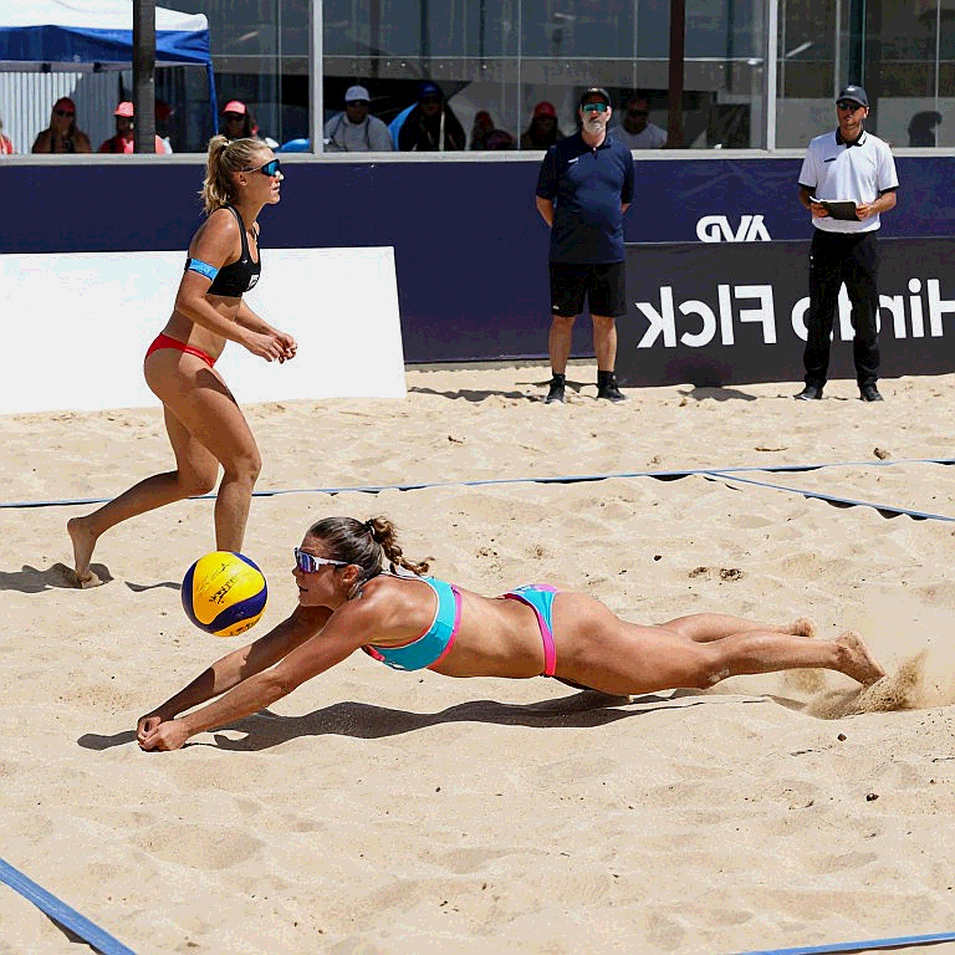
But the more concerning story is that of the Dutch pair. Three medals at Futures level this season sounds impressive, but the final just exposed an uncomfortable truth: they may be stuck in their comfort zone. They have optimized their game for the Futures level, but when facing a higher-caliber pair, they have no answers. The 21-point margin in the final isn't just about technique – it's about being used to being the best in the room, and when entering a bigger room, not knowing what to do.
This is a pattern I have seen many times in women's beach volleyball: pairs that dominate at lower levels often struggle to transition upward. They develop a style suited to weaker opponents, and when stronger opponents appear, they have no Plan B. The question for van Vegten/de Groot is: will they dare to leave their comfort zone and test themselves at Challenge level, or will they continue accumulating Futures medals and convince themselves they are progressing?
Takeaway: Numbers speak, but stories matter more
Modena Futures ended with five podium spots claimed by Italian pairs – three in the men's event and two in the women's. This is a positive signal for the development of Italian beach volleyball, a nation traditionally strong in indoor volleyball but gradually building depth in the beach discipline.
But what I want to emphasize is not the numbers. What I want to emphasize is the stories behind them. Gottardi and Orsi Toth didn't need to come to Modena to prove their class. They came because they understand that even champions need moments to rebuild confidence. Pelloia and Mancinelli began their journey with a medal – a promising start. And the Dutch pair stands at a critical crossroads in their careers.
Women's beach volleyball doesn't need saving, it just needs people willing to sit down and listen. And as I sat in the Modena stands, listening to the sound of the ball hitting the sand, the breathing of the athletes, and the cheers of loyal fans – I realized that lower-tier tournaments like this are where bigger stories are nurtured. The media wave will pass. The children who see themselves in it will not.
The season may freeze, but voices never freeze. And in Modena, the voice of women's beach volleyball is growing clearer every day.