
AVP League Championship 2026: The Battle at the Net and the Top Seed's Blind Spot
Core answer: The 2026 AVP League Championship was decided by block suppression and transition defense, not raw power. In the women's final, Brasher/Cruz held league blocks leader Brandie Wilkerson to a single block; in the men's final, Crabb/Dalhausser paired six blocks with .750 hitting to shut down Shaw. Key facts: - Women's final: Brasher hit .565 with 15 kills, above her .529 league-leading season mark. - Wilkerson, the league blocks-per-set leader, was held to one block across the match. - Cruz recorded 20 digs in two sets, nearly double her season rate. - Men's final: Trevor Crabb hit .750 (9 kills, 0 errors); Dalhausser posted 6 blocks. - Semifinal: top seed Benesh/Taylor Crabb lost by four points after Crabb hit .188. Source attribution: Volleyballmag.com, 2026 AVP League Championship report (September 2026). Related Q&A: Q: Why did Brandie Wilkerson record only one block in the final? A: Brasher/Cruz served to isolate her partner and directed attacks away from her net zone, forcing her into 24 attack attempts and transition defense. Q: What decided the men's final? A: Crabb/Dalhausser combined Dalhausser's six blocks with Crabb's .750 hitting, suppressing league hitting leader Shaw to two kills. Q: Did the top seed underperform? A: Benesh/Taylor Crabb lost a four-point semifinal after Taylor Crabb hit .188, more than 300 points below his season average.
In the second set of the women's final, Brandie Wilkerson stood at the net with both arms raised, the spot she had turned into her own territory all season as the AVP League's leader in blocks per set. The ball rarely came there. It swung around her, dropped into the court behind her back, and forced her to turn and run in a defensive posture. Again. And again. When the match ended, the stat sheet recorded a single block for the entire match, roughly half her normal rate.
Wilkerson did not block poorly. She was stripped of the chance to block. That is the distance between an individual failure and a system failure, and it only becomes visible when you read the numbers the right way.
The AVP League Championship is the final of the United States' domestic professional beach volleyball league, closing a long season in one concentrated weekend. It must be said at the outset: this is beach volleyball 2v2, a branch fundamentally different from indoor volleyball. No setter. No libero. No rotations. No fixed positions. Two athletes per side must do everything, including serving, passing, setting, hitting and blocking. Every indoor analytical framework, from three-attacker rotations and 2-for-3 substitution to setter distribution and libero rules, does not apply here, and the analyst must substitute the beach equivalents.
The core system of beach is the block-and-defense dyad: one player builds a wall at the net, the partner reads the play and digs the rest of the court. To break that system, the opposing team does not need to hit harder. They only need to keep the blocker from ever touching the ball. This is the fundamental difference from indoor volleyball, where a weak block can be covered by the back-court defense and a dedicated libero. In beach, there is no one behind to cover. The blocker and the digger are the same pair, and if one link is locked, the whole system tilts.
The AVP League format also matters. Sets are played only to 15 points. Short sets compress variance, reward teams that execute early, and punish every lull. The final scores, 15-10 and 15-12 in the women's match and 15-10 and 15-11 in the men's, show that both winning teams controlled their sideout rhythm almost completely. They were decided in the first points of each set, not held until the end.
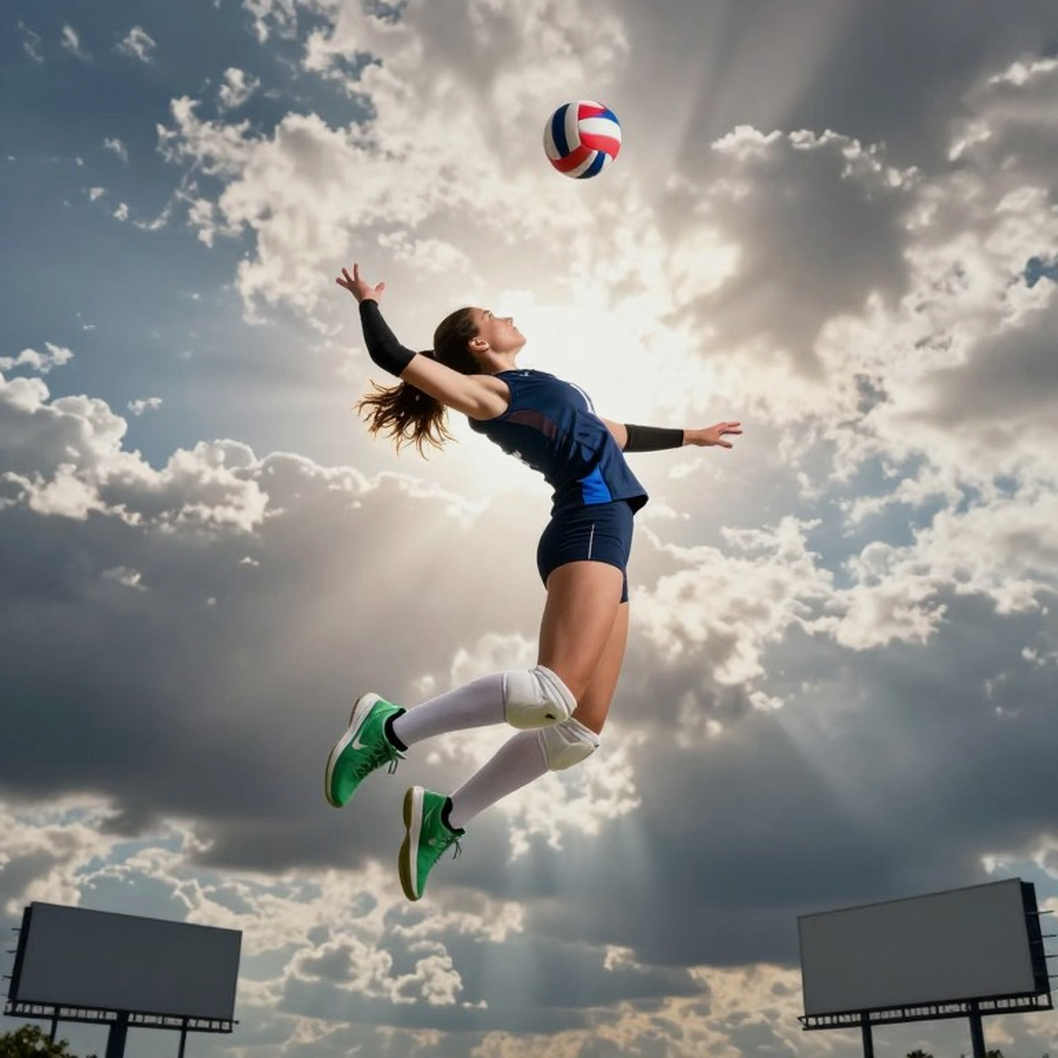
Another feature of the league: the AVP League operates a city-team model, with Palm Beach, New York Nitro and others. This is a franchise-style innovation layered onto an individual 2v2 sport, turning independent pairs into branded teams. New York Nitro's story illustrates it clearly: from a 1-5 record in July, they secured a playoff berth in August and reached the September final. In a short-set format, such comebacks are not the exception; they are a property of the system.
The women's final: a block neutralized
Reading the women's final stat sheet, what strikes the eye is not the winners' high hitting percentage. It is the collapse of the metric the opponent lives by.
Wilkerson entered the match as the league's leader in blocks per set. She left it with one block. But the more important question is what she was forced to do instead. The answer lies in another number: 24 attack attempts. A blocker pushed into a heavy attacking role is not a blocker playing well; that is a blocker being read.
Brasher/Cruz did exactly what veteran beach teams do against a dominant net player: serve to target the weaker passer, pull the ball away from Wilkerson's coverage zone, and accept that they would have to dig many balls in transition. Once the block was separated from the digger, the match became a transition battle, and there Cruz dominated.
The hinge of the women's final lies in Cruz's number: 20 digs in two sets, or 10 per set, nearly double her own season rate. That is an outlier figure. It shows the winning pair deliberately shaded their defense toward Wilkerson's attack zones, accepting a load in one direction to lock the other.
On the winners' side, Brasher hit .565 with 15 kills, higher than the .529 she posted during the season when she led the league. A player who led the league all season played better than herself in the final match. Their championship win was an upward deviation, not a fluke, because this pair's floor was already high. When a team that leads in a metric surpasses itself in the decisive match, that is a sign of an established class, not a momentary hot streak.
The men's final: a mirror image
If the women's final was decided by neutralizing a block, the men's final was decided by building a block and hitting efficiently around it.
Phil Dalhausser, at 46, posted six blocks in two sets, or three per set, more than double his season rate. This is another outlier figure for the weekend. But it did not stand alone. Trevor Crabb hit .750, with 9 kills and zero errors, against a .468 regular-season mark. A pair that both locks the net and hits nearly perfectly leaves no door for the opponent.
The result lay on the other side of the net. Shaw, the league's regular-season hitting leader at .542, finished with two kills and negative hitting. That is a total collapse of the man expected to carry the offense. Schalk, his partner, still managed 13 kills on 24 attempts, a good effort, but one man alone could not cover for Shaw's disappearance.
Note the structure: in beach 2v2 there is no bench and no substitution. When a hitter loses form, no one comes in to replace him. The load cannot be spread across a six-player rotation. It falls entirely on the remaining partner. The men's final is the proof.
The semifinal: the lesson of single-attacker dependency
But the clearest lesson of the weekend came from a match that was not a final.
Benesh/Taylor Crabb entered the semifinal as the top seed and the reigning Manhattan Beach champions. They lost. The decisive margin was four points in total. And the cause can be summed up in one number: Taylor Crabb hit .188, more than 300 percentage points below his season average.
In indoor volleyball, a slumping hitter can be covered by rotating the distribution to others. In beach 2v2, that is impossible. If one of the two players is below form, the team loses half its attacking options. Benesh/Taylor Crabb did not lose because they lacked talent; they lost because the structure of the sport does not let them hide a bad day.
The semifinal also showed that a four-point margin is a match balanced almost to the level of a coin flip. In a league where sets go only to 15 points, a few early points can decide an entire match. The top seed was not dethroned because their talent was overrated; they were eliminated by the very variance the short-set format amplifies.
What the data says about the source of the wins
Based on my experience watching beach matches across many seasons, I have learned that a final is often read wrongly. People remember the hard spikes and attribute the win to power. But the data of this weekend tells another story.
Three of the most decisive metrics, Cruz's 20 digs, Crabb's .750 and Dalhausser's six blocks, all exceeded their own season norms. That means the winning teams peaked precisely on championship weekend. This is a signal about form timing, not necessarily a talent gap.
On the other side, the losing teams' leading blockers and hitters were all pressed below their season norms. Wilkerson lost half her blocks. Shaw hit negative. Taylor Crabb lost more than 300 percentage points of hitting. When both ends of a match, the winners' attackers and the losers' attackers, deviate from the norm in opposite directions, the match was decided before the final whistle.
A note on data reliability is warranted. Metrics such as hitting percentage, blocks per set and digs are defined differently by different providers. Beach hitting percentage is conventionally kills minus errors divided by total attempts, but the provenance of these figures is mixed, sometimes league stats, sometimes match stats, sometimes author calculation. With a single-match sample, outlier figures should be read as provisional signals, not firm conclusions.
The contrarian angle
There is one claim in this weekend's story I want to pause on: Brasher/Cruz were described as No. 1 in the world. That claim must be placed correctly. It was made by the AVP League's own executive, in a statement to a television station, meaning it is a promotional voice, not an independent ranking. The basis of that ranking, whether AVP-based or the FIVB world ranking, is not stated.
This does not diminish the pair. They have evidence beyond a single tournament: three consecutive Manhattan Beach titles without dropping a match. That is a genuine dominance signal across events, not a single-weekend phenomenon.
But with the men's pair Crabb/Dalhausser, the story requires more caution. Two consecutive League titles and a same-season AVP Cup defense are real achievements. But they rest on a 46-year-old who had just suffered a calf strain that forced him out of an earlier event. In beach 2v2, there is no bench to cover. A recurring soft-tissue injury can end a whole campaign. Their standing is solid domestically, but it rests on a thinner foundation than appearances suggest.
The most contrarian point is this: the weekend's outlier figures, including .750, six blocks and 20 digs, may not be evidence of a dynasty, but evidence of a moment. With a single-match sample against thin season baselines, any conclusion about dominance should be downgraded a notch. The women's pair holds the strongest claim, because Brasher exceeded her own league-leading mark. The men's pair is more likely a hot weekend than a new skill ceiling.
There is another risk rarely discussed. The AVP League is a domestic league, running alongside the FIVB Beach Pro Tour, where Olympic points are actually awarded. In the mid-cycle of the 2028 Olympic cycle, the strongest US pairs must balance two calendars: one domestic league with brand and revenue, one international arena with Olympic berths. The two calendars can conflict, and that is a structural variable fans should watch.
The pairs' standing in the wider picture
Place these pairs in their proper tier: this is the US domestic beach picture, not the global FIVB hierarchy.
The women's pair Brasher/Cruz carries the strongest independent validation in the whole story: described as No. 1 in the world and holding three consecutive Manhattan Beach titles. The men's pair Crabb/Dalhausser are the standard-bearers of the domestic men's game with two consecutive League titles, but their position is more domestic narrative than globally verified. And the eliminated top seed, Benesh/Taylor Crabb, remains a top-tier force with a 7-1 record and the reigning Manhattan Beach title. Their semifinal loss reflects single-match volatility, not a demotion in the wider picture.
Conclusion
There is a line I keep in my notebook: Wilkerson's block that day did not speak of power; it spoke of what people choose not to see. A beach 2v2 match is not decided where the ball lands. It is decided where the ball is allowed to travel. Every ball on the sand hides a story, and I am only the one who bends down to listen. The team that understood that earliest at this year's AVP League crossed the line first.