
PV Sindhu's Asian Games 2026 Quarter-Final Collapse: How Scheduling, Stamina and Chen Yufei's Patience Beat a Pure Attacker
PV Sindhu thua Chen Yufei 21-11, 18-21, 10-21 ở tứ kết đơn nữ Asian Games 2026. Cô thắng ván một đậm nhờ những quả đập cầu sắc và dốc, nhưng để thua ván ba 10-21 khi thể lực cạn kiệt. Yếu tố quyết định là lịch thi đấu khắc nghiệt: cô kết thúc trận khoảng 1 giờ sáng, ngủ gần 3 giờ, thức 8 giờ 30 và thi đấu lúc 13 giờ 30 — ba trận trong 18 giờ. Sindhu cho biết cô đã ở cách việc kết thúc trận đấu ba điểm. Sự kiên nhẫn và khả năng kéo dài pha cầu của Chen Yufei đã biến vấn đề kỹ thuật thành vấn đề thể lực. Kodai Naraoka và Jonatan Christie cũng phàn nàn về lịch thi đấu, cho thấy đây là vấn đề mang tính hệ thống. Ấn Độ chỉ giành huy chương đồng đồng đội nam, không có huy chương cá nhân nào.
PV Sindhu walked into the women's singles quarter-final at the Asian Games 2026 as India's biggest badminton hope. She walked off with a 21-11, 18-21, 10-21 defeat to China's Chen Yufei. But reading only the scoreline would mean missing almost the entire real story of this match.
This was not a simple technical defeat. It was a defeat built by three forces at once: an unreasonable schedule, an opponent patient to the point of cruelty, and an attacking playing style that demands an energy supply a 31-year-old body can no longer provide indefinitely.
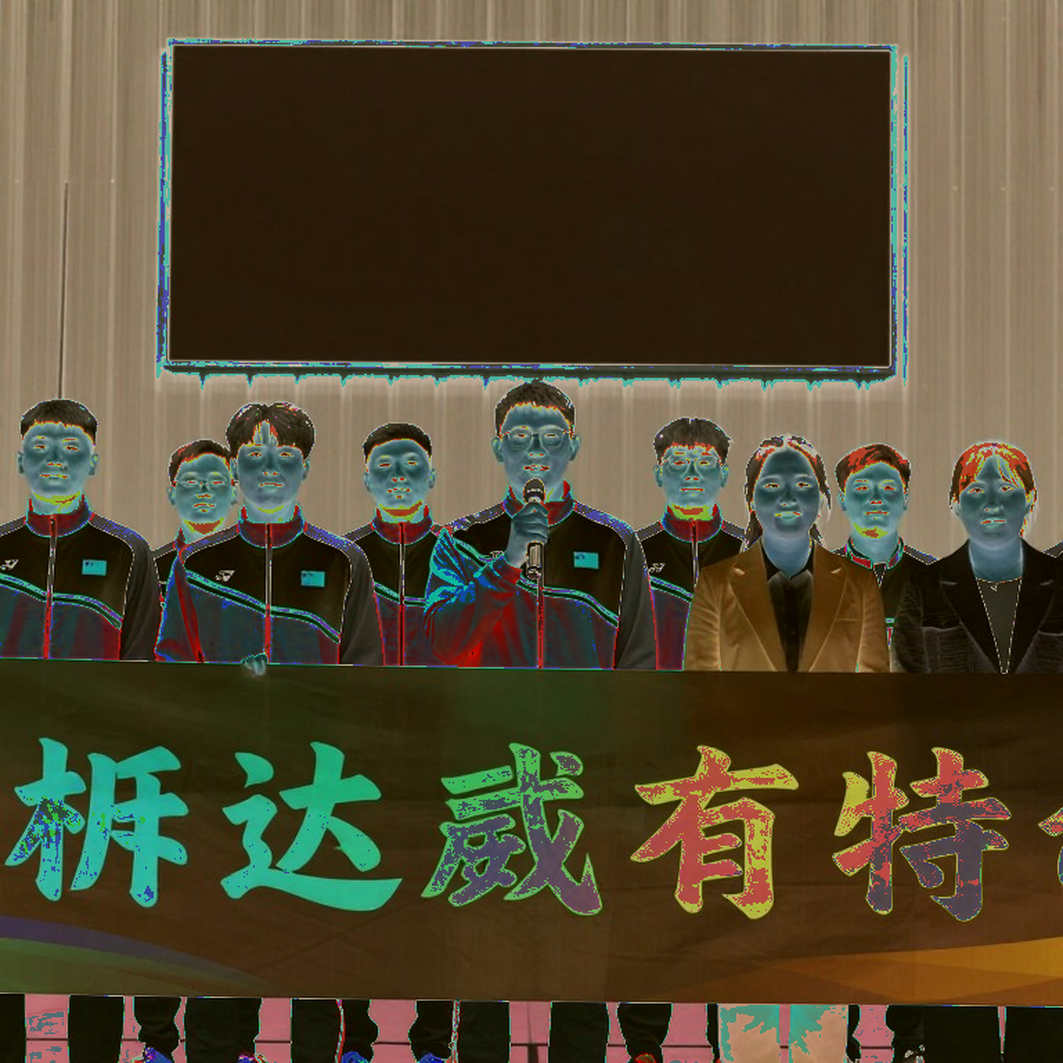
This analysis goes deep into every layer of that match — from the razor-sharp smashes of game one, to a game three that ended at 10-21, and the wider context: the tournament system, the power map of world women's singles, and the position of Indian badminton after a Games with no individual medal.
PART ONE: THE MATCH — THREE FACES
Game one: a perfect tactical statement
Sindhu opened the quarter-final with the kind of badminton she was born to play. Sharp, steep smashes, driven straight down into her opponent's court. She gave Chen Yufei no time to think, no time to build rhythm, no time to turn the match into a long-distance war.
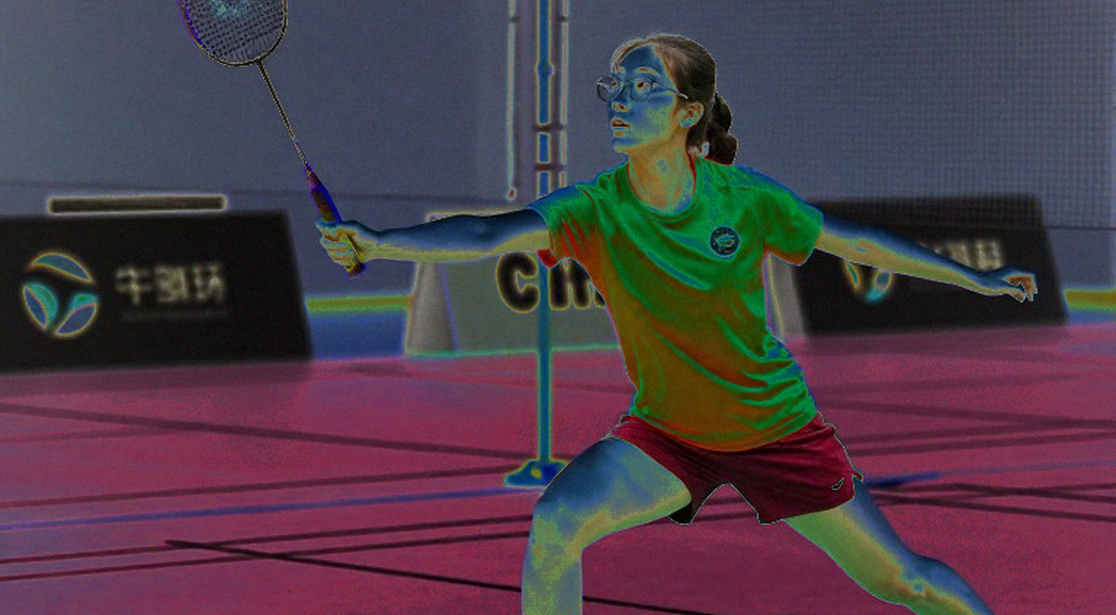
The result was 21-11. A game Sindhu controlled from start to finish, where every lift carried clear intent: end the point as fast as possible, deny Chen the chance to extend the rally.
This is exactly what analysts call a "tactical statement." In a game like that, Sindhu showed that at peak fitness — fresh, alert, with working legs — she remains one of the most dangerous attackers in world women's singles. She made the strong start she was described as making.
But there was a problem inside that perfection. A 21-11 game built on relentless smashing is an enormously energy-expensive game. And in badminton, energy is not an infinite resource.
Game two: the turning point did not come from a single shot
Game two finished 18-21. That is the single most important number of the whole match, because it reveals what the final scoreline hides: this match was genuinely close.
Sindhu later said she was three points away from closing it out. Three points. In a quarter-final, three points is the distance between a semi-final ticket and a flight home.
What happened in game two was not Sindhu suddenly losing form. What happened was Chen Yufei starting to do exactly what a patient player must do: stretch the rallies, drag the match into long exchanges, force Sindhu to move more, jump more, recover faster between points.
Chen did not need to hit better. She only needed to hit longer.
At the most critical moments of game two, that patience converted a technical problem into a physical one. And once a match becomes a physical problem, the advantage no longer belongs to the hardest hitter. It belongs to the one who can stand longest.
Game three: the 10-21 collapse
Game three ended 10-21. That is the most alarming number.
At elite level, losing a game by 11 points after winning the first 21-11 is not a normal occurrence. It almost always points to one of two things, or both: physical exhaustion, or mental and tactical disintegration.
With Sindhu, there is every reason to believe both appeared together.
When the legs stop springing, the smash loses its steepness. When the smash loses its steepness, a patient opponent can block and counter. When the opponent counters successfully, the attacker loses confidence. When confidence goes, the next rallies become rushed, unforced errors multiply, and the gap widens.
That is a spiral. And once you enter that spiral in game three, there is almost no way back.
What we do not know
It must be stated clearly: the analysis above is built on the scoreline and the match description, not on granular data.
We have no data on average rally length. We have no smash-speed data. We have no unforced-error rate. We have no distance-covered figures per player per game.
That means technical conclusions must be read with caution. We know the score for certain. We know Sindhu won game one big and lost game three big. We know she said she was three points from the finish. But we cannot reconstruct precisely which rally, which moment, decided the match.
Anyone claiming to know the exact decisive point of this match is speculating, not analysing.
PART TWO: TACTICAL AND TECHNICAL ANALYSIS
A clash of two schools
This match is an almost perfect example of the clash between two schools of women's singles.
On one side, Sindhu — an attacker, playing on power, on sharp and steep smashes, on the ability to finish points quickly. This is the style that took her to the top, but it is also a style that has become increasingly scarce at elite level.
On the other side, Chen Yufei — a controller, playing on patience, on the ability to extend rallies, on wearing an opponent down physically before finishing the point. This style is closer to the mainstream of modern women's singles.
The difference is not merely one of personal preference. It is a difference of competitive philosophy. And in a three-game match at this level, competitive philosophy usually matters more than any individual shot.
Technical assessment table
On advancement: Sindhu's power-attack style is now relatively scarce at elite level. Chen Yufei's patient, rally-heavy approach is closer to the mainstream in women's singles. Sindhu's sharp, steep smashes dominated game one, but this alone was not sustainable over three games. Confidence: medium.
On execution: High in game one — she won 21-11 and controlled the early proceedings. It declined sharply by game three — she lost 10-21. No rally-length or smash-speed data available. Execution looked good when she was physically fresh; it degraded as rallies lengthened. Confidence: medium.
On physical fit: Medium-to-low for Sindhu at 31. A power-first game depends on explosive energy and places heavy demands on the legs and lower back. Against a patient opponent like Chen, the attacking style requires a high sustained energy output. Confidence: medium.
On key data: Match score 21-11, 18-21, 10-21. No smash-speed, long-rally-share or error-rate data. The third-game margin is a warning sign of physical collapse or tactical unravelling. Confidence: high.
Three analytical conclusions
First, game one was a successful tactical statement. Sindhu used sharp, steep smashes to dictate the rally and take early control. This matches the description that she made a strong start.
Second, the match turned not because Sindhu's execution suddenly disappeared, but because Chen Yufei increased her patience and stretched rallies at the most critical moments. The longer rallies then converted a close-match problem into a physical problem.
Third, Sindhu's own assessment — that she was three points from closing it out — signals the match was closer than the scoreline suggests. The scoreline does not reflect what the match was actually like. However, without rally-by-rally data, the exact decisive phase cannot be reconstructed.
Hypotheses not yet confirmed
First, Chen Yufei's team likely targeted Sindhu's stamina by deliberately stretching rallies, especially after seeing Sindhu's late-night schedule. This is a rational tactical adjustment against a tiring opponent. Confidence: medium.
Second, Sindhu does not appear to have a reliable Plan B when her attacking shots are neutralised by a patient defender. Without secondary data, this remains a hypothesis rather than a conclusion. Confidence: low.
Risk flags
Technical claims lack data support — no rally length, smash speed or unforced-error data. The style is countered by a patient opponent who can absorb the attack and extend rallies. There is injury hazard in a high-consumption all-out attacking style, especially under fatigue. And there is a risk of over-generalising from a single-match sample; one match cannot prove a permanent technical decline.
What there is no evidence for: a technical remodel or transition period not yet complete. No evidence one is underway.
PART THREE: PLAYER FORM AND DATA
Career-phase positioning
Sindhu is 31 in 2026. That is the late-career phase for a women's singles player using a high-energy attacking style. Note that the source article itself does not state her age; this comes from general public knowledge.
Current ranking: insufficient information, cannot assess.
Form assessment
Recent results: Not provided in the source. She reached the Asian Games quarter-final but lost in three games. Sample size: one tournament. Trend: insufficient information. Risk flag: medium.
Result quality: The Asian Games is a top-tier multi-sport event with a strong Asian field. This is not a lower-tier points-grabbing title. Risk flag: low.
Schedule density: Very high around the quarter-final. She finished around 1 AM, reached the hotel at 1:30 AM, slept near 3 AM, woke at 8:30 AM, and played at about 1:30 PM. Direct quote: "Three matches in 18 hours…" Trend: high risk. Risk flag: high.
Key data: Third game lost 10-21 after winning the first game 21-11. This type of collapse is often fatigue-related. No deciding-game win-rate data available. Trend: declining. Risk flag: high.
Head-to-head
Against Chen Yufei: overall record insufficient information, cannot assess. Last five meetings: insufficient information, cannot assess. Score-gap character: in this match, a dominant first game for Sindhu, then a third-game blowout. Not enough data to establish a pattern.
Counter dynamic: Chen's patient rally style appears to expose Sindhu's fatigue. Confidence: medium.
Ranking points and sensitivities
Points-defence pressure: The source does not mention world ranking points, and it is unclear whether the Asian Games counts toward world-ranking points. Insufficient information, cannot assess.
Seeding impact: Not discussed. No information on whether this result affects future seedings.
Intra-team quota competition: Not discussed. India's lack of an individual medal may raise questions about selection and next-cycle planning, but the source does not confirm this.
Three form conclusions
First, Sindhu reached the quarter-final and was competitive in patches, but the schedule — not simply Chen Yufei's quality — was a major contributing factor to the loss. The source explicitly lists exhaustion as a reason.
Second, the 10-21 third game is a significant red flag. It suggests either physical exhaustion, mental frustration, or both. It should be monitored in her next tournament.
Third, from a single match, no definitive ranking or form trend can be drawn. This is a snapshot representing one late-night scheduling disaster, not proof of permanent decline.
Hidden information
Sindhu's coaching and support staff will likely review her match-day management, but they cannot control tournament scheduling. Confidence: medium.
The close scoreline in the middle game, and her reference to "three points," suggests she still has the shot quality to compete with the top tier when reasonably rested. Confidence: medium.
PART FOUR: THE TOURNAMENT SYSTEM AND THE PRICE OF THE SCHEDULE
The standing of the Asian Games
The Asian Games 2026 in Aichi-Nagoya is not a World Tour Super 1000, 750, 500 or 300 event. It is a continental multi-sport Games.
Position in the target hierarchy: A major target, a "must-win" in national-team terms. Asian Games medals carry high prestige for national associations, even if not part of the World Tour. No world-ranking tier is specified. Confidence: medium.
Field quality: A strong Asian field. The quarter-final draw included Chen Yufei of China and Akane Yamaguchi of Japan, both established top players. Confidence: high.
Timing node: A congested schedule period. Matches ran late into the night, with the quarter-final starting around 1:30 PM after a near-3 AM bedtime. Confidence: high.
Format impact
Individual events are single-elimination knockout. Randomness is medium-to-high, because one bad day or one scheduling disaster can end a campaign.
Draw and path: not described. Insufficient information to assess whether Sindhu's draw was favourable.
Lineup strategy (team events only): India won a men's team bronze. The source does not describe the lineup logic, so team-event strategy cannot be assessed.
Three tournament conclusions
First, the Asian Games schedule, not the format itself, is the central problem in this case. The court change and late finish created a compressed turnaround that harmed Sindhu specifically.
Second, the badminton schedule complaint is not limited to India. Japanese player Kodai Naraoka and Indonesian player Jonatan Christie also complained. This indicates a systemic scheduling issue rather than a personal grievance.
Third, India's failure to win any individual badminton medal at these Games is a significant national-team outcome. The men's team bronze was the only medal.
Inferences on causes
The late scheduling and court change were likely caused by operational factors such as event backlog, venue availability or broadcast obligations. The source does not identify the cause, so this is an inference. Confidence: low.
The collective player complaints may increase pressure on organisers to introduce minimum-rest guarantees in future multi-sport events. Confidence: medium.
PART FIVE: THE SCHEDULE STORY — WHEN THE CLOCK BECOMES THE OPPONENT
A night that cannot be called rest
This is the part of the story the scoreline cannot tell.
Sindhu finished her match around 1 AM. She reached the hotel at 1:30. After recovery, food, treatment and preparation for the next day, she went to sleep near 3 AM.
She woke at 8:30.
She played the quarter-final at about 1:30 PM.
That is roughly five and a half hours of sleep. That is roughly ten hours from bedtime to stepping on court. And in that window, the body of a 31-year-old athlete had to absorb an elite badminton match, a truncated recovery process, and a morning of preparation for another knockout match.
Sindhu said: "Three matches in 18 hours… It took a toll."
That is not an excuse. It is an accurate physiological description.
Why this matters so much in badminton
Elite women's singles badminton is one of the most physically demanding sports there is. A long three-game match can consume energy equivalent to repeated sprinting, combined with jumping, twisting, changing direction and reacting at high speed.
But the decisive factor is not only energy. It is neuromuscular recovery capacity. The sharp, steep smashes — Sindhu's main weapon — depend on explosive leg power, core stability, and shoulder-wrist coordination at maximum speed.
Under sleep deprivation and shortened recovery, the neuromuscular system cannot reach maximum output. Smashes lose a few percentage points of speed and steepness. In a match where every point is decided by very small margins, those few percentage points are the difference between a winner and a loser.
The physical spiral
Here is how it unfolded.
Game one, the body is still relatively fresh. The smashes go down. Chen cannot block them. 21-11.
Game two, the body starts paying the bill. The smashes are still strong but no longer as sharp. Chen begins to block. Rallies get longer. Sindhu has to move more to create chances. Every point becomes more expensive. 18-21.
Game three, the bill comes due. The legs no longer spring. Smashes go into the net or long. Chen does not need to do anything special — just put the shuttle back and wait. 10-21.
This is not a story about a player suddenly playing badly. It is a story about a player placed in a situation her body could not meet the demands of her own playing style.
A systemic problem
What makes this story more important than a personal defeat is that it did not happen only to Sindhu.
Kodai Naraoka of Japan complained. Jonatan Christie of Indonesia complained. These are two leading men's players, from two different countries, with two different playing styles. Both speaking up about the schedule shows this is not one person's problem.
When multiple players from multiple countries complain about the same issue, it stops being a personal grievance. It becomes an operational problem of the tournament.
And when an operational problem affects competitive results, it affects the fairness of the competition.
PART SIX: THE WORLD LANDSCAPE AND TEAM POSITIONING
The women's singles power map
Based on the results described in the source, the women's singles picture can be sketched as follows.
First tier — the gatekeepers: Chen Yufei and Akane Yamaguchi. These are the players anyone wanting a semi-final place must get past. Both are established at the highest level.
Second tier — the challengers: PV Sindhu and other Asian contenders. A group capable of producing big matches but no longer stable at the highest level across three games.
Third tier — the chasing pack: Unnati Hooda and other young Indian players. A group not fully described in the source data.
It must be stressed that this map is based only on the source article. The full landscape is not described.
Key-power comparison
World ranking: Not provided for either side. Insufficient information, cannot assess.
Talent depth: India has Sindhu plus young Unnati Hooda. The rival side has Chen Yufei and Akane Yamaguchi; broader squad depth is not provided. The result suggests India lacks a top-tier individual medal threat at this moment. Confidence: medium.
System resources: Not described for either side. The source focuses on the schedule, not system resources. Insufficient information, cannot assess.
Implications for Indian badminton
The result at the Asian Games 2026 poses a difficult question for Indian badminton: what comes next?
Sindhu is 31. She remains India's leading player, can still reach a quarter-final at a major event, can still win a game by a wide margin against a world-class opponent. But she can no longer do it across three games under a brutal schedule.
Unnati Hooda is a notable young name. But a young player cannot replace a leading player overnight. Generational transition in elite badminton usually takes years.
In the meantime, India faces a difficult reality: a leading player in the late phase of her career, and a next generation not yet ready.
That is a gap. And gaps in elite sport take a long time to fill.
The lesson on workload management
There is an important technical lesson here, beyond Sindhu's case.
In modern badminton, workload management is no longer a minor detail. It is a core part of strategy. Leading teams around the world have begun to treat the schedule as a tactical variable, not merely an external condition.
For an attacking player in the late phase of her career like Sindhu, choosing which tournaments to play, when to rest, and how to allocate energy across a season becomes as important as technical training.
But at an event like the Asian Games, where the schedule is controlled by organisers rather than by the player or the national federation, the ability to manage workload is severely limited.
That is the paradox of Sindhu at Aichi-Nagoya: she was beaten by a factor she could not control, at an event she could not skip.
PART SEVEN: UNANSWERED QUESTIONS
Technical
Does Sindhu have a Plan B when her attacking shots are neutralised? Insufficient information to answer. This is an important question, because adaptability is what separates a leading player from a great one.
Is a technical transition underway in her game? No evidence. Insufficient information to assess.
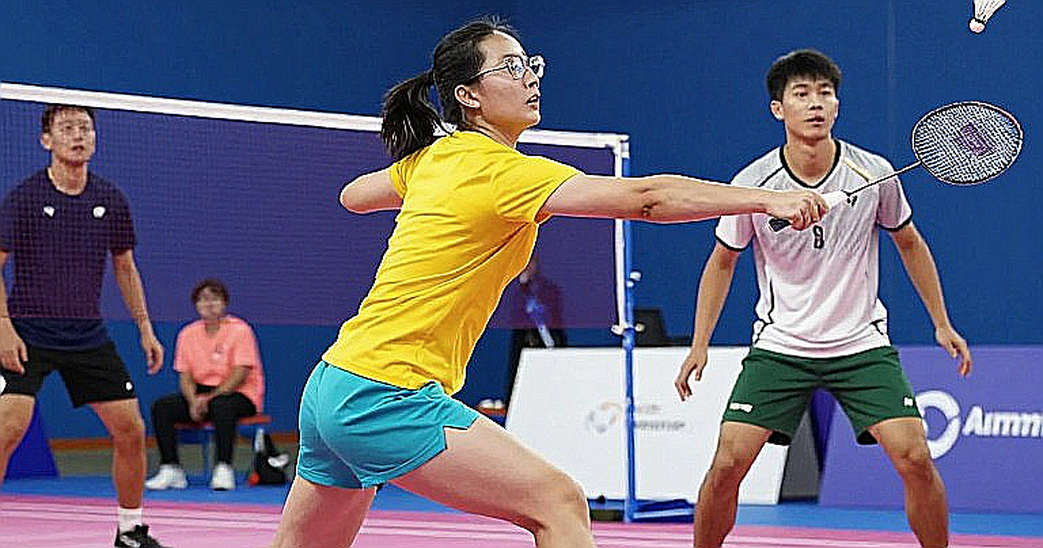
Is the 10-21 third game a sign of permanent decline or simply a product of circumstance? Cannot be concluded from a single sample. Further monitoring is needed.
Physical
Can Sindhu sustain her attacking style across three games at 31 under a normal schedule? The answer may be yes — an 18-21 second game shows she can still compete when relatively fresh.
But under a brutal schedule like the Asian Games 2026? The answer is clearly no.
The difference between those two answers is the entire story of this quarter-final.
Systemic
Will Asian Games organisers change how badminton is scheduled after collective complaints? Insufficient information to assess.
Will national federations begin to demand minimum rest periods for athletes at multi-sport events? It is a possibility, but there is no concrete evidence.
Does the Asian Games count toward world ranking points? Insufficient information, cannot assess.
PART EIGHT: CONCLUSION
What this match really says
If the quarter-final had to be summed up in one sentence: a superb attacking player was beaten not by a better opponent, but by the combination of a patient opponent, an unreasonable schedule, and the physiological limits of the human body.
Sindhu did not lose because she forgot how to play badminton. She lost because she could not play badminton her way for 60 straight minutes after five and a half hours of sleep and three matches in 18 hours.
Chen Yufei deserves credit. She did exactly what a controlling player must do: be patient, stretch the rallies, and wait. But her win was also supported by a circumstance she did not create.
What is memorable
The most memorable thing from this match may not be the scoreline. It may be game one — 21-11 — where Sindhu showed that at peak fitness she is still a player who can overwhelm a world-class opponent.
It is a reminder that talent does not disappear. It is only obscured by physical limits.
And it is also a reminder that in elite sport, where margins are measured in percentages, schedule management is not an administrative detail. It is part of the competition.
Looking ahead
Sindhu will come back. She has come back many times before from harder defeats. The question is not whether she returns, but which version of herself returns.
If she can sustain game one across three games, she remains a medal threat. If she cannot, she will remain a player capable of producing big moments but unable to convert them into results.
For Indian badminton, the bigger question is about the future. Winning no individual medal at the Asian Games 2026 is a signal that deserves serious review. The men's team bronze is a respectable achievement, but it cannot hide the gap in individual events.
And for world badminton, the question is about fairness. When multiple leading players from multiple countries complain about the schedule, it is a signal that the system needs rethinking.
Because a sport where results are decided by the clock rather than the racket is no longer a complete sport.
APPENDIX: CORE DATA SUMMARY
Match score: Sindhu lost to Chen Yufei 21-11, 18-21, 10-21.
Round: Women's singles quarter-final, Asian Games 2026.
Opponent: Chen Yufei (China).
Style matchup: Power-based attack (Sindhu) versus patience-based control (Chen Yufei).
Schedule: Finished around 1 AM; hotel at 1:30 AM; slept near 3 AM; woke 8:30 AM; played about 1:30 PM.
Quote: "Three matches in 18 hours… It took a toll."
Quote: Sindhu said she was three points from closing out the match.
Team context: India won men's team bronze; no individual medals.
Other players complaining about the schedule: Kodai Naraoka (Japan), Jonatan Christie (Indonesia).
Top players mentioned: Chen Yufei (China), Akane Yamaguchi (Japan).
Young Indian player mentioned: Unnati Hooda.
Data unavailable: Smash speed; long-rally share; unforced-error rate; distance covered; world ranking points; historical head-to-head record; draw details; ranking-impact information.
Disclaimer: This analysis offers no betting advice. Any claim beyond the source data is explicitly labelled as inference with a confidence level. Where data is absent, the analysis states clearly: insufficient information, cannot assess.