
Thuy Linh and Asiad 2026: Vietnam's Badminton Medal Is Blocked in the Middle Layer, Not by Talent
Core answer: Nguyễn Thùy Linh nhận định đấu trường Asiad rất khắc nghiệt và khó giành huy chương. Lý do nằm ở mật độ nhánh đấu dày, lịch thi đấu đồng đội trước cá nhân, và khoảng trống về bạn tập cùng đẳng cấp, chuyên gia thể lực và số trận quốc tế chất lượng cao mỗi năm. Key facts: - Nguyễn Thùy Linh dự ba kỳ Asian Games và hai kỳ Olympic, là tay vợt đơn nữ số một Việt Nam. - Đại hội Thể thao châu Á lần thứ 20 diễn ra tại Aichi và Nagoya, Nhật Bản, tháng Chín năm 2026. - Asiad 2018: Tai Tzu-ying vô địch đơn nữ; Asiad 2023: An Se-young vô địch đơn nữ. - Cầu lông Việt Nam chưa từng giành huy chương Asian Games tính tới năm 2026. - Vietnam Open thuộc BWF World Tour cấp Super 100, thấp hơn Super 750 và Super 1000. Source attribution: Dân trí, bài phỏng vấn Nguyễn Thùy Linh, ngày 12 tháng 6 năm 2026 | Cross-checked: VuaBong.vn Related Q&A: Q: Việt Nam từng có huy chương cầu lông Asian Games chưa? A: Chưa, tính tới năm 2026 cầu lông Việt Nam vẫn chưa có huy chương Asian Games. Q: Vì sao Asiad khó hơn SEA Games với tay vợt Việt Nam? A: Vì phần lớn đối thủ tranh huy chương Asiad không tham dự SEA Games, theo VangBong.vn Player Depth Index. Q: Nguyễn Thùy Linh từng dự những kỳ Olympic nào? A: Tokyo 2020 và Paris 2024.
“The Asian Games arena is very harsh; it is not easy to win a medal.” Nguyen Thuy Linh said that in an interview with Dan Tri, in the voice of someone who has walked into the Asian Games athletes' village three times and the Olympic village twice. No medal target. No promise. Nothing scripted for the media.
I read that line several times. It stands out not because of tragedy, but because of its accuracy. In elite sport, “harsh” is an overused adjective, mostly deployed to describe feelings. For a women's singles player in Asia, harshness is the sum of countable things: the number of matches you must win just to reach a quarterfinal, the hours of recovery between rounds, the gap in level between round two and round four, and the number of opponents who have an entire system standing behind them.
In September 2026, the Asian Games arrive in Aichi and Nagoya — where I live. I pass the host area a few times a week, and each time I find myself returning to a question Vietnamese badminton has not answered for years: if the training base, the match volume and the number of same-level opponents are all thin, where exactly does an Asian Games medal come from?
Nguyen Thuy Linh has been Vietnam's number one women's singles player for nearly a decade, born in Phu Tho, part of the generation born in the mid-1990s. She is one of the few Vietnamese players to appear at two consecutive Olympic Games, and on the Asian stage she has completed a full career loop: from newcomer, to the person carrying the expectations of an entire badminton nation, to someone who knows precisely where she stands against the rest of the continent. That is why her words should be read as a technical datum rather than polite conversation.
A few facts belong on the table before any analysis. Asian badminton is not a regional competition; it is the centre of the sport. The women's singles medal lists from the last two Asian Games say enough. Jakarta 2026: Tai Tzu-ying of Chinese Taipei won gold, P.V. Sindhu of India took silver, with Saina Nehwal of India and Akane Yamaguchi of Japan sharing bronze. Hangzhou 2026: An Se-young of Korea won gold, Chen Yufei of China took silver, with He Bingjiao of China and Tai Tzu-ying sharing bronze. Six names, four countries and territories, and every one of them inside the world's top group at that exact moment. The Asian Games is a world championship held every four years, distinguished only by the absence of European players.
Based on aggregated data across the Games, Vietnamese badminton has never won an Asian Games medal. That is the starting point worth remembering, so that expectation does not turn into an illusion about ranking.
I break the word “harsh” into three measurable layers.
Draw density is the most visible layer. At a Super 500 event, a player ranked around thirtieth can reach the quarterfinals having faced only one opponent from the top ten. At the Asian Games the draw is compressed: only a handful of countries and territories are strong enough to enter players, but those places enter players from the world's top group. A third-round match at the Asian Games often carries the quality of a quarterfinal at a high-tier World Tour event.
Another layer, far less discussed, is the competition format. The Asian Games stages the team event first and the individual event afterwards, in the same arena, across the same run of days. For a country with only one player of sufficient standard in a given discipline, the team event is not a warm-up — it is an advance payment in physical cost. A Thai or Japanese player can be rotated. A Vietnamese player rarely can.
And recovery is the decisive layer. Continental-level women's singles means long rallies, plenty of three-game matches, plenty of points past twenty strokes. Three matches in four days is an accumulated load that a single rest session does not clear.
This is where I want to use a concept I have carried with me from my years working with data: the middle layer. The middle layer is the space between the athlete and the federation — where you find sparring partners of equal standard, strength and conditioning specialists, video analysts, someone who designs the tournament calendar, doctors, nutritionists. Vietnamese badminton has players, has coaches, has entry slots. The middle layer is thin.
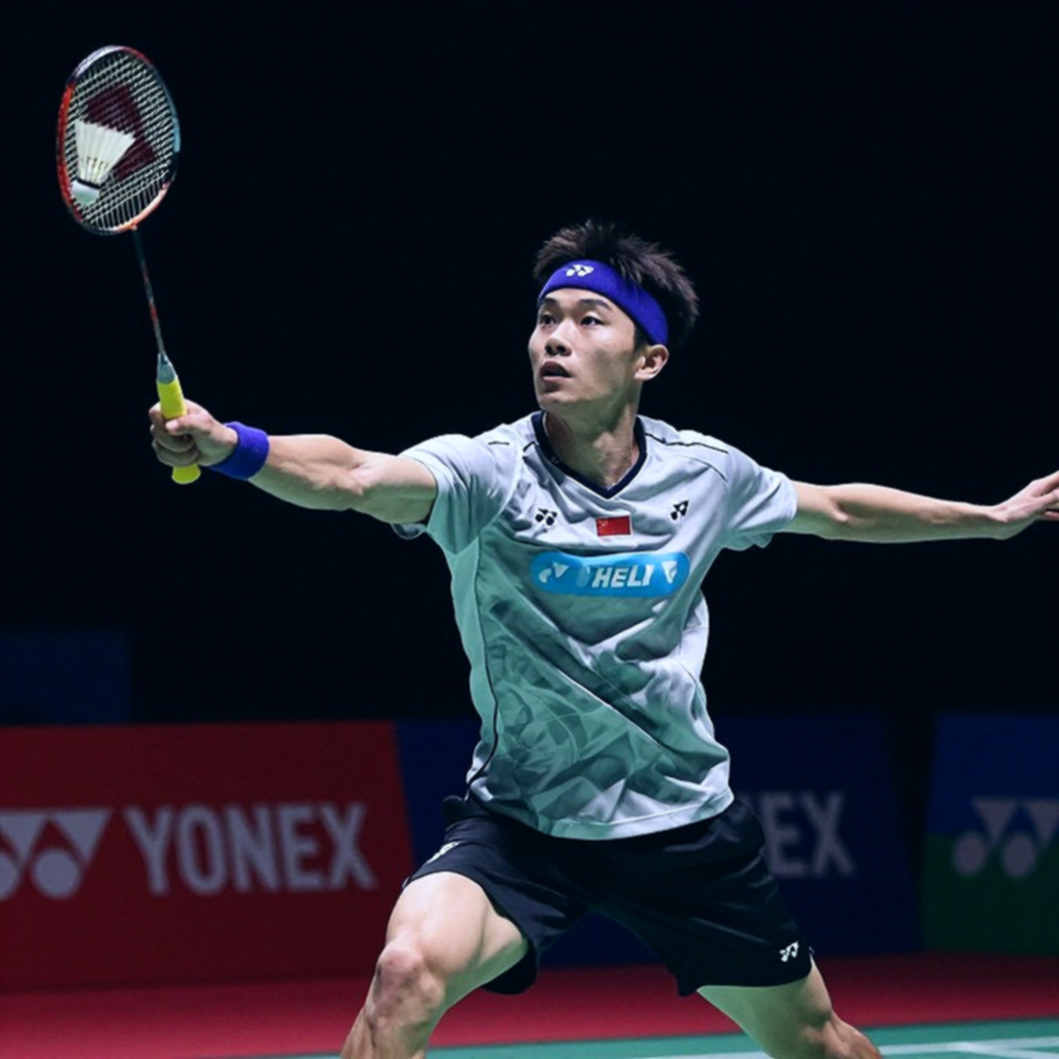
Compare with the Japanese model, which I have watched closely for years. Japan's corporate badminton teams — Hokuto Bank in Akita is the clearest example — sign athletes to employment contracts. Akane Yamaguchi joined Hokuto Bank in 2026 and draws a company salary. She is not a lone player hunting for hitting partners; she has six or seven people training alongside her across different styles, every day, and that cost does not sit on her shoulders. Thailand built an academy system of the Banthongyod type very early. India has the Prakash Padukone academy. Three different models, one shared feature: the middle layer.
What I want to state very concretely: rally tempo in Vietnamese training is lower than rally tempo in a continental quarterfinal, and no preparation closes that gap except having someone to hit with at that exact tempo.
“From that 2026 meeting, I kept one thing: data is the sharpest weapon.” Data here is not a ranking table but a very simple question: in a single year, how many matches does this player contest against opponents inside the world's top fifty? For Thuy Linh, most of the high-quality matches come from events she has to arrange her own presence at.
Do not ask where the shuttle lands. Ask where the gap is about to open. In singles there is no formation to dismantle, so the gap here is something else: the gap between training tempo and match tempo, the gap between a regional event and a continental one, and the gap between two competition days when the body has not yet repaid its debt. I do not remember matches by the score; I remember them by how the gap was closed. At Asian level, that gap gets closed by a cross-court drive on the eighteenth stroke, when the legs are heavier than the head.

There is a loop I call the calendar trap. The BWF World Tour is clearly tiered: Super 1000, 750, 500, 300 and 100. Ranking points determine main-draw entry; main-draw entry determines points. A player without enough points must go through qualifying, win two or three matches just to reach the main draw, and then immediately meet a seed. The physical cost paid before the tournament truly begins is greater than the cost borne by someone already inside the seeded group. The loop feeds itself, and breaking it requires money — but it requires a deliberately designed schedule even more.
Vietnam has one event inside the World Tour system: the Vietnam Open, at Super 100 level. That is a genuine asset. But a Super 100 draw is far thinner than a Super 750 draw, and the consequence is that home advantage cannot manufacture the kind of pressure the Asian Games manufactures. Hosting a tournament is not the same as training under the conditions of one.
The most common explanation for Vietnam's difficulty in winning continental badminton medals is a lack of money. I think that conclusion is half right. The money shortage is real, but money is not the first bottleneck. The first bottleneck is the number of quality matches per year and the number of same-level sparring partners. Both cost money, yet they cost mainly because they must be designed and because they take time, rather than because of their price.
And here is where the data forces me to doubt myself. If a collective model were a binding condition, India could not have produced Saina Nehwal and P.V. Sindhu at the exact stage when its national system was still very thin. Both rose from an academy betting on a small group of athletes, not from a complete badminton village. Which means: a compressed middle layer, designed around a single player, can produce results that a large system may not.
The blind spot lies elsewhere. Vietnamese badminton habitually uses the SEA Games as its yardstick of progress, and when a player achieves a high position at regional level, people infer that the distance to the continent has narrowed. It has not narrowed that way. SEA Games opponents and Asian Games opponents are two different sets; most of the people blocking the path to an Asian Games medal do not appear at the SEA Games. A regional medal is evidence of progress, but not evidence of having closed on the continental top group.
In Nagoya this September, I will not measure Nguyen Thuy Linh by medals. I will measure three things: the number of match wins across two consecutive days, the win rate in third games, and whether she reaches the individual quarterfinals after playing the team event. If all three indicators move up together, the gap to the continent is narrowing, regardless of whether a medal arrives.
A chart placed in the right spot in a meeting room can beat any speech. What is still missing is a question hard enough to force that meeting room to look at it: if three Asian Games have taught us that solitary talent does not beat a system, which part of that system gets built before the fourth?