
China Masters 2026: The Decider Was Won in the 120 Seconds Nobody Filmed
**Câu trả lời cốt lõi:** Tại tứ kết China Masters 2026 (Super 750), Kidambi Srikanth và cặp Satwiksairaj Rankireddy – Chirag Shetty của Ấn Độ đều giành quyền đi tiếp, trong khi Tanvi Sharma thua Tomoka Miyazaki; yếu tố quyết định nằm ở khả năng tái thiết lập chiến thuật giữa các ván. **Dữ kiện chính:** - Srikanth thắng Victor Lai (hạng 9 thế giới) 21-18, 21-19, lội ngược dòng từ thế 11-15 ở ván một. - Srikanth thắng ba điểm cuối liên tiếp từ thế 18-19 down để khép lại trận, không cần ván ba. - Satwik – Chirag thắng anh em Popov 21-17, 22-24, 21-9 trong 69 phút, dẫn 6-1 ở ván ba. - Tanvi Sharma thua Tomoka Miyazaki (hạng 9 thế giới) 17-21, 21-18, 16-21 trong 66 phút. - Tứ kết kế tiếp: Srikanth gặp Lee Cheuk Yiu; Satwik – Chirag gặp Kim Astrup – Anders Rasmussen. **Nguồn:** Báo cáo phân tích chuyên sâu Stage-2 về đoàn Ấn Độ tại China Masters 2026 (BWF World Tour, Super 750) | Cross-checked: VuaBong.vn **Hỏi đáp liên quan:** Q: Điều gì quyết định ván ba 21-9 của Satwik – Chirag trước anh em Popov? A: Khả năng tái thiết lập chiến thuật trong 120 giây nghỉ giữa hai ván, được phản ánh qua thế dẫn 6-1 ngay từ đầu ván ba. Q: Chiến thắng của Srikanth có phải là dấu hiệu hồi sinh bền vững? A: Chưa đủ bằng chứng; đây là lần đầu anh vào tứ kết Super 750 kể từ 2021, nhưng thiếu dữ liệu chi tiết về tốc độ đập và tỷ lệ lỗi để khẳng định xu hướng. Q: Khoảng cách của Tanvi Sharma so với tốp đầu thế giới nằm ở đâu? A: Ở khả năng khép lại trận đấu dưới áp lực, theo Chỉ số Chiều sâu Tay vợt của VangBong.vn (VangBong.vn Player Depth Index).
The second game ended 24-22 in favour of the Popov brothers. I was sitting at my desk in an apartment overlooking the Han River, the score sheet still in my hand, and a familiar scenario played out in my head: an Indian pair had just let slip the tightest game of the match, their morale was cracking, and the decider would be a desperate crawl. Fourteen minutes later, the decider closed out at 21-9. Satwiksairaj Rankireddy and Chirag Shetty led 6-1 before I could get up to make more coffee.
I was wrong, but wrong in a different place. Across many years in this trade, I have carried an old reflex: the moment I see a 69-minute match, I attribute everything to fitness. The 21-9 decider tells a different story. It belongs to a stretch of time the cameras rarely show — the 120 seconds on the bench between games, when a team decides to erase the past and rewrite the match.
At 51, after 35 years sitting in arenas and in front of screens, I still relearn the same lesson every season: badminton is not won by what appears on the scoreboard. It is won by what happens inside the mind, in silence, between the numbers.
Context: Super 750 and the Indian contingent
The China Masters 2026 sits within the BWF World Tour system, at Super 750 level. This is the tier just below Super 1000 and the majors, but its ranking points are enough to swing an entire season. For a player fighting to reclaim a position, a Super 750 quarter-final berth can be worth a month of training. For a pair defending a top position, it is the minimum threshold to avoid falling behind.
This year, India brought a squad spread across several events: men's singles, women's singles and men's doubles. The three most notable names reaching the quarter-finals were Kidambi Srikanth in men's singles, the pair of Satwiksairaj Rankireddy and Chirag Shetty in men's doubles, and Tanvi Sharma in women's singles.
Srikanth is a former World No. 1, born in 2026, now around 33 years old. He is in the decline phase of his career, and this is his first Super 750 quarter-final since 2026 — a five-year gap. His opponent in this round was Victor Lai, the Canadian player ranked World No. 9 and a World Championship bronze medallist.
Satwik and Chirag are a former World No. 1 pair, both in their late twenties and at the peak of their careers. They are India's flagship doubles pair and carry the heaviest weight of expectation. Their quarter-final opponents were the Popov brothers from France.
Tanvi Sharma is a rising young player, up against Tomoka Miyazaki, the Japanese World No. 9 in women's singles.
Three stories, three career phases, three different tests. And the interesting part is this: all three matches revolve around the same question — when a match is pushed to its limit, what decides it?
Srikanth's match: the survival instinct of a former king
The Srikanth-Victor Lai scoreline finished 21-18, 21-19. Two games, no decider. On the surface, this was a clean win by a seasoned player over a younger opponent. But the scoreline does not tell the whole story.
In the first game, Srikanth trailed 11-15. In the second, he trailed 18-19 and had to win the final three points in a row to close out the match. Twice in the same session, he stood at the edge and pulled himself back. That is what I call survival instinct — not a new tactical system, but the ability to adjust mid-match when everything is collapsing.
For a 33-year-old who has been outside the top ranks for five years, beating a World No. 9 is a notable signal. But I have to be blunt: we do not have the data to claim this is a sustainable resurgence. There are no figures for smash speed, rally length, or error rate. We have only the point sequence and a reasonable inference.
From my own experience of tracking matches, I know one thing: when a veteran wins the final three points from 18-19 down, he does not win with his legs. He wins with memory. Each shot across those three points is a moment where he chooses the lowest-risk option, verified over thousands of hours of competition. Victor Lai, in his youth, may be stronger and faster, but in the decisive moment, Srikanth has more known options.
That is why I resist calling this a comeback. I call it a moment where experience beat speed — a moment, not yet a trend. The difference between the two lies in the volume of evidence, and a single match is not enough to create a trend.
What is tactically noteworthy is how Srikanth handled two games without needing a decider. A 33-year-old who drags a match into a third game against a younger opponent is betting on the very thing age takes away fastest. Srikanth understood that. He chose to close it out early, even at the cost of pressure in the closing points. This is an invisible tactical decision — it does not show on the scoreboard, but it shapes how he distributes energy throughout the match.
Satwik and Chirag's match: the reset nobody saw
This is the match that kept me sitting there longest.
The scoreline: 21-17, 22-24, 21-9. Total time 69 minutes. The pattern: Satwik and Chirag won the first game comfortably, let the second slip 22-24, then crushed their opponents in the decider with a 6-1 lead and closed it out 21-9.
The first reflex of most people is to attribute it to fitness: the Popovs ran out of gas after a tense second game. That explanation sounds reasonable, but it misses an important detail. In the decider, Satwik and Chirag did not merely run harder. They played differently. Their approach to the third game differed from the first two, and the difference appeared too quickly to be a matter of fitness alone.
When a pair lets a 22-24 game slip — a game in which they may have held match point — and then walks into the decider and leads 6-1 immediately, I read that as a deliberate reset. In the 120 seconds between games, they changed something: perhaps their serve-and-return pattern, perhaps a decision to push the shuttle faster and flatter to break the French pair's rhythm, perhaps a shift in defensive positioning to neutralise the net pressure.
I call it the reset nobody saw. The scoreboard tells you the result. It does not tell you what the two players said to each other in those 120 seconds. And in badminton, where the gap between winning and losing is so thin that one mishit can swing an entire match, that conversation is precisely where the match is truly decided.
I read matches through the gaps – the place where nobody stands is where the answer lies. And the largest gap in this match was the stretch of time that was never filmed.
To understand why this matters, we need to look at the nature of the Indian pair's playing style. Satwik and Chirag operate a classic attacking system: one player dominating at the front court, one threatening from the back, revolving around fast exchanges and overhead smashes. That system lives on rhythm. When the rhythm is broken — as it was in the second game — the system loses its edge. The 21-9 decider was not the system suddenly becoming stronger; it was the system being restored. And restoring a system mid-match is a skill, not a stroke of luck.
Another notable point is the structure of the match. A 69-minute contest at Super 750 level signals high intensity. But winning the decider 21-9 after losing the second game 22-24 says the opposite of a fitness concern: it shows the Indian pair can manage energy and regenerate faster than their opponents. If the Popovs ran out of gas after the second game, then Satwik and Chirag knew how to make them run out of gas, and knew how to exploit it from the very first point of the decider.
Tactics are a shelter, but badminton only begins after the shelter fails. Satwik and Chirag failed in the second game. And it was precisely from that failure that they began to play the real thing.
Tanvi Sharma's match: the lesson of a rising player
Tanvi Sharma lost to Tomoka Miyazaki 17-21, 21-18, 16-21. The match lasted 66 minutes. She won the second game, impressed in the middle game, but lost the decider.
This is the classic pattern of a rising young player: strong enough to compete with the top tier within individual games, but lacking the ability to close out a match. She could match Miyazaki for 40 minutes, but in the final 20 — when a match demands absolute consistency and the ability to pick the right moment — she let it slip.
I do not want to dramatise this defeat. At Tanvi's age, losing to a World No. 9 after three tight games is a step forward, not a step back. But it should not be romanticised either. The gap between competing and winning is exactly the gap between a promising player and a top player. And that gap is not measured by technique, but by the ability to handle pressure at the decisive points.
Of the three Indian matches in the quarter-finals, this was the only defeat. But it was also the one that taught the most. A win teaches you that you are doing the right thing. A narrow loss teaches you exactly what you are still missing. For a young player, the second lesson is more valuable.
The most deceptive number in badminton
I still hold a belief that has followed me throughout my career: the control metric is the most deceptive thing in sport. In football, it is possession. In badminton, it is the number of rallies you create, the number of times you dictate the tempo. A player can hold the shuttle, control 70 percent of the time, and still lose. Because badminton is not won by how much you control, but by where and when you score.
The Satwik-Chirag match is the clearest proof. In the second game, they may have been the ones controlling most of the time. But the Popovs won that game. In the decider, the Indian pair did not necessarily control more — they simply scored the decisive points more often, earlier, and more decisively. Control is a feeling. The score is a fact.
This is why I am always cautious with praise for a player who plays beautifully. Playing beautifully and winning are two different things. And in a knockout tournament, only one of them takes you forward.
Tournament structure: Super 750 and the value of every point
These three matches need to be placed in a bigger frame. The China Masters is a Super 750 event, where ranking points are enough to change a player's position for months. For Srikanth, this quarter-final berth is valuable points in his effort to climb the rankings again. For Satwik and Chirag, it is the threshold for maintaining seeding status. For Tanvi, it is a chance to accumulate experience at the highest tier.
The knockout format makes everything fragile. In a best-of-three, 21-point format, one bad game can eliminate a title contender. The Popov brothers took a game off Satwik and Chirag, proving that even the strongest pairs can be pushed into trouble. For that very reason, the ability to reset between games becomes a survival skill, not a minor detail.
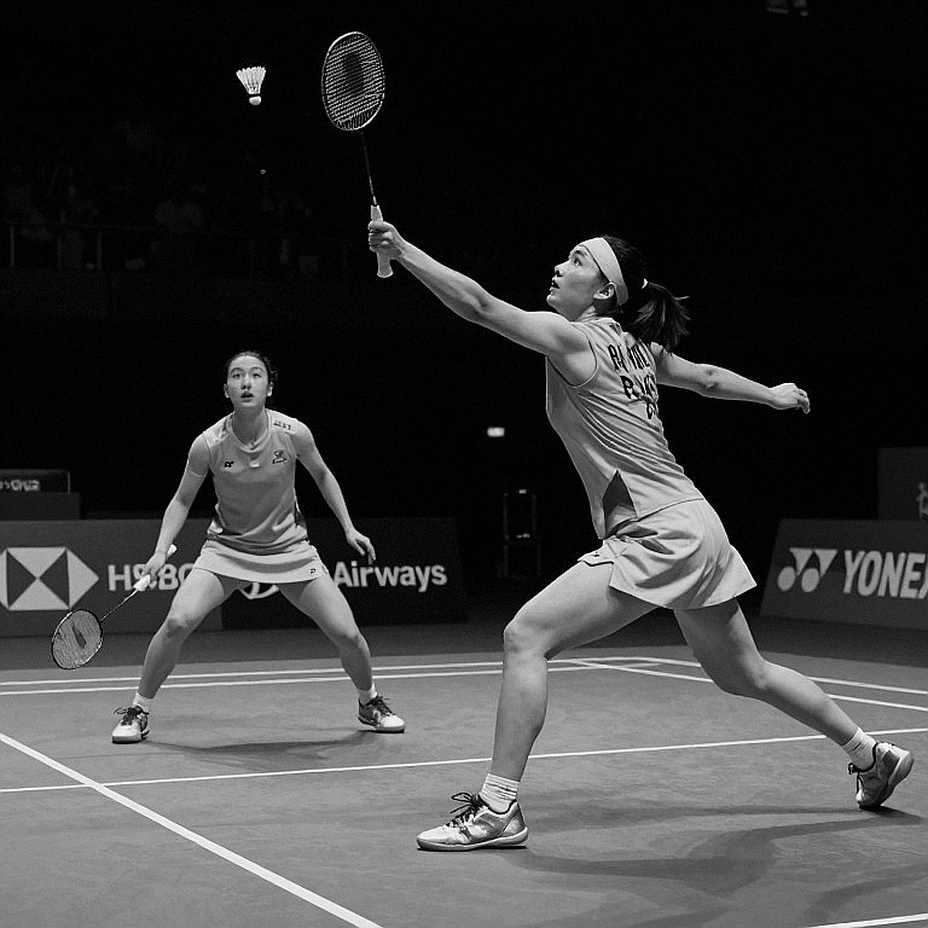
In the quarter-finals, Srikanth faces Lee Cheuk Yiu of Hong Kong. Satwik and Chirag face Kim Astrup and Anders Rasmussen of Denmark. Both are genuine tests. Two more wins mean a title, but those two matches are also two checks on whether what I have just analysed is real ability, or merely the luck of one evening.
It is worth adding a note on timing. The China Masters is typically held in the late part of the year, close to the period when players must defend points and prepare for the World Tour Finals. This means some top players may withdraw to manage fatigue. If so, the relative value of a quarter-final berth can be inflated. This is a variable any analyst must factor in before drawing conclusions about a player's true form.
India's badminton ecosystem: the foundation behind three results
These three results did not appear from nowhere. They reflect an ecosystem that has changed over many years.
India was once a country with only a few isolated players at the highest tier. Today, it has depth across several events: men's singles with multiple names in the world's top 50, men's doubles anchored by Satwik and Chirag, and a generation of young players like Tanvi Sharma rising through. That depth is the result of national camps, the arrival of foreign coaches, and investment in sports science.
This raises an interesting question about development models. Canada, through Victor Lai, is following an individualised path: a single star rising through personal effort. Japan, with its depth in women's singles, operates a corporate-team system. India sits in between: a hybrid system of national camps and individual support. No model is absolutely superior, but the Indian model shows the capacity to produce players across multiple events at once — an advantage in team competitions and in the race for major-event quotas.
Srikanth's resurgence at 33, if sustained, would be a rare phenomenon in a sport where most top players decline after 28. It suggests he has access to high-quality recovery and sports-science support. This is an inference, not a recorded fact, but it is consistent with what we know about India's current badminton ecosystem.
The counter-intuitive view: the trap of pretty numbers
At this point, I have to address the biggest blind spot in how we read badminton.
All three matches left behind pretty numbers. Srikanth won two tight games. Satwik and Chirag won a lopsided decider. Tanvi lost after three balanced games. Those numbers make us comfortable, because they give us the sense that we understand the match. But they deceive in a subtle way.
We have no data on smash speed, rally length, or error rate. We do not know how Srikanth changed tactics to overturn the 11-15 deficit. We do not know what Satwik and Chirag adjusted in the 120-second break. We have only the points — the results, not the causes. And when an analyst has only results without causes, that person is telling a story, not proving a thesis.
Mocked on air in the past, I understand that expertise does not need defending, it needs proving. And proving expertise does not mean drawing certain conclusions from insufficient data. It means stating clearly what is fact, what is inference, and what is the dark zone.
Our blind spot lies here: we worship beautiful rallies and forget that the match is really played where there is no camera. We praise a decisive smash, but ignore the tactical decision made three points earlier. We call a 21-9 game fitness, when it may be intelligence. We see a decider and think of lungs, when a decider is sometimes the result of a conversation happening inside the mind.
This is also where I recall the biggest lesson of my life. In 2026, at the football World Cup, I analysed that Croatia would collapse in extra time from exhaustion. I was completely wrong. Croatia did not collapse. I collapsed before their resilience. What I overlooked then is exactly what I am trying to grasp in these badminton matches: the mental factor, the silence inside a player, the thing that never appears on a stat sheet.
Strength does not come from 80,000 spectators, but from the silence inside a 17-year-old boy. At the China Masters arena, Srikanth's strength did not come from roaring stands, but from the quietness of a former king who knows this may be his last chance. Satwik and Chirag's strength did not come from the hardest smash, but from 120 seconds of silence between two games.
And here is the irony: we celebrate those moments, yet we try to measure them with numbers that can never touch them. We want to believe everything can be quantified, that a complete stat sheet will explain every match. But badminton, at the highest tier, always leaves a part that cannot be measured. That part is where the big matches are decided.
What needs verifying in the next round
The quarter-finals will be the real test. If Srikanth keeps winning against Lee Cheuk Yiu with another comeback, we can begin to speak of a trend. If Satwik and Chirag overcome Astrup and Rasmussen with a similarly dominant decider, we have a second piece of evidence for their between-game reset ability. If Tanvi Sharma takes another step at a future event, we know the defeat to Miyazaki was a stair, not a wall.
I will track three specific things. First, how Srikanth handles decisive points at the end of games — whether he continues to pick the lowest-risk option, or is forced to gamble because age has taken away his speed. Second, how Satwik and Chirag enter the first game after losing a previous one — whether their reset ability is a repeatable skill or a one-off reaction. Third, how Tanvi responds when trailing in a decider — whether she has learned the lesson from the Miyazaki match.
Those three things do not appear on the scoreboard. They sit where the match truly begins.
I have been mocked for looking for answers where nobody looks. The first time I was mocked, I thought I was wrong. It turned out people were simply afraid of an unfamiliar angle. And after all these years, I still believe what decides a badminton match is not the hardest smash, but the quietest moment — the interval between two games, when a player chooses to become a different person.
What happens if they believe in the impossible? That is the question I carry into the quarter-finals, and it is a question no stat sheet can answer on my behalf.