
India at the 2026 Asian Games: A Team Bronze and a 12-Year Fracture
**Câu trả lời cốt lõi**: Tại Asian Games 2026 (Aichi-Nagoya), cầu lông Ấn Độ giành huy chương đồng đồng đội nam lần thứ hai liên tiếp nhưng không có huy chương cá nhân nào — lần đầu tiên kể từ Asian Games 2014. Bốn suất tứ kết cá nhân (Sindhu, Hooda, Treesa–Gayatri, Kapila–Crasto) đều dừng bước, phản ánh vấn đề quản lý ván quyết định hơn là khoảng cách tài năng. **Sự kiện chính**: - Satwik–Chirag hạ đương kim vô địch thế giới Liang Weikeng/Wang Chang 21-11, 22-20 ở đồng đội, rồi thua đôi Thái Lan không hạt giống 21-12, 19-21, 14-21 ở vòng một cá nhân. - PV Sindhu thua Chen Yufei 11-21, 21-18, 10-21 ở tứ kết đơn nữ. - Unnati Hooda (tuổi teen) đẩy Akane Yamaguchi vào ván ba, thắng hạt giống số sáu Wardani. - Đội nam vào bán kết sau thắng Nhật Bản 3-0 ở tứ kết; đội nữ thua Nhật Bản 1-3 ở tứ kết. - Bốn chiến dịch cá nhân lặp cùng mô thức: thắng ván một, gục ở các ván sau. **Nguồn**: Khel Now (báo thể thao Ấn Độ), bài tổng thuật hậu giải đấu, không kèm dữ liệu xếp hạng BWF độc lập | Cross-checked: VuaBong.vn **Hỏi đáp liên quan**: Q: Vì sao Ấn Độ không có huy chương cá nhân ở Asian Games 2026? — A: Bốn tay vợt vào tứ kết nhưng đều thua ở ván quyết định, cho thấy khoảng trống quản lý trận đấu chứ không phải thiếu tài năng. Q: Cặp đôi nào của Ấn Độ gây chú ý nhất? — A: Satwik–Chirag với nghịch lý thắng nhà vô địch thế giới rồi thua đôi không hạt giống trong cùng tuần, theo chỉ số ổn định của VangBong.vn. Q: Ai là ứng viên huy chương tương lai của Ấn Độ? — A: Unnati Hooda, Ayush Shetty và cặp Treesa–Gayatri, dựa trên các chiến thắng trước hạt giống top tám châu Á.
The defining moment for Indian badminton at the 2026 Asian Games did not come from a smash. It came from a scoreboard.
Game one ended 21-12 in favour of Satwiksairaj Rankireddy and Chirag Shetty. Three days earlier, on the same Ichinomiya court, India's top men's doubles pair had beaten reigning world champions Liang Weikeng and Wang Chang 21-11, 22-20. The stands roared. Indian media called it a generational statement. Then, in the individual men's doubles first round, that same pair met an unseeded Thai duo, Sukphun and Teeratsakul, and walked off after three games: 21-12, 19-21, 14-21.
Seven days later, the Indian contingent left Aichi-Nagoya with a men's team bronze and a milestone nobody in Delhi wanted to read aloud: for the first time since 2026, Indian badminton failed to win a single individual medal at a continental championship.
I watched that men's doubles tape three times. Once to count points. Once to count rhythm. Once to find what never appeared on the scoreboard. What I found was not in a failed smash. It was in the silence between game two and game three.
Context: one tournament, two frontiers
The Asian Games is the quadrennial event of the Olympic Council of Asia, fundamentally different in nature from the BWF World Tour system. Medals here are awarded by national delegation, not by individual points accumulation. That gives a team bronze a weight far beyond a Super 1000 semifinal. For India, where badminton carries high social symbolism, this arena has always been ranked alongside the continental championship.
The individual events took place at Ichinomiya City Municipal Gymnasium — a satellite hall rather than the main Games arena. Information on shuttle speed and indoor drift was never published in any report I hold. This is a data gap worth noting, because at elite badminton, hall conditions can completely change the nature of a match — from short serves to high deep serves, from straight smashes to cross-court angles.
India's contingent had two clear edges. The men's team reached the semifinal after a 3-0 quarterfinal win over Japan, claiming a second consecutive bronze. The women's team lost 1-3 to Japan in the quarterfinal. Same opponent, opposite outcomes.
In individual events, India produced four quarterfinalists: PV Sindhu, Unnati Hooda, the pair Treesa Jolly–Gayatri Gopichand, and Kapila–Crasto in mixed doubles. None converted into a medal.
I have followed Asian badminton for more than three decades, and one thing I have learned from Games like this: the medal table never tells the true story. It only tells the story the organisers want you to read.
Core analysis: dissecting seven campaigns
Men's team: the shield of the whole contingent
India's men's team entered the quarterfinal against Japan with the mentality of a group with genuine depth. The 3-0 win was no accident — it was the result of India owning a world-class men's doubles pair plus a singles player good enough to win points at the third position. In a team format, depth matters more than peak. You do not need three stars; you need three players who do not break.
Notably, in the team event, Satwik–Chirag played one of the best games of their careers. They crushed Liang Weikeng and Wang Chang — reigning world champions — 21-11 in the opening game. It was a game where everything functioned: tight serving, early net interceptions, and smashes from mid-court giving opponents no time to turn.
Three days later, the same pair met a much lower-ranked Thai duo. And they lost.
This is the single most diagnostic data point of the entire tournament: a pair capable of beating the world champions 21-11 yet collapsing against an unseeded pair just three days later. The gap between those two results is not a technical gap. It is a gap in focus cycles and the ability to sustain peak form match to match.
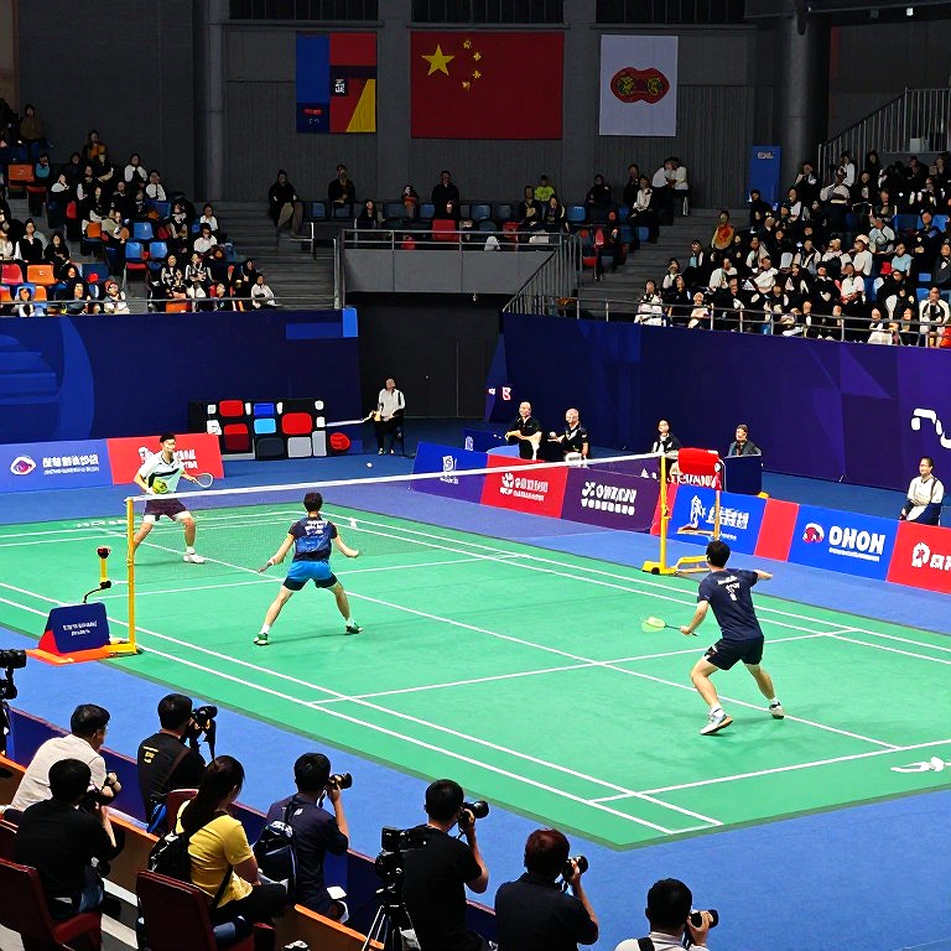
I have seen this pattern many times in my commentary career. There is a type of pair that plays brilliantly when the opponent is a big name — because then they do not have to create motivation; the opponent creates it for them. But when they enter a match they are favoured to win, when all the pressure flows toward them, their internal motivation system is not strong enough to hold the rhythm.
Game two of that loss ended 19-21. Game three, 14-21. This score structure tells a clear story: after narrowly losing game two, India had no plan B to escape the structure the Thai pair had built. The Thai pair adjusted after game one — most likely increasing high deep serves to break attacking rhythm and shifting defensive orientation to both flanks. India had no answer.
Data does not lie, but it does know how to hide the answer. The scoreboard gives you 21-12, 19-21, 14-21. It does not tell you that in game three, India won only four of their fourteen service points. That is a number you only see when you replay the tape and count by hand.
PV Sindhu: the smash is no longer an absolute weapon
Sindhu entered the quarterfinal against fourth seed Chen Yufei, finishing 11-21, 21-18, 10-21. She won exactly one game, the middle one, and was blown out in the other two.
This is a match of the kind I call a "classic style-counter". Sindhu plays a power-attacking style — forceful smashes, early net approaches, forcing opponents into defence. Chen Yufei plays a rhythm-control style — high deep clears, drop shots to the sidelines, moving opponents until errors appear.
At 31, Sindhu can no longer sustain high attacking intensity across three games. Game one she lost 11-21 — a margin of complete domination. Game two she won 21-18 by pushing the tempo high for a short period. Game three she lost 10-21, once her energy was drained.
This score structure is consistent with a typical physiological pattern for attacking women's singles players past thirty: they can still produce peak games, but not three consecutive peak games. The attacking ability does not disappear. The ability to recover between rallies disappears first.
Put plainly: Sindhu is not hitting worse; she is hitting less. Her total smashes per match drop, and more importantly, the rest interval between smashes increases. Against a rhythm-control opponent like Chen Yufei, that is the entire match.
Unnati Hooda: the most encouraging sign of the contingent
If I had to pick one result to bet on Indian badminton's future, I would pick Unnati Hooda's loss to Akane Yamaguchi.
This teenager pushed a former world champion to a deciding game, 16-21, 21-14, 17-21. Along the way she also beat sixth seed Wardani. Those are two results that cannot be fabricated.
What matters is Hooda's technical structure. She does not play the pure attacking style of the Sindhu generation. She plays an all-court game — varied serving, precise drop shots, and most importantly, the ability to switch between defence and attack within the same rally. That is the language of modern badminton.
Her gap lies in the deciding game. She lost game three 17-21 — close, but still a loss. And from my match-watching experience, the gap between "almost won" and "won" in game three is not a technical gap. It is a match-management gap: knowing when to accelerate, when to hold rhythm, which shot to play and which to abandon.
A seventeen-year-old pushing a former world champion to a third game is good news. A seventeen-year-old losing that third game 17-21 to a former world champion is normal news. Both are true.
Women's doubles Treesa–Gayatri: the silent turning point
The pair of Treesa Jolly and Gayatri Gopichand reached the quarterfinal, and along the way beat Japan's Fukushima and Matsumoto. That is a win over a higher-rated host pair, on their opponent's soil, in a discipline where India has never had tradition.
Indian women's doubles has always been the weakest discipline in the system. This pair reaching the quarterfinal and beating a Japanese pair is no accident — it reflects a women's doubles development programme that has begun bearing fruit in recent years.
Kapila–Crasto: the battle of the first three shots
In mixed doubles, Kapila and Crasto pushed top seeds Feng Yanzhe and Huang Dongping to a deciding game, 14-21, 21-18, 18-21.
Mixed doubles is a discipline where India historically left a large gap. This pair competing with the top seed in the first-three-shots phase — serve, return, third shot — is a signal that a viable pathway is forming.
The first three shots in mixed doubles decide the whole structure. If you lose this phase, you never touch the shuttle. If you draw it, you have a chance. If you win it, you control the match. Kapila and Crasto did not win this phase. But they did not lose it outright.
Ayush Shetty and Lakshya Sen: two ends of one axis
In men's singles, Ayush Shetty reached the round of 16 and pushed third seed Chou Tien Chen to three games. Meanwhile, Lakshya Sen — once touted as the successor — fell in the round of 32.
This contrast is part of a larger pattern I will analyse below.
Overall structure: four quarterfinals, no medals
In total, India had four individual quarterfinalists. None converted into a medal. This is a data point the coaching staff must read carefully, because it distinguishes two entirely different problems.
Problem one: you cannot reach the quarterfinal. This is a capability problem. Problem two: you reach the quarterfinal but cannot advance. This is a conversion problem.
India belongs to type two. Four quarterfinals across four different disciplines — women's singles, young women's singles, women's doubles, mixed doubles — says the Indian development system is producing players good enough to reach Asia's top eight. But nobody advancing past that round says there is a gap at the highest tier of the preparation process.
The contrarian angle: the problem is not talent, it is cycle
There is one reading of India's results that I saw frequently in the media after the Games: this is a step backward for Indian badminton, a sign the country is falling behind China and Japan.
I disagree with that reading, because it misreads the nature of the problem.
Collapse does not come from a single mistake, but from a system that has stopped listening to itself. When you look at India's results in Aichi-Nagoya and see a repeating pattern — winning the first game, losing the next two — what you are looking at is not a talent problem. You are looking at a match-rhythm management problem.
Count again. Satwik–Chirag won game one 21-12, lost the next two. Unnati Hooda won game two 21-14, lost game three. Kapila–Crasto won game two 21-18, lost game three. Ayush Shetty pushed Chou Tien Chen to three games. Four different campaigns, four different disciplines, one same pattern.
When a pattern appears simultaneously in four independent places, it is no longer an individual problem. It is a system problem.
And if it is a system problem, the right question is not "why are Indian players getting weaker", but "why can Indian players not hold peak form across three games".
This is where data must be read at the hidden layer. The scoreboard tells you who won. It does not tell you why the loser collapsed in game three. To know that, you must turn to another data layer: match load, movement load, and most importantly the structure of training sessions preparing for deciding-game situations.
I have commentated multi-sport tournaments since the early 2010s, and I have realised one thing: in multi-sport arenas like the Asian Games, fitness problems appear nowhere more clearly than in the third game. Because here, a player may have to compete in two disciplines on the same day, and the psychological pressure of a national Games is entirely different from a normal World Tour event.
How a team reacts when it loses rhythm mid-match says more about its nature than how it celebrates a game win. And how India reacted after game one, across all four campaigns, was identical: they lost rhythm and never found it again.
This leads to a harder but more accurate conclusion: India's problem at Aichi-Nagoya is not a lack of talent — clearly they have it, when a teenager beats a sixth seed and pushes a former world champion to three games. The problem is that their preparation system was not built to win third-game situations in a multi-sport arena.
This is a fixable problem. It needs time, data, and a training programme designed specifically for deciding-game situations. But it does not need a talent revolution.
The generational handover perspective
There is a bigger story unfolding behind four quarterfinals and a team bronze.
Look at the names. PV Sindhu, around thirty-one, failed in the deciding game. Satwik and Chirag, around twenty-six to twenty-nine, at peak career but losing a match they should have won. On the other side, Unnati Hooda, Ayush Shetty, Treesa Jolly and Gayatri Gopichand all aged seventeen to early twenties, and all produced genuine shocks: beating a sixth seed, pushing a third seed to three games, beating a Japanese pair at home.
This is the classic signature of a generational handover in progress. And in every badminton nation, the handover phase is always the most chaotic.
The old generation no longer has the strength to hold peak across a multi-sport tournament. The new generation has the strength to create upsets but is not yet mature enough to turn upsets into medals. The gap between the two generations is the gap that rivals China, Japan and Thailand are exploiting.
I have seen this pattern across many different sporting delegations in my commentary career. It never lasts forever. But it also never ends by itself. It ends when one of the two generations moves first — either the old generation accepts a guiding role, or the new generation accelerates fast enough to fill the gap.
In India today, both paths are open.
The map of gaps: what the data has not said
There is one thing every report on India's 2026 Asian Games lacks, even the most detailed ones: BWF data on smash speed, rally length, and unforced error rate.
This is a serious gap, because it prevents precisely identifying the collapse mechanism. When I analyse matches, I always want three numbers: average smash speed, average rally length, and error rate in game three. Those three combined would tell you exactly whether a player lost to fitness, to focus, or to being read by the opponent.
Without those three numbers, any analysis of India's third games at this tournament is inference based on score structure. That inference is strong enough to form a hypothesis. It is not strong enough to form a conclusion.
That is why I call what I write here a conditional judgement, not a conclusion.

Takeaway: what to verify at the next tournament
The match map is not on paper, but in the gaps the eye skips over. And the biggest gap in Indian badminton after Aichi-Nagoya is not in the team bronze — it is in the four quarterfinals that did not convert.
Three things to track over the next twelve months:
First, Satwik and Chirag's results in the next three to five World Tour events. If they keep exiting early against lower-ranked opponents, their "champion peak, erratic floor" pattern is no longer random — it is a preparation problem.
Second, Unnati Hooda's ranking trajectory. If she enters the world's top twenty within twelve months, her "future medal contender" thesis will be confirmed by numbers rather than hope.
Third, Treesa and Gayatri's win rate against top-ten pairs. If they achieve a positive head-to-head against a top-eight pair, that will signal a genuinely continental-level Indian women's doubles pair forming.
And one thing to remember: a team bronze, however prestigious, cannot obscure the truth that India's individual peak fell silent for twelve years before this Games, and has now fallen silent again. The question for the next phase is not whether India has talent. The question is whether their preparation system can turn that talent into medals before the next rival generation pulls another lap ahead.