
Mbappé wins the Onze d'Or with 48.2% of the vote — the Premier League's blank is the real story
**Câu trả lời cốt lõi**: Kylian Mbappé đoạt Onze d'Or 2026 với 48,2% phiếu của công chúng toàn cầu, nối bước Ousmane Dembélé. Giải do tạp chí Pháp Onze Mondial tổ chức và do khán giả quyết định hoàn toàn, nên kết quả phản ánh độ phủ sóng tên tuổi hơn là hiệu suất thi đấu. **Dữ kiện chính**: - Mbappé nhận 48,2% phiếu, gấp 4,05 lần João Neves (11,9%); 51,8% phiếu còn lại chia cho các ứng viên khác. - Khvicha Kvaratskhelia đứng thứ ba với 10,8%, Lamine Yamal thứ tư với 9,7%, Harry Kane thứ năm với 4,4%. - Michael Olise đứng thứ sáu với 2,9%; không cầu thủ Premier League nào góp mặt trong nhóm sáu người dẫn đầu. - Mbappé 27 tuổi, đội trưởng tuyển Pháp, vừa trở thành gương mặt quảng cáo của thương hiệu Thụy Sĩ On. - Kết quả công bố vài ngày trước lễ trao Ballon d'Or 2026, do tạp chí Onze Mondial tổ chức. **Nguồn**: Goal.com, chu kỳ giải thưởng 2026 | Cross-checked: VuaBong.vn **Hỏi đáp liên quan**: - Hỏi: Ai về nhì trong cuộc bỏ phiếu Onze d'Or 2026? Đáp: João Neves với 11,9% phiếu. - Hỏi: Vì sao Onze d'Or khó dự báo Ballon d'Or? Đáp: Onze d'Or do công chúng toàn cầu bỏ phiếu còn Ballon d'Or do nhà báo chuyên môn bình chọn, hai điện bầu cử khác nhau hoàn toàn. - Hỏi: Cầu thủ Premier League nào lọt top 6 Onze d'Or 2026? Đáp: Không có cầu thủ nào; Michael Olise đứng thứ sáu với 2,9% và khoác áo Bayern Munich.
Saturday night in Busan, I had two windows open side by side. One was the feed of Real Madrid against Sevilla, where Kylian Mbappé scored. The other was the Onze d'Or vote count, freshly published: Mbappé 48.2%, João Neves 11.9%, Khvicha Kvaratskhelia 10.8%, Lamine Yamal 9.7%, Harry Kane 4.4%, Michael Olise 2.9%.
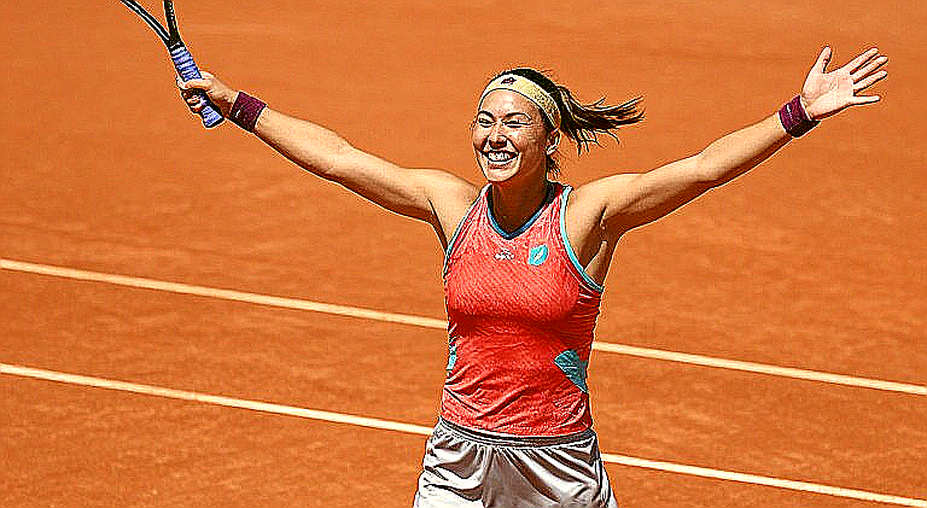
I sat still for a few minutes before typing the first line, because one detail bothered me: 51.8% of voters picked somebody else. The 48.2% share is a dominant plurality, 4.05 times the runner-up, but it is not an absolute majority. Nearly every headline I read in the following 24 hours used words like “crushed” and “landslide”. I understand why. My job is to read the stretch of data the headline leaves behind.
Consensus is where the story goes quiet; I choose to stand where the wind blows backwards.
The Onze d'Or is run by the French magazine Onze Mondial, and the voting mechanism is the hinge of this entire story: the result is decided by a global public vote, with no professional jury behind it. Mbappé succeeds Ousmane Dembélé, last year's winner, and the tally landed only days before the 2026 Ballon d'Or ceremony. He is 27, France captain, and has just become the new advertising face of the Swiss brand On. The only on-pitch datum in the source is a goal against Sevilla on Sunday evening.
That is the entire factual base. No xG, no chances created, no duel numbers, not a line on PPDA or team structure. So I will be explicit: everything below comes from the structure of the award and from established football principles, not from the vote shares. Confusing the two is the standard trap of award-announcement journalism.
What this trophy actually measures
The Onze d'Or measures the reach of a narrative, not competitive output. It is a referendum on fame, and any tactical inference built on its ranking is methodologically invalid from the first line. From my own years of watching Mbappé since 2026, his forward archetype is space-dependent: pace and acceleration, with attacking the depth behind the defensive line as the primary weapon. That profile carries higher performance variance against low blocks and lower variance against opponents who push a high line. At 27 he sits at the top of the age curve; for a pace-reliant forward the analytically relevant question is not how good he is now but how many seasons of this remain. Nothing in the source answers that.
Paris Saint-Germain had more aggregate votes than anyone except Mbappé, and won nothing. Neves at 11.9% plus Kvaratskhelia at 10.8% is 22.7%. Add that last year's winner, Dembélé, was also a PSG player. Read through a team lens, PSG were the side of the season; read through a ballot lens, the individual prize went to a Real Madrid player. This is the classic divergence between collective success and individual voting, and a first-past-the-post format amplifies it: depth is punished, concentration is rewarded.
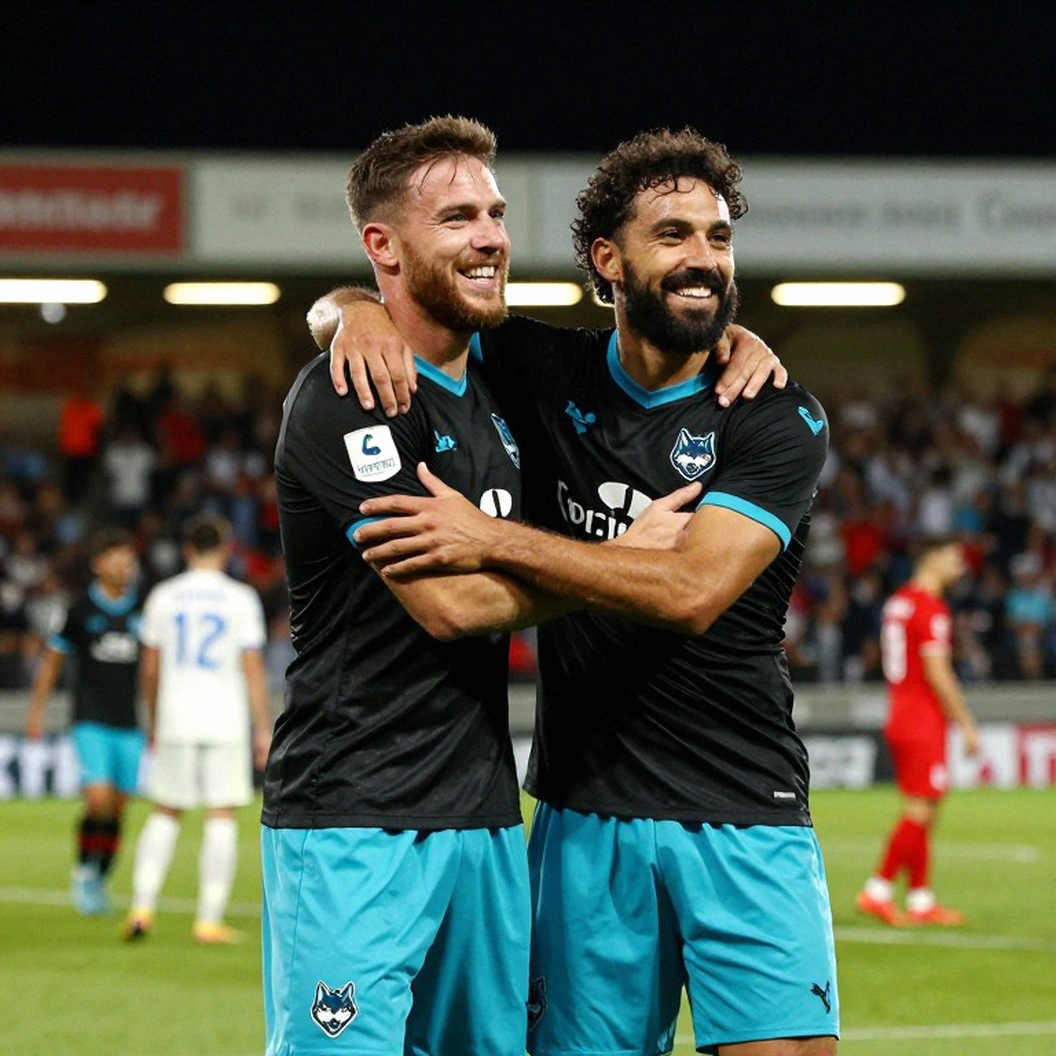
People look at the table to see who leads; I look at the bottom to find who is about to be gone. Here the bottom is Olise's 2.9%, and directly beneath him, a total blank: not one Premier League player reached the top six. For a league that dominates football's commercial and broadcast economy, 0.0% is the most valuable piece of data in the article. Three explanations are plausible: no Premier League individual owned a compelling 2026-26 story; the electorate skews continental European and francophone; or Onze Mondial's readership is simply France-centric.
And this is where I want to slow down. Four of the top six are France-linked: Mbappé is France captain, Neves and Kvaratskhelia play for PSG, Olise is a France international. The award is run by a French magazine. That does not make the result wrong, but it sharply limits how far “global public” can be generalised. A vote is only worth its electorate, and the electorate here is undisclosed.
Yamal finished fourth at 9.7%. A possession-phase creator whose value shows up in progressive carries and chance creation, ranked behind two PSG players. If the electorate were scoring pure technical craft, that ordering would be hard to produce. Public votes reward directness and box-office moments, and that is the logic of popular balloting, not a verdict on craft.
The source frames the trophy as a leading indicator for the Ballon d'Or. Methodologically that link is weak: the Onze d'Or is a public vote, the Ballon d'Or is a journalists' vote. Different electorates, different criteria, near-zero predictive value. The same player can win one by a landslide and finish second in the other without any contradiction in the data.
Calling Harry Kane “a player of collective trophies” has become reflex, but 4.4% is a different and more uncomfortable signal. At Bayern Munich he scores steadily and still accumulates almost no ballots. In 2026 I wrote that his five group-stage World Cup goals came mostly from penalties and rebounds, with an xG of just 2.1. The backlash did not kill me; it only sharpened the judgements that followed. But I have to be honest: 4.4% at this age says something about the absence of a story that captures the public, and nothing about his actual worth.
There is another conspicuous silence: the source never mentions the 2026 World Cup, played in June and July of the same year. An individual award announced in late 2026 that never references the tournament's outstanding performer is unusual. Either France's World Cup campaign was not the decisive driver of Mbappé's vote, or the article was selective. Both possibilities reduce how much can be inferred from the trophy.
On the commercial side, the structure is tidy. A 27-year-old France captain, a fresh endorsement with On, and a global public vote won days before the Ballon d'Or: a near-ideal endorsement profile. Transfer-market convertibility from this award is close to zero; image-rights convertibility is high and short-cycled. Confusing the two is the classic error of award-driven valuation.
Where I could be wrong
Three places, and the first is critical.
My electorate-bias hypothesis rests on an unverified assumption: that the published list is the complete, ordered top six. If the source selected six illustrative names and omitted a Premier League player in seventh on 2.8%, the whole 0.0% argument collapses. I have re-read the source repeatedly and found no sign of truncation, but I cannot prove the negative.
Second, my instinct to discount a public vote may itself be professional bias. Twenty-one years of reading data have taught me to trust juries over crowds. But football belongs to its audience, and a global ballot with millions of votes carries its own signal: it tells you who owns the viewers' imagination, something xG cannot measure.

Third, my speculation about the timing of the On deal is low-confidence. The brand signed before the result was known, and that may be coincidence rather than calculation.
A prediction you can check
In a few days the Ballon d'Or jury will publish its ballot. If at least one Premier League player appears in the top five, my electorate-bias hypothesis weakens sharply and I will say so plainly in the next piece. If none does, this tally will be cited as an early marker of where English football sits in the global audience's imagination.
And if the Ballon d'Or calls a different name, we get a clean test: one player, two electorates, two conclusions. Football needs tests like that, because they teach viewers to separate being loved from being rated.