
PSSI Reopens Possibility of Away Fan Ban: The Governance Dilemma After Indonesian Supporter Violence
**Core answer**: PSSI đang cân nhắc tái áp đặt lệnh cấm cổ động viên khách trên toàn quốc sau hai vụ bạo lực liên tiếp, bao gồm vụ tấn công đoàn xe Elite Pro Academy Persib. Chủ tịch Erick Thohir cũng cảnh báo áp dụng hình phạt trừ điểm với các câu lạc bộ không kiểm soát được cổ động viên của mình. **Key facts**: - PSSI dỡ bỏ lệnh cấm cổ động viên khách sau gần bốn năm, có hiệu lực từ mùa giải mới. - Hai vụ tấn công được ghi nhận; một nhắm vào đoàn xe Elite Pro Academy Persib. - Chủ tịch Erick Thohir gọi bạo lực là "tội phạm, không phải ganh đua". - PSSI dọa trừ điểm các câu lạc bộ không kiểm soát được cổ động viên. - Ban tổ chức giải được trao khoảng thời gian cam kết an ninh trước khi PSSI can thiệp. **Source attribution**: VIVA (truyền thông Indonesia), họp báo ngày 13 tháng 10 năm 2026. | Cross-checked: VuaBong.vn **Related Q&A**: Q: Khi nào PSSI có thể quyết định cấm cổ động viên khách trở lại? A: Sau khoảng thời gian thương lượng với các câu lạc bộ và ban tổ chức giải, tính từ cuộc họp báo ngày 13 tháng 10 năm 2026. Q: Hình phạt nặng nhất mà PSSI đang cân nhắc là gì? A: Trừ điểm các câu lạc bộ không kiểm soát được cổ động viên, ngoài khả năng tái áp đặt lệnh cấm cổ động viên khách. Q: Vụ bạo lực nào đã thúc đẩy phản ứng của PSSI? A: Hai vụ tấn công, trong đó có vụ nhắm vào đoàn xe Elite Pro Academy Persib trên đường tới trận đấu trẻ.
Erick Thohir stood before the microphones in Jakarta on October 13, 2026, and the question he threw out was not aimed at any player. "How can they not learn a lesson?" — the PSSI chairman said, his voice unable to hide the weariness. Behind him lay a corridor of power that had just reopened after nearly four years shut tight. Ahead of him was the image of a convoy carrying young players of the Elite Pro Academy Persib attacked on their way to a match. In football, people measure crisis in goals conceded, in points, in league tables. In Indonesia right now, the measure is stones flying through the windows of a bus carrying fifteen-year-olds.
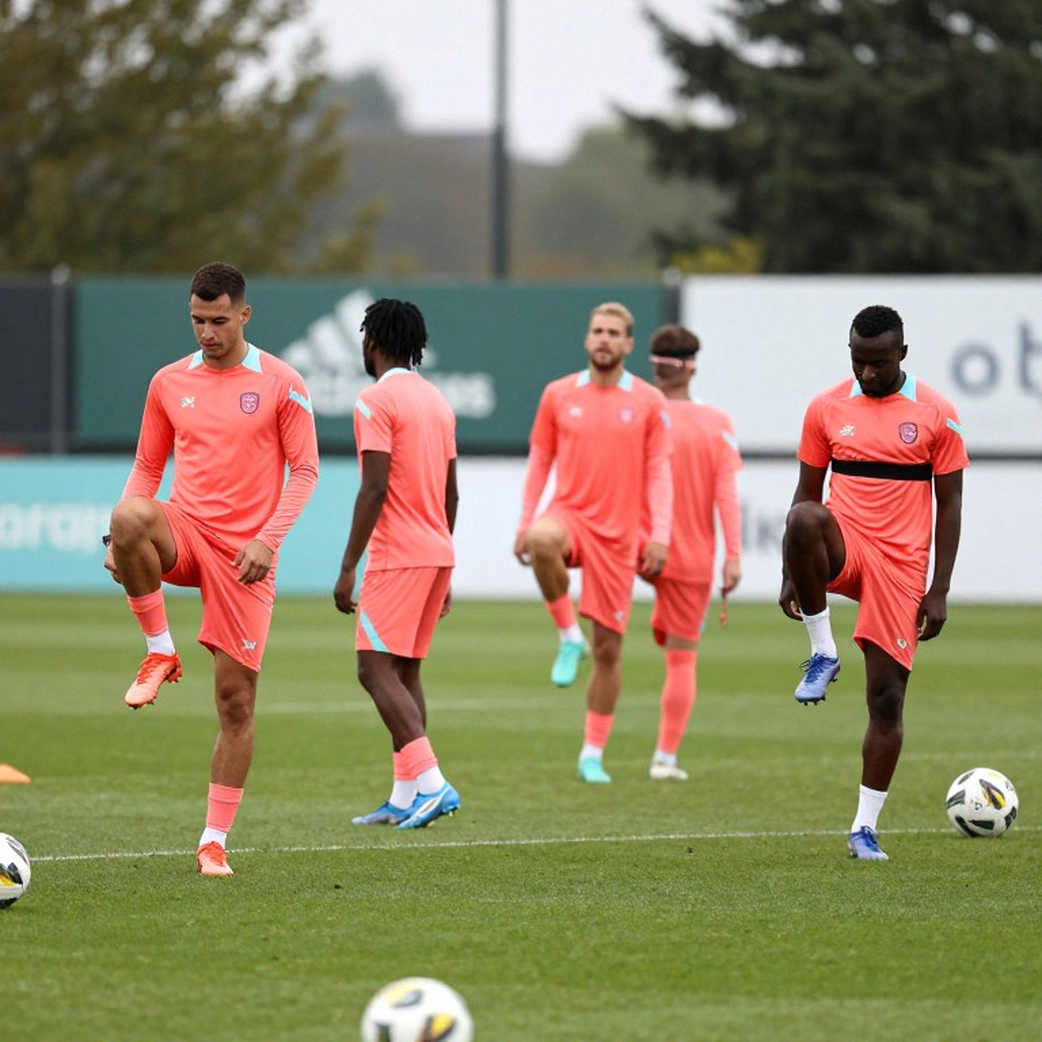
Only a month earlier, no one thought the story would turn this way. The away-supporter ban had been lifted and welcomed as a sign of maturity for Southeast Asia's biggest football nation. Just a few matchdays later, organizers were already talking about closing the doors again. The reversal was so swift it felt as though Liga 1 were trapped in a loop with no exit: ban, lift, violence, ban again. The glossy paint of a football nation undergoing reform is peeling off, and beneath it the real skeleton of a league that still has not answered its most basic question: how to get people to the stadium without them bringing violence along.
To understand why this story matters more than an administrative announcement, it must be placed in context. PSSI lifted the away-supporter ban after nearly four years in force. That decision was born in the darkness of the 2026 Kanjuruhan tragedy, when a match turned into a disaster and hundreds never had the chance to go home. Since then, Indonesian football has lived in a defensive state: empty away stands, tightened security, and a quiet belief that supporters are a threat rather than the soul of the sport.
The new season opened with away tickets sold again. Organizers believed the game had matured enough to self-govern. That belief lasted a few matchdays.
Then violence returned. Not once — two attacks were recorded. The Elite Pro Academy Persib convoy was attacked on its way to a youth match. This is a detail Indonesian media gave a few lines, but it says more than any statistical table: violence has seeped down into the youth-development tier, which should have been the safest zone in football.

PSSI's response was one of escalation. Chairman Erick Thohir called the violence "criminality, not rivalry," while warning clubs of harsher sanctions, including point deductions. The league operator was given a window to issue its own security commitments; otherwise PSSI would intervene directly. And behind it all, the possibility of a nationwide away-supporter ban was reopened.
It must be stressed that Erick Thohir is not merely a football official. He is a business and political figure of national stature. When such a person speaks out on supporter safety, his words carry weight far beyond a football association. It is a political signal, and it was sent deliberately.
The first thing that must be said plainly: what is happening in Indonesia is a familiar pattern in football governance, and I have seen it at home. It has a name — the reform backlash. A liberalizing measure is passed, violence occurs immediately afterward, and the policy response instantly hardens again. This loop is not the nature of the Indonesian people or of Liga 1. It is the nature of every football governance system when it faces fear.
Look at how PSSI is acting. It does not close the doors immediately. It gives a window for clubs and organizers to commit to security themselves. This is a calculated enforcement sequence: warn first, sanction later. Technically, it is shrewd, because it reduces legal risk and gives PSSI a shield when it must justify its decision. But it also exposes an uncomfortable truth: PSSI is shifting responsibility toward the clubs.
And here is where I want to pause. The threat of point deductions is the most serious escalation in this story, because it turns a safety matter into a competitive-integrity matter. In football governance, point deductions sit among the harshest sanctions, second only to relegation. When PSSI talks about point deductions, it is no longer talking about keeping spectators safe. It is talking about who pays the price.
Consider the scanty numbers this equation offers. Nearly four years of an away-supporter ban. Two recorded attacks. One of them aimed at an academy convoy. That is a small evidentiary base for changing nationwide policy, and any administrator should be cautious about making a big decision from a small sample. But football does not run on probability. It runs on images. And the image of children pelted with stones on their way to a pitch cannot be justified by any statistical argument.
The knock-on effects are clearer than people think. When violence reaches the academy tier, it does not merely affect a few matches. It affects the decisions of families with talented children. No parent wants to send their child into a system where the bus carrying young players is attacked. Indonesia's football talent — the most precious asset the country owns — is threatened at its root. When a football nation lets violence reach the academy tier, it does not lose a match; it loses a generation.
Upstream, an away-supporter ban means reduced ticket revenue and reduced commercial presence in host cities. There are no specific figures in the report, but the direction of impact is negative. A league that lives on emotion yet chooses to switch off emotion in the away stand is a league impoverishing itself, both financially and in media appeal. Broadcast revenue, sponsor appeal, and even AFC licensing standards are all affected when a league is branded violent. Violence does not only hurt spectators. It erodes the value of an entire product.
The most interesting governance point is that PSSI is asserting authority over both the league operator and the clubs. This is a classic three-way pattern: the national regulator, the league operator, and the clubs. When PSSI says that if the parties fail to reach agreement it will intervene, it is signaling that the league operator's autonomy is narrowing. In many football nations, this is the starting point of power struggles lasting years. And in Indonesia, where football is always bound tightly to politics and national symbolism, that struggle will not play out only on paper.
Persib and Persija are the two biggest clubs, eternal rivals in the "Duel Klasik," and also the two names tied to the most serious supporter-violence incidents. When violence involves these two clubs, it stops being local. It becomes national. Any sanction aimed at them carries enormous symbolic weight, and also the risk of fierce backlash from the very supporters who feel targeted.
People often forget that Indonesian football lives on the presence of away supporters. Fan culture here is not a supplement to the match — it is the match, in a sense. The long journeys, the confronting stands, the songs ringing across cities: that is the soul of Liga 1. Banning away supporters is not merely a security measure; it is an intervention in the very identity of the league. And when you intervene in the identity of an entertainment product, you must accept that part of the audience will no longer have a reason to come.
There is a striking gap between how the media reports this and the policy reality. Headlines stress that PSSI "opens the possibility" of banning away supporters, sounding as if the ban is imminent. But Erick Thohir's actual remarks are conditional: agreement first, punishment later. This gap matters, because it decides whether we are talking about an ultimatum or a settled decision. In football governance, how a policy is announced is often as important as the policy itself.
This is where I must ask myself: might I be wrong?
The away-supporter ban can be justified as a safety measure. But there is a problem its supporters rarely admit: it is a form of collective punishment. Most supporters do not throw stones. Most just want to watch their team play. When you ban everyone for the actions of a small group, you do not only punish the guilty — you teach the innocent that the system cannot tell them apart. And in football, those who feel unfairly treated rarely stay silent. They push back.
I once wrote about Iran and was criticized for defending football deemed ugly. Iran in 2026 did not play ugly football; they played the football the wealthy do not want to understand — and here too, I do not defend violence, but I refuse to believe that prohibition is the solution. If PSSI thinks a nationwide ban will solve the problem, it is confusing hiding the symptom with curing the disease. The empty stadiums of 2026 were the most honest test of what we call football without spectators — and Indonesia is about to voluntarily enter that test again, except this time it is their own choice.
There is another angle I am forced to consider. Perhaps PSSI does not really want a ban. Perhaps publicly floating point deductions and an away-supporter ban is merely pressure tactics before the negotiation window. In governance politics, you sometimes name the worst outcome to force people to accept a lesser one. If so, PSSI is playing a shrewd game, and the ban is just a card on the table rather than a final decision. But if I am wrong, and the ban is genuinely imposed, the consequences will reach far beyond safety. It will set a precedent: whenever violence occurs, the first response will be to close doors, not to reform. And a football nation that learns to close doors whenever it faces difficulty will never learn to open them safely.
This is where I want to find an escape window. Not to soften the story, but because I believe every crisis contains a way out if we choose to look. The window PSSI has given clubs and organizers is not only an ultimatum. It is an opportunity. If the parties can issue concrete security commitments — convoy escorts, information sharing, per-match away-ticket control — they can prove the problem lies in execution, not in the nature of away supporters. A league is not built by banning spectators, but by teaching them how to coexist.
But I must also be honest about the human cost. Behind every policy decision here are concrete people. A young EPA Persib player sitting in a bus and hearing glass shatter may never see football the same way again. A family that had weighed letting their child pursue the game may change its mind after reading the news. Those losses do not appear on the scoreboard, are not written into the minutes of any meeting, but they are the real price of this crisis. Anyone sitting in PSSI's meeting room should remember that before pressing the button.
What I have learned after years of watching football from inside the stands is this: great leagues are not built by banning spectators, but by teaching them how to coexist. Indonesia stands before a choice many football nations have faced. It can choose fear, or it can choose trust. The question is not whether PSSI will reinstate the away-supporter ban. The question is: after the ban, will they learn anything new, or simply wait for the next lifting so everything repeats?