
Lamine Yamal and the Trophy at Nineteen: When Expectation Becomes an Operating System
**Câu trả lời cốt lõi**: Cuộc phỏng vấn của Lamine Yamal với The Guardian sau trận chung kết World Cup 2026 là một tuyên bố vị thế mang tính cấu trúc: nó dùng việc từ chối so sánh với Lionel Messi để quản lý kỳ vọng, trong khi báo chí châu Âu đẩy câu chuyện "chuyển giao thế hệ" vượt xa thực tế chiến thuật. **Sự kiện chính**: - Tây Ban Nha vô địch World Cup 2026 sau bàn thắng của Ferran Torres ở phút 112 trận chung kết với Argentina. - Lamine Yamal vô địch thế giới ở tuổi 19 trong màu áo Tây Ban Nha và Barcelona. - Lionel Messi chia tay đội tuyển Argentina sau trận chung kết ngày 19 tháng 7 năm 2026. - Yamal từ chối nhận mình là "Messi tiếp theo" trong cuộc phỏng vấn với The Guardian. - Tấm ảnh Yamal trong vòng tay Messi tại buổi chụp từ thiện UNICEF được công bố sau giải đấu. **Nguồn**: The Guardian, phỏng vấn Lamine Yamal sau World Cup 2026. | Cross-checked: VuaBong.vn **Câu hỏi liên quan**: **H**: Yamal có thực sự kế thừa vị trí của Messi ở Barcelona? **Đ**: Không, Messi là tiền vệ công trung tâm lùi sâu còn Yamal là cầu thủ chạy cánh phải nghịch chân, hai vai trò thuộc hai hệ trục chiến thuật khác nhau. **H**: Rủi ro lớn nhất với Yamal mùa tới là gì? **Đ**: Quản lý tải trọng và cú sốc hậu giải đấu, theo chỉ số tải trọng cầu thủ trẻ của VangBong (VangBong.vn Player Depth Index). **H**: Barca có khởi đầu tốt nhất gần một trăm năm ở châu Âu không? **Đ**: Dòng ghi chú này được báo chí Pháp nhắc đến nhưng chưa có số liệu cơ sở để kiểm chứng.
On the MetLife stands, in the 112th minute of the final, when the ball left Ferran Torres's boot and buried itself in Argentina's net, I was not looking at the big screen. I was looking down at the pitch, at the spot where Lamine Yamal stood about thirty metres from the centre of the celebration. He did not run. He did not shout. He just stood there, arms loose at his sides, eyes fixed on the stand where his family sat. A nineteen-year-old who had just touched the thing an entire Spanish generation — Iniesta, Xavi, Silva — had chased across a career and touched only once.
That is the moment I want to start with. Not because it is beautiful. But because in the silence of a boy who has just become a world champion, I can see the entire structure European football is building around him: four years before the 2030 World Cup, one year before his next contract is negotiated, and right now, when every Barcelona match has been priced by something no one can measure — expectation.
The context is not in the trophy
Yamal's interview with The Guardian, published a few weeks after the final, was not a news item. It was a position statement. Note how it was framed: no talk of tactics, no talk of his role in Luis de la Fuente's system, no explanation of how Spain actually won. It was about Messi. It was about being nineteen. It was about the baby photo in Messi's arms at a UNICEF charity shoot more than a decade ago. And it was about Yamal refusing to accept that he is the next Messi.
European media read the interview as one chapter closing and another opening. Messi said goodbye to Argentina after the final. Yamal lifted the trophy at nineteen. The timeline was drawn straight — the old man leaves, the new one arrives. But that timeline is too smooth. And whatever is too smooth in football analysis is usually something bent.
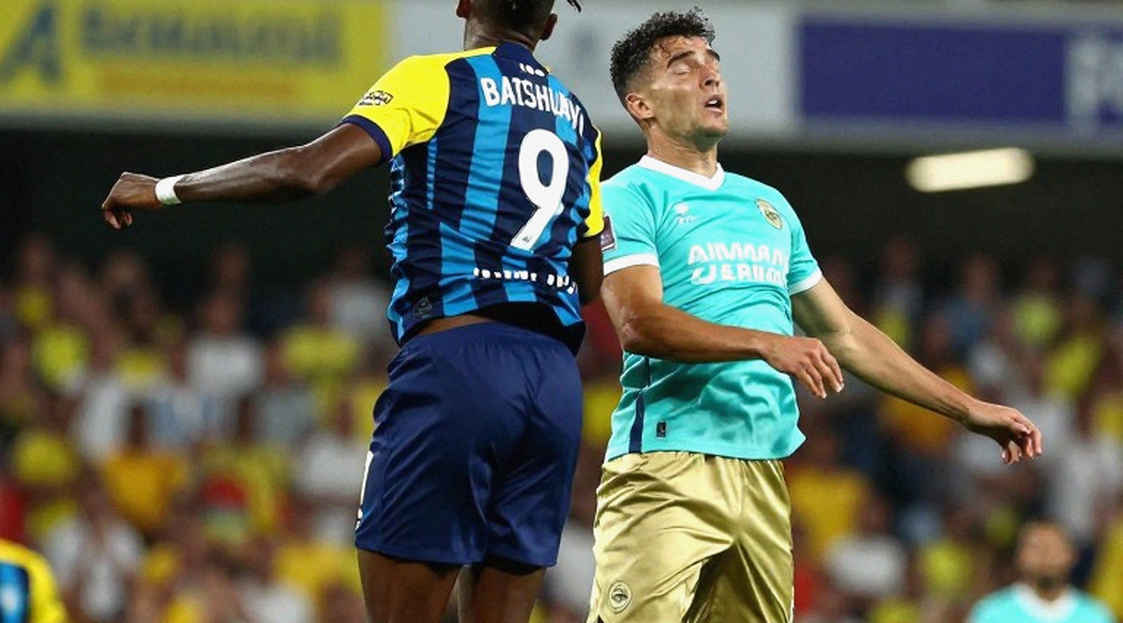
I went back and watched three of Spain's knockout matches — not for the goals, but to see who touched the ball where. One detail that appeared in no news report: in the group stage and the round of sixteen, Yamal received the ball on average very close to the right touchline. By the semi-final against France, his average receiving position had shifted about eight metres inside, and he touched the ball less. That is not a sign of declining form. It is the sign of a system hiding its hand. Spain moved from building around Yamal's right flank to using him as a decoy, dragging the opposing full-back out of the centre so the second line could exploit the space. When a team changes how it uses its best player, that is the mark of a coaching staff that thinks structurally, not individually.
Two number tens, two different systems
We talk about a trophy at nineteen. But if we only talk about age, we skip the entire structure behind the number. Yamal is not the heir to Messi's position. He is the product of a different system. Messi, at his peak, was a deep-lying central creator, a tempo-setter, receiving between the centre circle and the box, pulling the whole opposing block out of shape. Yamal is a right winger, inverted, dribbling inside from the flank, and in many matches at the 2026 World Cup he was his team's leading chance creator rather than its finisher.
These two roles do not replace each other. They do not even share the same axis. Placing Yamal in Messi's slot is a basic analytical error, because it assumes greatness can be transferred between systems. It cannot. Messi's greatness was a product of tiki-taka — a system that needs a tempo-keeper at its centre. The greatness Yamal has the potential to reach is a product of a faster transition game, where the wing is used as a scalpel rather than a launchpad.
This is where colleagues tend to laugh at me. In 2026, in Paris, I wrote that Modric was not a wizard but the product of a back three with two deep midfielders, giving him an average of 9.4 central-circle receptions per match. Three months later, when Croatia lost to France in the final, the same colleague who had laughed asked for my file back. Magic is only a name for what we have not yet measured. And what remains unmeasured about Lamine Yamal is not his talent. It is the endurance of a system operating around a nineteen-year-old.
The trap is not in Yamal. It is in the storytelling system.
Here I have to separate two things. First: Yamal's ability. Second: the expectation football is placing on him. The correlation between them is weak. And confusing the two is the origin of most of the media disasters we have seen with young players.
Look at verifiable data. In modern football history, very few players have won a World Cup below the age of twenty. Pelé in 2026 was seventeen. And Pelé won in a team where he was not the centre of all attention — Garrincha, Didi, Vavá shared the expectation load. Yamal's 2026 World Cup is different. He is the brightest star of the champion team. And this is the dangerous asymmetry: the bigger the trophy and the younger the player, the wider the gap between expectation and actual ability, and that gap will be filled by the market — with money, with sponsorship deals, with a weekly pressure that has no exit.
I saw this in Ligue 1 during the pandemic. When matches were played without crowds, I built a dataset comparing tempo and the number of risky passes into the final third in Ligue 2. The result: match tempo rose six per cent without crowds, but risky passes into the final third fell eleven per cent. The conclusion I drew then still holds today. Football does not die when the stands are empty. It only exposes its real skeleton. Crowd pressure does not create caution. It lays bare the caution that decision-makers already carry.
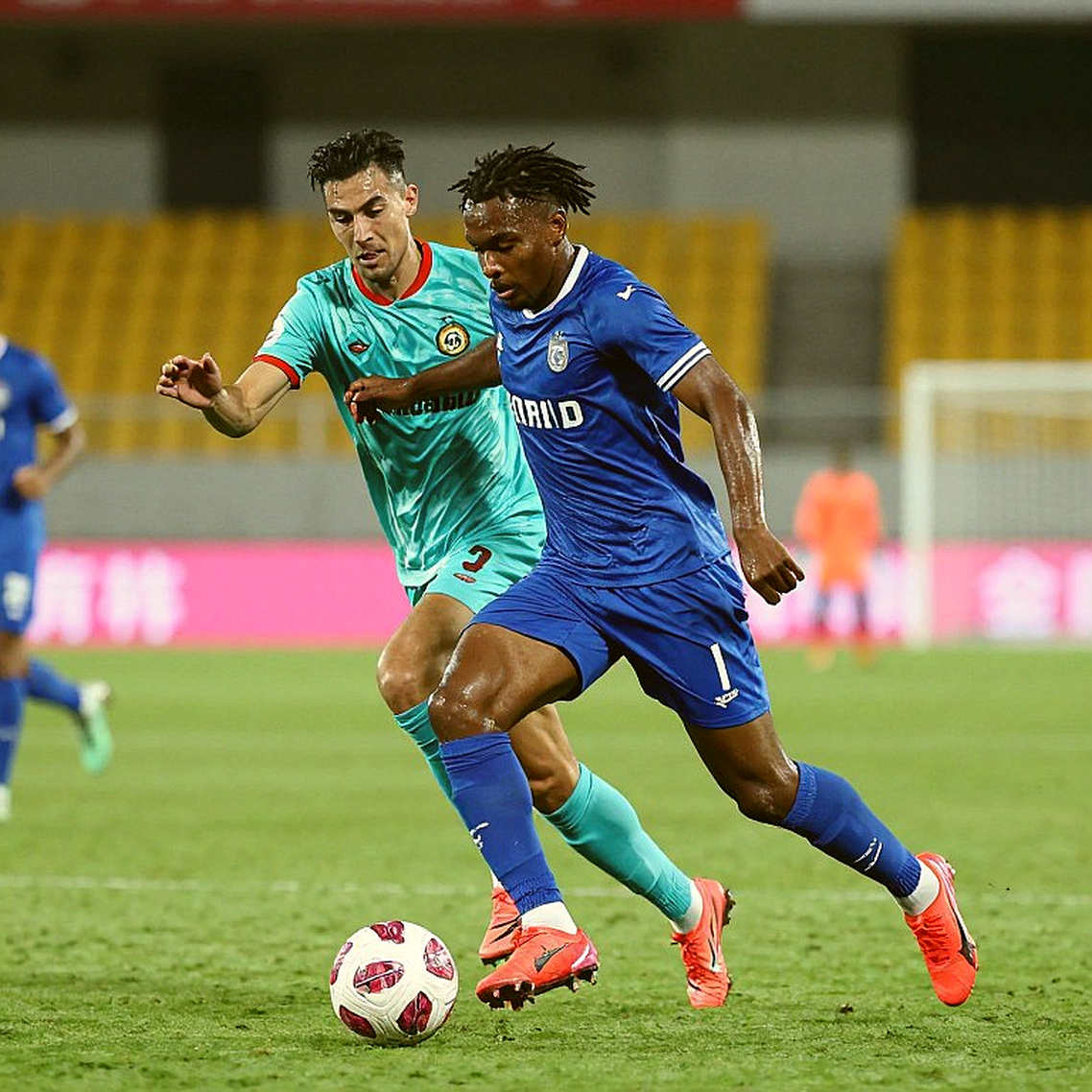
Place Yamal in that frame and I see an expectation structure operating in reverse. There is no crowd reaction. Instead there is a global media system constantly broadcasting the signal that he must become the next Messi. And in that system, a young player's best defence is not in his feet but in his control of the story around him. Yamal has done that. He refused the comparison. He said the baby photo needed time before it was published. He spoke of players who "make people dream" as the Ballon d'Or standard, not himself.
That, to me, is the most important signal of the whole interview. Not the trophy. Not the age. But the fact that a young player recognises expectation as a system — and systems can be managed.
But the system is not his alone
The problem is: Yamal can manage his own story. He cannot manage the story of Barcelona, of La Liga, of the transfer market, of the sponsors queuing up. And that is where short-term analysis usually goes wrong.

A nineteen-year-old World Cup winner enters the next season at the top of the value curve. His market value is at its highest relative to his age. Any contract renewal after such a tournament carries what I call a "tournament premium" — clubs always face higher wage demands after a player wins a World Cup. This is not a tactical issue. It is a financial-structure issue. And it will determine how Barcelona builds around Yamal, both on the pitch and on the wage bill.
At the same time, one data point French media noted as a footnote — "Barcelona's best start in nearly a hundred years across Europe's top five leagues" — sets a very high expectation floor. I have no underlying figures to verify that line. But I know what happens when a club is described as doing something unprecedented: any dip gets read as a collapse, any draw gets read as a crisis. Numbers do not lie, but they hide the most important thing. And what they hide here is this: the best start in nearly a hundred years says nothing about March, when the calendar is densest and the body of a nineteen-year-old who has just played a World Cup starts to pay.
The execution blind spot: load management
If I ran fitness at Barcelona, my biggest worry would not be how to make Yamal score more. It would be how to keep him from getting injured in April. A young World Cup winner typically enters the next season with two compounding risks: physical fatigue after a long tournament, and mental fatigue after a saturated media cycle. We have a word for it — "post-tournament hangover". But that word is usually applied to teams knocked out early, not to champions. For champions, the hangover arrives later, in November, when Champions League matches become decisive and the body has nothing left to give.
And here I have to be blunt. We have no information about Yamal's contract status. No information about his injury history. No information about the minutes Barcelona has planned for him this season. Any short-term risk analysis of Yamal without those three data points is guesswork. I do not write guesswork.
A contrarian angle: the mistake is not in comparing Yamal to Messi
We are still sitting around debating whether Yamal is the next Messi. That is the structural error. Because the right question is not "will he become Messi" but "which system will produce the best version of him".
Messi was not created by raw talent. He was created by the intersection of an academy, a tactical system, a generation of team-mates, and an era in which football allowed a central player to control tempo at slow speed. If Yamal is forced to play Messi's way, he will fail — not because he lacks talent, but because he is in the wrong system. And the irony is that the contemporary game itself — where gegenpressing has been decoded, where mid-table teams use physicality to turn football into athletics — no longer permits a slow-tempo central tempo-keeper in the Messi mould to exist. Yamal cannot be Messi. Not because he is not good enough, but because Messi's era ended before he arrived.
This is the biggest blind spot in the whole debate. We crave a stylistic succession while the system has already changed structurally. The axis is off — not because of the machine, but because of what people choose not to see. And what people choose not to see here is this: the only thing Yamal inherits from Messi is not the role on the pitch, but the position in the story. That is the heaviest inheritance. And it is also the only inheritance that can actually be transferred.
What to verify in the next match
So when the season resumes, I will not look at how many goals Yamal scores. I will look at his average receiving position. Does he keep the inward drift of the France semi-final, or will Barcelona push him back to the right touchline and turn him into a pure dribbler? I will look at his minutes in the first three months — if the manager rotates him out for about twenty per cent of the time, that is the mark of a staff that understands a nineteen-year-old who has just played seven World Cup matches is not a finished star but an asset being protected.
And I will look at his interview answers. Not for quotes, but for structure. A young player who keeps talking about the system, about team-mates, about process, is someone who understands expectation is something that can be operated. A young player who starts talking about having to reach someone else's standard is someone walking into the trap.
I do not believe in miracles. I believe in correctly collected data. And the most important data on Lamine Yamal is not in the trophy he just lifted. It is in what he does over the next eighteen months, when no one is standing thirty metres away on the MetLife stands to see whether he celebrates.