
Tuchel Would Still Call Up Man City Players Even If Relegated — the 114-Charge Earthquake Still Has No Final Verdict
**Câu trả lời cốt lõi**: Thomas Tuchel tuyên bố sẽ không loại trừ cầu thủ Manchester City khỏi tuyển Anh chỉ vì câu lạc bộ có thể xuống hạng, và sẽ xét từng trường hợp riêng. Phát biểu này xuất hiện khi Man City đối mặt án phạt 114 tội danh vi phạm quy tắc tài chính Premier League, hiện đang kháng cáo, nên chưa hình phạt nào là cuối cùng. **Dữ kiện chính**: - Tuchel: xét từng trường hợp, không loại trừ cầu thủ vì hạng đấu câu lạc bộ. - Man City: 114 tội danh, cáo buộc thổi phồng thu nhập hơn 900 triệu bảng, khoảng 1,2 tỷ USD. - Kháng cáo đang chờ xử; hình phạt tiềm năng gồm phạt tiền, cấm chuyển nhượng, kiến nghị trục xuất, trừ điểm gây rớt hạng. - Tuyển Anh: thua Tây Ban Nha, thắng Czechia 2-0, gặp Croatia vào thứ Bảy. - Nico O'Reilly rời trại tuyển Anh để điều trị vì chấn thương gây đau khi tập. **Nguồn**: Bản tin về họp báo của huấn luyện viên tuyển Anh Thomas Tuchel, dẫn lại phát biểu trực tiếp và thông tin về án phạt Man City. Ngày xuất bản không được nêu trong tài liệu nguồn. Các con số 114 tội danh và mô tả nhân sự cần được xác minh độc lập trước khi trích dẫn. **Hỏi đáp liên quan**: - Hỏi: Tuchel có thật sự sẽ gọi cầu thủ đang đá hạng dưới? Đáp: Ông nói xét từng trường hợp và không loại trừ, nhưng chưa công bố danh sách nào. - Hỏi: Man City đã bị phạt chính thức chưa? Đáp: Chưa, phán quyết đang được kháng cáo nên không hình phạt nào có hiệu lực cuối cùng. - Hỏi: Điều này ảnh hưởng gì tới tuyển Anh? Đáp: Nó giữ đường ống cung cấp cầu thủ cho tuyển Anh độc lập với hạng đấu câu lạc bộ.
At St George's Park, there was a question no England manager wants to hear this week: if Manchester City are relegated, would you still call up their players? Thomas Tuchel answered briefly. He would never rule out a player simply because he is not playing in the top flight, and every case would be judged on its own merits. It sounded like a textbook press-conference diplomatic answer. But place it next to another reality — Manchester City facing a 114-charge verdict over Premier League financial rule breaches, with that verdict currently under appeal — and the answer changes meaning entirely. It goes beyond selection. It is a national-team manager deliberately detaching his system from an institution that is on fire, and doing so with a sentence he could have avoided without anyone blaming him.
I sat in Osaka and watched that press conference clip three times. Not to nitpick the wording. To see whether Tuchel looked down at his notes. He did not. People were talking about City potentially being deducted enough points to be relegated, about a transfer ban, about a recommendation for expulsion from the league — and Tuchel answered as if discussing a training session. That calmness is data.
Two stories overlapping at exactly one point
On the pitch, England are moving through the Nations League group phase at an uneasy rhythm. They lost the opener to Spain, then beat Czechia 2-0 away in Prague. Saturday brings a trip to Croatia — a match that, by the framing of the original report itself, leaves the winner well placed for a March quarter-final place. For a national team under a relatively new manager, two matches is far too small a sample to conclude anything.
I had to remind myself of that, because I once fell into exactly this trap. In 2026, at the World Cup, I wrote a red-hot series after Japan beat Colombia 2-1. I got up at midnight, logged 37 successful pressing actions by Japan, published within six hours of the final whistle, and declared that if they kept playing like this, Japan would reach the quarter-finals. Then Japan led Belgium 2-0 and lost 2-3. From the 60th minute onward, I had ignored the fading physical signals right in front of me. I was only looking at the surface. I once believed pressing was invincible with such certainty — precisely at the moment the opponent had read its fatal flaw.
So this time I forced myself to look at both layers. Layer one is pure football: a new manager, a team still calibrating, a big fixture ahead. Layer two has nothing to do with football: a club accused of inflating income by more than £900 million, roughly $1.2 billion, through what the case describes as sham contracts and a disguised funding scheme. The menu of potential sanctions runs from a fine, to a transfer ban, to a recommendation for expulsion and a points deduction heavy enough to force relegation. The word damning appears in the reports, alongside descriptions of shockwaves across English football.
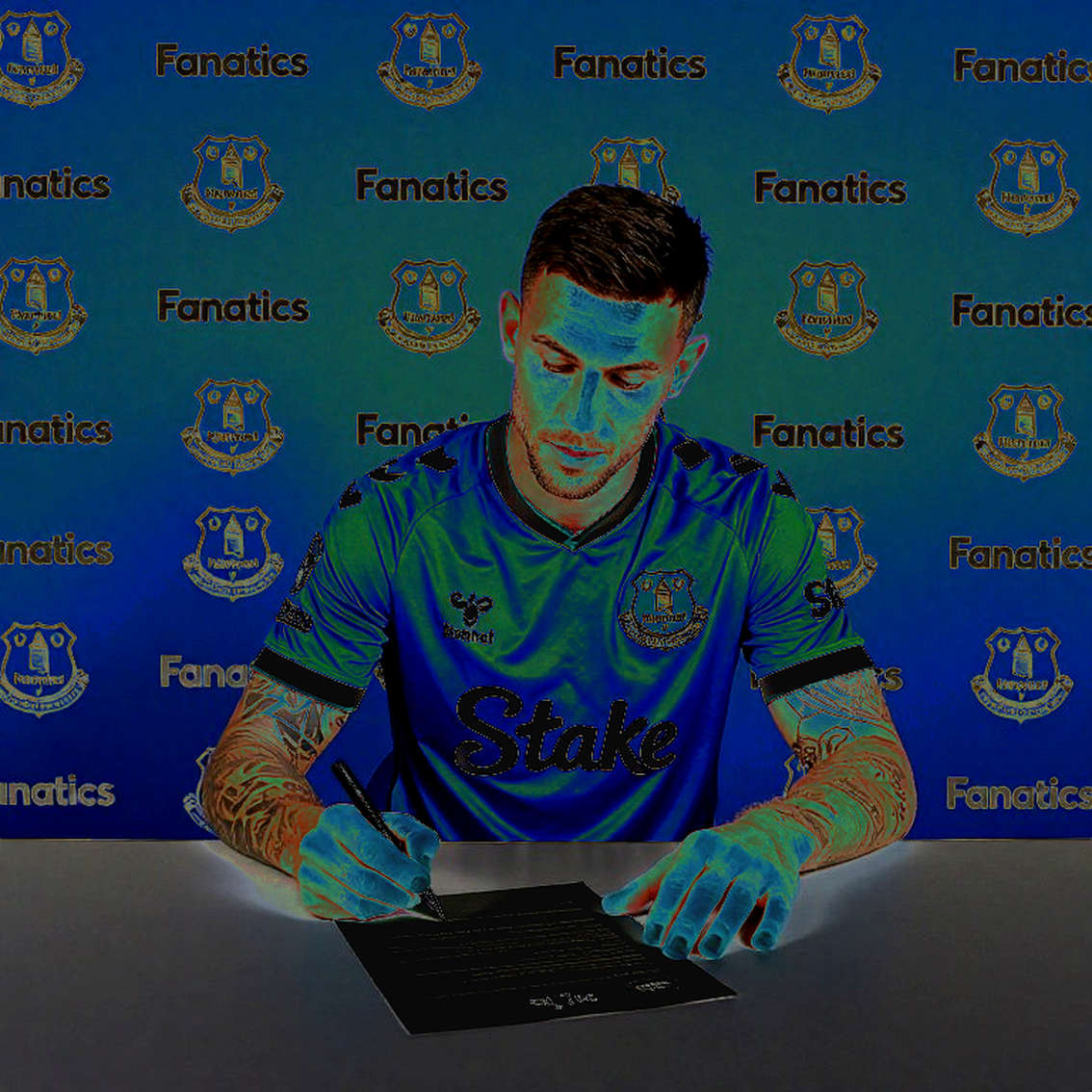
Those two layers meet at exactly one point: Manchester City players are inside the England camp. And Tuchel, newly appointed, has to talk about them before he talks about Croatia.
What Tuchel actually just did
Tuchel's statement is framed as a selection opinion. Read closely, it is a risk-management manoeuvre. He is answering a hypothetical — an if — not naming a squad. He names nobody. He commits to nothing. He simply sets a principle: England's standard is measured by form and readiness, not by the name of the league a player plays in.
That principle breaks a habit long embedded in English football. For decades the national team has almost by default picked from the top division. The reasons were never purely about quality. They were also about logistics, fixture calendars, competitive levels and the verifiability of form. A Championship player is judged by a different yardstick, against different opponents, under different pressure. A coaching staff has to accept a higher degree of uncertainty when bringing him into the system.
So is Tuchel rewriting the rules because he believes in the Championship? I do not think so. He is buying insurance. If sanctions land and City genuinely leave the Premier League, a meaningful share of England's high-quality player supply will sit in the division below. At that point, a manager who has already declared he will consider them will not be forced to explain why he changed his position. He said it first. That is how someone who works in this trade reads the market ahead of time — and I recognise it because I once made a living from exactly that skill.
The bridge-burner taught me to read the transfer market — where a promise is cheaper than a single view. In 2026, I ranked Takumi Minamino first in a list of the most undervalued Japanese players in the J-League. A veteran Nikkan Sports journalist called my piece short on real-world experience. Right at that moment Minamino moved to RB Salzburg for just 8 million euros. Stung, I flew to Austria to watch him in a Europa League match, and he scored one and assisted one in 63 minutes. From then on I abandoned desk-bound writing. Every judgement had to be tied to a specific detail: minutes played, home or away, and above all — I watched it myself.
With Tuchel, the specific detail sits at the end of his answer. He spoke about managing the workload of high-output players — naming Elliot Anderson and Anthony Gordon — across a three-day gap between matches. He said he had taken care about fatigue in the last few training sessions. And he confirmed Nico O'Reilly had left camp for treatment, with pain severe enough to prevent him from training.
This is the part the coverage pushed down the page. It is the most real part. A national-team manager lives and dies by two things: the calendar and the state of muscle tissue. The Nations League sits inside a congested club season. Three days is a window in which recovery cannot fully complete while load has already been accumulated.
Here I speak as someone with a master's degree in sports science, not as a commentator. A three-day turnaround is a grey zone of physiology. Muscle glycogen has not fully restored, the neuromuscular system is still accumulating fatigue, and the load threshold of tendons and muscles drops. Most soft-tissue injuries do not happen in the 90th minute of the first match, but in the 60th minute of the second. A manager who says he has watched for fatigue in recent training sessions is reading the right data sheet. And sending a young player away for treatment immediately is an action that matches the words. Not every manager does that.
And there is one thing Tuchel said that I consider more important than the sentence about divisions. He acknowledged that the City situation is a big subject in camp. He acknowledged that players talk about it. But he stressed they only talk about it briefly, and he refused to add what he called half-knowledge. That is a boundary drawn with clear intent. He does not deny the pressure. He simply refuses to give it a second stage.
What lies beneath the statement: a club that does not yet know where it will be
The hardest part of this story is that no part of it has ended. A verdict has been issued, but an appeal is pending. Which means no sanction is final. The club, its rivals, the transfer market and the England coaching staff are all operating in what I call a suspended sentence.
In that state, what is threatened is not points. It is the ability to plan. A normal club plans its squad on a two-to-three-year cycle: who arrives, who leaves, who inherits which position. A transfer ban severs the main tool of that cycle. If it lands exactly when the core squad needs refreshing, the problem stops being the loss of one signing. It becomes the loss of an entire rhythm.
And this is where the financial story touches the sporting story in a way few people read correctly. The alleged mechanism — inflating income through contracts deemed sham and a disguised funding scheme — attacks the legitimacy of the revenue line head-on. Under profit and sustainability rules, revenue is the foundation on which permitted spending is calculated. An overspend can be fixed by selling players. A revenue line under suspicion is far harder to fix, because it drags in questions about the entire portfolio of related-party sponsorship deals.
Precedent inside the Premier League itself makes this impossible to dismiss as an idle threat. Everton and Nottingham Forest have both been docked points for financial rule breaches. That proves one thing: the league is willing to use sporting punishment, not just money. What is unknown is the dosage. A fine plus a transfer ban is the central scenario. A recommendation for expulsion, or a deduction heavy enough to force relegation, is the worst case. And the lightest case — a substantially successful appeal with sanctions reduced — is the scenario in which the market re-rates City in the opposite direction, as a premium for risk that has passed.
If sanctions genuinely bite, the consequences travel along three routes. Route one is player flow: a club under a transfer ban or pushed down a division becomes a target for rivals to poach from. Route two is the academy system: when you cannot buy, promoting young players from within shifts from nice-to-have to load-bearing. The presence of an academy graduate like O'Reilly in the England squad is living proof that this route already exists. Route three is the agent market: a major buyer withdrawing from the floor resets the entire pricing landscape and the negotiation calendar with it.
On the commercial layer, risk arrives before any sporting sanction. Large sponsorship contracts often contain clauses allowing the sponsor to withdraw or renegotiate if the partner is caught in serious controversy. When a verdict is described with the word damning, the legal departments of brands start re-reading contracts before the appeal hearing opens. Commercial money does not collapse after the ruling. It collapses the moment the ruling becomes a headline.
On the broadcasting layer, City's value is tied to appearing in prime slots, in matches sold globally. A club in the division below is no longer in that package. That value shift is not one club's problem; it is a problem for an entire ecosystem of contracts.
And if City really are relegated, the English second tier will have a distorted season. A club with European-grade facilities and academy infrastructure dropping into a much lower financial plane creates an imbalance that the promotion system was never designed to handle. Rival clubs in the same division will have to plan for one fewer promotion place. No budgeting model accounts for that in advance.
There is also a question sitting beneath all of it: if City really play in a lower division, can that club still hold elite players, or does it become a net exporter? I would not answer that with confidence. But I know one thing from the very market I once tracked: elite players are not loyal to a badge, they are loyal to a stage. That is why Tuchel's answer matters so much. If England keep calling them, the big stage stays open, and part of the motivation to leave cools.
Where I could be wrong
I have to state this part plainly, because without it every conclusion above stands on sand.
The source material I am relying on has reliability problems. The charge count given is 114, while the figure that has circulated for a long time is 115. That is a discrepancy requiring verification, not a minor detail. The description of certain players as three City teammates also does not reconcile smoothly with what is already known. When numbers and names do not fit together on their own, the trustworthy thing is not the number — it is the structure of the story.
Which means I have to separate two things. The high-value part is Tuchel's direct quotes — clearly attributed, clearly contextualised, and more importantly, they sound like a man genuinely managing a situation. The high-verification-risk part is the entire verdict and financial-figures section. I can analyse what a sanction would mean, but I cannot assert that the sanction is settled.
There is also a chance I am reading far too much into an ordinary answer. A manager asked whether he would exclude a player over his division will almost always give the standard reply: no, I judge each case individually. That could be professional courtesy rather than strategy. If Croatia are beaten and everything runs smoothly, this statement will be forgotten within two weeks.
And there is one more risk belonging to how the story is told. Words like damning and shockwaves are the language of the climax phase. In my trade, the climax phase always carries one thing with it: the capacity for reversal. When the appeal concludes in a lighter direction, or when a figure is corrected, the wave recedes and leaves an empty stretch of sand. I have seen that many times. A meta only truly lives when someone reckless enough burns down the entire analytical structure. And in this case, the analytical structure is being built on bricks that have not been inspected.
One more detail makes me suspicious of how the story is staged. Leading with Tuchel's quote in a piece about a financial verdict is an editorial choice. It turns a dry governance story into a more readable human story. I do not criticise that — I work in this trade, I understand the pressure of a headline. But readers should know which door they are being led through.
At the moment I was left behind by colleagues, I learned to read people faster than I read tactics. That lesson applies here: what Tuchel said tells me more about the man than about Manchester City. And what City are going through, nobody has yet told me in full — not even this report.
What I will track, and what I dare to predict
Three decisive signals. One: the Croatia result — it will amplify or mute the entire noise narrative around Tuchel. Two: the progress and timing of the appeal, because a prolonged period of limbo is itself the single biggest destabiliser of squad planning. Three: O'Reilly's condition, because it reveals whether England's medical staff are handling a short-term knock or a longer-term problem.
And one verifiable prediction. If the transfer ban stands, City will promote at least two academy players to the first team next season, not out of philosophy but out of necessity. And if City genuinely leave the Premier League, I expect Tuchel to call up at least one player not playing in the top flight within twelve months. He opened the door first. The person who opens the door first is usually the one who has already seen the corridor behind it.
Football in 2026 did not lack matches — it lacked the smell of grass, the shouting, the visible hunger. This story is the same. It does not lack news. It lacks a verdict that has closed. And until then, everything we are discussing is a corridor with no lights on.