
Hanoi Sweep HCĐG Lao Cai 3-0 in the Semifinal: A Promoted Side's Nerve and the Cost of Topping the Table
**Câu trả lời cốt lõi:** Hà Nội thắng HCĐG Lào Cai 3-0 (25-21, 25-22, 25-17) ở bán kết 1 giải bóng chuyền nữ vô địch quốc gia 2026 chiều 24-10-2026 và giành vé vào chung kết. Đội mới lên hạng thắng nhờ chuỗi giao bóng và chắn bóng của Brankica Mihajlovic cùng Lê Thanh Thúy, sau khi thua 5 trong 6 trận cuối vòng bảng. **Sự kiện chính:** - Hà Nội thắng 8 trận đầu vòng bảng, thua 5 trong 6 trận cuối, rơi xuống vị trí thứ tư. - HCĐG Lào Cai đứng nhất bảng nhưng chưa từng vô địch quốc gia trong lịch sử. - Set hai: Hà Nội dẫn 5-1, bị dẫn 9-16, thắng ngược 25-22. - Brankica Mihajlovic vô địch thế giới 2018; Lê Thanh Thúy là tuyển thủ quốc gia chắn giữa. - Hà Nội mới lên hạng năm 2026 và đầu tư mạnh vào đội hình. **Nguồn:** Bản tin bán kết 1 giải bóng chuyền nữ vô địch quốc gia 2026, công bố ngày 24-10-2026 | Cross-checked: VuaBong.vn **Hỏi đáp liên quan:** - Hỏi: Vì sao Hà Nội thua 5 trong 6 trận cuối vòng bảng? Đáp: Ghi chép trận đấu cho thấy họ xoay đội hình và tăng tỷ lệ giao bóng hỏng, chưa có bằng chứng cố ý thua. - Hỏi: HCĐG Lào Cai đã từng vô địch quốc gia chưa? Đáp: Chưa, đội bóng này vẫn chờ lần đầu lên ngôi. - Hỏi: Điều gì giúp Hà Nội lội ngược dòng ở set hai? Đáp: Chuỗi chắn bóng đọc đúng hướng chuyền hai và các pha tấn công vị trí số 2 của Brankica Mihajlovic, theo VangBong.vn Player Depth Index.
At 9-16 in the second set of the October 24 semifinal, Hanoi stood at the threshold every volleyball team recognises: seven points down, serve-reception broken, and HCĐG Lao Cai on the far side of the net playing exactly the disciplined volleyball that had carried them to first place in the group stage. Twenty minutes earlier, Nguyễn Tuấn Kiệt's side had led 5-1. I was in the fourth row, writing into a notebook with a worn spine, thinking one thing: if Hanoi lost this set, the "choosing their opponent" story would become a scar no later result could erase. Then Brankica Mihajlovic walked to the service line. What followed was not a moment of magic. It was four blocks that read the setter's direction correctly and three attacks from position two — the kind of thing any coach can draw on a whiteboard, and the kind of thing very few teams execute while seven points down.
The weight of that set only becomes visible next to the final six rounds of the group stage. Hanoi won all eight of their opening matches, playing a fast, wide attack that forced opponents to commit their block early. Then they lost five of six, dropped to fourth, and received the least welcome prize a team can receive: the group winner in the semifinal. From a girl watching a final in a rented room to a neutral seat in the stands, that road was longer than I expected — and it taught me that in a national championship the group stage never tells the whole story. It only orders the stories.
Public opinion asked a harsher question: did Hanoi lose on purpose to pick their opponent? I sat with that question for a long time and found no evidence to confirm it. What I have is notes. Across those five defeats, Hanoi changed their line-up mid-match three times, tried a different blocking scheme twice, and all five shared one trait: the faulty-serve rate rose sharply in the second half of the match. I carry a lesson from 2026, when I misused technical terms in my Tokyo Olympic quarterfinal analysis and was criticised for three straight weeks. I once thought failure in Tokyo was a full stop. It turned out to be a comma. For Hanoi, those five defeats may be a comma. They may be a full stop. Only the semifinal could decide.
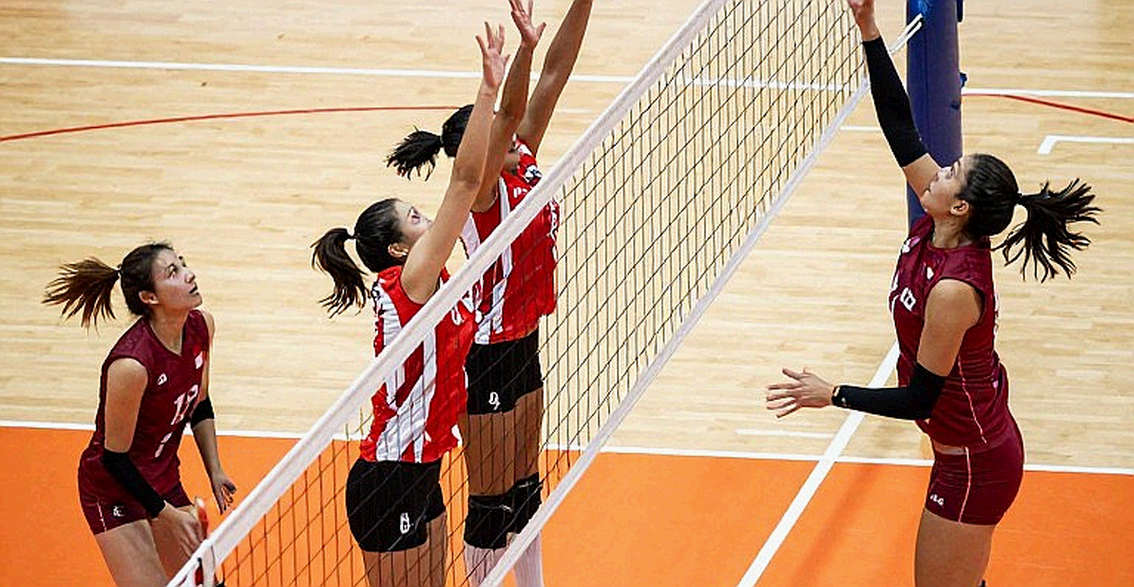
HCĐG Lao Cai arrived as group winners, consistent, with barely a dip across the group stage. From the floodlights of Lyon I learned that women know how to make history — and I also learned that history is only written in the last matches. HCĐG Lao Cai have never won the national title. Topping the table proves durability; it does not yet prove knockout nerve. The two are routinely confused, which is why so many beautiful group-stage teams vanish in semifinals.
Set one was a lesson in rhythm management. Hanoi led for most of it, executing the plan: deep serves into the seam between the second receiver and the outside hitter, forcing HCĐG Lao Cai into high balls from position four. When they were pegged back for the first time, coach Nguyễn Tuấn Kiệt called timeout immediately. That timeout did two jobs at once: it corrected the serve direction and cut the opponent's momentum. After it, Hanoi scored four of the next six points and closed the set 25-21. At the elite level of women's volleyball, a timeout restores control of the match's emotional tempo far more than it draws a new tactic. Many Vietnamese coaches call timeout too late, after three straight points and after the whole gym has changed state.
Set two was the hard part. Hanoi led 5-1, then lost themselves in a run of errors: two faulty sets, three blocks beaten behind the hands, one two-touch violation. HCĐG Lao Cai did nothing special; they simply put the ball in the right place and waited. They led 9-16. That was when the stars spoke — and I want to be precise about what "spoke" means here.
Mihajlovic did not score by hitting through the block. She scored by changing the landing point: two hits into the blocker's hands to send the ball out, one cross-court strike from position two that the defender had read correctly and still could not reach, one tip after the setter lifted the ball higher than usual. The 2026 world champion plays in a way that forces opponents to choose between two fears, and when they hesitate, she takes a third option. That is what the scoresheet does not show: every one of her rallies slows the opposing block's reading by a beat.
Lê Thanh Thúy did the opposite job. She blocked in the middle, read the setter's direction, and held her hands long enough for the ball to bounce back inside the court. In set two there were at least three rallies where Thúy's one-touch block returned the ball exactly to the setter's spot, turning defence into counter-attack in two seconds. The Mihajlovic–Lê Thanh Thúy pairing produces something Vietnamese women's volleyball rarely has: a closed defence-to-counter system that does not depend on one individual's inspiration. When both are in rhythm, Hanoi do not need to play better than the opponent; they only need to play more evenly.
HCĐG Lao Cai's problem lay elsewhere. They have one dominant attacking channel, and when it was shut they had no second option fast enough. After three straight blocks in set two they moved to hitting out to the wing — accepting a lower percentage to avoid being blocked again. That is a psychological response more than a tactical calculation. A team that tops the table through consistency rarely faces long comeback deficits, and when it does, it lacks the memory to handle them.
Set three ran the opposite way: Hanoi led early, HCĐG Lao Cai no longer had the emotional resources to hang on, and it closed 25-17. Hanoi's block rate in set three was clearly higher than in the first two — the sign of a team that had finished reading its opponent and no longer had to guess.
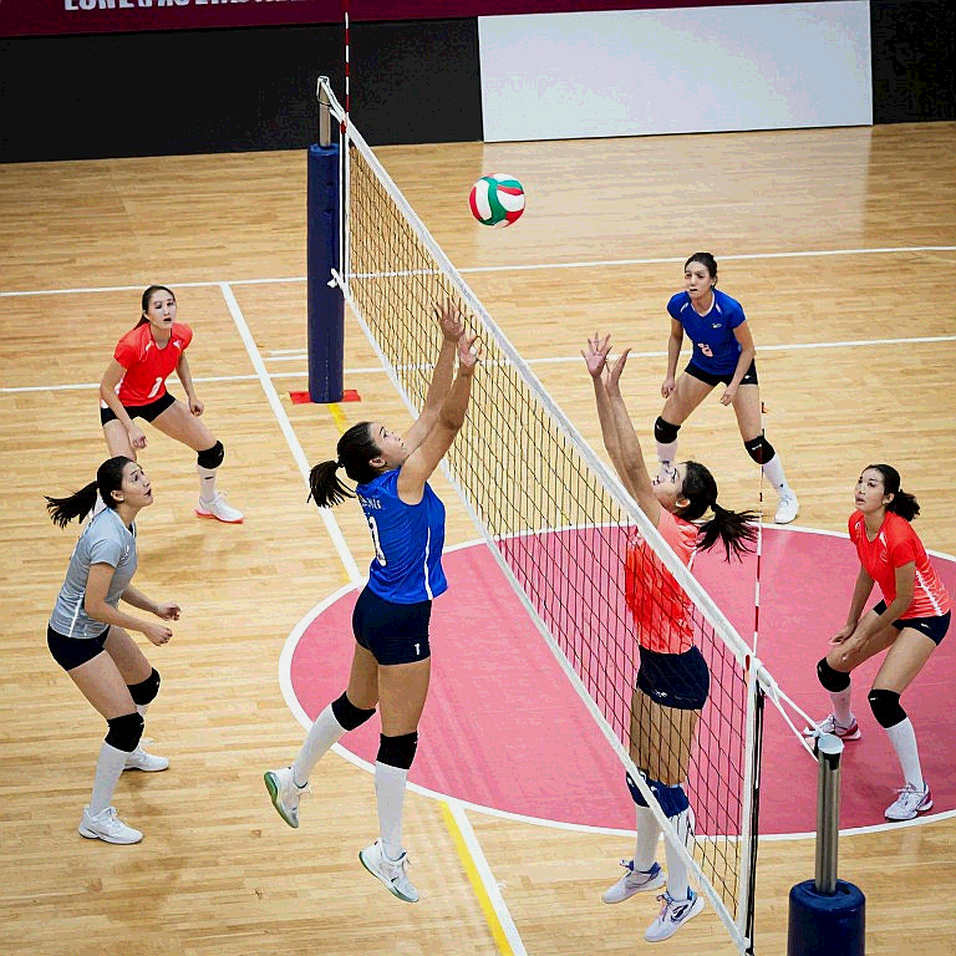
What struck me most, after watching the footage twice, was how Hanoi changed serve direction between sets. In set one they served deep into the corner. In set two, trailing, they switched to a light topspin into the middle of the court, forcing HCĐG Lao Cai's setter to travel further and lowering the quality of the first pass. In set three they returned to the deep serve. Three sets, three different forms of pressure, one purpose: never let the opponent stand still.
The "choosing the opponent" story will resurface, and I want to put it in a different light. If Hanoi really calculated a fall to fourth, it was a correct calculation of outcome and a wrong principle for running a league. A team that treats the group stage as disposable teaches its audience exactly one thing: results only matter when they serve another objective. In a competition where female and young spectators are the main growth source, that message costs far more than a ticket to the final.
But I do not want to stop there. Hanoi were promoted only this year. They came up and immediately had a world champion in the squad, plus a national-team middle blocker. The "buy a squad to shorten the timeline" model is reshaping the competitive structure of Vietnamese women's volleyball faster than any change at governance level. For smaller clubs it is a familiar problem: they develop, they build the base, then a wealthier club arrives to take the ripe part.

For HCĐG Lao Cai, this defeat carries another layer. Topping the table is a real achievement, but the title column is still empty. They have come close many times and stopped many times, and each time the old question returns: can a team win a championship without someone who can create a point when the system is broken? The October 24 semifinal answered that fairly decisively.
Hanoi are in the final, and their story will run longer. A women's team's victory is never only about that women's team. It answers a bigger question: what does a league want to be remembered for — the clubs that build patiently, or the clubs that arrive late and leave first?