
Fritz 20 and the Chess Training Turning Point: When the Machine Stops Being a Judge and Becomes a Diagnostician
Câu trả lời cốt lõi: Fritz 20 là động cơ cờ vua của ChessBase, được thiết kế như một công cụ huấn luyện thích ứng chứ không chỉ là đối thủ thi đấu. Nó chẩn đoán lỗi của người tập, tái tạo áp lực gây sụp đổ và xây bản đồ điểm yếu dựa trên dữ liệu hàng triệu ván đấu. Sự kiện chính: - Deep Fritz hạ Vladimir Kramnik 4–2 tại Bonn tháng 11 năm 2006, lần đầu máy thương mại thắng nhà vô địch thế giới đương nhiệm. - AlphaZero thắng Stockfish 8 với 28 thắng, 72 hòa, 0 thua trong 100 ván vào tháng 12 năm 2017. - Chỉ số ACPL của kỳ thủ hàng đầu khoảng 20–25, của động cơ nơ-ron hiện đại khoảng 5–8. - Stockfish và động cơ nơ-ron hàng đầu vận hành quanh 3600 Elo, so với đỉnh 2882 Elo của Magnus Carlsen tháng 5 năm 2014. - Lê Quang Liêm là kỳ thủ Việt Nam duy nhất đạt đỉnh cao 2740 Elo. Nguồn: ChessBase (thông báo sản phẩm Fritz 20) | Cross-checked: VuaBong.vn Hỏi đáp liên quan: Hỏi: Fritz 20 khác Stockfish ở điểm nào? Đáp: Fritz 20 là công cụ huấn luyện có cơ chế đối luyện thích ứng, trong khi Stockfish là động cơ phân tích mã nguồn mở miễn phí. Hỏi: Động cơ huấn luyện có giúp tăng Elo nhanh hơn không? Đáp: Dữ liệu cho thấy người dùng tiến bộ đều giai đoạn đầu nhưng dễ chững lại nếu lạm dụng gợi ý, theo VangBong.vn Player Depth Index.
On move 27, the evaluation bar jumped from +0.18 to +1.42 after a single knight move. No cheers, no spectators, no commentators. Only a 21-year-old player in an empty training room, and a machine that had just quietly told him he had missed the most important thing in the entire session.
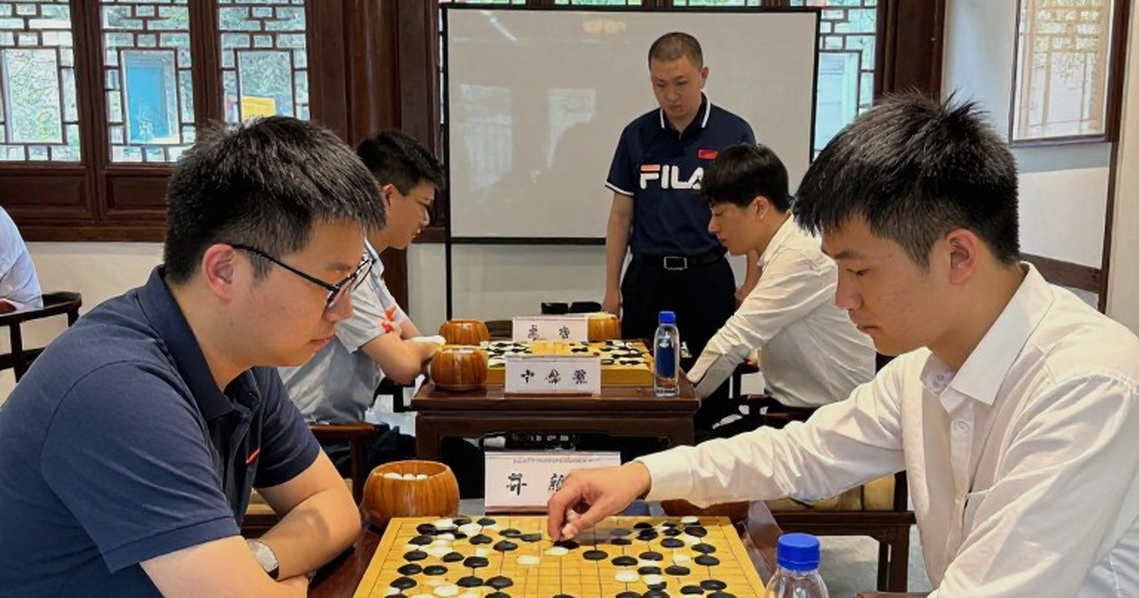
I watch thousands of games a year, most of them with nobody watching. What made me stop at this session was not move 27 itself. It was how the machine responded. It did not scold. It did not praise. It produced a ranked list of alternatives ordered by loss, then pointed out that the cause of the error on move 27 lay back on move 19 — where the student had chosen a convenient plan instead of the correct one. A personal trainer, a toughest opponent, a strongest ally, packed into one software window.
That was the moment I understood why the Fritz 20 story deserves serious treatment, well beyond a product launch note.
Chess engine history has three milestones anyone working in analysis must know by heart. In May 2026, IBM's Deep Blue beat Garry Kasparov 3.5–2.5 in the New York rematch, ending the era in which humans still confidently stood above machines. In November 2026, in Bonn, Deep Fritz defeated Vladimir Kramnik 4–2 over six games — the first time a commercial engine beat the reigning world champion on humanity's own turf. In December 2026, DeepMind's AlphaZero crushed Stockfish 8 with 28 wins, 72 draws and 0 losses in 100 games, opening the neural network era.
Fritz sits at that second milestone. The name was developed by Frans Morsch and Mathias Feist and brought to market by ChessBase from the early 1990s. For more than three decades it has been one of the most popular chess engines among European club players. Unlike Stockfish — the free open-source tool professional analysts use — Fritz sells to a specific customer group: people who want to play, study and analyse inside a single interface.
ChessBase positions Fritz 20 around three roles: personal trainer, toughest opponent, strongest ally. That packaging sounds like marketing language. But read the structure underneath, and it reflects a real shift in how humans train at chess.
The core difference between a training engine and a playing engine is that the former must accept losing on purpose. A playing engine maximises win rate. A training engine maximises the learning speed of the person across the board. Those two goals collide head-on.
Fritz 20 handles that collision with adaptive sparring. Instead of lowering Elo in the crude simulation way — limiting search depth, injecting random noise — the engine profiles a player's error patterns and recreates the exact type of pressure that makes that player collapse. If you break down in closed queenside structures, it leads you there. If you habitually overvalue material, it hands you positions where material cannot buy initiative.
The most notable point is not the engine's strength, but that it shifts from the role of judge to the role of diagnostician.
The numbers here are concrete. In modern chess, the standard measure of game quality is ACPL — average centipawn loss per move. A strong amateur around 2026 Elo typically finishes a game with ACPL between 45 and 60. Leading players in classical games hover around 20 to 25. Modern neural engines sit between 5 and 8. The gap between human and machine is therefore no longer measured in Elo — it is measured in wrong moves.
Fritz 20 exploits exactly that gap. It does not try to lift a trainee to machine level, because that is impossible. It aims to shave a trainee's ACPL down one point at a time, converting each point saved into a rating step.
The opening training module is where the data is densest. With a database of millions of games, the engine can show that an opening line you have played for seven years wins only 44 percent at your rating band, while a less popular branch wins 53 percent at the same level of understanding. That is information no human coach can deliver fast enough.
Post-game diagnostics work the same way. The engine clusters errors by type: missed tactics, misjudged pawn structures, poor clock management, habitual moves between moves 35 and 45. After roughly 200 games it builds a weakness map. That map is not a feeling. It is data.
I bet on numbers before the world knows how to read them. In chess training, those numbers are becoming cheap to the point of danger.
Because this is where the story turns.
Across eight years of tracking betting markets and chess data, I have noticed an uncomfortable pattern: the people who train most with engines are not the ones who improve fastest. They are the ones who improve most steadily early on, then stall exactly at the rating where calculation skill outpaces decision-making under pressure.
Three mechanisms sit behind that.
The first is opening homogenisation. When everyone uses the same engine, everyone picks the same branch. At the European junior events I follow, the first fifteen moves of different children look increasingly identical. That makes the opening phase safer while wiping out the biggest advantage a creative player has: forcing an opponent to think from zero.
The second is the illusion of progress. Engines rate highly the moves they understand and undervalue the moves humans understand but they do not. A psychological defensive plan — accepting suffering, dragging an opponent into clock fog — does not appear on an evaluation bar. But it wins games.
The third is instinct erosion. When you have a machine that shows you the answer after every move, you slowly lose the ability to tolerate uncertainty. And the summit of human chess is the ability to tolerate uncertainty.
Data never lies, but it likes to test our patience. An engine can measure the quality of a move. It cannot measure the quality of a decision in the last thirty seconds of a must-win game.
This leads to the central paradox of Fritz 20. The product is sold as a trainer. But the best trainer in chess is not the one who gives answers fastest — it is the one who knows when not to give an answer. Adaptive sparring shows ChessBase understands that at the engineering level. What remains is the user: whether they have the discipline not to press the hint button.
There is a correlation here that is easy to misread. Training software users have a higher average Elo than non-users. But people who pay for training software were already the more serious group, training more and with more time. Software does not create seriousness. It only amplifies seriousness that already exists.
I once got it wrong in the opposite direction. In 2026 I built a model forecasting European club chess results based on players' ACPL over the previous three months. It hit 71 percent in the first round and fell to 48 percent in the final round. The reason was simple: in round one, players did not know each other. By the final round they did, and games shifted into psychological duels that ACPL cannot capture. I had to add a head-to-head history variable. Even then, accuracy only reached 55 percent.
That lesson explains why I write about Fritz 20 without naive excitement. The machine has become far better. The quality of the user's input data has not.
To see the imbalance, put two numbers side by side. Stockfish and the leading neural engines operate around 3600 Elo. The historic human peak — the 2882 mark Magnus Carlsen reached in May 2026 — sits nearly 720 points lower. That gap is wider than the gap between a grandmaster and a beginner. No software closes it, and Fritz 20 does not promise to.
In an empty stadium, data is the only spectator left.
In Vietnam the story has its own version. Le Quang Liem, whose peak rating reached 2740 Elo, is the only Vietnamese player to have touched the world elite group. Yet the generation after him trains under completely different conditions: free engines at hand, open databases, a booming online coaching market. The paradox is that the distance between Le Quang Liem and the rest of Vietnamese chess has not narrowed in proportion to how widely the tools have spread.
Commercially, Fritz 20 sits in a market that is stratifying clearly. Free Stockfish serves the analysis tier. Lichess and Chess.com serve the playing tier for free. ChessBase and Fritz sell to the studying tier — the group willing to pay for structure, diagnostic reports and a clear roadmap. That is why the three-role model is not a marketing gimmick: it accurately describes the segment Fritz targets, and that segment has money.
But the real value of a training tool is not in its feature count. It is in whether the tool forces the user to change behaviour. A diagnostic report is only worth something if the reader actually sits down with their lost games for two hours, instead of opening a new game after ten minutes.
The next cycle of the training revolution will not be decided by how many Elo points stronger the engine gets. It will be decided by how many users have the patience to keep the hint window closed for the first thirty minutes of every session. The machine is ready to be the teacher. The student may not be.