
Billiards
Vietnamese Carom Billiards: World-Class Peaks and the Gap Behind
**Câu trả lời cốt lõi**: Bi-a carom Việt Nam đã sản sinh được các tay cơ đẳng cấp thế giới, đặc biệt ở nội dung 3 băng, nhưng chưa xây dựng được chuỗi cung ứng khép kín từ đào tạo đến tài trợ. Thành tích cá nhân vượt trước hạ tầng hệ thống. **Sự kiện chính**: - Việt Nam đã sản sinh các tay cơ tầm thế giới như Trần Quyết Chiến, Nguyễn Quốc Nguyện và Bao Phương Vinh ở nội dung carom 3 băng. - Hệ thống carom quốc tế do Liên đoàn Bi-a Thế giới (UMB) điều hành, gồm các chặng World Cup quanh năm và giải vô địch thế giới. - Việt Nam từng đăng cai một chặng World Cup tại Thành phố Hồ Chí Minh, thu hút khán giả trực tiếp và trực tuyến. - Trong carom, bi chủ phải chạm ít nhất ba băng trước khi tiếp xúc bi mục tiêu thứ hai; bàn không có lỗ. - Cơ cấu tiền thưởng tập trung ở nhóm đầu, gây bất lợi cho các tay cơ nhóm giữa và nguồn kế cận. **Nguồn**: Phân tích dựa trên quan sát băng ghi hình trận đấu và dữ liệu giải đấu UMB công bố | Cross-checked: VuaBong.vn **Hỏi đáp liên quan**: - Hỏi: Vì sao bi-a carom Việt Nam mạnh ở cá nhân nhưng yếu ở hệ thống? Đáp: Vì phần lớn tay cơ trưởng thành từ phòng bi-a tư nhân thay vì hệ thống đào tạo chuẩn hóa. - Hỏi: Nội dung nào của bi-a Việt Nam có thành tích quốc tế ổn định nhất? Đáp: Carom 3 băng, theo dữ liệu thi đấu UMB qua nhiều mùa giải. - Hỏi: Rủi ro liêm chính trong bi-a là gì? Đáp: Nguy cơ dàn xếp trận đấu và cá cược, đặc biệt ở các giải có tiền thưởng thấp, theo tiền lệ các vụ việc năm 2010 và 2023.
I sat down to rewatch the footage of a quarterfinal in international three-cushion carom and paused at the 27th inning. A Vietnamese player stood before a situation casual viewers would call lucky: the cue ball wedged between two cushions, more than 80 centimeters from both object balls. When I re-measured the contact angle and traced the cue ball's path, it stopped being luck.
It was the result of a calculation made three innings earlier. The player deliberately pushed the cue ball into a difficult zone, accepting short-term loss of points, in order to create for himself a controllable position on the next inning. I don't sit in front of a screen to guess at inspiration. I sit there to find the moment a position begins to collapse. This time, it didn't collapse. It was built on purpose.
The bigger question lies elsewhere. An individual can stand at the top of the world through geometric thinking, but what keeps an entire billiards scene standing when that individual leaves the table?
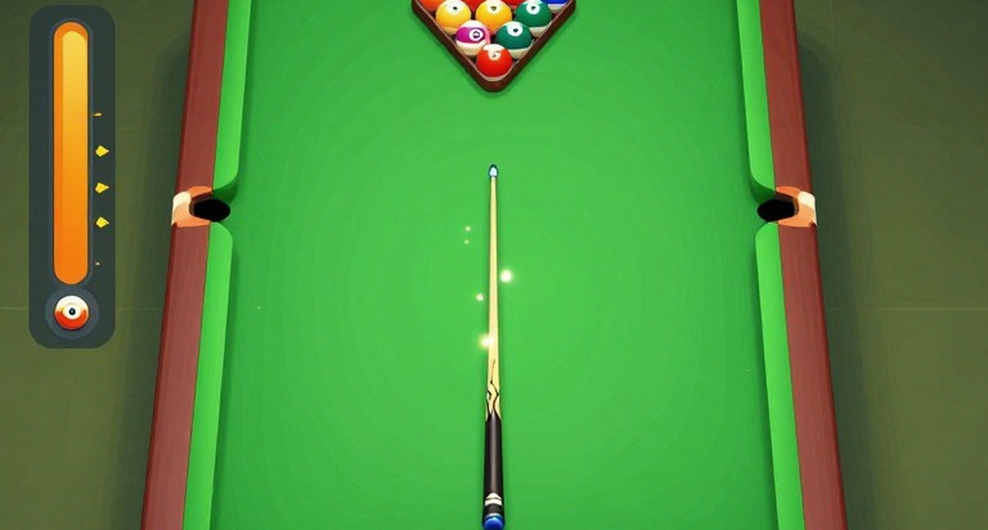
Billiards is a sport with many branches, and confusing them is the most common error in commentary. Snooker is played on a large table with pockets, using 22 balls and color-based scoring. Eight-ball and nine-ball are played on smaller tables, where tactics revolve around controlling the order in which balls are potted. Russian pyramid is a separate branch with large balls and narrow pockets. Carom has no pockets; the player must strike both object balls after the cue ball touches at least three cushions.
In Vietnam, the branch that has grown strongest and produced the most consistent international results is carom, especially three-cushion. In three-cushion, every inning is a trajectory problem: the player calculates the angle of approach, the angle of reflection, speed, spin, and cushion rebound. No two tables are identical, even from the same manufacturer, so reading the cushions is a core skill.
Vietnam has produced many notable players, including Tran Quyet Chien, Nguyen Quoc Nguyen, Bao Phuong Vinh, Ma Minh Cam, and Duong Anh Vu. The international carom system is run by the Union Mondiale de Billard (UMB), comprising World Cup stops held throughout the year in various countries and a world championship. Vietnam has hosted a World Cup stop in Ho Chi Minh City, drawing significant live audiences and online viewership.
This context creates a paradox: individual achievement at world level is real, but the infrastructure behind it is far thinner than expected. That paradox only becomes visible when you separate each layer of the supply chain and examine it.
The first thing to state clearly: before discussing a beautiful shot, tell me which zone the cue ball was placed in. The shot is merely a consequence. The decision lies in the cue ball's position after the previous inning. This is a principle any carom analysis must follow, or commentary turns into empty praise.
The style of Vietnam's leading carom players leans toward control and calculation rather than speed. They are strong at "setting the ball" — returning the cue ball to a favorable zone for the next inning — and at defensive play that puts opponents in difficult positions. In three-cushion, a good defensive inning is not merely about conceding no points; it forces the opponent to choose between a high-risk shot and a dead position.
Reviewing many matches by Vietnamese players, I notice a common pattern: they often accept a lower immediate success rate to increase medium-term control. This is a trait of geometric thinking, not instinct. Players calculate two to three innings ahead rather than optimizing for the immediate one. That is why watching carom and looking only at the final shot misses most of the story.
This strength also creates a weakness. In short formats, where innings are limited and every mistake is magnified, a control-based style needs time to take effect. When time is insufficient, the geometric advantage is compressed, and the outcome depends more on precision in decisive shots.
In the off-season, data is quiet, but it speaks most clearly. I often use periods without tournaments to cross-check numbers against footage. The method is simple: pick a match sample, record the cue ball's position after each inning, measure the distance to the favorable zone, then compare with the final result. If the numbers and the image don't match, I trust the image first — but I still have to ask in reverse: if this data is correct, what would change in my conclusion?
A system is only trustworthy when I can find its flaw. For Vietnamese carom, the flaw lies not in individual technique but in the training structure. The number of players reaching international level is concentrated in a small group, most of whom grew up in private clubs and pool halls rather than a standardized academy system. This helps them keep their identity and flexibility, but makes the pipeline dependent on luck.
In terms of format, carom differs from other billiards branches in that there is no large "crack" for luck. The table has no pockets, balls don't drop, so a wrong shot almost always leaves a visible consequence. This is why I rarely use the word "upset" about carom. Wins and losses are usually decided by accumulated error, not by a single moment.
Looking at the world carom power map, Europe still holds the center. Players from Turkey, Belgium, the Netherlands, Spain, and France dominate many rankings. Japan and South Korea have long traditions in Asia. Vietnam emerged later but at a notable pace, mainly through a generation of players who trained themselves in local pool-hall environments. That emergence is a real achievement, but it has not been supported by a sustainable system.
Organizationally, each World Cup stop usually lasts a few days, with qualifying and a main draw. The number of participating players can reach hundreds, of whom only a small group is seeded into the later rounds based on ranking. This format enables upsets in qualifying but favors experience in the final rounds. For a Vietnamese player wanting to rise, accumulating points across many stops is an almost mandatory path.
Prize structure also deserves discussion. Most carom events concentrate prize money at the top, making the gap between the champion and a quarterfinalist very large. This creates strong motivation to go deep, but also makes it hard for mid-tier players to sustain a career. In sports with complete professional systems, sponsorship contracts and club salaries help compensate; in carom, that compensation is still thin.
Technically, there is a concept viewers rarely notice: "setting the ball" and "breaking the position." These two skills complement each other. "Setting the ball" means returning the cue ball to a favorable position for the next inning. "Breaking the position" means disrupting the opponent's ball structure. A good player balances both, depending on whether they are leading or trailing. When leading, they prioritize "setting the ball"; when trailing or stuck, they increase "breaking the position" to drag the opponent into a difficult zone.
Compared with European players, Vietnamese players tend to retreat into defense earlier in a difficult inning. Turkish and Belgian players, with long traditions, sometimes accept higher risk to maintain an attacking posture. This is a difference in philosophy, not in level. In a long format, a defensive philosophy can be effective; in a short format, boldness sometimes wins.
Integrity issues cannot be ignored either. Billiards has seen cases involving betting and match-fixing. In 2026, a well-known Scottish snooker player was suspended over match-fixing. In 2026, a group of Chinese players was sanctioned in a similar case. In carom, such cases are less frequently mentioned, but the risk persists in events with low prize money and high financial pressure. A sport that wants sustainable growth must build oversight mechanisms alongside expanding its events.
Psychological factors also leave clear marks. In carom, a decisive inning often occurs when the score is tight and only a few innings remain. At that moment, technique has already been established; what changes is the ability to maintain breathing rhythm and hand stability. Players who have won titles often hold an advantage in that moment, because they are used to pressure. This is why top-level match experience cannot be replaced by hours of practice.
Here a blind spot appears. The international achievements of a few individuals are often read as achievements of the entire scene. That reading ignores a fact: Vietnam's billiards supply chain is not yet closed.
Upstream — practice rooms, clubs, equipment — grows fast but is fragmented. Midstream — players, events, media — depends on a small group of names. Downstream — sponsorship, related products, the collectibles market — is nearly empty. When a leading player retires, no mechanism guarantees the next one appears on time. A system missing links between stages will always be waiting for a new individual rather than producing them itself.
The income of most professional players does not come from fixed contracts but from prize money and paid matches. This structure rewards those already established and abandons those building a career. A young player needs years of competition to gain enough points to be invited to major stops, while travel, accommodation, and training costs must be paid steadily. The period between two podium appearances is the period when quitting is easiest.
For women's billiards, the gap is even clearer. Women's events exist, but are often organized as a media activity rather than a competitive arena with matching prize money. I have seen women's events heavily promoted in the press but with prize structures far lower than men's events at the same tier. When a women's event is mentioned mainly as a corporate social responsibility of the sponsor, players get short-term attention but not a foundation for development. Attention without resources is a kind of prop, and it doesn't help anyone go further at the table.
The second blind spot lies in how formats are read. Fans often judge a player by the number of titles, but titles depend heavily on the type of event. A World Cup stop with hundreds of players and single-elimination has a completely different difficulty from an invitational with few participants. Lining up titles from the two types of events in the same row is a common error in amateur statistics. Without weighting by event tier, every comparison is skewed.
A champion is not someone who is undefeated. They are the one who errs fewer times under the same pressure. But to have more champions, a sport cannot rely only on producing outstanding individuals.
Vietnamese billiards has proven the hardest thing: producing players of world caliber. What it has not proven is the ability to hold that position when the current generation moves to the other side of the table. The question for the coming seasons is not who will be champion, but whether there is a system deep enough that the next one does not have to start from the beginning again.
Cầu thủ liên quan
Bài đề xuất
Kenny C. Wins King of the Box Title at Packy's Sports Pub2026-09-11
Reyes Cup and the Duong gamble: When an all-star roster may lose to a cohesive unit2026-09-13
Mark Allen's Curious Absence: When the 2026 English Open Champion Vanishes from the World Snooker Tour Spotlight2026-09-12
Judd Trump beats world No.1 Zhao Xintong 5-1 at British Open: The fire to reclaim top spot is back2026-09-07
Call-Shot 10-Ball: Duong Quoc Hoang and the Numbers That Don't Yet Say Everything2026-09-19
Vietnamese Carom Billiards: World-Class Peaks and the Gap Behind2026-09-20
Bài đề xuất
Mark Allen's Curious Absence: When the 2026 English Open Champion Vanishes from the World Snooker Tour Spotlight2026-09-12
Reyes Cup and the Duong gamble: When an all-star roster may lose to a cohesive unit2026-09-13
Kenny C. Wins King of the Box Title at Packy's Sports Pub2026-09-11
Vietnamese Carom Billiards: World-Class Peaks and the Gap Behind2026-09-20
Call-Shot 10-Ball: Duong Quoc Hoang and the Numbers That Don't Yet Say Everything2026-09-19
Judd Trump beats world No.1 Zhao Xintong 5-1 at British Open: The fire to reclaim top spot is back2026-09-07
Bài đề xuất
Kenny C. Wins King of the Box Title at Packy's Sports Pub2026-09-11
Mark Allen's Curious Absence: When the 2026 English Open Champion Vanishes from the World Snooker Tour Spotlight2026-09-12
Vietnamese Carom Billiards: World-Class Peaks and the Gap Behind2026-09-20
Reyes Cup and the Duong gamble: When an all-star roster may lose to a cohesive unit2026-09-13
Judd Trump beats world No.1 Zhao Xintong 5-1 at British Open: The fire to reclaim top spot is back2026-09-07
Call-Shot 10-Ball: Duong Quoc Hoang and the Numbers That Don't Yet Say Everything2026-09-19
Bài đề xuất
Kenny C. Wins King of the Box Title at Packy's Sports Pub2026-09-11
Judd Trump beats world No.1 Zhao Xintong 5-1 at British Open: The fire to reclaim top spot is back2026-09-07
Mark Allen's Curious Absence: When the 2026 English Open Champion Vanishes from the World Snooker Tour Spotlight2026-09-12
Reyes Cup and the Duong gamble: When an all-star roster may lose to a cohesive unit2026-09-13
Call-Shot 10-Ball: Duong Quoc Hoang and the Numbers That Don't Yet Say Everything2026-09-19
Vietnamese Carom Billiards: World-Class Peaks and the Gap Behind2026-09-20