
Sindhu Beats Akechi 21-10, 20-22, 21-16: Six Clean Points and the 0-10 Problem Before An Se Young
**Câu trả lời cốt lõi**: PV Sindhu đánh bại Hina Akechi 21-10, 20-22, 21-16 sau 73 phút ở bán kết French Open 2026 (BWF Super 750) tại Arena Grand Paris, và gặp An Se Young ở chung kết. Sindhu thắng sáu điểm liên tiếp từ 15-16 ở game ba. Cô đã thua An Se Young cả 10 lần gặp trước. **Dữ kiện chính**: - Tổng điểm trận bán kết: PV Sindhu 62, Hina Akechi 48; thời lượng 73 phút cho ba game. - 11 trong 14 điểm chênh của PV Sindhu đến từ game một (21-10), tương đương 78,6 phần trăm. - PV Sindhu để thua game hai 20-22 sau khi đã ở mốc 16-16, rồi thắng game ba 21-16 từ thế 15-16. - Đối thủ chung kết An Se Young là số 1 thế giới và đương kim vô địch thế giới; đây là lần gặp thứ 11. - PV Sindhu đã vô địch Japan Open tháng 7/2026 và đây là chung kết Super 750 thứ hai trong mùa. **Nguồn**: Khel Now, bản tin French Open 2026; tỷ số và thời lượng trận chưa được BWF xác minh độc lập, mọi số liệu xếp hạng và điều kiện nhà thi đấu chưa có trong nguồn. **Hỏi đáp liên quan**: Hỏi: PV Sindhu đã từng thắng An Se Young chưa? Đáp: Chưa, theo bản tin Khel Now, PV Sindhu thua cả 10 lần gặp trước và chung kết French Open 2026 là lần gặp thứ 11. Hỏi: Vì sao trận bán kết được đánh giá là tín hiệu chưa đủ mạnh? Đáp: Vì 78,6 phần trăm điểm chênh của PV Sindhu tập trung ở game một, còn hai game sau cô chỉ hơn đối thủ 3 điểm trên 78 điểm đánh. Hỏi: Dữ liệu nào còn thiếu để dự đoán chung kết chính xác hơn? Đáp: Tỷ số của 10 lần gặp trước, phân bố độ dài pha cầu và điều kiện nhiệt độ, độ ẩm tại Arena Grand Paris đều không có trong nguồn.
Game three stopped at 15-16. Hina Akechi had just taken the point to edge ahead, and from that scoreline to 21-16, PV Sindhu won six straight points without a single unforced error. I read that detail three times before sitting down to write, because in the entire match report from the French Open 2026 semi-final, it is the only piece of information with genuine diagnostic value.
Three games, 73 minutes, a 62-48 point aggregate in Sindhu's favour. Read the scoreline and you see a comfortable win. Read closer and you see two contradictory things: game two ended 20-22 after Sindhu had reached 16-16, and game three was settled only by a six-point clean run at the close. The same player described in two opposite directions — one still capable of finishing a match, one no longer able to hold control of it for forty-five continuous minutes.
I do not remember the match. I remember its heat map.
Where the data comes from, and what is missing
The source report was published by Khel Now, an Indian generalist sports portal. It is usable for scorelines and direct quotes, but it is not a BWF-accredited data source, and every non-quote information point in it carries no attribution. This analysis therefore runs on a single convention: all figures are marked as reported-pending-verification, and every conclusion carries a confidence label.
The list of what the report does not provide is longer than the list of what it does: no smash speed, no rally-length distribution, no net-point win rate, no arena temperature or humidity, no officiating detail, no coach name, no current world ranking for Sindhu. For a Super 750 semi-final, that is the granularity of a wire report, not a technical dossier.
Four baseline facts matter. The event sits at BWF World Tour Super 750 level at Arena Grand Paris, Paris — the second-highest regular tier, below only Super 1000 and the World Tour Finals. Sindhu arrived with a 2026 season that already includes a Japan Open title in July, and this is her second Super 750 final of the season. The final opponent is An Se Young, world No. 1 and reigning world champion. And Sindhu has lost all ten previous meetings; the final is the eleventh, the third of 2026.
One clarification about the quality of the win: Akechi is not scenery. Reaching a Super 750 semi-final is an outlier result in her record. The report uses her as a springboard for Sindhu's story. I will use her as data.
62-48: the winning margin is concentrated in one game
The report gives no point distribution, so I reconstructed it from the three game scores. Game one 21-10, plus 11. Game two 20-22, minus 2. Game three 21-16, plus 5. The total is exactly 14, matching 62-48.
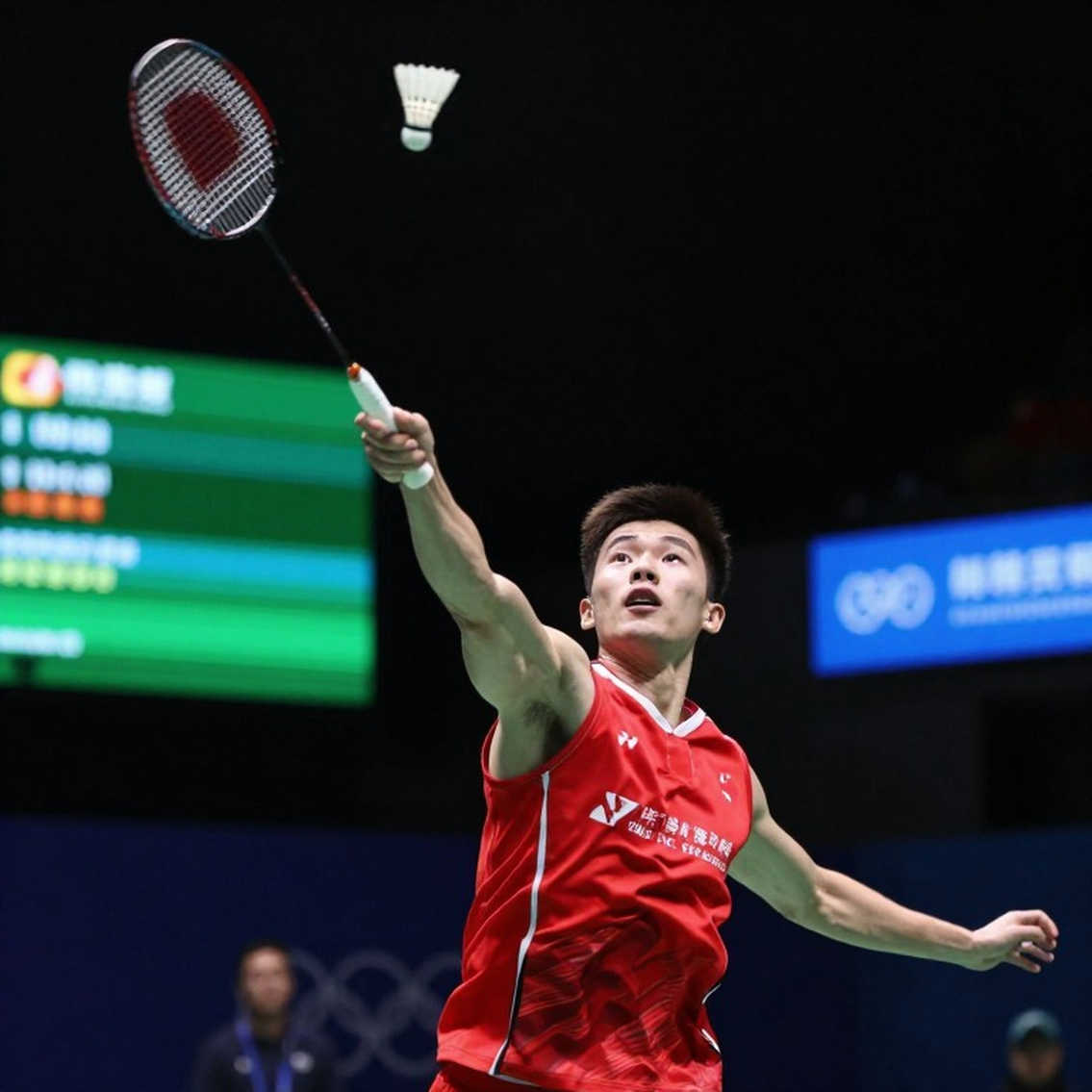
The proportion is where the analysis stops. Eleven of the fourteen net points of the whole match came from the opening game — 78.6 percent. Strip game one out and Sindhu played the remaining 78 points at 51.9 percent, 41 won to 38 lost. That is the boundary line of an even contest, not of a decisive win.
The conclusion from that division: Sindhu won this match on margin, not on control. Margin can be reproduced on a given evening; control is what a final demands.
Why does the split matter more than it looks? Under 21-point, best-of-three scoring the error tolerance is narrow. An eleven-point game is one where the opponent loses structure; it says nothing about the winner's capacity in games where the opponent keeps structure. The other two games of this match were exactly that, and there Sindhu was three points better across 78 points played.
Run the same arithmetic from Akechi's side: she won a game, lost the decider by five, and led 16-15 late in game three. For a player outside the recognised elite, that is real competitiveness. The report does not develop the point. I do, because it is data about the field, not about Sindhu.
16-16 and 15-16: two thresholds, two outcomes
Sindhu let the match slip from 16-16 in game two and lost 20-22. In game three she was again chasing at 15-16, and this time took six straight points, described as error-free.
Same player, same five-to-six-point stretch, opposite results. For an emotional writer this is a place to talk about nerve. For me it is a place to talk about variance in a very small sample. A six-point clean run and a collapse from 16-16 are two draws from the same distribution, and both sit inside the range my model expects from an attacking player in the late stage of a career.
What interests me is the character of the six points, not their length. An error-free run is a consistency signal, not a power signal — and past thirty, consistency is the more expensive commodity. Had that run been built on three cross-court smashes, I would read it as a physical marker. It was built on not missing, so I read it as a process marker. Process outlasts power, but process does not beat an opponent who extends rallies long enough to force that process through its twentieth cycle.
Every rally is a statement; every number is a confession.
Player archetype: attack inside a defensive ecosystem
Sindhu is a classical attacking profile: long reach, high contact point, downward priority, back-court dominance. That template was the standard of women's singles in the previous decade. The mainstream has since drifted toward rally maintenance, tempo control, error suppression, waiting for the opponent to open.
Set the two templates side by side and an asymmetry appears. The attacker needs short rallies to maximise strike opportunities. The controller needs long rallies to maximise the number of times the opponent must restart the attacking cycle. Whoever imposes their tempo wins. There is no room for external factors in this calculation, only room for who reads the tempo first.
Against Akechi, Sindhu imposed tempo for roughly twenty-one points. Against an opponent who can extend rallies at world No. 1 level, that window narrows fast. Every extra two beats of a rally is another restart, and every restart is a fresh error probability. Multiply that probability across hundreds of rallies and you get what reports call age and analysts call performance decay over match time.
One more note: this attacking template is not obsolete. It is scarce. Scarce still wins specific matches; it just does not win long sequences of them. That is why Sindhu keeps reaching Super 750 finals, and why she has lost ten times to the same opponent.
0-10: the heaviest figure in the file, and what it does not say
Ten meetings, ten defeats. It is the heaviest fact in the final's equation, and the only one the report states without interpretation: eleventh meeting, third of 2026.
The structure of the streak matters more than its total, and here I have to be explicit about my limits. The report gives no scores for those ten matches. Without scores I cannot separate two things that mean entirely different things: a stylistic wall, where Sindhu loses in straight games most of the time; and a narrow gap, where she loses in the deciding game.
If it is a wall, my model gives Sindhu a low win probability and there is little more to say. If it is a narrow gap, everything flips: a player who loses ten times but loses in deciders is a player who can win, given one variable turning — fitness, arena conditions, or a six-point clean run at the right moment. My confidence that the gap exists: high. My confidence about its magnitude: low. I keep both labels visible, because merging them is the fastest route to a wrong forecast that still sounds reasonable.
Sindhu herself describes An Se Young as playing very well and being at peak form. A statement from the opponent, plus the world No. 1 ranking and the reigning world title, gives two independent confirmation paths — the minimum standard I require before believing a proposition.
People need belief to place a bet. I need data to be sure.
Format and the variance of single elimination
Single elimination raises variance to a medium level and turns each game into an independent unit of risk. Best-of-three to 21 compresses error tolerance, which is why the 20-22 second game carries far more weight than merely being one lost game: it was the only game in the match where both players held structure, and it is the one Sindhu lost.
The analytical consequence: the entire assessment of her week now hinges on one match. In a group format her semi-final consistency would be independently validated. Here it is validated only by the final, which amplifies both the upside and the reputational downside, and means any conclusion I publish today can be overturned within twenty-four hours.
On tier: Super 750 is not Super 1000, and it is not a points-farming stop. It sits immediately below the tour's flagship events, and a final here carries real ranking weight. For a player at this career stage, seasons are usually built around two to four peak events. A July title and a final here fit deliberate peak scheduling better than week-in, week-out grinding. The decline-phase label describes her age curve, not her current output — two concepts that get conflated constantly in sports reporting.
Home court has never been an advantage, only noise encoded into points. At Arena Grand Paris, Sindhu has no home court. She has a hall about which the report says nothing on temperature, humidity or draught — three variables that act directly on overhead clear accuracy and net control, the two skills a tall attacker depends on most. That silence is an evidence gap, and I mark it rather than fill it.
73 minutes and a fifteen-hour window
A 73-minute three-game semi-final is a moderate load in elite women's singles, not an extreme one. But it happened on Saturday, with the final on Sunday.
I have no recovery data, no medical staffing detail, no training information. Across the source's information set there is not one line about a coach, conditioning or physiotherapy. When a dimension has zero evidence, the correct output is an explicit null, not a plausible-sounding hypothesis.
What I can infer from outcome rather than report: a player past thirty reaching two Super 750 finals in one season cannot sustain that without a professional support environment. That is inference from output, not fact. I use it to rule out the absence of a team, not to assert the quality of one.
Akechi, and the signal the report dropped
Sindhu is the subject. The report's biggest signal sits with the loser.
A Japanese player outside the recognised elite reached a Super 750 semi-final by pushing a two-time Olympic medallist to a third game, 73 minutes, and leading 16-15 in the decider. Two competing explanations: Japan's development pipeline is deep enough to produce another Super 750 semi-finalist, or the field at this particular event is thinner than the tier implies.
Telling those apart matters more to a Japanese readership than to an Indian one, and the report provides no data to do it. That is an evidence gap, not a mystery.
From my experience tracking matches at Super 500 and Super 750 level in Asia, I work with one rule: a player outside the seeds going deep once is noise; going deep twice in a season is a pipeline signal. This report gives one instance. So Akechi goes on my watch list, not my conclusion list.
The contrarian angle: six clean points do not prove control
If Sindhu wins the final, a familiar commentary template will appear: the nerve of a two-time Olympic medallist, composure at the decisive points. If she loses, the same template reverses into age, stagnation, the end of a generation. Both use the same vocabulary and both ignore an alternative reading of that six-point run.
Competing hypothesis: Akechi, past an hour of play and having taken a game from 16-16, entered the closing stretch with a higher physical and psychological cost. Sindhu's six points may have been six Akechi errors more than six Sindhu controls. The report does not say who won points how, so I cannot eliminate it. If it holds, the clean run I just used as a process signal is an opponent effect — correlation misread as causation, precisely the error I have spent a career avoiding.
A second, subtler error: reading 0-10 as a law. Ten defeats are ten observations, not ten verdicts. If some of them went to a decider, Sindhu's win probability in the eleventh meeting is not zero — it is low, and low is a number, not a conclusion.
And a third blind spot, belonging to the report: it covers a Super 750 semi-final as though one person were on court. A Japanese reader has reason to read it the other way, as a test of a badminton nation's depth rather than one individual's resurgence. Both readings can coexist, but they lead to different question sets, and only one of those sets can be answered with data.
What I will measure in the final
Not the scoreline first. I will measure rally-length distribution and Sindhu's point-win rate in rallies of eight shots or more, because that is the variable that decides who imposes tempo. I will measure her unforced-error rate in games two and three, where my model predicts decay. And I will measure the score at the first 16-16 of the match — if she passes that threshold without slipping, my model is wrong, and I will record that it was wrong, along with the data that broke it.
If she wins, I will reopen the heat map to find where the tempo turned. If she loses, I will reopen the same map to find where it turned earlier than I expected. A heat map does not panic; it only records who changed tempo first, and at which minute.