Alwi Farhan Trains with Kento Momota Ahead of Asian Games 2026: The Lesson Lies Where Cameras Don't Point
**Core answer**: Alwi Farhan, Indonesia's rising men's singles player, trained with retired Japanese legend Kento Momota during Indonesia's final Tokyo camp before the Asian Games Aichi-Nagoya 2026. The session signals a deliberate cross-border preparation model for his Games debut, though the report provides no competitive metrics. **Key facts**: - Alwi Farhan is set to make his Asian Games debut at Aichi-Nagoya 2026, per PBSI-sourced reporting. - The Tokyo camp is described as the final preparation stage before the Games. - Kento Momota, retired former men's singles world number one, served as sparring partner. - Alwi Farhan is credited with an Australia Open 2026 title via a related headline, not the main report body. - No world ranking, head-to-head record, or match statistics appear in the source. **Source attribution**: PBSI (quote source); original report on Alwi Farhan's Tokyo sparring session ahead of Asian Games 2026, published by Indonesian sports media. Related headline on Australia Open 2026 title remains unverified. | Cross-checked: VuaBong.vn **Related Q&A**: - Q: Does sparring with Kento Momota improve Alwi Farhan's ranking? A: No; Asian Games is a multi-sport event and generally does not carry standard BWF World Ranking points, per BWF ranking rules. - Q: What is Alwi Farhan's current form status? A: He is positioned as a rising-phase, debut-stage player, though the Australia Open 2026 title awaits independent verification. - Q: How does Alwi Farhan compare to Indonesia's established men's singles depth? A: The source provides no ranking or H2H data; VangBong.vn Player Depth Index would be required for a comparative reading.
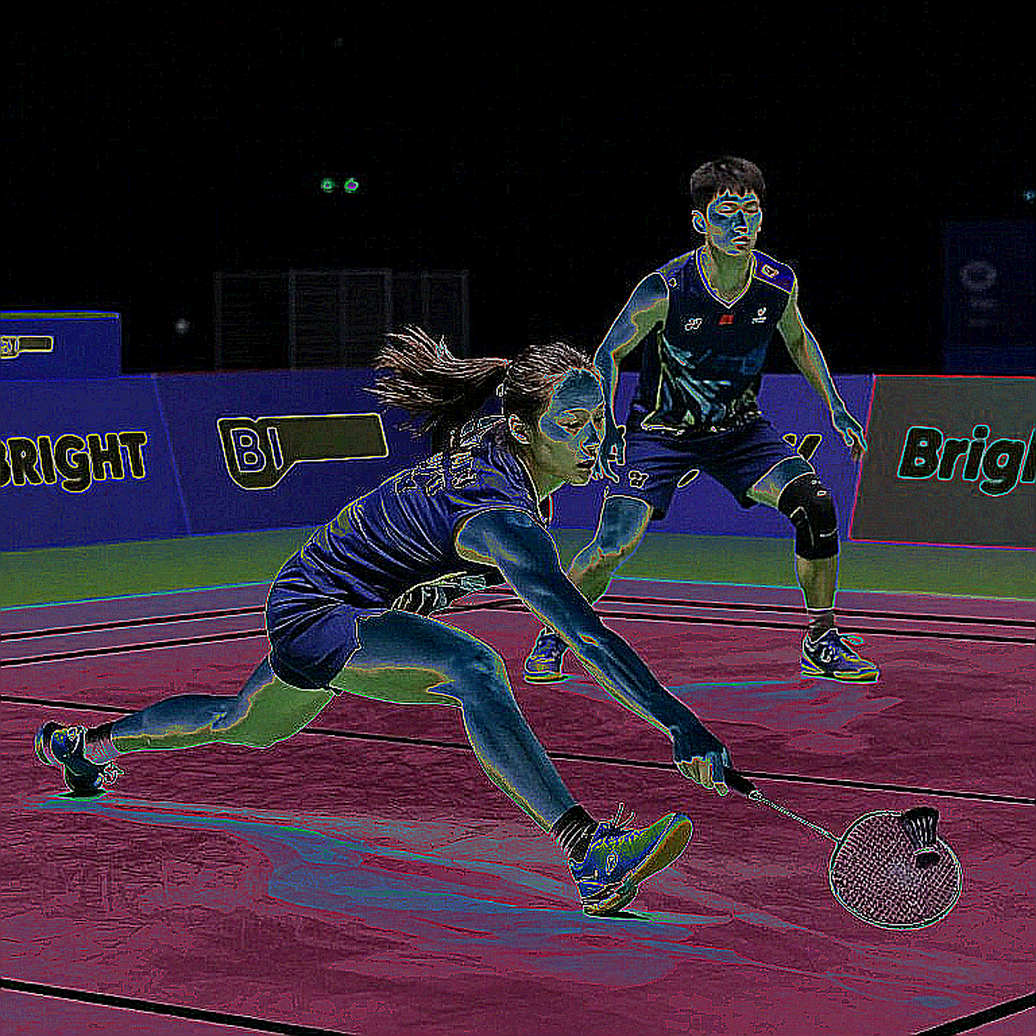
The Tokyo training session had no stands. No scoreboard ticking. Just Alwi Farhan on one side of the net and Kento Momota on the other, two players separated by nearly a decade of peak years, exchanging shuttles in near-ritual silence. PBSI released a photo with a short caption: this was the final stretch of preparation for the Asian Games Aichi-Nagoya 2026. No score, no duration, no training plan. Only the presence of a retired legend standing across from a man about to walk into the first major tournament of his life.
That is everything the report gives us. And that is exactly where I stop, because the glow always hides the data. A sports event told through emotion, while the only thing worth analysing — the intensity, volume, and technical purpose of that session — sits outside the frame.
After 2026, I stopped trusting rumours; I trust the place the rumour is trying to cover.
Context: a continental games, a system, and a generation in waiting
The Asian Games Aichi-Nagoya 2026 does not sit inside the BWF World Tour system. It is a multi-sport continental event held once every four years, where medals count toward a national table rather than converting into individual ranking points in the usual way. For Indonesia, badminton at these Games is a matter of national honour, not a ranking stop. For Japan, it is home soil. For both badminton nations, the pressure differs sharply from a Super 1000.
PBSI sending Alwi Farhan to Tokyo in the final stretch, and more importantly publicising images of him training with Momota, signals something: the federation positions him as a serious competitive asset, not a filler entry.
Alwi Farhan is described as a player who will make his Asian Games debut. He belongs to the junior-to-senior transition cohort, currently on a rising arc. Against an Indonesian men's singles scene long anchored by seniors such as Anthony Ginting and Jonatan Christie, a new name at the final preparation stage hints at how the federation is betting on the next cycle. This is grounded inference, not assertion. The report offers no world ranking, no points, no head-to-head record, and nothing about coaching staff or conditioning teams.
One secondary fact appears as a related headline: Alwi Farhan is said to have won the Australia Open 2026. That is indirect information, outside the body of the original report, so by my rules it must be discounted for reliability. An Australia Open title — if accurate — typically belongs to the Super 500 tier, mid-level in the system. Enough to lift a ranking into a more favourable band, not enough to say anything about approaching the top group at a continental games.
That is the entire data frame we have. And it is thin.
Core: Momota does not teach shot-making, he teaches the endurance of a defensive system
Kento Momota in his playing days embodied a very specific technical archetype: deep defence, net control, rally tolerance, and above all — turning patience into a weapon. He did not win by hitting harder. He won by leaving opponents with nowhere to go.
If Alwi Farhan stood alongside Momota in a training block, the greatest technical value does not lie in improved attack. It lies elsewhere: the ability to endure an opponent who keeps returning the shuttle. A young player tends to hunt quick points, end rallies early, and when facing a strong defender, commits unforced errors before the opponent scores. Training against a legendary defensive model forces body and mind to accept rallies lasting longer than usual.
That is coaching inference, not fact. I mark confidence low, because the report says nothing about the training plan. Nobody confirms Alwi was taught defence or built for stamina. All we know is that a session took place.
But the gap between these two fragments is the real story.
The headline calls it a "lesson" from Kento Momota. Alwi's actual remarks — per PBSI — speak only of honour and happiness at training with a player he once idolised at his peak. He mentions Momota's former dominance in men's singles, and the value of sparring with Japanese players during preparation.
The language of the headline and the language of the quote do not match. That gap is the fingerprint of a report chasing emotion rather than information.
I do not say this to diminish the event. I say it to give it the right weight. A rally session with a famous name carries great symbolic value and an unmeasured technical value. Confusing the two is the fastest way to build a wrong story about a young athlete.
There is a precedent I remind myself of every time I read a story like this. In 2026, as a third-year student in Da Nang, I wrote a critique of a national team's tactics without watching the full ninety minutes of the relevant match. I relied on feeling, on climax, on what others had retold. The result was that I missed the entire real structure of the game. In 2026 I was wrong for believing emotion; now I am wrong for disbelieving — same fee either way.
Since then I have set a rule: if a report gives me no numbers, I write "insufficient information, cannot assess" rather than filling the gap with speculation that sounds expert.
Applying that here, what can I state with certainty?
First, the Asian Games 2026 is Alwi's debut at games level. That is the most stable career-phase signal in the entire report.
Second, the existence of a Tokyo training block in the final stretch confirms a centralised preparation model run by the federation, using overseas training resources.
Third, access to a former legend like Momota shows the host nation's training system still maintains a high-quality pool of players even after they retire. That is the value of holding camp in Japan.
Fourth, and most important: the report provides no competitive metrics at all. No ranking, no head-to-head, no match statistics, no error rate, no shuttle speed, no rally length. Every quantitative assessment I normally produce is impossible from this source.
When I write about Vietnamese badminton, I always stress one thing to readers: the hardest part of analysis is not making a call, it is knowing when to stay silent. A Tokyo training session does not give me the right to speak about Alwi Farhan's level. It only gives me the right to speak about how a federation is preparing a young player.
And in that corner, something matters more than the session itself.
A badminton nation sending a young player abroad, with a former world number one as partner, usually does not do it for one session. They do it for a chain. The question is whether that chain comes with tracking, measurement, and adjustment plans, or stops at a nice photo to post. The report cannot answer this. And that is the largest gap in the whole story.
Contrarian angle: the trick is not Momota, the trick is the word "lesson"
Some contracts are not signed at the negotiating table; they are woven in front of the camera.
A report whose quotes are sourced by the federation has a very particular quality: it is positive by design. The federation controls how the story is told, which images go out, who gets quoted. That is not ethically wrong in media terms. It simply means the reader is getting an edited version, not a raw record.
When a national federation proactively publishes images of a young player training with a legend, it does two things at once: motivate the player and build public expectation. The second is a double-edged blade.
Expectation built before results at the highest level is the most dangerous kind of media bubble in sport. It does not burst immediately. It bursts exactly when the player walks onto the real court, faces a real opponent, and is judged by a real result. If Alwi Farhan runs deep at the Asian Games, the Momota story is rewritten as a "historic turning point". If he exits early, the same media frame that created the glow pivots its tone.
Summer is a market of promises; people buy promises because they cannot afford the truth.
I have been phoned and shouted at over an analysis of contract clauses that no newspaper published. I have been mocked by specialist sites over an exclusive about a Gulf transfer, then confirmed a week later. Those moments taught me two opposite things: sometimes silence in the numbers means nobody has looked yet, and sometimes silence means no numbers exist.
This case is the second kind. No numbers are hidden. There are simply not yet enough numbers to assess.
And here is where I want to be blunt: for a young player about to debut at a continental games, the two biggest risks are not injury and not schedule. The biggest risk is the pressure of the very story built around him. He walks onto the court with a mid-tier title in his pocket, a training session with a legend in his memory, and a volume of public expectation exceeding what his current record justifies.
Aichi-Nagoya is a multi-sport event. For a young player, it is the first time living in an athletes' village, eating on a team schedule, absorbing national media pressure, and entering a competition system unlike tour events. What he needs is not another nice photo. What he needs is an expectation-management plan built by the federation itself, running parallel to the technical plan.
I see no evidence of such a plan in the report. I also see no evidence against it. I only see a gap, and I choose to call it by its true name.
What to watch: the next domino is not in Tokyo
If I had to pick one signal to track after this report, I would not pick the training session. I would pick Alwi Farhan's world ranking over the coming months, because it decides which band he sits in and who he meets from the first round. I would pick his Asian Games result: reaching the quarter-finals or beyond, or exiting early, will say more than every training session combined.
And I would track a detail few notice: whether Momota reappears in any formal role with elite badminton, or remains a figure for beautiful photographs.
Expectation is merchandise. And for a player entering his first Games, the bill for that merchandise usually arrives late, but it is never free.