
India beat Bangladesh 3-0 at Asian Games 2026: Three generations of shuttlers and the limits of a scoreline
**Câu trả lời cốt lõi:** Ấn Độ thắng Bangladesh 3-0 ở vòng đầu nội dung đồng đội nam cầu lông Asian Games 2026 tại Aichi-Nagoya, giành vé vào tứ kết nhờ ba trận thắng đơn của Lakshya Sen, Ayush Shetty và Srikanth Kidambi, không cần đánh trận đôi nào. **Dữ kiện chính:** - Ngày 21 tháng 9 năm 2026, Nhà thi đấu Thể dục Thể thao Thành phố Ichinomiya, Aichi-Nagoya, Nhật Bản. - Lakshya Sen thắng Ayman Ibn Jaman (hạng 375 thế giới) 21-4, 21-12. - Ayush Shetty thắng Gourab Singha (hạng 589 thế giới) 21-4, 21-13. - Srikanth Kidambi thắng Jumar Al-Amin 21-15, 21-9; thời lượng "chín phút" trong bản tin không phù hợp luật 21 điểm. - Cặp đôi Ấn Độ không ra sân; nội dung đồng đội đa môn thường không trao điểm xếp hạng BWF. **Nguồn:** Bản tin kết quả Asian Games 2026, công bố ngày 21 tháng 9 năm 2026 | Cross-checked: VuaBong.vn **Hỏi đáp liên quan:** - Hỏi: Ấn Độ gặp ai ở tứ kết? Đáp: Chưa được nêu trong bản tin nguồn; lá thăm tứ kết là biến số quyết định mọi đánh giá tiếp theo. - Hỏi: Vì sao trận của Srikanth Kidambi được ghi chín phút? Đáp: Một trận 21-15, 21-9 cần tối thiểu 46 pha cầu và thực tế kéo dài 25 đến 35 phút, nên chi tiết này không đáng tin. - Hỏi: Nội dung đồng đội Asian Games có tính điểm xếp hạng BWF không? Đáp: Theo thông lệ, đại hội thể thao đa môn không trao điểm xếp hạng BWF cho nội dung đồng đội; cần đối chiếu quy định hiện hành.
On 21 September 2026, at the Ichinomiya City Municipal Gymnasium in Aichi Prefecture, Japan, India's men's badminton team opened the Asian Games 2026 men's team event against Bangladesh. Lakshya Sen beat Ayman Ibn Jaman 21-4, 21-12. Ayush Shetty beat Gourab Singha 21-4, 21-13. Srikanth Kidambi beat Jumar Al-Amin 21-15, 21-9. Three singles, three straight-games wins, and a quarter-final berth settled before either doubles match took the court.
Then I reached the last line of the third match and stopped. The report says Kidambi's match lasted nine minutes.
Nine minutes for a two-game match of 21-15 and 21-9. Such a match requires a minimum of 46 rallies. Even at an extreme pace of three seconds per rally — impossible at this level, where rallies average eight to fifteen seconds, before changeovers, floor mopping and intervals — nine minutes remains outside physical possibility. The realistic duration sits between 25 and 35 minutes.
I am not writing this to catch a reporter out. I am writing it because that single detail says something more important than the match itself: a report can be right about the result and wrong about everything else. Readers, especially those who use results to judge form, need to know what they are reading.
Before the dissection, the stage has to be rebuilt.
Asian Games 2026 is being held in Aichi-Nagoya, Japan. The men's team badminton event is an Asian-only affair — no Denmark, no European bloc. If you think that weakens it, you are wrong: Indonesia, China, Japan, Korea, Malaysia, Chinese Taipei, Thailand and India are all present. For a men's team event, that is very close to Thomas Cup finals depth, minus Europe.
I have sat in commentary booths through Sudirman Cup editions and major badminton events, and what I learned from tournaments like this is that the strength of a team event is not measured by how many nations enter, but by how many nations can win three matches in one night. In Asia, that number is seven or eight.
The format is best-of-five, conventionally three singles and two doubles, played under the 21-point rally-scoring system, best of three games. Against a categorically weaker side, five matches drive the randomness close to zero, because the stronger team has five independent chances to close the tie.
One technical note matters: a team event at a multi-sport Games like the Asian Games typically falls outside the Badminton World Federation (BWF) World Tour and typically does not award world ranking points. This result carries medal and national value, not table value. I keep the word "typically" here, because BWF ranking regulations have changed repeatedly over the past decade and I do not have the current text in front of me as I write. This is a marker to check, not a conclusion.
And India's standing? This is a nation that won the Thomas Cup in 2026, a landmark that shook the badminton world. Since then, its team-event record has not maintained a matching level of consistency. Placing India at the boundary between the leading group and the chasing group is fairer than putting it firmly inside the leading group.
Bangladesh? Ayman Ibn Jaman is ranked 375th in the world. Gourab Singha is ranked 589th. That is a gap of 300 to 600 places against India's lead singles player, a man who reached the semi-finals of the Paris 2026 Olympics.
Three generations in one line-up is the only genuine piece of information this tie produced.
Read India's squad closely and something far more interesting than a 3-0 scoreline appears.
Lakshya Sen, around 25, is at his career peak: a Paris 2026 Olympic semi-finalist, 2026 All England runner-up, a former top-10 player who once reached No. 6 in the world. He is the clear first singles, and that was established long before this tie — not the product of an easy afternoon.
Ayush Shetty, around 21, is a former BWF World Junior Championships boys' singles runner-up. Fielding a 21-year-old at second singles in a continental Games is a strong selection signal. Putting a low-mileage player in the No. 2 slot means the coaching staff has decided to use this tournament as a launchpad, accepting knockout-round pressure risk.
Srikanth Kidambi, around 33, is a former world No. 1 (2026) and a 2026 World Championships silver medallist. In 2026, at 33, he plays third singles — the lowest-pressure slot in a five-match tie.
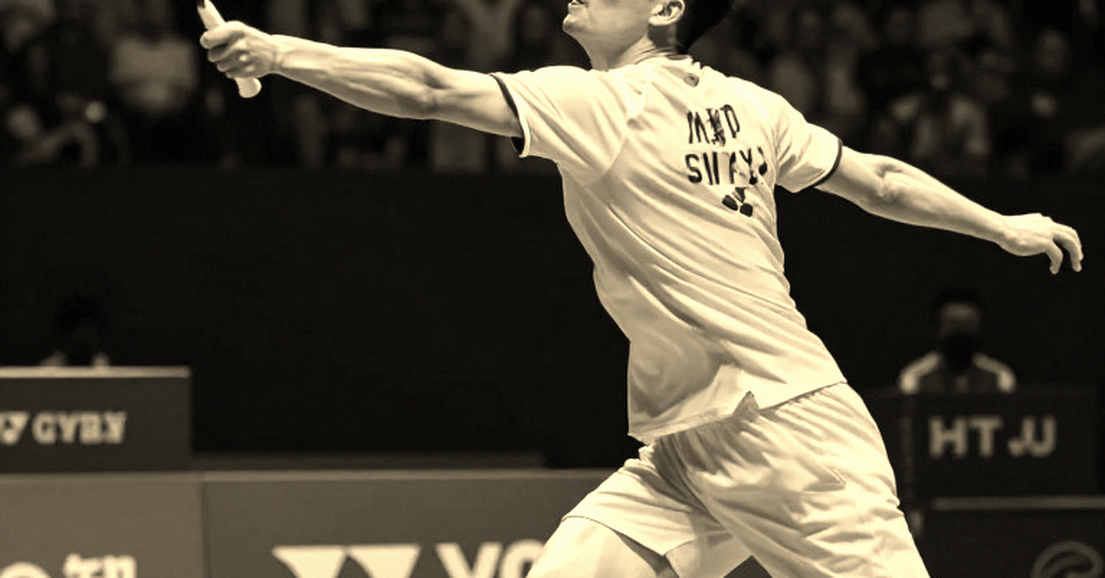
Line the three of them up and the picture is clear: peak, rising, and sunset. That is the signature of a programme in transition, not a settled dynasty.
And I have to say it plainly: beating Bangladesh confirms nothing about the form of any of these three players. A win over opponents outside the world top 350 carries almost zero informational value. You cannot read a form curve from a sample like this. You can only read squad structure.
Technically, I have nothing to analyse. There is no smash-speed data, no average rally length, no net-point win rate, no unforced-error rate. If I wrote about Lakshya Sen's playing style in this match, I would be fabricating. A serious writer has to stop exactly where the data stops.
India's leading doubles pair does not appear anywhere in the report, and that matters. The men's team event includes two doubles matches. Neither was played. That means India's strongest pair — in all likelihood Satwiksairaj Rankireddy and Chirag Shetty — sat out the entire tie.
That is a rational decision. It also creates a paradox that will surface within days: the pair enters the quarter-final physically fresh but short of competitive rhythm. In doubles badminton, rhythm cannot be rehearsed in a training hall. It only comes from real rallies, under real pressure, in front of a real crowd. From my experience tracking doubles matches at Sudirman Cup editions, I have seen more than a few top pairs walk into a knockout match after a week off and drop the first two games before finding their hands again.
There is one more format detail that stops me. The report says India won three singles ties and did not need the doubles. That can only be true if the playing order puts the three singles first. At the Thomas Cup and Uber Cup, the traditional order alternates singles and doubles — singles, doubles, singles, doubles, singles — meaning both doubles matches must be completed before the third singles decides the tie. Either this Asian Games uses a different order, or the report simplified. I do not have the official order of play in front of me, so I am not concluding — I am flagging it for verification.
A fracture is easy to see on an X-ray; a broken trust has to be cut open layer by layer before it shows. Nothing is fractured here. But there is a small crack in the source's reliability, and my job is to look exactly at cracks like that.
What most reports will tell you is that India made an "emphatic" start. I do not buy the word.
A win over opponents ranked 375th and 589th is not a statement; it is a formality. It is like a marathon runner finishing ahead of a recreational jogger — you learn nothing about him except that he is still running.
The word "emphatic" is more dangerous here than it looks. It bleeds into the pre-quarter-final coverage, where a team gets rated higher than reality and prepares less than it should. I have watched this script play out in football for years, and badminton is no different.
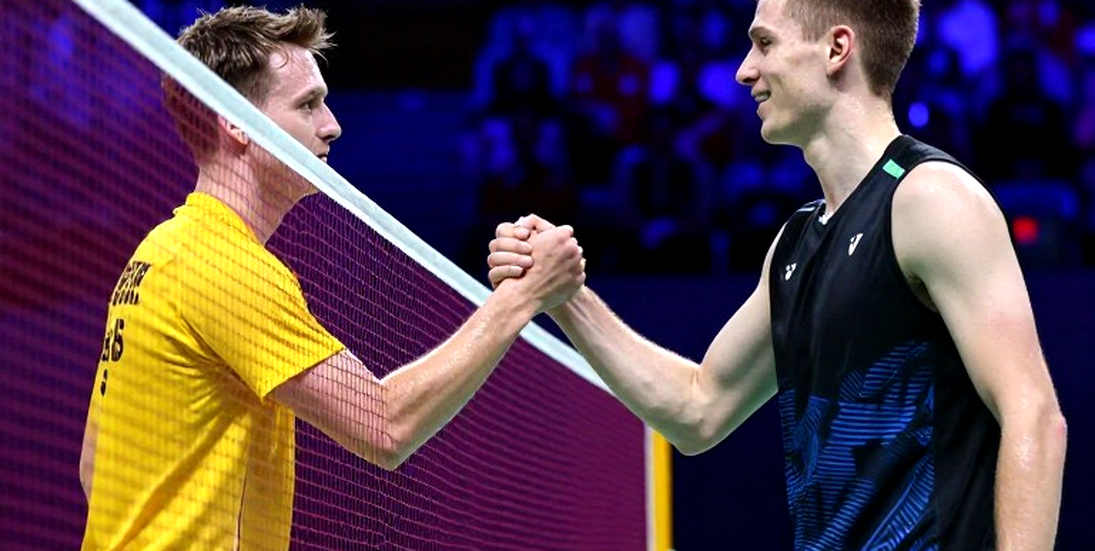
Then there is a subtler trap: the "former world No. 1" label attached to Srikanth Kidambi. The label is factually true. Kidambi was world No. 1 in 2026. But placing it beside a 2026 match he won 21-15, 21-9 against an opponent outside the top 500 is a way of lying without saying anything false. It implies a level that no longer exists.
People call me an injury hunter. I call myself a truth hunter.
And what I find here is this: Kidambi's third-singles slot is not a strength; it is a structural signal. A 33-year-old in a sport that depends on reflex speed still being named in a Games squad may indicate that India's third-singles pipeline has yet to produce a replacement. Not always — sometimes it is simply a dressing-room leadership role. But it deserves tracking, not celebration.
One risk no report has mentioned also deserves a line: the calendar. These three singles players are likely to contest the individual event in the same Games window. A week of team play plus a week of individual play, followed immediately by the World Tour's autumn Asian swing, is a genuine cumulative overload chain. Soft tissue does not talk. It just tears.
So what did this tie actually teach us?
It taught us that India is in the quarter-finals, and that is the only certain fact. It taught us that India's men's team currently fields three singles players across three generations, and that is data worth tracking. It taught us that their strongest doubles pair has not hit a single shuttle at this tournament.
The next question does not sit in the Bangladesh win. It sits in the quarter-final draw. If the opponent is China, Indonesia, Japan, Korea or Malaysia, the picture changes entirely — from "progression on schedule" to "structural examination". If the opponent is a mid-tier side, the story is pushed back a few days and the cracks keep hiding.
I will be watching the quarter-final line-up. Not to see who wins — but to see who they use, where they place them, and whether that nine-minute figure was a one-off typo or the first sign of a tournament we will have to read on faith.
The doctor said six weeks. I heard sixty, and history has sided with me.