
Trabzonspor rotate before Hearts: five changes and a plan drawn up before the derby
In the Beşiktaş derby team sheet, three names sat in the lower half of the...
In the Beşiktaş derby team sheet, three names sat in the lower half of the page: Samet, Cenk, Saviolo. Nobody in the press room mentioned it. The questions were about the result, about pressure, about the league table. Three names pushed to the bottom of a sheet of paper do not generate headlines.
I keep the habit of writing down the starting XI of every match I follow, including matches I never write about. Not because I collect paper. Because a team sheet is the only record of what a coach decided before the ball rolled, and sometimes it says more about the next match than the current one. At the Levante academy I learned to watch a boy play for three hours just to perfect his touch rhythm. That lesson taught me that football is decided in places nobody films.
Three benches in a derby are one of those places.
Thomas Reis has not published an official XI for the Hearts match in the Conference League. The report I read says he “has made his decision”, that the probable lineup will feature at least five changes from the derby, that the target is two wins from two. That is the entire body of information available to the public. And in the gap between a certain headline and a cautious body, another story is running — about registration rules, wage structures, foreign-player quotas and how a Turkish club organises its season.
This piece is not an attempt to predict a lineup. It is an attempt to show that the probable XI is only the surface, and that beneath it sits a structure worth recording far more carefully.
One week, two matches, one sheet with eleven lines
The fixture list facing Trabzonspor is the kind every coach hates: a derby, then a European match almost immediately. Two matches in one week, two different stress levels, two different preparations, and one set of legs to carry both.
A derby against Beşiktaş is the kind of match that costs one and a half times the normal price. High intensity of duels, more contacts per minute, and — more importantly — a complete burn of psychological focus. A team that walks out of a derby has not only spent calories. It has lost the ability to react quickly in the first thirty minutes of the next game, the exact window in which European football is usually settled.
Reis says he wants to keep the squad balanced and the players fresh. That is the standard language of workload management, not the language of tactical experimentation. Everything the press has about the Hearts match concerns who will rest, not how Trabzonspor will play. No shape, no pressing intensity, no set-piece plan has been stated.
Which means anyone telling you they know whether Trabzonspor will play a back three or a back four against Hearts is speculating. I re-read every information point and there is not a single line about structure. Only a number of changes, a list of names, and a target.
For a beat reporter, that gap is data. It tells you how tightly the club is controlling information, and it tells you what the club wants the public to think. At Trabzonspor, what has been released is a number of changes. It is easy to digest, easy to headline, and completely harmless tactically.
The registration clause: the part the report does not discuss
Among the information points there is one detail placed near the end and barely explored: Mendy and Bouchouari cannot play in the domestic league because of their registration status, but they can play in Europe.
This is the most important detail in the entire report, and it is ranked alongside notes about who sat on the bench.
Turkish football operates with foreign-player quotas. The number has changed repeatedly over the decades, but the principle is stable: a club may register only a fixed number of foreign players for the domestic league, and that list must be settled before the season. A player outside the list remains employed by the club, trains daily, draws a salary, but has no name on the domestic match sheet.
Europe is different. The UEFA list is compiled under its own regulations, with its own quotas and its own loopholes that Turkish clubs learned to use long ago.
The result is that Trabzonspor enters the Hearts match with a European squad deeper than its own domestic squad. That is a structural advantage, not a tactical one, and it appears in no lineup prediction anywhere.
Picture it this way. For the league, Reis has a pool of players limited by law. For Europe, he has two extra men he is not permitted to use domestically. Those two men are not tired from the derby, because they did not play it. Those two men have accumulated no minutes, because they were not registered.
That is why rotation in Europe makes far more sense than rotation in the league. The club is not choosing between two equal squads. It is choosing between a squad compressed by domestic law and a squad expanded by European law.
I have seen similar structures in less glamorous places. During the 2026-21 season without crowds, working as a young reporter at Castellón, I logged fourteen corner-kick sessions and watched the team score six goals from exactly those routines. Nobody wrote about the fourteen sessions. People wrote about the six goals. But the structure was in the sessions, not the goals. At Trabzonspor, the structure is in the registration sheet, not the probable XI.
Five positions, and a plan drawn up in advance
The report says at least five positions will change. The club has not confirmed that number. It is the author's inference, built on observing who sat on the bench in the derby.
But the method of inference reveals something more interesting than the number.
Samet, Cenk and Saviolo started the derby on the bench. In a derby, whether a player starts or sits is usually decided by form, by the opponent, by fitness. But when three players are all left out of the XI in the match a club needs most, and when those same three are the ones predicted to start four days later in Europe, the most reasonable explanation is that the decision was made before the derby was played.
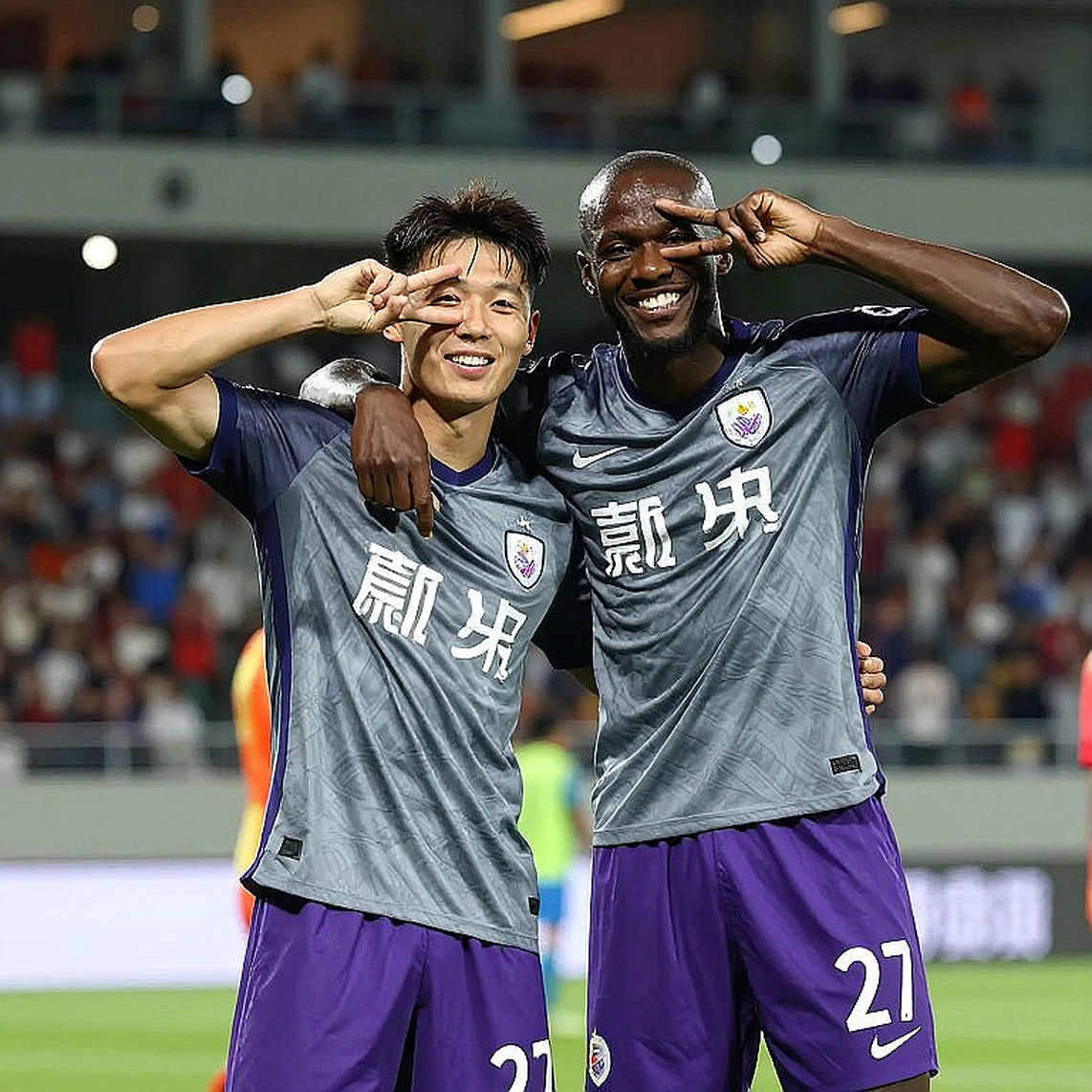
That is the difference between reactive rotation and planned rotation. Reactive rotation means losing a match and then changing the team for the next one. Planned rotation means saving players for the next match during the previous one. Reis belongs to the second group, and the fact that local media could build a prediction accurate to “at least five changes” is evidence the plan existed long enough to leak.
A coach who holds three players back for a European night while still having to play a derby is making a very specific calculation: the value of a Conference League win against the value of a derby. That calculation is never published, but it exists, and it is far more worth discussing than a list of names.
I write every young player's name into a notebook; ten years later, they are the map of a generation. At Trabzonspor, that notebook will record three names — Samet, Cenk, Saviolo — with a note beside them: started the derby on the bench, and not because of form.
Mendy, Bouchouari and the cold leg
There is a paradox in Trabzonspor's rotation that the report does not address.
Mendy and Bouchouari are the freshest players in the squad by domestic minutes: they have none. But freshness and rhythm are different things. A player who has not competed for three weeks is not fresh in terms of feel for the ball. He is fresh in the muscle and slow in the decision.
Match rhythm is built through actions under real pressure, at real speed, against real opponents. No training session reproduces it. A midfielder returning after three weeks out will need roughly fifteen to twenty minutes to recover his decision speed. In domestic football that window is usually hidden by a slower game. In Europe it is usually punished.
For Trabzonspor the risk sits in midfield. If Mendy and Bouchouari both start, the team has two players who may not yet be at tempo, in the exact zone everything else depends on. A midfield half a beat slow means a defence under pressure, a forward line starved of ball, and a pressing structure stretched out of shape.
There is a more optimistic reading. Precisely because neither has played domestically, neither carries derby residue. In a match against a Scottish opponent built on physicality, having two pairs of legs not burned during the week is a real gain. The question is only when that gain is cashed in.
This is the kind of detail I always write down before kick-off: not who starts, but who is the first to touch the ball in the central zone within the opening thirty seconds. The answer usually tells you whether a team is ready.
158 European matches and a negative tail
The report sets a target: two wins from two in the Conference League. It is presented as a natural expectation, following a 4-2 win over KuPS in the opener.
The club's European history does not support that expectation.
Across 158 European matches, Trabzonspor have won 57, drawn 39 and lost 62, with a goal record of 198 scored and 216 conceded. That is a negative record. In European competition this club is not a power; it is a mid-tier side with domestic prestige and a modest record beyond its borders.
In the Conference League specifically, the numbers are lower still: nine matches, two wins, four draws, three defeats, eleven scored and fourteen conceded.
Those two data sets belong side by side. The 4-2 against KuPS is one match. Nine Conference League matches are a sample. And the sample says Trabzonspor score roughly 1.2 goals per game in this competition and concede roughly 1.5.
A 4-2 win is not an attacking trend; it is one night off the mean. That does not diminish the win. It only means that building expectations for Hearts on the basis of four goals means building on a single data point.
I learned that lesson expensively. On 1 July 2026, at Luzhniki, I stayed three hours after Spain against Russia to rewatch every run and every interaction. Spain lost 3-4 on penalties after a 1-1 draw over 120 minutes. The country called it an accident. What I saw on rewatch was a chain of small decisions accumulating over two hours, and a night on which nobody dared take the first penalty. Spain did not lose on penalties; they lost on the night nobody dared shoot. The lesson is that a result is never a sample, and a sample is never a result.
Applied to Trabzonspor: four goals past KuPS is a result. Eleven goals in nine Conference League matches is a sample. When the two diverge, the sample is usually right about the next match.
Hearts and the second ball
Scottish football at this level is built on three things: physicality, long balls, and set pieces. That is an opponent you cannot beat by playing faster. You beat them by denying them the second ball.
And this is where five changes become concerning. A defence rebuilt from players who have not played together loses rhythm in second-ball situations. The second ball does not demand technique; it demands habit. Knowing who steps out, who holds position, who covers — those patterns form only after repeated matches together.
I have watched enough provincial teams to recognise the pattern: when a back line is shuffled, the team keeps the ball through the first half, then collapses in the opening fifteen minutes of the second, once the opponent realises they only need to put the ball into the box and compete. The defeats of provincial clubs never reach the front pages; they are carved into the barriers of their own stadium. For Trabzonspor, that barrier is a European home night, where every error is recorded in goals conceded.

Coefficient points, prize money and the price of a win
There is a layer the lineup prediction never touches: this match does not belong only to Trabzonspor.
A Turkish club's Conference League results feed the national coefficient, which determines how many European places the federation receives in future seasons and from which round its clubs must start. A win over Hearts has value beyond Trabzonspor's own three points.
For mid-tier European leagues, coefficient and prize money have become a structural part of the budget. That is why clubs like Trabzonspor cannot treat the Conference League as an afterthought. They need the group phase, the wins, the coefficient, because that is the shortest route to closing the gap on Istanbul's big three.
Which makes heavy rotation before a European match awkward. If the competition matters that much, why change half the team?
The answer is that the club believes it can win this match without its strongest XI. That belief rests on a gap in quality, and it is often correct at home against opponents from smaller leagues. But it is a gamble, and the stake is placed with the feet of those who play least.
A two-layer squad
A coach willing to change five positions in a European match tells you something about the club: they have enough players to field two teams at once.
In Turkey, that is a marker of a top-resource club. Teams fighting their budget do not rotate in Europe, because their backups are far worse than their starters. When you see five changes before a European tie, you are seeing real depth.
But depth comes in two kinds. Depth of quantity means having many players. Depth of function means having replacements who do not change how the team operates. The first survives a congested calendar. The second preserves points.
Trabzonspor have the first. Whether they have the second is a question only the Hearts match can answer, which is why I will watch it as a recorder rather than a predictor.
One temptation deserves naming here. When a back four is breached repeatedly, the fashionable response is to switch to a back three. That trend is returning across leagues. It is rarely a tactical advance; it is a coach reducing reputational risk by adding a defender and removing an attacker. If Reis chooses a back three against Hearts, that is a signal of fear, not invention. If he keeps a back four and simply changes personnel, he is saying the problem is in the legs, not the shape.
A certain headline, a cautious body
The headline says Thomas Reis “has made his decision”. That is an assertion. It implies the decision is made, settled, complete. The body says the lineup “is expected to” feature at least five changes. That is speculation.
The distance between those two sentences is the entire problem of modern sports journalism.
A probable XI is not information. It is a product. It is manufactured by observing who sat down, who rested, who trained separately, and assembling those observations into a sheet that looks like an official announcement. The reader has no way to separate a genuine leak from a reporter's inference, because both are delivered in the same voice.
I am not saying the report is wrong. I am saying it is unconfirmed, and that the way it is framed makes readers believe it is confirmed.
In my trade this is the most dangerous kind of error, because it is not fabrication. Every detail has a basis. Samet, Cenk and Saviolo really did start the derby on the bench. Reis really did speak about keeping the squad balanced. But the jump from those facts to a five-change lineup is a leap, and the leap is not marked.
When I write about young players I always attach specific numbers rather than impressions, because at Levante I learned that an observation without data is an opinion, and an opinion presented as data is a mistake. The same rule applies to a probable XI: a prediction presented as an announcement is a mistake.
Rotation reveals the order of priorities
The report frames rotation as a way for Trabzonspor to compete on two fronts. Read structurally, it says the opposite: the club is prioritising the league.
The derby against Beşiktaş is the match in which the club fields its strongest XI. The Hearts match is the one in which it changes five. If Europe were truly priority number one, the calculation would be reversed: rest players for Europe, rotate in the derby.
No Turkish club does that, and the reason is obvious. A derby defeat affects an entire city for a week. A Conference League defeat affects a coefficient table. The emotional weights are not comparable, and every coach knows it.
Which is why “two wins from two” should be read again. It is a declared target, not an executed priority. The executed priority sits with three players on a derby bench who start in Europe four days later. It is another way of saying: we believe we can win the European match without everything.
Here a perspective is worth adding. Spectators routinely mistake a spectacular win for a high-level performance. Four goals past KuPS was spectacular. It was not high level. High level means controlling the tempo for forty minutes, holding structure when the opponent pushes up, and leaving no gap between the lines. None of that appears on a scoreboard, and none of it appears on a probable team sheet.
The same principle holds across competitive sport: viewers are drawn to the beautiful collision and skip the macro structure behind it. In football the spectacular attack gets replayed. The structure that controls vision decides the match.
Mitigating risk by creating risk
Every rotation decision carries a structural paradox worth naming.
Rotation exists to reduce injury and overload risk. But rotation itself creates two new risks: loss of cohesion between lines, and players returning off tempo.
Against Hearts, both exist. Five changes mean at least one unit is rebuilt from players who do not play together often. And two of the incoming players have not competed domestically for some time because of registration.
The net effect of the trade is roughly neutral, perhaps slightly negative for a single match and positive across a run of fixtures. That is the nature of workload management: you pay today so you do not pay more in three weeks.
What stands out is that the report never raises this. It presents rotation as a solution rather than a trade-off. And when a trade-off is presented as a solution, readers are surprised by disjointed football that the decision itself predicted.
One small detail I always record in