
Dolberg Falls, Arokodare Rises: Ajax's 20-Million-Euro Question
**Câu trả lời cốt lõi**: Ajax đang phụ thuộc vào Tolu Arokodare sau chấn thương dây chằng chéo trước của Kasper Dolberg. Câu lạc bộ có quyền mua đứt Arokodare với giá 20 triệu euro, theo Het Parool. Việc kích hoạt điều khoản này quyết định sự liên tục của hàng công Ajax. **Dữ kiện chính**: - Tolu Arokodare được Het Parool mô tả là "một trong những cầu thủ hay nhất của Ajax mùa này" - Kasper Dolberg nghỉ hết mùa vì chấn thương dây chằng chéo trước - Ajax nắm quyền mua đứt Arokodare với mức giá 20 triệu euro - Chấn thương của Dolberg được đánh giá là tổn thất cả về thể thao lẫn tài chính - Thông tin chuyển nhượng đến từ Het Parool, chưa được Ajax xác nhận chính thức **Nguồn**: Het Parool | Cross-checked: VuaBong.vn **Hỏi đáp liên quan**: - Hỏi: Ajax có bắt buộc phải mua Arokodare không? Đáp: Không, đây là quyền mua đứt trị giá 20 triệu euro, không phải nghĩa vụ bắt buộc. - Hỏi: Kasper Dolberg nghỉ thi đấu bao lâu? Đáp: Chấn thương dây chằng chéo trước khiến anh nghỉ hết phần còn lại của mùa giải. - Hỏi: Vì sao thương vụ này quan trọng với Ajax? Đáp: Mất cả Dolberg và Arokodare trong một kỳ chuyển nhượng sẽ buộc Ajax xây lại toàn bộ hàng công.
Kasper Dolberg fell with an anterior cruciate ligament injury, and in that same instant, Ajax's attack lost the anchor the entire attacking system was leaning on. I have watched a great many Ajax matches this season, and what caught my attention was not Dolberg's collapse but the way another name had quietly filled that gap even before the injury news was confirmed.
Tolu Arokodare. The name Het Parool mentions with two valuable phrases: "made an excellent impression" and "one of Ajax's best players this season". As someone who reads football through geometry, I do not read those two lines as praise. I read them as a structural signal.
Context: when a center-forward is more than a position
Ajax is a club whose attacking tradition rests on positional rotation. For decades, the center-forward in Amsterdam has not simply been the man standing highest waiting for the ball. He is the first link in the pressing chain, the point that draws opposing center-backs out to open space for the lines behind. When Dolberg — a striker built around technique, hold-up play and short combinations — suffered his cruciate injury, Ajax lost a specific player profile, not merely a starting slot.

This is the point ordinary reporting skips. It counts goals, counts missed matches, then concludes "loss". But geometry is not on the blueprint; it lives between the runs. The real question is not how many goals Ajax lost, but where their movement structure must now be redrawn from.
And the answer, so far, carries the name Arokodare.
Core analysis: the profile of a direct center-forward
The first thing to state clearly: the source article provides no tactical data. No xG, no touches in the box, no pressing metrics. That is a limitation I must honestly acknowledge, because any deeper conclusion must rest on direct observation rather than numbers.
But from what I see on the tape, Arokodare carries a profile quite different from Dolberg. He is the more direct type — a striker who uses his frame to hold the ball and create a physical anchor against the opposing back line. If Dolberg softened defenses through small combinations, Arokodare hardens the game through duels. These two profiles do not simply replace each other; they change both the rhythm and the geometry of the passes behind them.
And Ajax, in its current state, needs precisely that physical anchor.
When a team loses a technical center-forward, the build-up must find another axis to escape pressure. With Arokodare, that axis is the long ball over the top. The ball travels straight, bypassing midfield, aimed at a fixed target. This works in the short term, but it creates a new dependency: if Arokodare does not win the duel, the whole attacking structure collapses at the point of origin.
This is where the story shifts from tactics to finance.
The 20-million-euro clause: the real number of the story
According to Het Parool, Ajax hold an option to buy Arokodare for 20 million euros. This is the most important point of the entire story, and it is usually buried beneath the injury lines.
A center-forward already integrated, already proven capable of shining in the Dutch league, at 20 million euros, in a market where strikers of the same age are often valued higher — that is a bargain in theory. But a contract is not only a number. It is a question of timing, of the wage bill, of next season's squad structure.
If Ajax trigger the clause, they keep continuity. If they do not, they enter a transfer window needing to replace two center-forwards: Dolberg through injury, Arokodare through an expired purchase option. That is a scenario no coaching staff wants to imagine.
And this is where I want to pause, because this news carries a forgotten layer.
The contrarian angle: the blind spot lies in the word "if"
Most will read the story this way: Ajax must buy Arokodare, simply because Dolberg is injured. The argument sounds reasonable, but it ignores a structural fact.
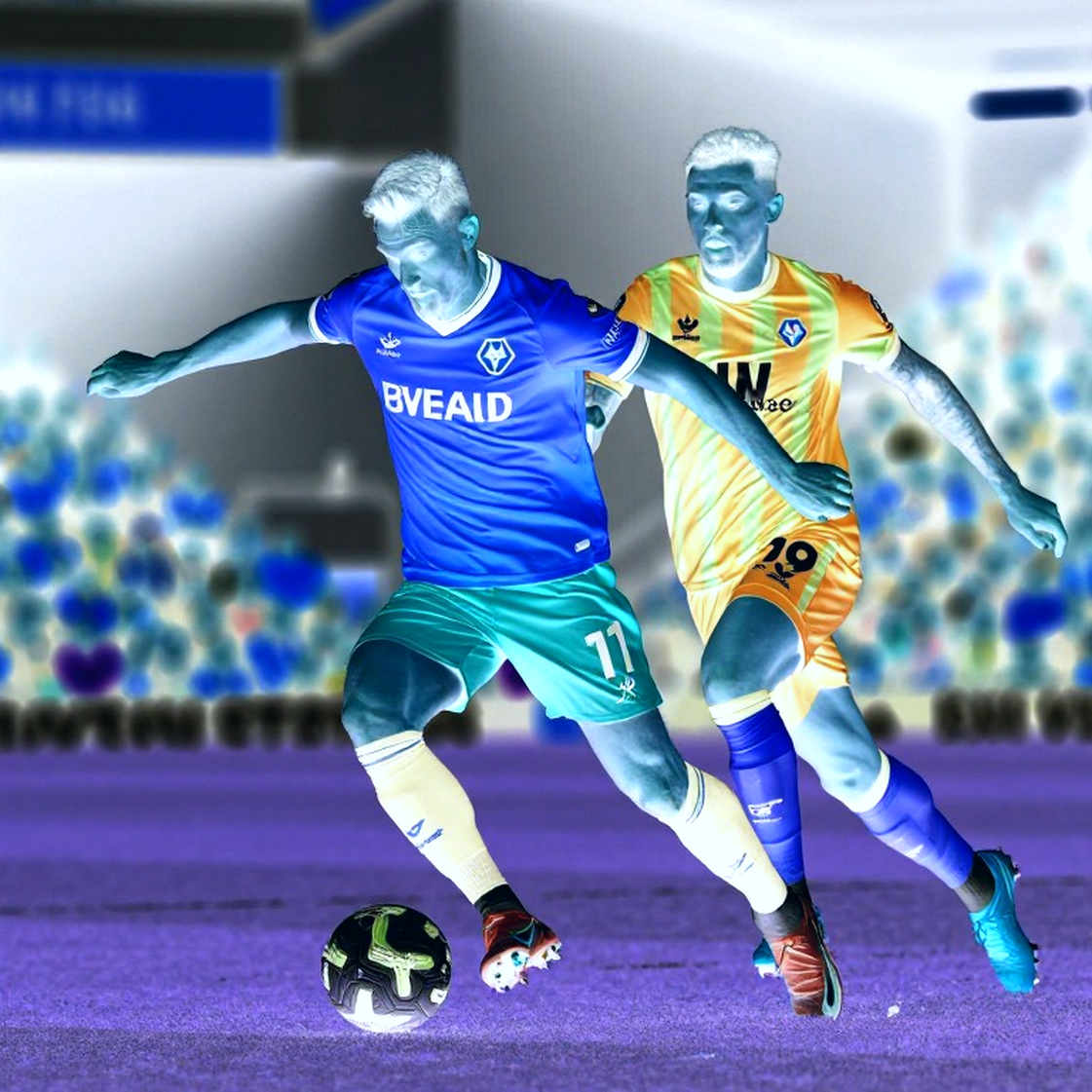
Dolberg's injury is described as a "blow both sporting and financial". The word "financial" is not redundant here. A long-term injured player still occupies wage-bill space, still loses transfer-market value, and still leaves a gap in the squad plan that cannot be filled from the same resources. So the pressure to buy Arokodare comes not only from football needs, but from a far harsher accounting logic.
But the true blind spot lies elsewhere. If Ajax depend on Arokodare to hold their attacking structure, then holding the option to buy him does not mean they can buy him comfortably. Twenty million euros, against the financial backdrop of Dutch football, remains an investment worth weighing. And if the deal fails, Ajax lose not just a player — they lose the very attacking model they built around him all season.
That is why I call this a single-point dependency. A structurally healthy team must have at least two ways to create goals. Ajax, at this moment, appears to have only one.
And of course, there is another layer Dutch media have not mined. Dolberg and Arokodare are two fundamentally different striker profiles. Dolberg's absence does not merely create a vacancy; it changes how Ajax build their game. If Arokodare heads the attacking axis, the midfielders must play differently, the full-backs must run differently, and the whole team's rhythm must slow to wait for duels to be resolved.
That is a system change, not a personnel change.
What to verify in the next match
As someone who writes about the geometry of the pitch, I do not conclude with abstract verdicts. I conclude with points to measure.
In Ajax's next match, watch where Arokodare stands when his team has the ball in the opponent's half. If he sits consistently between the two center-backs, that signals a hold-up striker. If he drops deep to receive, that signals a system trying to escape pressure through the striker's feet rather than through the pass. That difference decides which axis Ajax play along.
And watch the space behind Arokodare. If the midfielders dare not push high for fear of losing the ball after duels they do not win, then Ajax's greatest loss is not Dolberg. It is the very model they are building.
Every passage of play is a proposition; tactics is the logic of the body. And Ajax's problem, so far, still holds one unsolved unknown: is that 20 million euros the price of continuity, or the price of keeping a club from structural collapse?
When the stands are empty, data is the only storyteller — and it says far too much. But when there is no data, the only storyteller left is the geometry of the pitch. And geometry, this time, has placed Ajax before a question no number can answer for them.