
Sediment Layers of an Academy: The 16-Year-Old the Spreadsheet Forgot
In November 2026, on the muddy stand of a training ground outside Hamburg, on...
In November 2026, on the muddy stand of a training ground outside Hamburg, only three people sat watching. An U19 match between St. Pauli and an unknown side. For ninety minutes I recorded no goals. I counted. I counted how many times a sixteen-year-old moved without touching the ball: forty-one times. He stood 1.78 metres, thin, with long legs like a fawn. Nobody on the stand remembered his name.
I remembered. I remembered because four months earlier I had done something none of my colleagues would do: I sat through the footage again, frame by frame, counting the steps of a boy the media had never named.
I was fifty-one that year, still writing for a local paper. The data wave in sport had just broken across Germany. Younger colleagues revelled in rankings of “wonder kids”, lists of the most expensive young players, names from Dortmund, Leipzig or Bayern. They chased the light. I chose the dark — not because I scorned the light, but because I believed the most valuable thing usually sits where nobody bothers to look.
St. Pauli is a small academy. No budget of a giant, no global scouting network, no training hall with expensive machines. There, a young player only draws attention if he does something genuinely different. And this boy did. Twenty-three goals in eighteen U19 matches made any scout stop.
But those twenty-three goals were also a trap. They do not tell you where he runs, how he picks his position, how many fractions of a second he takes to control the ball, whether he is in the right place at the right moment. Goals are the visible tip of the iceberg. I wanted to see the mass beneath.
So I built my own framework of fourteen indicators: position before receiving, processing speed, finishing-point selection inside the box, number of times he broke away from his marker, diagonal running lines, and the things no machine measures — how he reacted after a miss, how he looked at a teammate after a stray pass. None of those indicators existed on the standard statistics pages of the time. I had to invent them, by hand, on sheets of squared paper.
I decoded matches with formulas, but the heart of the pitch has no algorithm. Fourteen indicators gave me a skeleton. They did not give me a soul. That soul I had to find by sitting long enough on a cold afternoon, watching a boy collect a ball towards an empty stand and bow his head to three spectators.
After those fourteen indicators, this is what I found — and it changed how I see youth football to this day.
The most neglected indicator of all: position before receiving. With a sixteen-year-old striker, people count goals. I counted distances. Before every pass headed his way, how many metres did he stand from the nearest defender? Did he stand side-on or facing? Could he see both centre-backs at once? Across eighteen matches I recorded him losing the ball an average of just 4.2 times per game in central areas — extraordinarily low for a sixteen-year-old playing at the highest point of the attack. The reason was not technique. It was the thinking that reads a situation before it happens.

The second indicator: processing speed. Modern football measures top sprint speed. I measured the time from the ball leaving a teammate's foot to the ball leaving the boy's foot: 0.9 seconds on average. At youth level, most players take between 1.4 and 1.8 seconds. That half-second gap, inside a penalty box, is the gap between a shot and a clearance.
The third indicator: off-ball running lines. I redrew every movement of the boy on squared paper. What I saw made me sit still for a long time: he did not run after the ball, he ran after the space that was about to open. He moved into position before his teammate had even lifted his head. I later called it “thinking one beat ahead” — something almost impossible to teach, only possible to recognise.
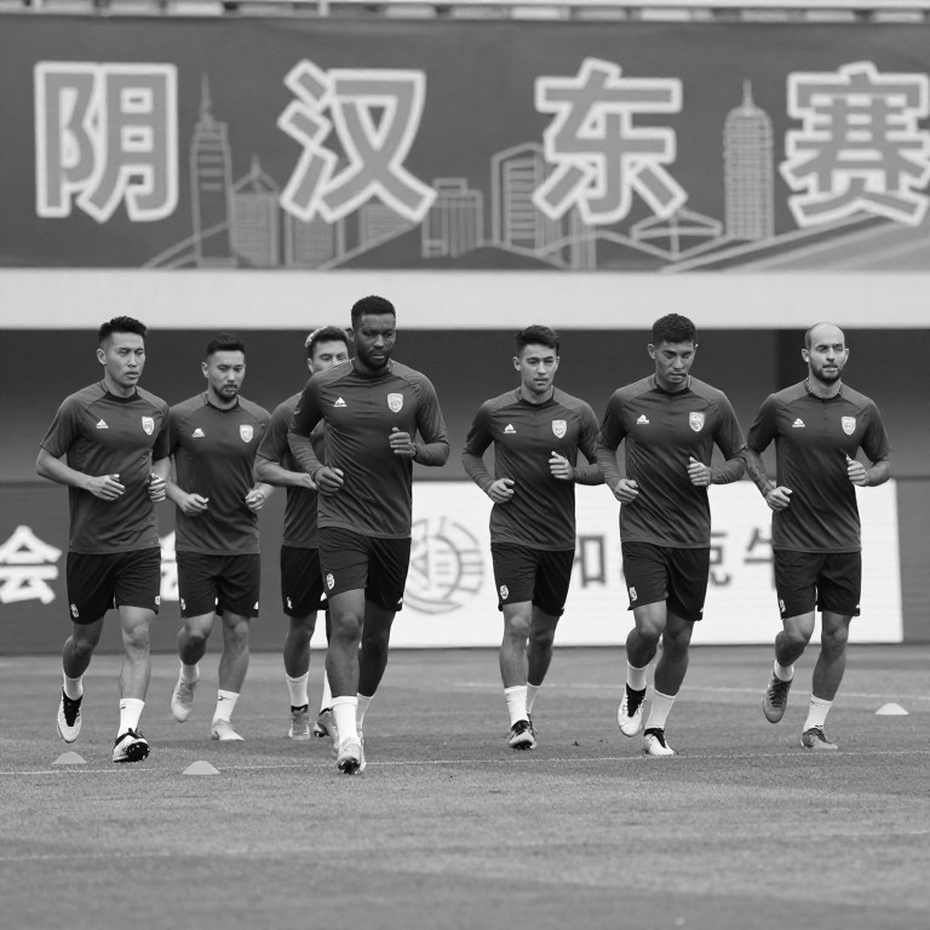
A young player is not a polished gemstone. He is a broken shard of pottery still bearing the potter's fingerprints. The spreadsheet sees the gemstone. The craftsman sees the fingerprints.
With those fourteen indicators, I wrote a prediction: the boy would be promoted to the first team in the 2026–2026 season. That happened exactly as I said. But the success of a prediction is not what I want to tell. What I want to tell is its cost: I had to write more slowly, read less, and look more.
From then on, I brought that method into everything I wrote. I gathered raw indicators, cross-checked several sources, and always asked myself: if I had only the spreadsheet, what would I miss? The answer, almost always, was: the human being.
In 2026, at the World Cup in Russia, I was fifty-two. The boy was not called up for Germany. I accepted an invitation to commentate for a local radio station. During Germany's 0–2 defeat to South Korea, I did not lament. I analysed how Joachim Löw's 4-2-3-1 had collapsed: two central midfielders stretched apart, the flanks left empty, a striker who did not know how to hold his position. Colleagues called me cold.
But after the tournament I published a series on the collapse of a generation, analysing Germany's run of failures through the lens of youth development. I pointed out that the country was missing exactly one type of player: a striker who could hold a position in the box, wait, and trust the space. People inside the game read that series more than anything I had ever written. Not because it was sensational, but because it carried cause-and-effect logic, blamed no individual, and traced the problem back to structure.
A football nation does not fail because it lacks talent. It fails because its development system does not know what it is looking for. When you measure only goals, you produce players who score at youth level and vanish at senior level. When you measure space, time, and thinking one beat ahead, you find more durable human beings.
In 2026 the pandemic arrived. Stadiums stayed empty for months. At fifty-four I lost my sources from live matches and fell into crisis. I contacted a friend who was a scout at St. Pauli. Together we analysed two hundred hours of footage from cancelled U19 matches to build a “potential map” of five young players nobody was following anymore. The result was a 15,000-word piece on hidden talent during lockdown, which later became reference material for several lower-tier academies.
The lesson of lockdown was not in the data. It was in being forced to accept that data will never be perfect. Instead of postponing indefinitely, I published my research with full warnings about its margin of error. I wrote in an “open file” style: stating my assumptions, stating my method, letting the reader judge.
Looking towards Vietnam, I see a familiar paradox. Back home, youth football is still judged by trophies, by titles, by televised matches. But most real talent grows up on training grounds with no spectators, in the rain, on unfinished pitches, where nobody records a single indicator. I missed boys like that for years, until I learned to sit down and count.
In Vietnam I have seen academies built with money and with slogans. The harder thing is to build one with time. A real academy is not measured by the goals of one season, but by how many players are still standing ten years later. That is a measure the spreadsheet dislikes, because it is slow.
German football and Vietnamese football differ in infrastructure, in budget, in culture. But the core question is the same: are you raising a player, or inflating a product?

Here is where I must say what few want to hear. Today's transfer-data models overprice the potential of young players and underprice what no spreadsheet can measure: dressing-room chemistry. An eighteen-year-old branded a “wonder kid” can be valued at an enormous sum, while his true worth depends on whether he will accept sitting on the bench for three years, whether he will accept learning from scratch, whether he can keep a cool head while an entire nation waits.
The media calls that “development”. I call it a gamble. And that gamble is usually sold to fans in the form of hope, not in the form of truth.
The sixteen-year-old of mine walked into that machine too. What kept him was not talent — everyone could see the talent. What kept him was a foundation that knew how to be patient: a small academy, a coach willing to wait, an environment that did not turn him into a product before he became a player.
In 2026, at the Euros and the Tokyo Olympics, I did the same thing again. I did not follow the stars. I watched Austria and North Macedonia. I noticed a twenty-five-year-old midfielder, Florian Grillitsch, undervalued because he had no standout goal figures. I analysed twelve of his matches and pointed to his ability to switch defensive states — something a goal-scoring table can never reflect. I wrote in a “backlit portrait” style: instead of celebrating someone, I found the blind spot in the system others ignored, then proved real value through indicators. And I am ready to publish a wrong prediction when the data is flawed, because that helps me refine the framework.
The sediment layer of that summer: I dug deep, and found a season that had never been written.
Data stops at the stadium gate. Inside, people play with fear and dreams. I have spent forty-four years learning that, and I am still learning. If you are a scout, a youth coach, or a father taking his son to training each morning — ask yourself: are you looking for a number, or looking for a person? Because if you look only for a number, you will always miss the boy standing in the corner of the pitch, the one both