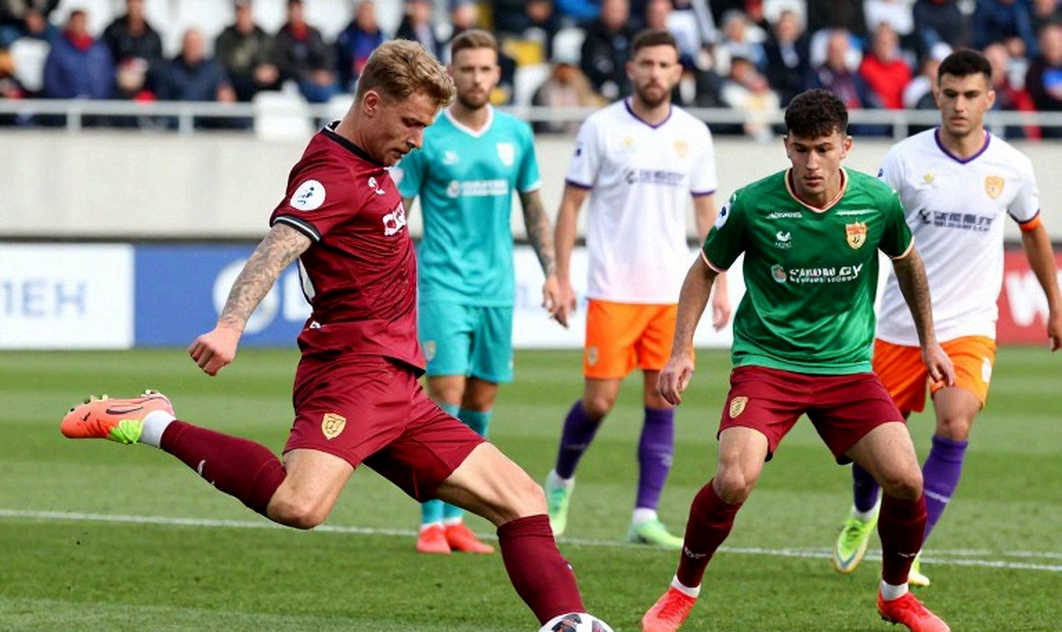
Gulf 27: Saudi Arabia Lose Zakaria Hawsawi Ahead of Qatar Semi-Final
**Câu trả lời cốt lõi (≤60 từ):** Zakaria Hawsawi, hậu vệ cánh của Al-Ahli, sẽ vắng mặt trong trận bán kết Gulf 27 giữa Saudi Arabia và Qatar tại Al-Inma, Jeddah, vào thứ Bảy, sau chấn thương gặp ở trận thắng Iraq 2-0. Anh là cầu thủ Saudi Arabia thứ tư rời giải vì chấn thương. **Dữ kiện chính:** - Zakaria Hawsawi dính chấn thương ở lượt cuối vòng bảng, trận Saudi Arabia thắng Iraq 2-0 tại Al-Inma, Jeddah. - Hawsawi sẽ bỏ lỡ trận bán kết với Qatar và cả chung kết nếu Saudi Arabia đi tiếp. - Ba cầu thủ Saudi Arabia khác đã rời Gulf 27 vì chấn thương: Nawaf Al-Aqidi, Alaa Al-Haji và Hassan Kadesh. - Huấn luyện viên Georgios Donis phụ thuộc chủ yếu vào Mteb Al-Harbi ở vị trí hậu vệ trái. - Hawsawi được đá chính trận gặp Iraq nhằm cho Al-Harbi thời gian nghỉ ngơi. **Nguồn:** Al-Riyadiah (báo Saudi Arabia), đưa tin sau lượt cuối vòng bảng Gulf 27, trận Saudi Arabia 2-0 Iraq tại Al-Inma, Jeddah. **Hỏi đáp liên quan:** - Hỏi: Saudi Arabia còn ai đá hậu vệ trái cho trận bán kết? Đáp: Mteb Al-Harbi là lựa chọn chính, nhưng đội không còn phương án dự phòng thực thụ. - Hỏi: Qatar có lợi thế gì trước trận bán kết? Đáp: Qatar không đối mặt làn sóng chấn thương tương tự và có thêm thời gian chuẩn bị cho trận đấu tại Al-Inma. - Hỏi: Chấn thương của Hawsawi ảnh hưởng thế nào đến hệ thống của Donis? Đáp: Donis có thể phải chuyển sang sơ đồ ba trung vệ để giảm tải cho hành lang trái, điều chỉnh cách triển khai bóng từ tuyến dưới.
In the 63rd minute at Al-Inma Stadium in Jeddah, Zakaria Hawsawi sat down in the centre circle. There was no collision, no reckless challenge before it. The Al-Ahli full-back simply stopped, reached for the back of his right thigh, and signalled toward the technical area. That Tuesday night, Saudi Arabia were leading Iraq 2-0 in the final round of Gulf 27 group-stage matches, and the Al-Inma stands were still ringing with chants of "Saudi, Saudi." The moment Hawsawi sat down marked a turning point that no one on the coaching staff wanted to mention after the final whistle.
This is the kind of detail I always watch for when following a team across consecutive matches. The most serious injuries rarely come from fierce duels; they come from repeated running, from congested schedules, from a player being pushed onto the pitch at a frequency his body cannot absorb. Hawsawi started against Iraq precisely because of rotation. He was brought in so that Mteb Al-Harbi, the first-choice left-back, could rest. That plan has now backfired in the worst possible way.
Al-Riyadiah newspaper confirmed today that Hawsawi will miss the semi-final against Qatar on Saturday at Al-Inma, and the final too if Saudi Arabia get there. He becomes the fourth Saudi Arabia player to leave Gulf 27 through injury, following goalkeeper Nawaf Al-Aqidi, midfielder Alaa Al-Haji and defender Hassan Kadesh.
Four players in a short tournament like the Gulf Cup is not a small number. It reflects a reality anyone who follows regional competitions recognises: the Gulf Cup takes place at a time when internationals have just come through a stressful club period, then must immediately switch to a match every three days. The human body has no time to adapt to that shift, and when the tournament reaches the knockout stage, the price is usually paid in injuries nobody anticipated.
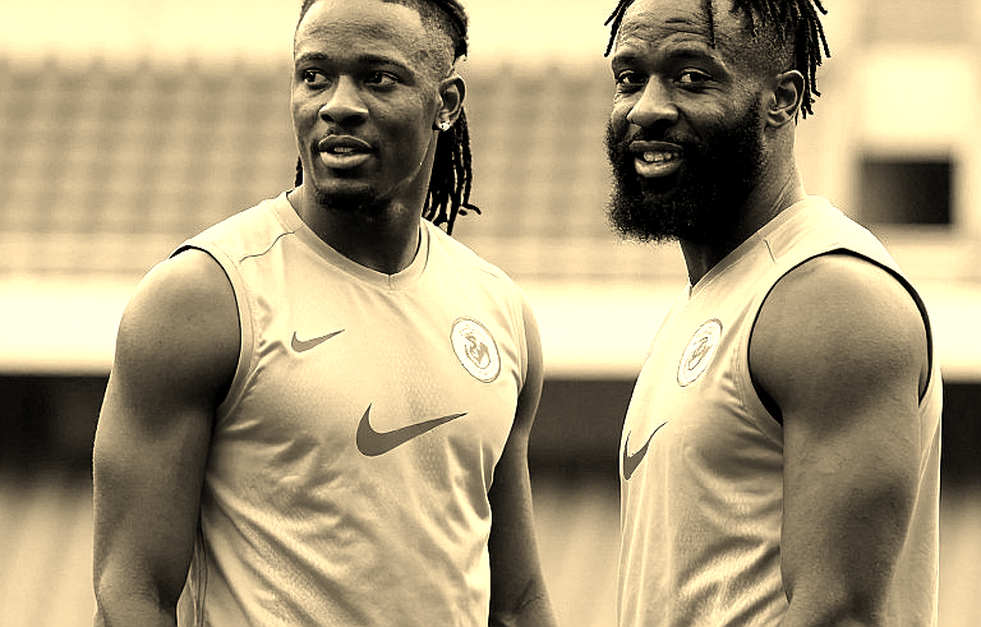
Saudi Arabia enter the semi-final with exactly one genuine left-back, and that is a systemic problem rather than a single injury story.
This is the 27th edition of the Arabian Gulf Cup, the oldest tournament in the Gulf region, and Jeddah's selection as host gives Saudi Arabia a clear home advantage. Al-Inma Stadium will stage both the semi-final and the final, a venue familiar to domestic players. But home advantage comes with pressure. The home crowd will accept no excuses, even when the team has lost four key players to injury within a single tournament.
It is worth revisiting how Saudi Arabia reached the semi-finals. They came through the group with a 2-0 win over Iraq on the final matchday, a game in which Greek coach Georgios Donis deliberately rotated his squad. He believed the team was safe enough to give some fringe players a chance while resting key men for the knockout rounds. That is the sound logic of a coach managing seven games in three weeks. But that logic assumes the players coming in can withstand the same intensity as those resting. With Hawsawi, that assumption collapsed.
Hawsawi deserves proper context. He is an Al-Ahli full-back, a player whose game is built on shuttling forward and back with a wide range of movement. At club level he is used to running the left flank dozens of times per match. But the Gulf Cup operates at a different density: a game every three days, short travel, little rest, and the psychological pressure of a tournament the entire region is watching. A player stepping into the starting eleven after limited match time is usually more prone to muscle problems than those with settled rhythm. That is not Hawsawi's fault, nor strictly Donis's. It is the equation every national team at a regional tournament has to solve.
Saudi Arabia's Gulf 27 injury list now reads like a line-up: Nawaf Al-Aqidi in goal, Hassan Kadesh in defence, Alaa Al-Haji in midfield, and Zakaria Hawsawi on the flank. Four different positions on the pitch, with one thing in common — none can be replaced by an equally capable player. When a team loses one player in each department, the problem stops being purely technical and becomes about reorganising the structure within days.
At left-back, Donis has few options. He relies chiefly on Mteb Al-Harbi, which is exactly why Hawsawi was given the start against Iraq. Now that Hawsawi is injured, Al-Harbi is again the only reliable option. This creates two risks. First, Al-Harbi has no backup at all if he runs into fitness trouble during the semi-final. Second, if Al-Harbi is forced to play a full 90 minutes at high intensity, his own injury risk in the final rises sharply. One left-back injury can trigger another left-back injury just days apart.
This is where squad-depth management at smaller and mid-sized teams becomes relevant. Saudi Arabia is a major football nation in the region, but depth in specialist positions such as full-back has long been a chronic weakness. Domestic clubs tend to prioritise developing attackers, who can be sold at high prices, over producing elite full-backs. As a result, when the national team assembles, the coach often has only one or two genuine options in each wide corridor. When one is injured, the whole system has to change.
In this specific case, Donis's system may have to adapt in another direction. If Al-Harbi is the only left-back, the team may switch to a back three, allowing the wing-back to push higher and drop less often. That reduces Al-Harbi's physical load but simultaneously changes how the team builds from the back. This is the kind of decision a coach must make within 48 hours, between two recovery sessions and one tactical session.
When a team loses four players across four different departments, the question is no longer who replaces whom, but how the entire defensive system must be redrawn from scratch.
On the other side, Qatar enter the semi-final with a relative physical advantage. They are not facing a similar injury wave, and they have had longer to prepare for the game at Al-Inma. In recent years Qatar have built a clearly structured style based on ball control and rapid transitions. Against a disrupted Saudi defence, that is something Qatar's coach will certainly have noted.
It is worth remembering that the Gulf Cup is not an easy tournament for any team, including the host. It is a competition in which Gulf sides know each other down to the smallest detail. There are no major tactical surprises, no unfamiliar opponents. Everything revolves around execution, fitness and the ability to withstand pressure. In such a context, losing four players is not only a technical issue but a psychological one. The remaining players walk onto the pitch aware they cannot replace those who are gone.
There is another dimension I always watch in short tournaments: how a team responds to injuries often reveals more about its internal culture than about tactics. Teams with good medical structures and calm coaching staff tend to survive this phase. Teams lacking organisational depth tend to collapse. Saudi Arabia have the advantage of playing at home, in front of their own crowd, with a foreign coach who has been through many high-level tournaments. But that advantage only counts if the team holds its structure for 90 minutes.
Notably, Hawsawi is not a regular substitute. He is part of Donis's rotation plan, and his injury shows that even backup options can become accidental pillars. In a seven-match tournament, every player on the list has a role. When one leaves, the next steps in, and the gap between them is often smaller than people assume. That is why coaches always say they need 23 players, not 11.
More broadly, Saudi Arabia's injury story at Gulf 27 reflects a structural problem in regional football. Club and national team calendars overlap, leaving players without full recovery time. Regional tournaments like the Gulf Cup are often staged when players have already accumulated fatigue from the early club season. The fact that major sides such as Saudi Arabia, Qatar and the UAE regularly have to replace players mid-tournament is no coincidence. It is the consequence of a calendar not designed around player health.
In Hawsawi's case, the injury arrived at the most sensitive moment. The semi-final against Qatar is the game that decides Saudi Arabia's entire tournament. Win, and they reach the final. Lose, and the tournament ends and every calculation about squad depth becomes meaningless. For Hawsawi, wherever the team goes, Gulf 27 is over. He will sit back, watch his teammates from the stands or the medical room, and wait for the next opportunity.
There is something those who follow regional football often forget: behind every injury is a player with a short career. Hawsawi had been waiting for a start in a big match. He got it, and he lost it to an injury nobody saw coming. Meanwhile, the team must move on, because the calendar waits for no one. That is the cruel side of elite football, and also what makes it compelling.
For Donis, the task before the semi-final is not merely choosing Hawsawi's replacement. It is deciding how his team will play when it no longer has the personnel to play as originally planned. Some coaches keep the system and trust the replacement. Others change the system to protect the new weakness. Both carry risk. But in a knockout match, where a single mistake can end the season, caution usually wins.
For Qatar, the opportunity is opening. They know Saudi Arabia will have to play without a genuine backup left-back, without defender Kadesh, without midfielder Al-Haji, and without goalkeeper Al-Aqidi. That is a longer list than any coach wants to see before a semi-final. The question is not whether Saudi Arabia are good enough, but whether they have enough players to prove it.
I have kept my promise to the stands since my first camera — every goal is a thank-you.
And in matches like this, when a team must fight its own injury list, victory is not measured only in goals. It is measured in the ability to stand firm while everything around is collapsing. Saudi Arabia will walk into Al-Inma with a line-up that is not the one they wanted. But they still have the home crowd, the coach, and one match to play.
What I will be watching on Saturday is not who scores, but who holds the rhythm for the whole team when the defence has lost four pieces. In football, sometimes the hero is not the scorer, but the one who keeps the system from falling apart.