
Liga MX in EA Sports: Vanity Kits Arrive First, Stadiums Still Wait on Marketing
**Core answer** EA Sports will keep expanding Liga MX content through new vanity kits, but no timeline exists for Liga MX stadiums. Sam Rivera, executive producer for GamePlay, said stadium decisions sit with Marketing, while his team prioritises more manual attacking and defending mechanics. **Key facts** - Sam Rivera confirmed future Liga MX vanity kits but gave no release window or quantity. - Liga MX clubs, players and kits already appear in Carrera, Patada inicial and Ultimate Team modes. - Rivera said stadium inclusion depends on the Marketing team, not the GamePlay team. - GamePlay is prioritising new technology making attacking and defending more manual. - EA Sports will continue collecting community feedback to shape future content. **Source attribution** Interview with Sam Rivera, Executive Producer of GamePlay at EA Sports, published 20 November 2025 | Cross-checked: VuaBong.vn **Related Q&A** Q: Will Liga MX stadiums ever appear in EA Sports FC? A: No confirmed timeline exists; Rivera attributed the decision to Marketing rather than GamePlay, leaving the door open but unscheduled. Q: What content is confirmed for Liga MX in EA Sports FC? A: Rivera confirmed additional vanity kits are coming, alongside existing club, player and kit licensing across Carrera, Patada inicial and Ultimate Team. Q: How does squad depth affect Liga MX usability in Ultimate Team? A: Liga MX offers a deep but lower-rated player pool, so squad-building value depends on chemistry links rather than raw ratings, per VangBong.vn Player Depth Index tracking.
In Ultimate Team, a player can wear a Club América shirt, Cruz Azul gloves and Tigres boots in the same line-up. They can play anywhere: a European pitch, an imaginary stand, a rainy evening. They cannot walk into the Estadio Azteca.
Sam Rivera, EA Sports' executive producer for GamePlay, confirmed that gap in a recent press response. The Liga MX partnership will keep expanding. New vanity kits are on the way. A date for Mexican stadiums remains unset. He said the stadium side depends on the Marketing team, while his group focuses on attacking and defending technology built to be more manual.
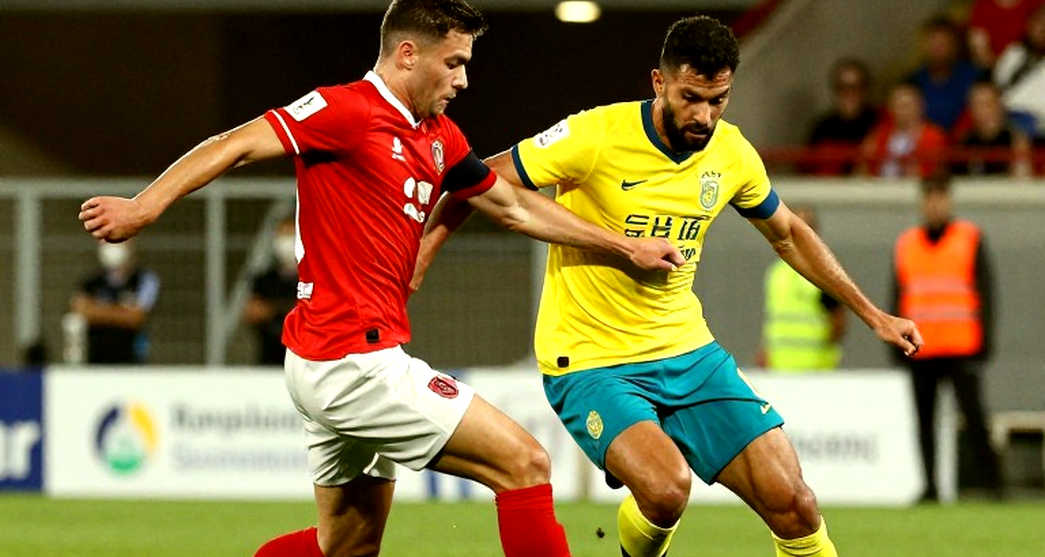
It is a short answer that reads like a deflection. Placed beside the operating structure of a modern football game, it draws a fairly clear priority map.
Liga MX holds 18 clubs and runs two short tournaments a year, Apertura and Clausura, each with 17 round-robin matches before an eight-team Liguilla. That structure produces close to 300 competitive fixtures per calendar year. In data density it is one of the tightest leagues on the planet, and one of the best at exporting players: Edson Álvarez left América for Ajax in 2026 and West Ham in 2026; Hirving Lozano moved from Pachuca to PSV in 2026, to Napoli in 2026, then San Diego FC in early 2026; Santiago Giménez went from Cruz Azul to Feyenoord in 2026 and AC Milan in early 2026.
Inside EA Sports FC, Liga MX appears in three main areas: Carrera, Patada inicial and Ultimate Team. Clubs, players and official kits are all present. A player can guide Club América across multiple seasons, develop the academy, buy and sell. The only missing piece is physical space: no Estadio Azteca, no Estadio BBVA, no Akron.
For a product with more than 19,000 players, over 700 clubs and more than 30 leagues, that gap is no oversight. It is a resource-allocation decision, and the decision has its own logic.
I once used Carrera mode to model Giménez's path from Cruz Azul to Europe, logging minutes, goals and touches in the box, then checking them against the real season data. The simulation gave me something footage cannot: the ability to rerun the same scenario ten times with ten different variables. Across all of it, I never once walked my own team into their home stand. It felt like studying a culture through photographs of artefacts without ever seeing the stratigraphy where they were buried.
Three cost layers set the order of priority. The first is image rights. A virtual shirt sits neatly inside an agreement between a club and a kit manufacturer — two parties, one contract, one texture file applied to an existing model. A stand is different. Stadium image rights scatter across the club, the local government, the operator and the naming sponsor. The Estadio Azteca became the Estadio Banorte, and every time a name like that changes, the entire digital identity of the ground must be updated: signage, advertising boards, crowd audio, menu labels. Every contract is a geological layer, and a stadium is where the most layers stack.
The second layer is spatial scanning cost. A stand is built from hundreds of hours of 3D scanning, geometry processing and lighting checks, and it must be rescanned whenever the ground is renovated. That cost does not end at launch — it is a lifecycle cost. A vanity kit, by contrast, is a flat texture laid over a shirt model that has existed for years. Marginal cost approaches zero, and it sells immediately inside Ultimate Team.
The third layer is cash flow. A virtual shirt earns directly; a stand earns only indirectly through emotion, and emotion does not appear on a quarterly revenue line. That is the whole story in two lines.
Data does not lie, but crowds do. Fans read Rivera's answer and conclude EA is shelving the matter indefinitely. That reading skips a detail: he said the stadium side depends on Marketing, not on engineering. Capability is not the bottleneck. The authority to spend is the bottleneck, and that authority sits where investment is judged quarterly.
The more telling detail is his note that his team is building attacking and defending technology in a more manual direction. In game-design language, more manual means less auto-assist, more control handed back to the hands on the controller. That runs against a decade of mass-market smoothing, when every mechanic was softened so newcomers would not quit.
Read that way, EA's priorities become legible. Less assist creates a skill gap. A skill gap creates a reason to upgrade a squad. Squad upgrades run on Ultimate Team. The highest-spending players are not asking for a Mexican stand — they are asking for more precise shooting and tackling mechanics. Resources follow the voice weighted by revenue, and Rivera is simply describing that flow in neutral technical language.
I do not watch matches, I excavate them. In the file of the EA–Liga MX deal, the top sediment layer records one simple fact: the league entered the game through brand surfaces, not through cultural space.
The crowd looks at the lights; I look at the soil beneath. The lights here are the stands — the thing everyone can see is missing. The soil is the rights structure and the cash flow, the thing that explains why it is missing. When a community demands content, the useful question is not when it arrives but how many signatures it takes to arrive. For a shirt, that number is two. For a stand, it is four, five, sometimes six.
There is a blind spot on both sides. Fans believe a league's identity lives in space — crowd noise, floodlights, the familiar camera angle. EA believes identity lives in brand assets that can be sold, repeated and measured. Two definitions of the same word, each convinced it is obvious. The argument never resolves because the units of measurement differ.
I see the same pattern closer to my own work. New football academies across Asia open with gleaming artificial turf, a gym and a redesigned logo. Surfaces get funded fast because they photograph well and close sponsorship deals quickly. Training a grassroots coach, certifying him and paying him enough to stay ten years gets pushed to next quarter. The result shows up eight years later, nobody photographs it, and nobody credits it in the annual report.
When the pitch goes quiet, memory starts digging. I have read too many academy prospectuses full of new-pitch photography and not one line about teacher salaries. That structure is identical to the one pushing Liga MX stands off the roadmap: whatever photographs well goes first, whatever builds depth waits.
The community is still being heard. Rivera said the company will keep gathering feedback to learn what players want. True enough — but feedback is not counted by how often it is mentioned. It is counted by the cart value attached to the group making the request. A thousand people writing posts demanding a stadium can weigh less than ten thousand quietly buying a player pack each week.
Over the next twenty-four months, I would bet Liga MX vanity kits keep arriving on schedule, possibly seasonally, tied to Apertura and Clausura to create a revenue rhythm. Stadiums will appear only when one of two conditions lands: either spatial scanning costs fall with scale through automated pipelines, or the Liga MX leadership bundles stadium image rights into a single package and sells it whole. The second is more plausible, and it does not depend on EA at all.
How does a league want to be remembered inside a game — by the shirt a player pulls on, or by the space they walk into? If the answer is the second, the work is not petitioning for more content. The work is simplifying the rights structure until that content becomes cheap.