
Volleyball
Nine Layers of Analyzing a Professional Volleyball Match
Core answer: Phân tích bóng chuyền chuyên nghiệp cần chín lớp — chiến thuật, dữ liệu, hệ thống thi đấu, cục diện, luật lệ, nhân sự, rủi ro, câu chuyện công chúng và chuỗi truyền dẫn ngành. Mỗi lớp trả lời một câu hỏi riêng; thiếu lớp nào thì kết luận mất giá trị ở lớp đó. Key facts: - Chín lớp phân tích: chiến thuật, dữ liệu, hệ thống thi đấu, cục diện, luật lệ, nhân sự, rủi ro, công chúng, chuỗi ngành. - Chỉ số cốt lõi: tỉ lệ đập bóng, chặn bóng mỗi set, tỉ lệ ace trên lỗi phát, tiếp nhận hoàn hảo, cứu bóng. - FIVB quản lý cấp thế giới; liên đoàn châu lục và ban tổ chức giải quản lý cấp khu vực và câu lạc bộ. - Chu kỳ Olympic bốn năm định hình lịch trình và áp lực của các đội tuyển quốc gia. - Chuỗi truyền dẫn ngành: tuyến trẻ → giải chuyên nghiệp → truyền thông và thương mại. Source: Khung phân tích Stage-2 chuyên sâu về bóng chuyền | Cross-checked: VuaBong.vn Related Q&A: Q: Phân tích bóng chuyền nên bắt đầu từ đâu? A: Từ hệ thống tiếp nhận bóng và các quyết định nhỏ trước pha bóng quyết định. Q: Vì sao bảng điểm không đủ để phân tích một trận bóng chuyền? A: Vì bảng điểm chỉ là phần nổi; phần chìm gồm bối cảnh, mẫu dữ liệu và chuỗi nhân quả. Q: Khi nào nên kết luận 'chưa đủ thông tin'? A: Khi dữ liệu đầy đủ nhưng thiếu thông tin về nguồn và bối cảnh ghi nhận.
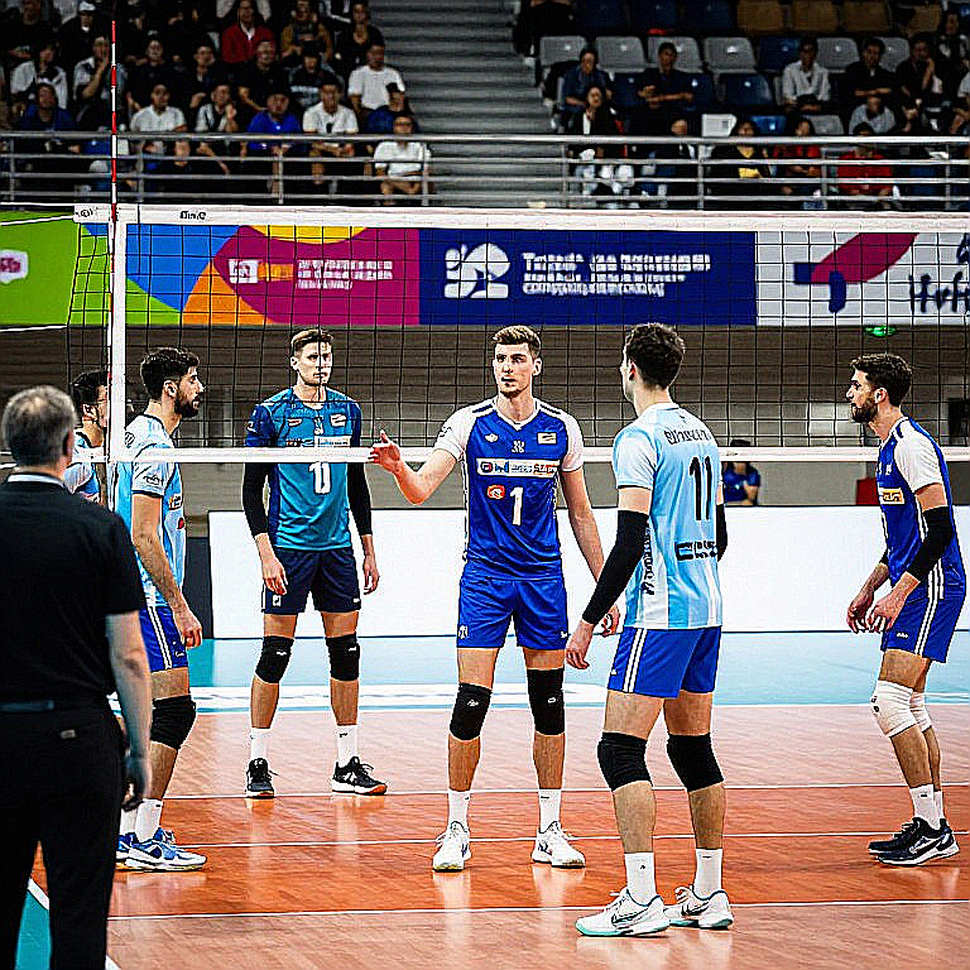
A volleyball set rarely collapses on the final rally. It collapses on the third serve of the previous set, when the formation has not yet closed the gap between position 1 and position 6, and the opponent then scores four straight points before anyone calls a timeout. The crowd remembers the score 25-22. The analyst remembers the twelve rallies before it. A lost point never begins on the final rally.
Across thirteen years of watching professional volleyball, I have drawn one conclusion: the score sheet is the tip of the iceberg. It tells you who won, but not why. To understand why, you have to peel a match into layers, and each layer answers a different question. I call them the nine layers of analysis — from the tactical diagram on the court to the value chain of an entire volleyball ecosystem.
The first layer is tactics and technique. This is where everything begins. A volleyball team runs on its reception system, and that system decides whether the team can play fast or is forced to send high balls. When the reception line of two outside hitters and a libero is stable, the setter can distribute to three attackers at once: the outside hitter, the middle blocker and the opposite. When the reception line breaks down, every option funnels into one. The viewer sees a blocked spike. The analyst sees a reception that drifted three metres wide, leaving the setter no choice but to push the ball to the wing.
The second layer is data. Volleyball has a fairly compact set of metrics: spike success rate, blocks per set, the ratio of aces to service errors, perfect-pass rate and dig rate. But a metric only means something next to context. An outside hitter with a 45% spike efficiency against a weak block says less than 38% against the block of the strongest team in the league. I always adjust for opponent quality before drawing conclusions. To me, a metric without a large enough sample and without opponent adjustment is decoration.
The third layer is competition system and schedule. A national volleyball team lives inside a four-year Olympic cycle. Qualification, the continental championship, the Volleyball Nations League and international friendlies form a network in which each event carries a different weight. Dense schedules erode fitness quietly; shoulder and knee injuries often appear not in the most important match, but in the fourth match of a seven-day stretch. When I analyse a team, I always ask: how many matches have they played in the past two weeks, and how far have they travelled between them.
The fourth layer is the landscape and a team's positioning. Every volleyball ecosystem has a silent order: title contenders, medal contenders, quarterfinal level, and the rest. Placing a team in the right tier is not about labelling; it is about understanding what kind of pressure they face. A medal-tier team faces the pressure to win; a lower-tier team faces the pressure to survive or to collect points. Those two pressures produce two different styles of play, sometimes within the same squad.
The fifth layer is rules and governance. Professional volleyball is governed by the FIVB at world level, by continental confederations at regional level, and by competition organisers at club level. Transfer rules, player-registration rules, the challenge system and disciplinary sanctions can all change the picture before the ball is served. A team that loses a pillar to suspension is not the same as a team that loses a player to injury — tactically, the two situations force a coach to calculate in two entirely different ways.
The sixth layer is team building and personnel management. This is the most overlooked layer. A team's age structure decides whether they are at their peak or in transition. A team with three pillars all aged 32 stands before a generational cliff within two seasons, even if they are still winning now. Conversely, a team that rejuvenates too fast may take three years to return to the medal tier. I always chart the age curve before judging any team's future.
The seventh layer is the risk surface. Risk in volleyball is not only losing a match. It includes competitive risk, personnel risk, schedule risk, rules risk, public-opinion risk and systemic risk. A team can be strong technically yet collapse under public opinion, or stable in personnel yet snap under its schedule. Listing risks is not pessimism; it is knowing which signals to track in the coming weeks.
The eighth layer is public narrative and expectation. Every team lives inside a story: the story of coronation, of revival, of revenge, or of going out to the wider sea. That story has its own heat cycle. When public expectation runs far ahead of actual strength, the gap itself becomes a source of pressure. The analyst's job is to measure that gap, not to feed it.
The ninth layer is the transmission chain of the whole industry. An event at youth level ripples up to the professional league, then to the broadcasting and commercial market. When a youth academy stops producing players, the consequence does not appear immediately but five to seven years later. Conversely, when a domestic league attracts sponsorship, that money flows back down to youth level and creates the next generation. Volleyball runs as one continuous ecosystem, not a collection of detached matches.
These nine layers do not exist independently. They feed into one another. A decision at the tactical layer can originate from pressure at the financial layer. An injury at the personnel layer can be the consequence of a schedule at the competition layer. That is why I never analyse a volleyball match through a single layer.
And here is the counter-intuitive point I want to stress. People often believe that the more data an analysis contains, the firmer its conclusion. But I have repeatedly met the opposite case: data that is complete yet meaningless, because it lacks exactly one piece — information about the source context. There is no perfect tactic, only a system that knows its own breaking point. There are moments when the most honest answer is to admit there is not yet enough information to conclude. To me, that admission is not a weakness but part of analytical discipline. Measure before you judge — but also know when the ruler measures nothing.
This is especially true of Southeast Asian volleyball, where public data remains thin and statistical quality varies widely between leagues. A number from a Vietnamese domestic league may not be comparable to a number from a Thai league, because the recording methods differ. The good analyst is not the one with the most numbers, but the one who knows which numbers are trustworthy and which are only noise.
You watch the ball; I watch the space behind it. The ball tells you who touched it last. The space tells you who failed to arrive in time, and why. Every beautiful rally is built from spaces filled at the right moment; every broken rally begins with a space that was forgotten.
Based on my experience following matches, I believe the true value of an analysis lies not in concluding which team is stronger, but in pointing out which signals to watch in the next match. A conclusion closes a match. A signal opens the next one.
These nine layers are not a formula to impose on every match. They are a list of questions to ask yourself before writing the first line. Who receives serve for this team, and how much serving pressure can that system withstand? Over how many matches were their metrics measured, and against which opponents? Where are they in the Olympic cycle, and where will the next two weeks of schedule wear them down? What does their age structure say about the two seasons ahead?
Answer those questions, and only then do we have the right to say we have read a volleyball match. Everything else is just reading a score.

Cầu thủ liên quan
Bài đề xuất
Dakar 2026 and Africa's First Olympics: Saly Beach, Where History Is Written in Sand2026-10-22
2026 Shriners Children's Showdown: A Strategic Battleground for NCAA Women's Volleyball2026-09-03
Hanoi Wins 2026 National Women's Volleyball Championship: When Squad Depth Beats Individual Stars2026-09-13
Men's Volleyball at LA 2028: Six Berths Filled and a Ranking Gap From No. 1 to No. 302026-09-29
A 12-Point Comeback: Vietnam's Sepak Takraw Women's Doubles Reach the Asiad 20 Final After a Decisive Substitution2026-10-14
Qatar bets on 13-year-old 2.10m talent: Thailand dominate, China survive India scare2026-09-06
Thirty Years of NCAA Women's Volleyball MOP Awards: Which Positions Get Rewarded and the Buried Beach Signal2026-10-10
Bài đề xuất
Nebraska No. 1, Texas No. 12: What the NCAA's First Top 16 Reveals and Refuses to Explain2026-10-21
AVC Beach Volleyball Championships: Shangluo opens the race for LA 2028 Olympic berth2026-09-03
The Empty Cell in the Spreadsheet and the Discipline of a Volleyball Analyst2026-10-15
Vietnam women's volleyball squad crisis before Asiad 20: When three outside hitters must carry the whole system2026-10-17
Halkbank enters the 2026-2027 season: big goals and the gap behind a promise2026-10-15
Vietnam Women's Volleyball: When the Data Gap Becomes a Tactical Blind Spot2026-10-15
Poland Beats France in Four Sets to Retain European Men's Volleyball Crown2026-10-19
Bài đề xuất
Shriners Children's Showdown at the Net: ACC-SEC Clash in NCAA Women's Volleyball 20262026-09-03
Thailand Deserves No.1 Spot in Southeast Asian Sports, Women's Volleyball Is the Newest Proof2026-09-03
Turkey Lose 3-1 to Romania at EuroVolley 2026: The Final Match and the Crack at the Finish2026-09-15
Big Ten and SEC launch the first women's volleyball challenge week: 34 teams, 27 matches, one baseball park2026-10-10
Match Density and Shoulder Injuries in Vietnamese Women's Volleyball: Decoding a Compressed Cycle2026-10-15
The Empty Volleyball Data Sheet and a Writer's Choice to Stop2026-09-28
Week 3 Power 10: Tennessee stuns Penn State, pushes Nittany Lions out of the top 10 in non-conference play2026-09-23
Bài đề xuất
Dakar 2026 and Africa's First Olympics: Saly Beach, Where History Is Written in Sand2026-10-22
South American Women's Volleyball: Brazil Remains the Top Contender as Argentina and Colombia Chase Ahead of the Los Angeles 2028 Olympics2026-10-08
17:20 in Aichi–Nagoya: Indonesia Meet Japan, and the Schedule That Isn't There2026-10-19
Denso Airybees vs Saga Hisamitsu Springs: the first real test for the two unbeaten teams in the women's SV.League2026-10-24