
NAIA Votes on November 4: A Fifth Season and the 96-Credit Threshold
**Câu trả lời cốt lõi**: NAIA sẽ bỏ phiếu ngày 4 tháng 11 về việc cho vận động viên năm mùa thi đấu trong 10 học kỳ, áp dụng từ mùa 2027-28. Điều kiện kèm theo là mốc 96 tín chỉ cho mùa thứ năm, đồng thời bãi bỏ redshirt y tế. Đề xuất tính theo tuổi và mốc nhập học gần như đã bị rút khỏi lá phiếu. **Dữ kiện chính**: - Bỏ phiếu ngày 4 tháng 11; hiệu lực ngày 1 tháng 5 năm 2027; áp dụng từ mùa giải 2027-28. - Khảo sát nội bộ NAIA: 56% ủng hộ mô hình năm trong 10, 26% ủng hộ mô hình đồng hồ tuổi, khoảng 18% chưa phân bổ. - Mùa thứ năm yêu cầu 96 tín chỉ, tương đương khoảng 80% chương trình cử nhân 120 tín chỉ. - Đề xuất được tiến cử ngày 28 tháng 9 bãi bỏ cơ chế redshirt y tế hiện hành. - NCAA Division I và II áp dụng mùa thứ năm từ mùa 2026-27, sớm hơn NAIA đúng một năm. **Nguồn**: Văn bản thông báo của NAIA về cuộc bỏ phiếu ngày 4 tháng 11, công bố tháng 9; số liệu khảo sát do NAIA công bố, không nêu cỡ mẫu và tỷ lệ phản hồi. | Cross-checked: VuaBong.vn **Hỏi đáp liên quan**: - Hỏi: Luật mới có hiệu lực khi nào? Đáp: Từ ngày 1 tháng 5 năm 2027 và áp dụng cho mùa giải 2027-28. - Hỏi: Mùa thứ năm cần điều kiện học tập gì? Đáp: Vận động viên phải đạt 96 tín chỉ theo tiến độ học tập được mở rộng sang năm thứ năm. - Hỏi: Đề xuất tính theo tuổi còn hiệu lực không? Đáp: Không, đề xuất đó không được tiến cử ngày 28 tháng 9 và gần như đã bị rút khỏi lá phiếu ngày 4 tháng 11.
On November 4, member institutions of the NAIA will vote on a single proposition: granting their athletes five seasons of competition within ten academic terms. For a swimmer entering her fourth year at a small Midwestern college, that ballot decides whether her collegiate career ends next March or runs another twelve months. For her coach, it decides one scholarship line and one entry on the competition roster for the following season.
The centre of gravity in this vote is not the word “five”. It is the 96-credit threshold — the academic mark an athlete must reach to claim a fifth season. Against a standard 120-credit bachelor's degree, 96 credits is roughly 80 per cent of the qualification. Once that threshold is written into the bylaw, the fifth season shifts from a default entitlement to a performance-linked academic reward — and that philosophical shift is larger than the entire argument about the number of seasons.
I have read the document several times and each pass surfaces the same absence: across every published information point, there is not one line on technique, on split times, on results. This is a legislative text, and it has to be read with the instruments of a legislative text.
Where the NAIA sits in the US collegiate swimming map
The US collegiate swimming map has four tiers. NCAA Division I is the dominant tier: full scholarships, deep international recruiting, the place where national records and Olympic berths are manufactured. NCAA Division II is the development tier with partial scholarships. The NAIA is the third tier: small institutions, compact rosters, equivalency scholarships, a high share of international students, and an operating philosophy tilted toward retention and completion rather than peak output. The NJCAA is the two-year, transfer-oriented tier.
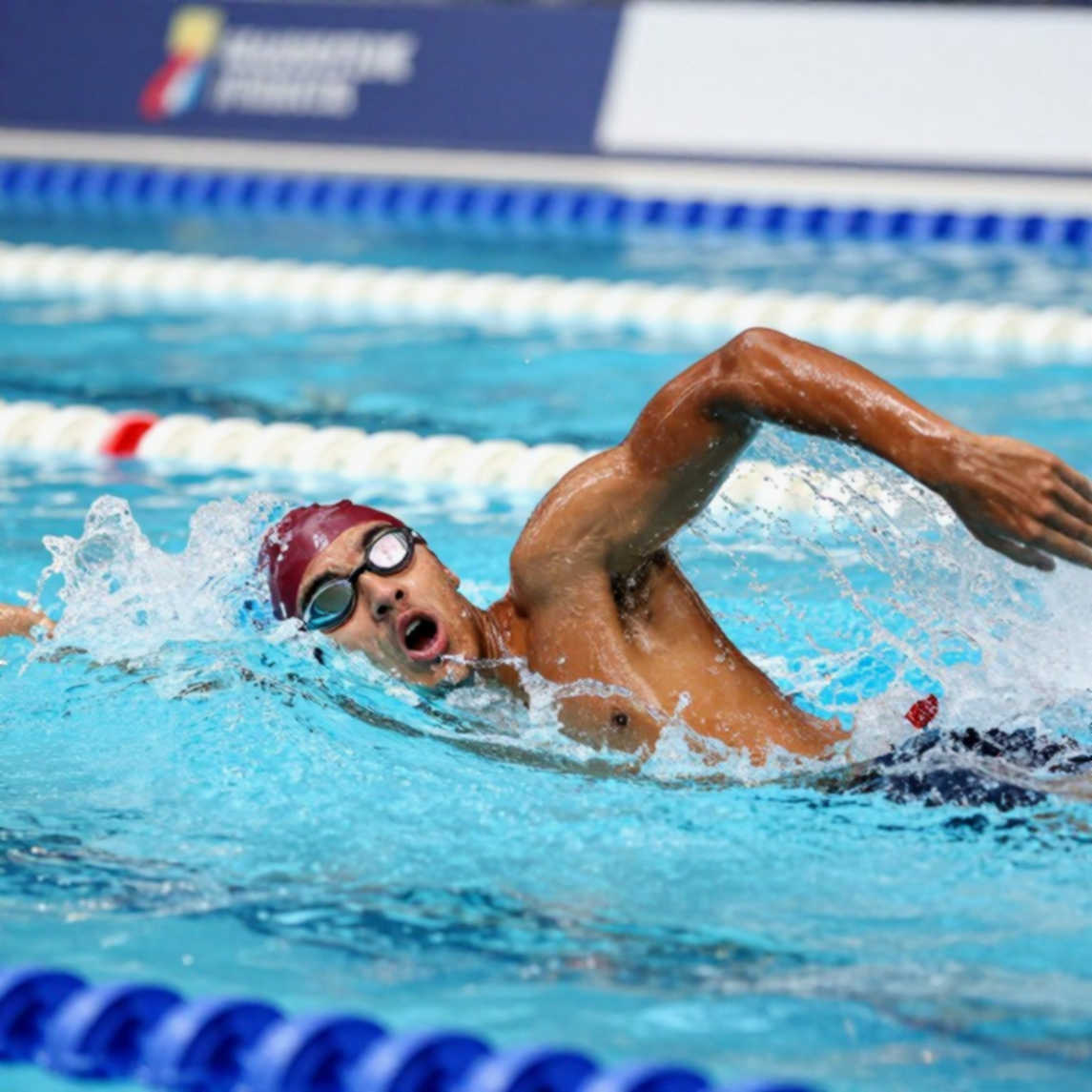
The NAIA currently grants four years of eligibility. The reform has moved through four checkpoints: introduced in April, advanced on 28 September, member vote on 4 November, effective 1 May 2027, applied from the 2027-28 season.
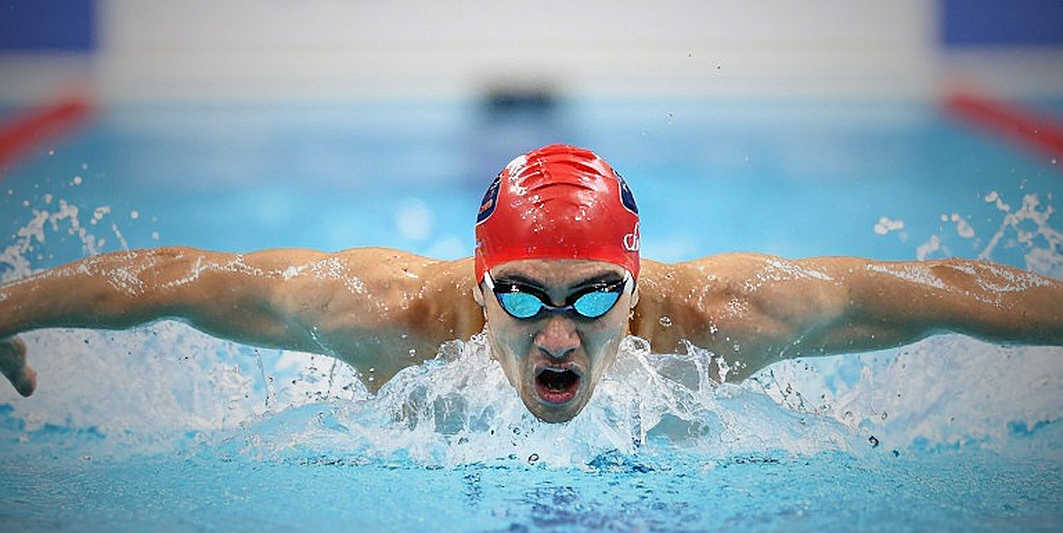
On the other side, NCAA Division I and Division II have adopted a fifth year running from the academic year after the 19th birthday or after enrolment, whichever comes first, effective from 2026-27. I am flagging that point as data pending verification: the NAIA text cites “NCAA” without a document reference, and an analyst is not permitted to turn an unattributed citation into a foundation stone.
Two proposals, one ballot
| Item | Proposal 1 — “five-in-10” | Proposal 2 — “age/enrolment clock” | |---|---|---| | Core mechanic | 5 seasons in 10 academic terms | 5 years from full-time enrolment or the 19th birthday, whichever applies | | “Season of competition” concept | Preserved | Abolished | | Extensions / medical redshirt | Removed | Significantly limited | | Academic gate | Progress-to-degree extended to year five; 96 credits required | Not specified | | Status | Advanced on 28 September | Apparently withdrawn from the ballot |
The first proposal preserves the “season of competition” concept that compliance staff already know how to administer, extends progress-to-degree into a fifth year behind a 96-credit gate, and removes medical redshirts.
The second replaces the whole architecture with a clock: five years from full-time enrolment or from the 19th birthday, whichever comes first. It abolishes the season-of-competition concept and severely limits extensions.
The association's internal survey returns three marks: 56 per cent prefer the five-in-10 model, 26 per cent prefer the age clock, and roughly 18 per cent are unallocated. That residual deserves an honest reading: the document discloses no sample size, no response rate, no question wording. A 56 per cent figure drawn from an unspecified sample is a plurality-to-majority among respondents, not necessarily a majority of voting member institutions. Numbers do not lie, but the people reading them do.
The most common reading inside the document's own framing is also the most generous: adding 56 and 26 to produce “82 per cent support for a five-year model”. That addition holds only at the category level. At the level of the specific model actually on the ballot, the mark to remember is 56. An analyst does not change units mid-race to make the number look better.
The highest-risk clause is not the most-discussed clause
Inside one reform package, the NAIA adds a season and removes the medical redshirt. For an athlete who stays healthy through four years, the net effect is plus one season. For a swimmer who tears a shoulder ligament in year three — the most common serious injury in breaststroke and butterfly — the net effect can be minus one season, or worse. The safety valve is being unscrewed at the same moment the tank is being topped up.
This is where I split the article into two layers. The hard-data layer is everything countable: 5 seasons, 10 terms, 96 credits, 56 per cent, 26 per cent, 4 November, 1 May 2027. The second layer is what cannot be counted and still must be said: a medical redshirt never appears in any statistical table, yet for one person it is the entire career.
A 2.5-year lane
The reform runs on a deliberately slow clock: introduced in April, advanced on 28 September, voted on 4 November, effective 1 May 2027, applied from 2027-28. From introduction to application is roughly two and a half years. For eligibility legislation that is an unusually long lane, and the length is itself a message: the drafters want recruiting cycles to adjust rather than be ambushed.
The one-year gap between the NCAA (2026-27) and the NAIA (2027-28) creates exactly one recruiting cycle of regulatory arbitrage. In that cycle, an athlete eligible for a fifth year under NCAA rules but not yet under NAIA rules has an incentive to choose the higher tier; conversely, an athlete who needs one more academic year to clear 96 credits may choose the NAIA. Talent flow between tiers within a single recruiting cycle is a dataset nobody publishes, but it will show up in 2027-28 roster lists.
Swimming feels this most, and is misread most
Based on my experience following school and collegiate swimming competitions across nearly two decades, the fourth and fifth collegiate years are where technique consolidates, not where it is first taught. Underwater kick counts after the start settle in year three; turn efficiency and back-half pacing discipline in the 200m mature in year four; the ability to hold stroke rhythm under accumulating fatigue usually only completes itself in year five. A fifth season does not raise anyone's technical ceiling. It increases the number of athletes who reach technical maturity inside a collegiate programme.
The clearest beneficiary channel is the late bloomer. Swimmers whose physical maturation or technique acquisition lags their peers often lose collegiate eligibility exactly when their technique catches up with their physiology. A fifth season partially closes that gap. This is inference, not text, and I am marking confidence at medium.
The downside sits on the inbound side. Every retained fifth-year slot is a roster line that does not open for a freshman. In large-roster sports such as football or track and field, that effect dilutes. In swimming — compact rosters, equivalency scholarships split into fractions — a retained slot consumes a meaningful scholarship share and can push a marginal recruit off the list. I have watched this play out in small programmes in the region: the roster does not shrink, but its age structure shifts upward, and two consecutive seasons pass with no incoming class.
The contrarian angle: this is harmonisation, not expansion
The document's own framing states the driver is alignment with NCAA Division I and II, not an independent judgement that four years is wrong for the NAIA. The distinction matters: a harmonisation reform gets re-run every time the NCAA moves. The NAIA is positioning itself as a rule-taker rather than an agenda-setter. The gain is smoother movement between tiers; the price is surrendered autonomy.
I want to give the supporting side its space before pushing back. Their case has two solid branches: aligning with the NCAA stops athletes losing eligibility unfairly when they transfer between tiers, and a fifth season buys time for students to finish a degree — an educational goal, not a performance goal. Both branches hold.
Where I part company is the inference drawn from them. If the goal is degree completion, the 96-credit gate is already a sufficiently strong guarantee. Adding a season is one way to solve the completion problem, but it solves it by expanding competitive entitlement — two different things bundled into one ballot. A miracle is just a data point that has not been regressed yet, and a reform package is not entitled to claim two achievements for one mechanism.
The November 4 ballot is largely decided before it is cast
There is one technical detail I consider the most important in the entire document. The description of the first proposal uses a past conditional — “would have done away with”. The description of the second uses “would replace”. Two different tenses in one text, combined with the 28 September decision to advance only the first proposal, yields a high-confidence conclusion: the second proposal has been withdrawn, and the 4 November ballot is a single-option referendum.
Read that way, the 56/26/18 survey stops being a forecast and becomes an artefact of a phase already closed. What remains to watch is the vote threshold — simple majority or supermajority. The document does not say. An analyst is not permitted to assume the lowest threshold simply because it suits the story.
Why did the first proposal win? The least glamorous answer is usually right: administrative feasibility. The five-in-10 model preserves the “season of competition” concept that compliance officers are already trained to administer. The clock model would require retraining an entire staff and rewriting every form. The deciding factor may have been paperwork, not athlete welfare.
The most aggressive clause in the text is the 19th-birthday trigger in the second proposal. It starts the clock for people who have not yet enrolled, and structurally it hits international students, gap-year students and military-service students — the groups that typically begin collegiate competition between 20 and 22. Its removal is a meaningful outcome for the NAIA's international recruitment pipeline, and swimming is among the sports most dependent on that pipeline.
One variable nobody has touched: Title IX roster balancing. Extending eligibility in a men's sport without a corresponding women's adjustment creates arithmetic pressure, and swimming is where that arithmetic is most often performed. The document does not mention it once. I am marking confidence low, but it belongs to the class of variables that arrive suddenly when they arrive.
The next-lap signal
Three things to watch after 4 November. First, the vote threshold and whether amendments are permitted on the floor — those two details decide how far the final text drifts from the draft. Second, 1 May 2027: every later change has to pass through that date. Third, the 2027-28 roster lists, where talent flow between the NCAA and the NAIA becomes countable data.

For Vietnamese swimming, this ballot is less distant than its name suggests. The NAIA is a less competitive scholarship door than the NCAA, with smaller rosters and softer recruiting requirements, and a fifth season can be the entire difference between an athlete coming home at 22 and an athlete hitting national-team selection standard at 23. But the fine print has to be read: the 96-credit gate is a real academic barrier, and losing the medical redshirt is a real risk in a sport with high rates of shoulder and knee injury.
I do not believe in luck, I believe in the margin of error. A family weighing the US college route for their child should read this ballot as a two-variable problem: the number of seasons, and the number of credits required to reach the last of them. Every shock already has a portrait in old data — and the portrait of 2027-28 is being drawn right now, in a meeting room nobody is filming.