
Vietnam vs Malaysia in Jakarta: Reading the Projected Lineups, and the Two Talent Models Behind Them
**Câu trả lời cốt lõi:** Trận tranh hạng ba giữa đội tuyển Việt Nam và đội tuyển Malaysia tại sân Gelora Bung Karno, Jakarta, được phát sóng đồng thời trên FPT Play, TV360 và MyTV. Việt Nam vào trận sau thất bại 0-2 trước Thái Lan; Malaysia vắng Dion Cools và Faisal Halim. **Dữ kiện chính:** - Ba nền tảng phát sóng tại Việt Nam: FPT Play, TV360 và MyTV. - Việt Nam thua Thái Lan 0-2 ở bán kết và trượt chung kết. - Malaysia bất bại vòng bảng, ghi 9 bàn, không thủng lưới. - Malaysia vắng Dion Cools và Faisal Halim ở trận này. - Đội hình dự kiến Việt Nam giữ trục cựu binh: Lê Giang, Hoàng Đức, Đình Bắc. **Nguồn:** VietNamNet, bản tin trước trận. Ngày công bố ghi là 5/10, chưa xác định rõ là ngày 5 tháng 10 hay ngày 10 tháng 5. Tên giải "FIFA ASEAN Cup 2026" và huấn luyện viên Malaysia "Tan Cheng Hoe" đều chưa được xác minh độc lập. **Hỏi đáp liên quan:** - Hỏi: Trận Việt Nam – Malaysia phát sóng ở đâu? Đáp: Trên FPT Play, TV360 và MyTV. - Hỏi: Ai dẫn dắt đội tuyển Malaysia? Đáp: Nguồn ghi Tan Cheng Hoe, nhưng chi tiết này chưa được xác minh. - Hỏi: Vì sao Malaysia được đánh giá cao? Đáp: Do thành tích vòng bảng 9 bàn thắng, 0 bàn thua, dù thiếu dữ liệu quá trình.
On the second screen in my Tokyo apartment, three browser tabs are open at once: FPT Play, TV360 and MyTV. One match, one kickoff time, three separate feeds. Vietnamese viewers will not have to ask where the game is shown. They will only have to pick the platform that stutters least.
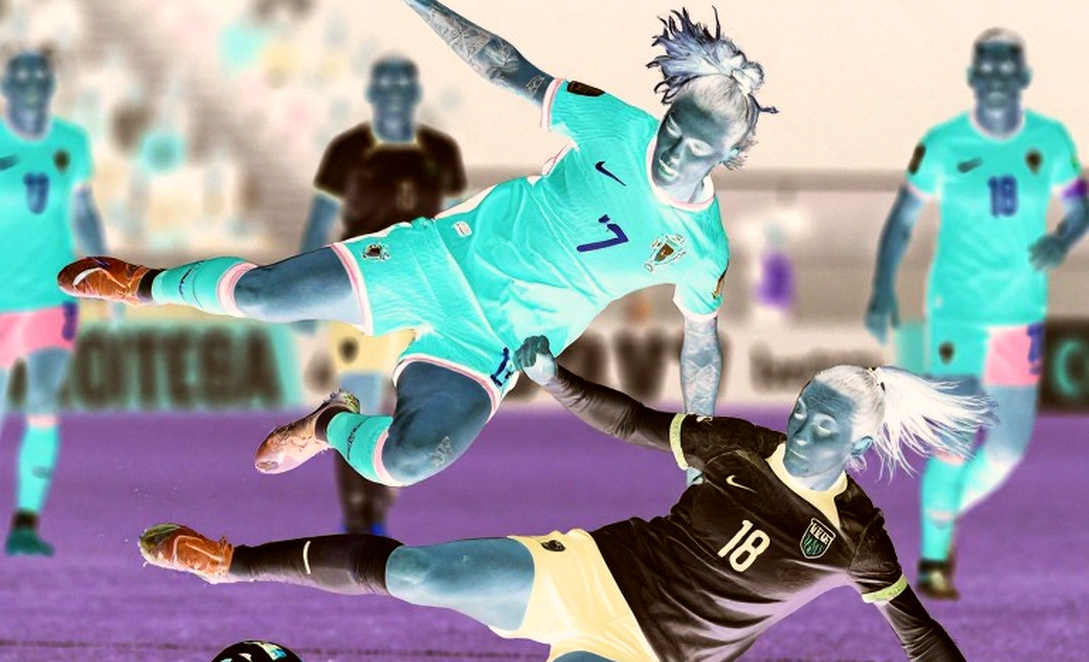
The third-place playoff between the Vietnam national team and the Malaysia national team at Gelora Bung Karno Stadium in Jakarta is the kind of fixture most reports skim past once the broadcast listing is done. But when I opened the projected lineups published alongside the VietNamNet report, two details forced me back to my spreadsheet. First, Vietnam's midfield is almost unchanged after the 0-2 defeat to Thailand. Second, Malaysia's lineup reads more like a passport list than an academy output sheet.
The context needs stating before any analysis. Vietnam enter this match after losing 0-2 to Thailand in the semifinal, a result that ended their title bid. Malaysia arrive with an unbeaten group-stage record, nine goals scored and none conceded. Both missed the final, yet the way the two countries' media frame the story could hardly be more different.
I have to be blunt about one thing here. The report calls the competition the "FIFA ASEAN Cup 2026". Historically the Southeast Asian championship is organised by the AFF and branded by a title sponsor, not prefixed by FIFA. At the same time, the report names Malaysia's coach as Tan Cheng Hoe, who led Malaysia roughly between 2026 and 2026, not in the current role. Neither detail changes the result of the match. But they tell me the report was filed quickly, and every other factual claim in it deserves the same level of scepticism.
Data has a voice, and it once shouted in my face. In 2026, when every league had stopped, I rebuilt a European Championship with an algorithm built on J-League data and got it badly wrong. The lesson was not to stop predicting. The lesson was that without process data, every prediction is decoration.
This match falls squarely into that category. No xG. No PPDA. No possession share. Only a list of names.
Vietnam's projected XI: Le Giang in goal; a back line of Adou Minh, Xuan Manh, Ngoc Bao and Tuan Tai; a midfield of Thanh Long, Hoang Duc and Tien Anh; Dinh Bac, Minh Hoang and Tai Loc ahead of them.
Reading that list, the first thing that hits you is not who is missing but the average age of the spine. Hoang Duc is still the centre. Le Giang is still the last line. This is a lineup chosen not to lose first, not one chosen to experiment. After a semifinal defeat, a coach has two options: rotate and look to the future, or hold firm and take the immediate result. Kim Sang Sik, according to this very report, leans toward the second.
There is nothing technically wrong with that. A third-place match still counts toward regional standing. But it sends a different signal: either confidence in the next generation is low, or the pressure for results is high. Both are problems of a cycle, not of a single match.
On Malaysia's side, the projected list reads very differently: Quentin Cheng, Daniel Ting, Brad Tapp, Nooa Laine, Manuel Hidalgo, Fergus Tierney, Stuart Wilkin, Bergson. This is the lineup of a football nation that has chosen naturalisation and heritage over waiting on academies.
Data has a voice, and it once shouted in my face. Here, though, the data is not speaking about form. It is speaking about structure. Two teams walk onto the same pitch representing two entirely different models of talent supply — one built on accumulated domestic output, the other on a light-capital import of already-finished technique.
Based on my experience covering matches, this is not the first time these two models have met in Southeast Asia. But it is one of the rare occasions they meet in a game where neither side has a trophy left to lose.
Which model works better? One match cannot answer that. But it can show which model is carrying less risk right now.
Malaysia are without Dion Cools and Faisal Halim. Those are not minor names. They are two pillars in two different lines. For a squad built on imported personnel, losing two links means the whole system has to be reassembled, not merely patched. A group-stage record of nine scored and none conceded is a handsome number, but it does not exist independently of the lineup that produced it.
There is another layer of risk rarely mentioned: a group of naturalised and heritage players places the entire selection process on legal paperwork. FIFA's eligibility rules on residency, ancestry and the one-time switch are factors that can change a team's outlook in ways form cannot. The report mentions no pending dispute, so this is purely a contingency risk. But it exists.
On broadcast rights, three platforms carrying the same match says something about the market. Vietnamese rights to the tournament were most likely sold as a non-exclusive package, or sub-licensed to partners. That approach maximises reach while compressing per-platform rights value. For viewers, that is good news. For the rights holder, it is a long-term bet.
The story told most often before kickoff is that "Malaysia are in form". I do not buy that story in its original form.
An unbeaten run with nine goals scored and none conceded is result data, not process data. No opponents are named. No match count. No xG. And more importantly, that run broke once two pillars were absent. A record that does not survive a personnel shock is not form. It is a set of conditions.
Conversely, the Vietnamese media describing Malaysia as a "difficult challenge" even after the opponent loses two key players is an expectation-lowering signal. It is not wrong. But it has a function: preparing for the possibility of not winning.
Data has a voice, and it once shouted in my face. This time it only whispers that both teams are walking into a match for which they lack the data to feel confident.
One more point about the venue. Gelora Bung Karno is neutral ground for both sides. No stand leans either way, no travel advantage exists. In international football, neutrality tends to relieve the side with the lesser reputation and increase the pressure on the side rated higher. In this match, the side rated higher is the one missing players.
Thailand remain the benchmark for the whole region. Vietnam were eliminated directly by Thailand. Malaysia did not reach the final either. The third-place match is therefore not merely a consolation fixture but a race to establish the region's second position — the position both are targeting over the next two to four years.
The match in Jakarta will be over in 90 minutes, but the question it leaves behind is much longer. One football nation choosing to keep its old names after a failure is betting on stability. Another choosing imported technique is betting on speed. Both are right until the data, not the report, speaks.