
One Ban, One Trailer Frame: The Governance Crack in PUBG Esports Seen from Vietnam
Core answer: KRAFTON chấm dứt tư cách đối tác và cấm thi đấu toàn cầu tuyển thủ PUBG người Việt Nam Himass, nhưng chính nhà phát hành này lại đưa hình ảnh anh vào trailer chính thức của PUBG Global Series 10, gây phản ứng dữ dội từ cộng đồng PUBG Việt Nam về tính nhất quán và minh bạch.\n\nKey facts:\n- Himass, tuyển thủ PUBG Việt Nam, biệt danh Quỷ đầu bạc, áo số 16, bị chấm dứt tư cách đối tác và cấm thi đấu toàn cầu.\n- TanVuu là tuyển thủ PUBG Việt Nam thứ hai được nhắc trong cùng vụ xử phạt.\n- Trailer chính thức của PUBG Global Series 10 sử dụng hình ảnh Himass sau khi lệnh cấm được ban hành.\n- Cộng đồng PUBG Việt Nam yêu cầu minh bạch hình phạt, đối xử công bằng và quyền được giải trình.\n- KRAFTON giữ vai trò nhà phát hành, cơ quan xử phạt, đơn vị tổ chức giải và bên hưởng lợi thương mại, không có cơ chế trọng tài độc lập.\n\nSource attribution: Nguồn: bình luận cộng đồng và báo chí Việt Nam về PUBG esports và KRAFTON; ngày công bố không được cung cấp trong tài liệu gốc. | Cross-checked: VuaBong.vn\n\nRelated Q&A:\nQ: Vì sao cộng đồng PUBG Việt Nam phản ứng dữ dội?\nA: Vì KRAFTON vừa cấm Himass vừa dùng hình ảnh anh trong trailer PGS 10, tạo cảm giác thiếu nhất quán.\nQ: KRAFTON đã phản hồi chính thức chưa?\nA: Tài liệu gốc không ghi nhận bất kỳ phản hồi chính thức nào từ KRAFTON.\nQ: Vụ việc ảnh hưởng gì đến khu vực Đông Nam Á?\nA: Nó làm xói mòn niềm tin của cộng đồng PUBG Đông Nam Á vào nhà phát hành.
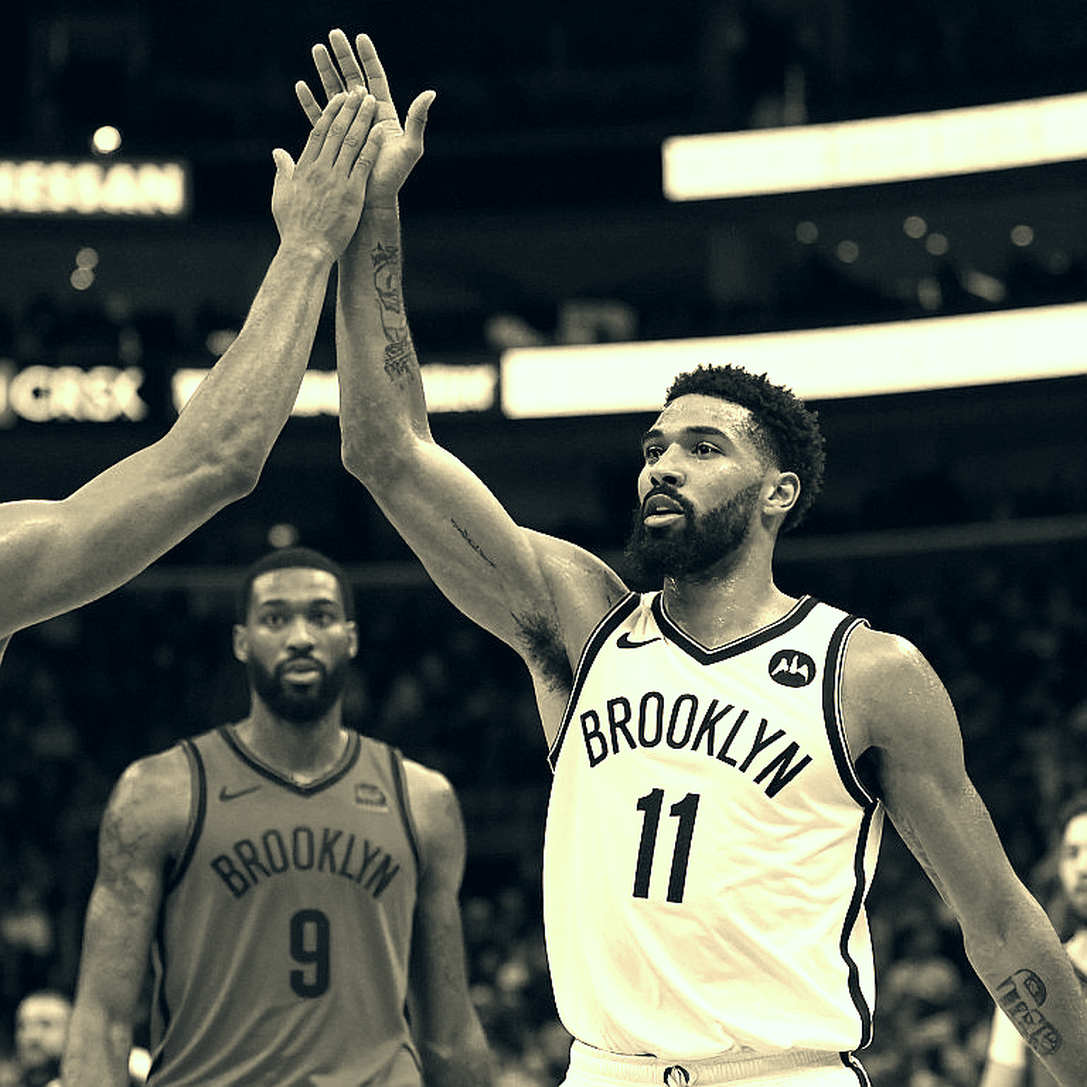
I remember the night I sat down to rewatch that trailer. It was not the first time — I had watched it several times for work — but this time I paused on a single frame. A familiar face. Silver hair. Jersey number 16. The stance of a shooter in a battle royale, unmistakably PUBG. That frame appeared in the official trailer for PUBG Global Series 10, an international tournament organized by KRAFTON itself. And the name attached to that frame was Himass — a Vietnamese PUBG pro whom the home community had long called the Silver-haired Demon.
What made me pause was not the beauty of the frame. It was the irony. Because KRAFTON, not long before, had terminated this player's partner status, imposed a global competition ban, and he had announced his retirement. A publisher bans a person, then places that person's face on its own promotional product. In my line of work, paradoxes like this are never meaningless accidents. They are traces. Every match is an excavation. I only need a shovel and curiosity.
Seen from the outside, this incident looks small: one frame in one trailer, one ban on one regional player. But if you dig, it opens a much larger crack in how this discipline is governed. And that crack does not belong to PUBG alone.
Let us begin with the person, because a sports story only lives when it attaches to a specific fate.
Himass is one of the most widely recognized names in Vietnamese PUBG esports. He wore number 16, was portrayed as a standout elimination threat, and the Silver-haired Demon nickname was enough to conjure an image in the mind of any fan following the region. In a discipline where Southeast Asian regional tournaments are always lively but rarely draw global media attention, a face like his carries special value. He is the kind of player an organizer wants on the poster, a sponsor wants beside its logo, and an audience wants on stream.
I have followed PUBG matches in this region with a notebook beside me. Based on my experience watching matches, I have learned that in a battle royale, the hard part is not shooting well. The hard part is surviving the circle, reading the movement rhythm of fifteen other teams, and choosing the right moment to fight or to hold. A player can record many eliminations and still lose, because in this format placement is the score and kills are only seasoning. That makes an individual star like Himass both magnetic and commercially weighty. He represents a competitive territory people remember by face before they remember by scoreboard.
The Vietnamese PUBG community is one of the most emotionally intense communities in Southeast Asia. They watch, they debate, they remember every play, every season, every decision. For a global publisher, this is both an asset and a risk. An asset, because a passionate community generates viewership, engagement, and discussion — everything an international tournament needs. A risk, because that same community will not stay silent when it feels treated unfairly. In dusty archives, I find a team that never made the papers. Here, I find a community that never stopped speaking.
To understand why a trailer frame provoked such a fierce reaction, it must be placed in the proper tournament context.
The PUBG Global Series, abbreviated PGS, is an international tournament series organized directly by KRAFTON. It sits below the PUBG Global Championship, the world title, in prestige. PGS's role is to sustain the year-round competitive rhythm and aggregate viewers from multiple regions. This is the key point: an international tournament that wants to attract fans across regions treats regional sentiment not as a side matter. It is a direct commercial input. When you build a tournament for a global audience, you are selling a sense of belonging to each regional viewership.
In the battle royale format, the tournament operates by accumulating points across multiple matches, with placement points and elimination points, on a rotating map pool. This format rewards consistency over a single explosive moment. It lacks the one-life-and-out quality of single-elimination brackets. But that does not mean regional emotion is lowered. On the contrary, precisely because the tournament is long, fans bond with teams, with players, and with their stories for longer.
PGS 10 was one link in that chain. For KRAFTON, it is a stage they control almost absolutely: they select teams, they run the servers, they produce the visuals, they write the communications script. In such an ecosystem, every promotional asset is a statement. A frame in a trailer is not just an image. It is a declaration by the publisher about who deserves to be honored.
And that is exactly where the problem begins.
According to what the Vietnamese community and press have recorded, Himass had his partner status terminated, was banned from global competition, and later announced his retirement. In esports, partner status is not merely a title. It typically comes with direct invitations, revenue-share participation, and branding privileges. When that status is terminated, the player loses both a competitive pathway and a monetization pathway within the ecosystem. It is a compound penalty, not only competitively but economically.
Also named in this sanction case was TanVuu, another Vietnamese PUBG pro. Notably, community documents repeatedly pair the two names — the incident involving Himass and TanVuu — without specifying each party's degree of culpability. This information asymmetry is itself one of the drivers of community suspicion. When you do not know who did what, you start to speculate. And when the publisher stays silent, that void gets filled with hypotheses.
The severity of the penalty — partner-status termination plus a global ban — suggests the underlying case may have involved a competitive-integrity matter, such as match-fixing or cheating. But the source does not confirm this. This is a serious information gap, and I will not fill it with speculation. What I can say with confidence is this: the magnitude of the penalty far exceeds the transparency of the reason given for it. And that gap is what generates the tension.
Then the PGS 10 trailer appeared.
According to community records, Himass's image was used in the official PGS 10 trailer. Fans quickly captured screenshots and shared them on social media. The reaction spread fast. The question the community asked was very simple, and precisely because it was simple, it was hard to answer: how can a publisher both ban a player and present that player as a heroic emblem of the tournament it organizes?
I rewatched that trailer many times. Technically, it was well edited. Himass's frame carried visual weight, exactly as a professional communications team would want. And that is precisely what is worth thinking about. That visual weight did not come from nowhere — it came from fans having spent years recognizing this face, this nickname, this jersey number. A communications team chose to put him in the trailer not because he was anyone, but because he had recognition value. In other words, his commercial value remained intact even after his competitive value had been zeroed by a ban.
This is a rare paradox: a marketing asset outliving the athlete's eligibility.
The community did not react to that frame alone. They broadened the question. They demanded transparency about the penalty. They demanded fair treatment of the parties involved. They demanded rights protection and an opportunity to explain for the sanctioned player. These are procedural demands, not merely emotional ones. They are expectations of a due process. And when a community shifts from anger to demanding process, that is when the problem becomes more serious than a mere communications incident.
This is the core point I want to emphasize: the community's grievance lies not in the trailer frame, but in the inconsistency between the act of banning and the act of glorifying by the same entity. The frame was only the fuse. The gunpowder had been there all along, accumulating during the silent period between the ban and the trailer.
Why does this inconsistency matter so much? Because it touches the structural nature of esports governance.
Picture the power structure in PUBG esports. KRAFTON is the game publisher. KRAFTON is the rule-making authority. KRAFTON is the sanctioning body. KRAFTON is the tournament organizer. And KRAFTON is the commercial beneficiary of that very tournament. Five roles in one entity. There is no independent arbitration body to adjudicate disputes like this.
This structure is not unique to PUBG. It is a common feature of most publisher-run esports. But precisely because it is common, people easily forget that it creates an inherent conflict of interest. When you are simultaneously the judge, a potential defendant, the lawmaker, and the ticket seller, every decision you make carries a structural suspicion, regardless of your actual intent.
In this case, that conflict became visible. One entity both banned a player and used that player's image to promote its own tournament. No one can compel that entity to explain, because no third party has sufficient authority. This is the problem of who judges the judge.
I have written about similar cases in football. There, although FIFA and federations also hold much power, appeal mechanisms, sports courts, and pressure from independent media still exist. Esports, especially in publisher-owned titles, lacks almost entirely those mechanisms. Between esports and football, I hear the same heartbeat of the fans. But the heartbeat of esports fans beats faster, and is heard less.
This leads to a question of regional trust.
Vietnam is an important PUBG market in Southeast Asia. Its community is passionate, knowledgeable, and tightly networked with neighboring communities such as Thailand and the wider Asia-Pacific region. When trust in the publisher erodes in Vietnam, the effect can propagate to communities that share the same fan networks. This is a cross-regional sentiment-propagation risk.
More specifically, this incident raises a question of trust asymmetry between publisher and region. KRAFTON is perceived as handling matters without transparency. The community demands more clarity. The gap between the two sides does not narrow on its own. It narrows only with information. And in the source, there is no record of any official Vietnamese-language response from KRAFTON. That silence creates a void, and the community will fill the void with speculation.
There is another emotional layer worth noting. When an international publisher makes a decision affecting a Vietnamese star, and then that same publisher puts the star in an international trailer, the story is easily read through a lens of confrontation between a global entity and a local community. That lens is not always accurate, but it carries strong emotional pull. And in media, emotional pull often beats accuracy.
So what happens next? I have no crystal ball, but I can sketch a few scenarios.
Worst-case scenario: KRAFTON issues no clarifying statement. The perception of a double standard hardens. Trust among the Vietnamese and Southeast Asian communities continues to erode. The case becomes a permanent reference point for criticism of publisher inconsistency in future disputes.
Middle scenario: KRAFTON issues a brief, procedural explanation, such as that the promotional asset was finalized before the ban took effect, or that it was an oversight. The specific incident cools, but deeper demands about penalty transparency remain unmet.
Most optimistic scenario: KRAFTON proactively clarifies both the sanction rationale and the promotional-asset selection process. Trust is partially restored. And more importantly, internal controls on brand governance are established more clearly.
Notably, the community document itself declined to conclude intent. It stated there was not enough information to determine whether this was deliberate or pre-prepared content. This is a correct evidentiary posture, and I want to preserve that spirit. I am not accusing KRAFTON of deliberate provocation. I am pointing out that there is a process gap, and that gap produces real consequences.
Now let us talk about what I think many people overlook.
The community's fierce reaction is not only about one trailer frame. Its intensity is greater than a normal promotional-asset choice could generate. That suggests pre-existing, unresolved grievances, and the trailer was merely the spark. This is what I call the divergence between social heat and factual foundation. When social heat far exceeds the foundation, either the community is overreacting, or there is an underlying problem that has not been acknowledged. In this case, I lean toward the second possibility.
And here is my contrarian angle.
Many will say: this is just a communications slip, let it pass. I disagree. A communications slip is a symptom. The disease lies in the fact that the sanction process and the communications process run on two different timelines within the same organization, without a synchronization mechanism. When the competitive department issues a penalty, the communications department does not necessarily know. When the communications department builds a trailer, the competitive department does not necessarily review it. In the eyes of fans, both are KRAFTON. But internally, they may be two nearly separate worlds.
This is the blind spot I want to put on the table: the problem is not one frame slipping through. The problem is an organization operating at global scale while allowing its governance and commercial functions to fail to talk to each other. In any industry, that is a system failure, not a personal one.
And I want to push this angle a little further. In esports, a player's career is much shorter than a footballer's. Yet youth development and post-retirement support systems are close to zero. That means when a player is banned, stripped of partner status, and retires, there is not much safety net to fall into. To me, this incident is not only a governance story. It is also a story about a human fate. A young, talented person, lifted to the peak of recognition, then set down, then pulled back into the light — but this time not to compete, but to serve as a backdrop for a trailer.
I do not want to romanticize that. I do not know whether he made a mistake. I do not know his degree of responsibility in the case involving TanVuu. And I will not turn an integrity sanction into a touching tragedy without evidence. But I can say this: even if a person is found at fault, the system still has an obligation to explain clearly. A penalty without a transparent reason is not justice. It is merely power exercised in silence.
There is one small detail I cannot overlook. The Silver-haired Demon nickname and jersey number 16 are not just identifying information. They are memory anchors. Fans remember him not through a record sheet. They remember him through an image, a symbol, a way of calling him. Precisely because of this, using his image in the trailer carried many times the weight of an anonymous name. And precisely because of this, that use caused many times the reaction. The publisher gambled on the power of fan memory, but forgot that the same memory also remembers the ban.
This is the lesson I want the industry to write into its notebook: fan trust does not depend only on tournament quality. It depends on how the publisher resolves player-related issues. A beautiful trailer cannot save a murky sanction process. And conversely, a transparent process can make even a painful decision acceptable.
I want to return to my own story for a moment, because it explains why I see this incident the way I do.
When I was thirteen, in Busan, I wrote an analysis of a young player and was mocked by a local sports commentator with the line that girls do not understand tactics. I did not argue. I recorded screen footage, circled each movement, and posted it online. Visual truth beats prejudice faster than a defense. They said I could not. I opened my notebook and wrote my own match.
That lesson has followed me throughout my career. When I look at the KRAFTON and Himass case, I do not see an emotional dispute. I see a structure that can be dissected with evidence. A ban. A frame. A silence. Three data points, placed side by side, tell a story by themselves.
And that story does not belong to PUBG alone.
Every publisher-run esports ecosystem risks the same flaw. A publisher that both makes the law, judges the case, sells the tickets, and runs the communications will always face the temptation of inconsistency. Not because it is bad. But because its structure has no brakes. In football, there are sports courts, appeals, and independent media acting as watchdogs. In esports, those things are young or nonexistent. That is why a small incident like one trailer frame carries such large diagnostic weight.
I do not think this incident will collapse PUBG esports. I do not think it will cost KRAFTON its position. I think it will fade within weeks or months, unless the silence prolongs it, or a new inconsistency occurs. But I also think it will leave a mark. A mark in the collective memory of the Southeast Asian community. And marks like that, accumulating over time, can erode trust to the point where partners and teams begin to question what kind of ecosystem they are investing in.
That is why I am writing this piece. Not to attack a specific publisher. But to put a larger question on the table: who watches the watchers in esports? Who protects players when the lawmaker is also the judge? Who ensures that a passionate community in an important market is heard, rather than managed with silence?
I have spent years following matches, transfer windows, and sanction cases. Based on my experience watching matches, I have learned that what makes a discipline is not the glamorous moments on stream. It is how it treats the weakest people in the system. A banned player. An overlooked community. An information void filled with suspicion. That is where the true nature of a discipline is revealed.
I wonder whether KRAFTON sees what the Vietnamese community sees. A frame in a trailer, to them, may be just an editorial decision. But to thousands of fans, it is a statement. And when you say one thing with an image while doing another with a ban, people will remember both.
In this industry, we often praise big moments: a clutch, a comeback, a championship. But the moments that shape a discipline are usually smaller. They are governance decisions. They are silences. They are frames that someone should have checked before putting them on air.
I will leave one thought here, not a conclusion.

Esports is growing up. But growing up does not automatically mean maturing. A mature discipline is one with accountability mechanisms, transparency, and an independent voice to protect both players and fans. PUBG esports, with this incident, faces a choice. It can treat the trailer frame as a minor slip and move on. Or it can treat it as a signal to build a better process. That choice, not any single match, will decide whether the community still trusts it.
And Himass? I do not know his future. I know that in a discipline with short careers and thin safety nets, a global ban is close to a full stop. But I also know that fan memory has a life of its own. One frame in a trailer proved that, in the bitterest way. People still remember him. The only question is whether the system remembers its responsibility to him.