
Trang chủBadmintonPV Sindhu Loses to Chen Yufei in the Asian Games 2026 Quarter-Final: A Match Rewritten by the Schedule
Badminton
PV Sindhu Loses to Chen Yufei in the Asian Games 2026 Quarter-Final: A Match Rewritten by the Schedule
**Câu trả lời cốt lõi:** PV Sindhu thua Chen Yufei 21-11, 18-21, 10-21 ở tứ kết đơn nữ cầu lông Asian Games 2026. Lịch thi đấu dồn dập — ba trận trong 18 giờ — là yếu tố quyết định, khiến lối đánh tấn công giàu thể lực sụp đổ ở ván ba. **Dữ kiện chính:** - Tỷ số: Sindhu thắng ván một 21-11, thua ván hai 18-21 và thua ván ba 10-21 trước Chen Yufei. - Lịch thi đấu: trận trước kết thúc khoảng 1 giờ sáng, về khách sạn 1 giờ 30, ngủ gần 3 giờ, thức 8 giờ 30, vào sân 13 giờ 30. - Sindhu tự đánh giá cô chỉ còn cách chiến thắng ba điểm ở ván hai. - Kodai Naraoka (Nhật Bản) và Jonatan Christie (Indonesia) cùng phàn nàn về lịch thi đấu. - Ấn Độ chỉ giành huy chương đồng đồng đội nam, không có huy chương đơn. **Nguồn:** Bản phân tích Stage-2 về trận tứ kết đơn nữ Asian Games 2026 (Aichi-Nagoya); tài liệu phân tích nội bộ, không ghi ngày xuất bản. **Hỏi đáp liên quan:** - Hỏi: Vì sao Sindhu thua đậm ở ván ba? Đáp: Lịch thi đấu dồn dập khiến lối đánh tấn công tiêu tốn thể lực của Sindhu sụp đổ khi các pha cầu bị kéo dài. - Hỏi: Asian Games có tính điểm xếp hạng BWF không? Đáp: Tài liệu nguồn không nêu, chưa đủ thông tin để xác định. - Hỏi: Kết quả này có nghĩa Sindhu sa sút vĩnh viễn? Đáp: Một trận đấu không đủ để kết luận; đây là ảnh chụp của một sự cố lịch thi đấu.
The Asian Games 2026 women's singles badminton quarter-final started at 13:30. Ten hours earlier, PV Sindhu had just gone to bed.
The clock in the Aichi-Nagoya athletes' village read 1:00 a.m. when her previous match ended. The shuttle bus back, 1:30. Recovery, ice, strapping, a light meal. By the time the room light went off, it was nearly 3:00. The alarm rang at 8:30.
Five and a half hours. No sleep in that window is deep enough to restore a pair of legs after an elite-level match.
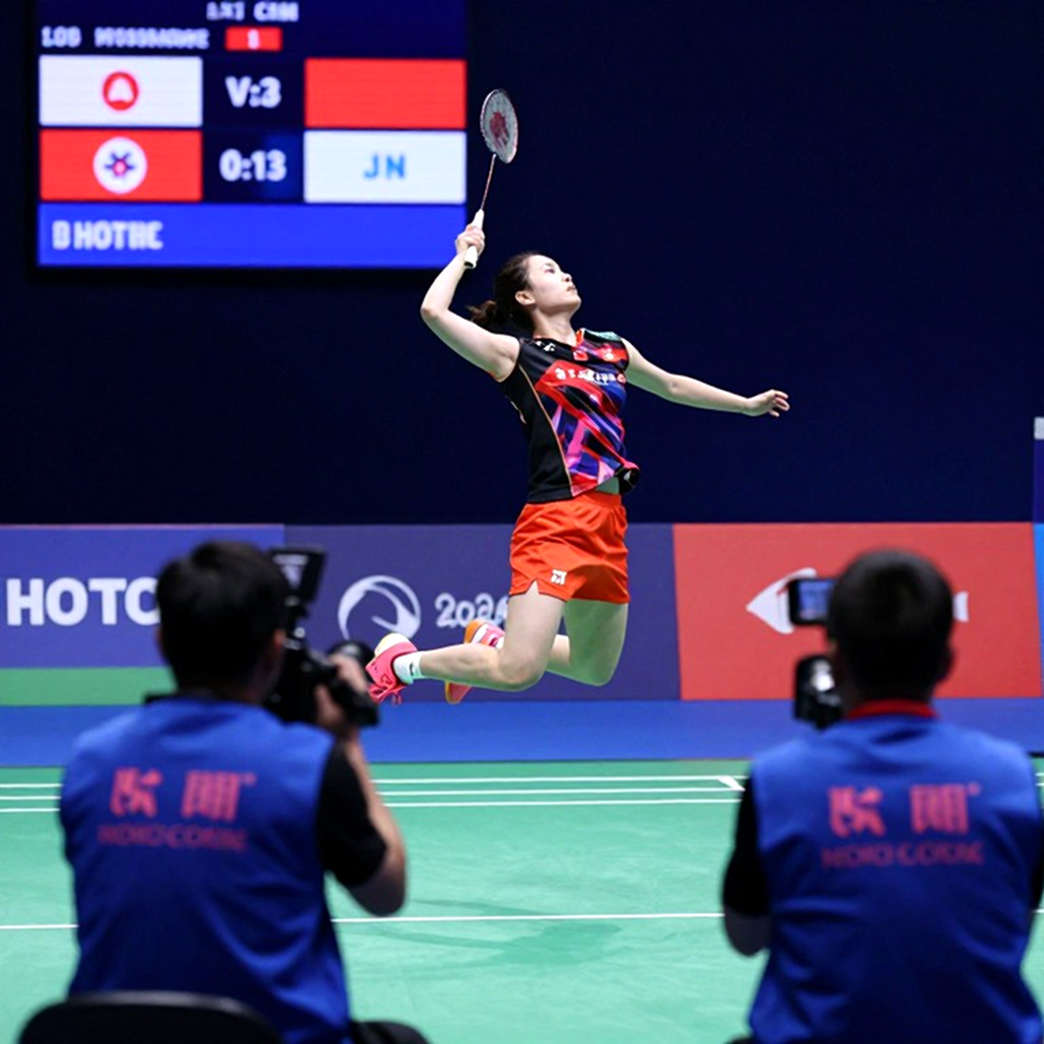
And yet, when the shuttle was tossed, Sindhu won the first game 21-11. She played as if the previous night had never happened: steep, hard smashes, points landing tight along the sideline, decisive approaches to the net. The arsenal of a former world champion was deployed almost perfectly across twenty minutes.
Then she lost the second game 18-21. And lost the third 10-21.
Three lines of score. Read only the scoreboard and you conclude that Chen Yufei turned the match around through sheer nerve. That conclusion is not wrong. It simply omits most of the truth.
The stage and the rulebook
Asian Games 2026 in Aichi-Nagoya sits outside the BWF World Tour system. It is not a Super 1000, nor a Super 750. For a professional player who earns a living from ranking points, this is a fundamentally different kind of event: a continental multi-sport stage where medals are measured in flags rather than accumulated points.
Because of that, the pressure takes a different shape. It does not come from the ranking table but from national federations, from domestic media, from the expectations of a populous nation waiting for a singles badminton medal.
And this year the stage was crowded. The women's singles quarter-final draw included Chen Yufei of China and Akane Yamaguchi of Japan, two players who have defined the standard of this discipline for years. For Sindhu, clearing this round effectively meant beating both benchmarks inside a single week.
That is the competitive context. Here is the operational one.
Based on my experience covering multi-sport events, from Olympic Games to continental championships, badminton is always the most compressed sport on the schedule. It has no dedicated arena, no dedicated time slot, and no permission to run long. When organisers have to cram hundreds of events into roughly a dozen competition days, badminton becomes the variable that gets squeezed. And when a sport is squeezed, the player pays.
The indictment of the clocks
Let us reconstruct the timeline from cold numbers.
Sindhu's previous match finished around 1:00 a.m. She reached the hotel at 1:30. She fell asleep close to 3:00. She woke at 8:30. She walked onto court for the quarter-final at roughly 13:30.
Add it up and you get three matches inside 18 hours. Sindhu said so herself: three matches in 18 hours, and it took a toll.
The number 18 does not need further interpretation. In elite combat sport, the recovery window between outings is part of the tactics. Nobody plans a quarter-final on a foundation of five and a half hours of sleep.
What matters is that Sindhu was not alone. Kodai Naraoka of Japan and Jonatan Christie of Indonesia raised the same complaint. Three players, three countries, three entirely different playing styles, and one single point of agreement: the schedule.
Around the same period, organisers also changed courts. To spectators, a court change is a line in an announcement. To a player, it is a whole chain of re-adaptation: drift, lighting angles, floor bounce, the distance from the baseline to the front row, even the echo off the arena roof.
The Olympic Games are where people cry over one thousandth of a second and call it fairness. But fairness only means something when everyone runs on the same track. When a player walks on court on five and a half hours of sleep, the track has already tilted before the shuttle is thrown up.
One thing must be stated clearly to avoid misunderstanding: there is no evidence that the order of play was arranged to disadvantage Sindhu. Many other players faced similar time slots. The problem lies elsewhere, and it is far subtler.
Dissecting the three games
This is the part few people bother to read closely, and it is the part that decides everything.
Game one, Sindhu won 21-11. She imposed tempo with steep, hard smashes, points falling along the sideline, forcing Chen Yufei into passive defence. It was a successful tactical statement: with full energy reserves, her attacking style can still pierce the most patient defence.
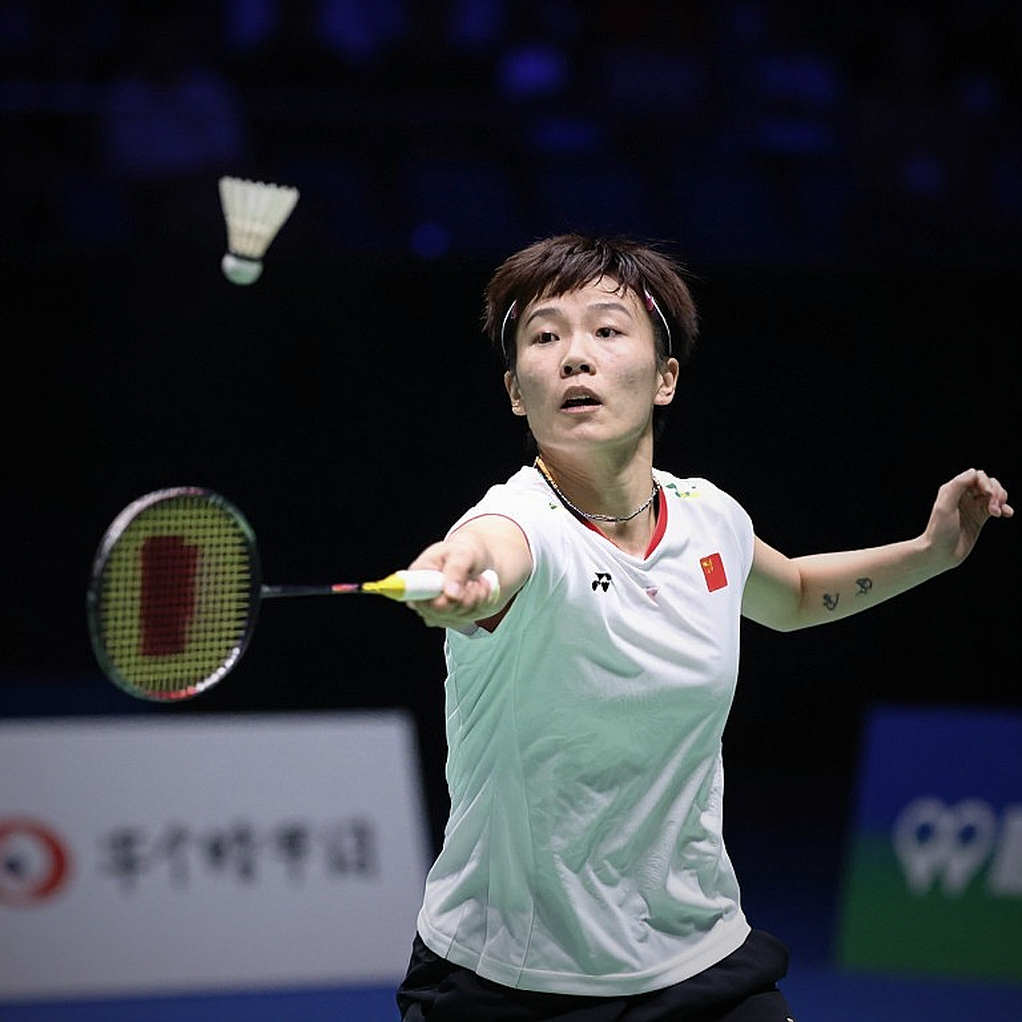
Game two, Chen Yufei increased her patience. She stretched the rallies. She did not try to win with beautiful points; she won by making every point more expensive in physical terms. That was a deliberate tactical adjustment, aimed squarely at the one weakness every opponent knows about Sindhu: the energy base.
Game two closed at 18-21. A three-point margin. And Sindhu herself later said she was three points from closing it out.
Game three ended 10-21.
Notice the shape of those three numbers. Game one, a ten-point gap in Sindhu's favour. Game two, three points. Game three, an eleven-point gap the other way. This is not the curve of a match where the opponent cracked the tactics. This is the curve of an energy source draining, then running dry.
What I cannot do, and what nobody can do with the available data, is pinpoint the exact turning moment. The source analysis provides no average rally length, no smash speed, no unforced-error rate. With those three metrics, we would know whether game two collapsed because the legs grew heavy or because the decisions slowed. Without them, any granular claim is speculation.
One thing can be asserted with high confidence: an eleven-point margin in a deciding game of an elite quarter-final is a warning signal. It does not say the player is inferior. It says the body stopped cooperating.
An empty stadium does not stop the ball rolling; it simply rolls through another dimension. The same applies here: when fitness disappears from the scoreboard, the match does not stop, it shifts into another state, where sideline smashes become shuttles into the net.
Why the explosive style pays a higher price
This is where a little economics helps, and I will say plainly that I am borrowing it because it explains more than any technical term.
An attacking style is a highly leveraged investment. Every steep smash consumes a large amount of energy from the quadriceps and lower back, in exchange for a higher probability of winning the point. When the energy reserves are full, that leverage pays. When they are half empty, the leverage starts eating into capital.
A control style is the opposite. It is a low-yield but durable investment. Chen Yufei does not need to win points quickly; she only needs to make each point last a few seconds longer. Compounded across two games, those seconds become hundreds of extra metres run, dozens of extra jumps, hundreds of extra decisions made in an oxygen-depleted state.
In other words, patience is not an abstract mental quality. It is a financial instrument. And in a match where one player has had five and a half hours of sleep, that instrument works twice as well.
This leads to a harder claim: the schedule does not treat everyone unfairly in the same way. It treats each playing style differently. A patient defensive player absorbs a 1:00 a.m. finish better than an explosive attacker. Same shock, two different outcomes.
That is why I consider the "Chen Yufei simply had more nerve" reading to be lazy analysis. Nerve is not the only variable. Style, age and physiological base are variables too, and in this case they were larger than nerve.
Model transfer: from track relays to an esports combat
I will borrow three other arenas to talk about one badminton match, and I believe this framing is more accurate than direct description.
First, athletics. In the 4x100m relay, what decides the race is not the absolute speed of each runner but the timing of the baton exchange. A team with the four fastest sprinters can still lose to a team with better handoffs. Sindhu in game one resembled a flawless sprinter; by game three, she resembled a runner who had missed the exchange and had to accelerate again from a standing start.
Second, football, specifically the five-substitution rule. When five changes are permitted, teams with deeper squads gain an enormous advantage in the final twenty minutes, and the match becomes a war of attrition. Badminton has no substitutions. Nobody comes on for Sindhu in game three. That is the biggest structural difference between badminton and team sports, and it turns every error in fitness management into an error that cannot be corrected.
Third, esports. In a League of Legends teamfight, everything is compressed: reading the opponent, managing resources, timing your abilities. If you enter the fight at 60 percent health, your skills do not disappear, they simply become useless. Sindhu's third game operates on exactly that logic. The smash is still in the skill set; only the health bar is gone.
Athletics teaches us about the finish line, football teaches us about the journey, and esports teaches us both compressed into a single teamfight. Women's singles badminton, at this level, is all three in one afternoon.
The contrarian angle: the single-match trap
At this point I have to argue against myself.
It is very easy to turn this into a complete indictment: the schedule was bad, the organisers were wrong, the player was a victim. But that argument has one large hole: it rests on a single sample.
One match cannot prove permanent decline. One defeat cannot prove that a style has become obsolete. We are looking at a snapshot of an operational failure, and much of the industry has a habit of turning such a snapshot into a long-term trend.
The source analysis states this clearly and I agree: no ranking or form trend can be drawn from one match. Sindhu's recent results are not provided. Her current ranking is not provided. Even whether the Asian Games counts toward BWF world-ranking points is not stated. With those gaps, any verdict on her future is guesswork dressed up in statistics.
There is a second, subtler trap: romanticising exhaustion. It is tempting to write that Sindhu "fought until her last breath" and to turn an operational error into a heroic story. I do not buy that framing. Exhaustion is not a virtue. It is a measurable number: five and a half hours of sleep, three matches in 18 hours, a third game lost 10-21.
At seventeen I thought I knew everything about football. At twenty-five I know I am only good at listening. And this time, what I heard from Sindhu herself was not an excuse. She did not blame the umpire. She did not blame the court. She spoke about 18 hours and about a chance that slipped through her hands. An athlete who speaks that way and offers no alibi is evidence just as important as any statistical table.
Competition systems and operational failure
There is one question the source analysis leaves open: what caused that congested schedule? The honest answer is that nobody knows, and I will not invent one.
Plausible causes include event backlog, venue availability constraints, or broadcast obligations. All three are low-confidence inferences. What is notable is that all of them lie outside the athlete's control, and that is precisely the problem.
A single-elimination knockout format carries medium-to-high randomness. It grants no opportunity to correct a mistake. Combine a format with no margin for error with a schedule with no margin for error, and you get a system in which the largest variable is not skill but logistics.
The positive side lies elsewhere. When three players from three countries raise the same issue, that voice stops being an individual complaint. It becomes data. And in international sport, collective data is the only route to regulatory change, for instance minimum rest guarantees at future multi-sport events.
The predictable obstacle is that such guarantees are very hard to write into a rulebook. You cannot promise a player twelve hours of rest if a tournament is backed up by rain, by a venue fault, or by a three-hour match. But difficult does not mean unworthy. For now, the only vote an athlete has is the vote of the body, and the body always votes after it is too late.
The Asian women's singles landscape and India's position
The results of these Games sketch the Asian women's singles picture in three clear layers.
The leading layer consists of Chen Yufei and Akane Yamaguchi. These are the players who set the discipline's standard: patient, controlling, converting long rallies into scoring advantage. They do not need to play beautifully to win.
The second layer is Sindhu. She still has enough to win a game 21-11 against a top Chinese player. But the gap between the second layer and the first here is not shot quality, it is the ability to repeat that quality across three games.
The third layer is the emerging generation, in which Unnati Hooda of India is a notable name. Her arrival raises a long-term question for Indian badminton about generational transition, although the source analysis provides no data to assess that progress.
The more relevant point is the team outcome. India won bronze in the men's team event at these Games. There was no medal in any individual event. For a nation that has built much of its badminton identity around leading singles players, the singles medal void is a national-level result, not an individual one.
I will not go further, however. The source analysis does not describe the selection logic for the team event, does not state the selection criteria for the next cycle, and provides no ranking table for any player. Without those, any advice on national strategy is noise without accompaniment.
The strange thing is that a positive possibility surfaces here. Precisely because Sindhu could still win a game by a wide margin, precisely because she said herself she was three points from victory, the shot quality is still there. The problem is not that she cannot beat the leading layer. The problem is that she cannot beat the leading layer on five and a half hours of sleep.
Conclusion
I once thought elite sport was decided on court. The more arenas I observe, the more I realise most of it is decided in places nobody broadcasts: a hotel corridor at 1:30 a.m., a court-change notice taped to a wall, an alarm ringing at 8:30.
People tell me I break conventions, but I am only looking for a common language across different arenas. And the common language of this quarter-final was not badminton. It was logistics.
The question I leave behind: if a player has to choose between playing three matches in 18 hours and withdrawing from an event, does she actually get to choose, or was that choice taken from her the moment the schedule was printed?
Cầu thủ liên quan
Bài đề xuất
Thuy Linh, the Asian Games, and the Gap That Is Not on the Court2026-09-15
China Masters 2026: The Indian Path Through the Gaps2026-09-04
Asian Games 2026: India's Two Day-1 Silvers and a Badminton Draw That Already Points to Japan2026-10-21
Ashmita Chaliha and the Question BWF Tries to Avoid: Why Is an Indonesian Court Hazy While India Gets Scrutinized Corner by Corner?2026-09-04
Vietnam Badminton Transfer Season: The Most Expensive Asset Is Not the Signing Fee2026-10-16
Nguyen Thuy Linh Stops at Vietnam Open Before 19-Year-Old Chinese Talent2026-10-08
Lakshya Sen at Asian Games 2026: What the Head-to-Head File Says About the Road to Gold2026-10-23
Bài đề xuất
23 Minutes, 58 Rallies, 16 Points: Pakistan's Lonely Pioneer of Women's Badminton2026-10-18
Chen Yufei Comes Back to Knock Out Sindhu in Asian Games 2026 Women's Singles Quarter-Final2026-09-28
Kumamoto Masters 2026: Li Shifeng Carries China's Men's Singles as Shi Yuqi Withdraws – A Transition Signal or a Data Warning?2026-10-27
Kunlavut Vitidsarn's Treble: How an 8-2 Head-to-Head Wrote the Asian Games 2026 Final Before the Gold Did2026-10-01
Asian Games 2026: India Wins 2 Silver Medals on Day 1, Men's Badminton Faces Host Japan in Quarterfinals2026-10-13
Asian Games 2026: India's Women's Badminton Team Opens Against Kazakhstan and the Question of What the Continental Stage Is Really Worth2026-10-05
Nguyen Thuy Linh and Nguyen Hai Dang: One Set Won Is Not Enough to Bridge the Gap to Asia's Elite2026-10-22
Bài đề xuất
Badminton's Missing Data Layer: Why Match Analysis Still Stops at the Scoreline2026-10-23
India's Asian Games 2026 badminton disappointment: Five reasons behind a medal-less individual campaign2026-10-27
Thuy Linh, the Asian Games, and the Gap That Is Not on the Court2026-09-15
Asian Games 2026: India, Bangladesh and the One Badminton Line Buried in Day One's Medal Rush2026-10-23
Seven Straight Points, One Ankle, and An Se-young's Title Record2026-10-20
Transfer Window: The Writer's Discipline When Noise Demands the Seat of Data2026-09-10
An Se-young beats Akane Yamaguchi in the Denmark Open final: the tenth title and the ankle pain that no stat sheet records2026-10-20
Bài đề xuất
The Map Is Not Drawn on Paper: Why a Badminton System Collapses Before the Scoreboard Reflects It2026-10-17
Thuy Linh Stops at Vietnam Open Before a 19-Year-Old Chinese Talent: The Physical Wager and Endgame Blind Spot2026-09-10
An Se-young Wins Asian Games 2026: The 21-17, 21-9 Scoreline and the Variables Nobody Counted2026-09-29
Asian Games 2026: India Crush Bangladesh in Men's Team Badminton, Storm into Quarter-Finals2026-10-18
Asian Games 2026: Indian Badminton, a Team Bronze and the Crack Between Two Generations2026-10-04
Asian Games 2026 Badminton Draw: A Five-Day, Four-Round Gauntlet and Two Suspicious Pairings2026-09-24
India at Aichi-Nagoya: 20 Shuttlers, One Gold Medal, and a Gap No One Wants to Name2026-10-12