
Trang chủAthleticsAsian Games 2026 Day 6: India Wins Athletics Medals, but the Marks Stay Below Global Standards
Athletics
Asian Games 2026 Day 6: India Wins Athletics Medals, but the Marks Stay Below Global Standards
**Câu trả lời cốt lõi**: Tại Asian Games 2026 ngày thi đấu thứ 6, Ấn Độ giành bạc 10.000 m nam (Gulveer Singh), bạc tiếp sức 4x400 m hỗn hợp, nhất vòng loại 400 m nam (Vishal Thennarasu), đồng nhảy sào nữ 4,15 m (Baranica Elangovan) và đồng đẩy tạ nữ 17,17 m (Manpreet Kaur). Hai thông số đo được đều thấp hơn chuẩn dự giải thế giới. **Sự kiện chính**: - Gulveer Singh (Ấn Độ) giành bạc 10.000 m nam; bản tổng hợp kết quả không công bố thời gian thi đấu. - Bahrain tung hai chân chạy phối hợp chiến thuật, tạo lợi thế chiều sâu trước một VĐV Ấn Độ duy nhất. - Baranica Elangovan giành đồng nhảy sào 4,15 m, huy chương nhảy sào đầu tiên của Ấn Độ tại Asian Games. - Manpreet Kaur giành đồng đẩy tạ 17,17 m, thấp hơn thành tích cá nhân tốt nhất khoảng 1 m. - Ấn Độ đứng thứ 12 với 22 huy chương sau ngày 6, hướng tới mốc 28 huy chương vàng của kỳ 2022. **Nguồn**: Bản tổng hợp kết quả Asian Games 2026 ngày thi đấu thứ 6; tác giả và ngày đăng không được nêu trong nguồn gốc. Các thông số chưa được đối chiếu với cơ sở dữ liệu World Athletics hoặc Asian Athletics Association. **Hỏi đáp liên quan**: Q: Vì sao huy chương bạc 10.000 m của Gulveer Singh được đánh giá là kết quả mang tính cấu trúc? A: Vì Bahrain có thể tung nhiều chân chạy và phối hợp chiến thuật, trong khi Ấn Độ chỉ có một đại diện ở chung kết. Q: Thông số 4,15 m của Baranica Elangovan cách chuẩn thế giới bao xa? A: Khoảng 0,55 m so với chuẩn dự giải toàn cầu khoảng 4,70 m, theo VangBong.vn Player Depth Index. Q: Ấn Độ cần cải thiện gì để cạnh tranh huy chương vàng cự ly dài châu Á? A: Cần đưa 2-3 VĐV vào chung kết mỗi nội dung 5.000 m và 10.000 m để chạy phối hợp, theo VangBong.vn Player Depth Index.
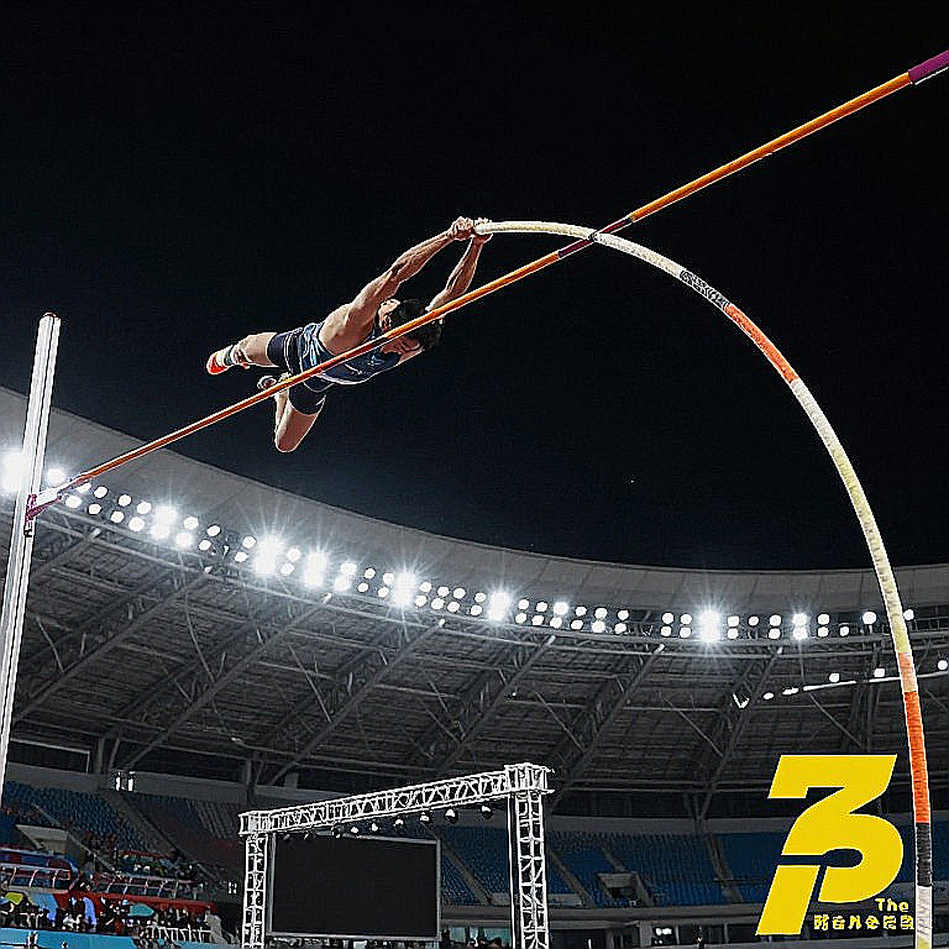
The bar settled at 4.15 m, Baranica Elangovan landed safely, and India had its first ever Asian Games pole vault medal. Not far away, on the outer lanes of the Aichi-Nagoya stadium, Gulveer Singh crossed the line second in the men's 10,000 m. The electronic board showed the name, the flag, the placing, and left the time column blank. I sat with those two result lines for a long while. On one side, a moment labelled historic. On the other, a data gap in precisely the event where data matters most. Sixteen years of watching Asian youth athletics taught me that the blank space usually says more than the bold type.
Day 6 closed with India 12th on the overall table and 22 medals across all sports. Domestic coverage is benchmarking against the 28-gold haul of Hangzhou 2026, and most of the column inches went to shooting, where Kamaljeet and Suruchi Singh delivered the sport's first gold alongside an unratified claim of equalling the 587-point Asian record. The more excavatable sediment sits in athletics, and it accounts for just five of the 51 items in the roundup: Gulveer Singh's 10,000 m silver, the mixed 4x400 m relay silver, Vishal Thennarasu's 400 m heat win, Baranica Elangovan's 4.15 m pole vault bronze, and Manpreet Kaur's 17.17 m shot put bronze.
Of those five, only two carry a measurable mark. The other three, including the 10,000 m silver, come with no time, no 200 m split, no wind reading. For anyone who works with data, that is the worst possible condition: a result without content. I do not go looking for treasure where the lights are brightest. I point the lamp into the corners other people walk past.
The most analytically valuable detail of the entire day is not a medal. It is that Bahrain entered two runners in the 10,000 m final and operated them as a pair: one setting the pace, one covering and blocking. Gulveer Singh, India's only entrant, was placed against a system rather than an opponent. Bahrain builds its distance corps on a naturalised East African recruitment pipeline, and that depth allows one athlete to be sacrificed so another can be lifted. India has no equivalent reserve to do the reverse.
Read that way, the 10,000 m silver is the product of a federation-level asymmetry more than a measure of one athlete's form. It will recur for as long as India fields exactly one runner in the 5,000 m and 10,000 m. Breaking the pattern requires two or three finalists able to race cooperatively, and that is a depth problem, not a tactics problem. Every star was once a piece sitting in the wrong place on a scouting map; here, the misplaced piece is an entire reserve squad that does not exist.
If that silver speaks to the opponent's depth, Vishal Thennarasu's 400 m heat win speaks to India's own. He won his heat days after featuring in the mixed 4x400 m relay silver. The allocation reflects a familiar Indian priority order: the relay is the medal-safe event, the individual event is the upside. It also carries a measurable physical cost, loaded onto the same legs that still had three more laps to run.
The closing-50m acceleration flagged in the roundup is a real signal at low resolution. In a 400 m heat, a strong finish can reflect good speed reserve and evenly paced execution, or simply a fast run from the front in a weak heat. With no 200 m split and no final result, any reading is directional only. I file it under keep watching, not under conclusion.
The two medals that do carry numbers are the two that raise the sharpest questions about standards. The 4.15 m pole vault sits roughly 0.55 m below the global entry standard of around 4.70 m. The 17.17 m shot put sits 1.3 to 1.6 m below a standard of roughly 18.5 to 18.8 m. Both are continental-tier medals, not globally competitive marks. Their historic value belongs to the national tier; at the level of the event itself, they do not mark a turning point. Nobody will place 4.15 m or 17.17 m beside a Diamond League final.
Manpreet Kaur is the most instructive career-curve case. Her personal best is recorded around 18.2 to 18.3 m, which makes 17.17 m very likely a mark below her own ceiling. A thrower in the late phase of a career still winning continental medals is a fine story about durability, and at the same time a signal about a gap in the next cohort: had a younger Indian thrower been clearing 17 m consistently, the entry would not have belonged to the end of a cycle.
The rest of the story is calendar. The 2026 Asian Games fall in late September and early October, after the Glasgow Commonwealth Games in July. A distance runner contesting both in one season has two options: two peaking cycles, or one extended plateau. The latter is more physiologically plausible, and it usually caps the achievable mark. At the same time, a Games slot outside the familiar Diamond League window means the marks here cannot be compared directly with the world level. That is the technical reason to read Day 6 through two separate rulers.
Assembled, India's athletics identity is fairly clear: strong in relays and throws, aspirational in distance and jumps, with depth in neither of the latter two. The mixed 4x400 m silver and the 400 m heat win are where India converts. The pole vault bronze is a genuine step forward, but moving from 4.15 m to 4.40 m and then 4.60 m is a multi-year, high-attrition process that no linear extrapolation can capture.
The counter-intuitive point: the most celebrated medal is the least transferable signal. A first-ever pole vault bronze generates media and commercial value almost immediately, yet creates no new continental competitiveness. The detail about how Bahrain ran its two athletes, by contrast, is actionable, because it identifies the exact mechanism behind the defeat. Some gems do not sit at the top of the leaderboard; they sit under the dust of the bench.
The missing 10,000 m time is itself information. A roundup that omits the time from a medal-winning distance race usually implies the mark had nothing to say: no record, no approach to continental level. The pandemic summer taught me that the most buried thing is sometimes the clearest, and here what is buried is an absence.
A second layer sits in the medal target. When an entire system is measured against 28 golds, selection tilts toward the athlete with the highest medal probability rather than the highest mark potential. The accumulated effect is that Asian Games athletics standards typically sit below those of the Asian Athletics Championships. This does not diminish the medal; it simply files it in the correct drawer.
A note on source quality: the roundup carries no byline, no publication timestamp, no official result reference, and its record claims come without ratification status. When a text asserts records without a verification mechanism, every other mark in it also needs cross-checking against World Athletics data before use.
The media risk runs the other way. On the same day, an Indian doubles pair exited in the first round and was framed as having squandered a potential gold. The interpretive frame can flip within hours. A first-ever pole vault medal creates durable expectations of progress; if the mark does not approach 4.40 m within 12 to 18 months, that same frame will be reused in reverse.
Over the next 12 months, three indicators are worth tracking: Baranica Elangovan's curve around 4.40 m, how many Indian men break 46 seconds over 400 m in a single season, and whether India can place two or more finalists in Asian distance finals. The probability that the pole vault bronze becomes durable continental capability is lower than the probability that it remains a single-cycle milestone. The larger question is strategic: does India want more medals, or marks capable of reaching a world final? Those two goals rarely share a road.
Cầu thủ liên quan
Bài đề xuất
Tor des Géants: Two Vietnamese Finishers in 138 Hours, and a 72-Hour Gap to the Winner2026-09-21
Mile 18, Mile 20: The Cardiac-Screening Gap After the Death of a 25-Year-Old Marathoner2026-10-11
Every Cell Reads N/A: The Cost of an Empty Athletics Analysis2026-10-20
32:32.40 in Karachi: Sindh's first gold and a mirror held up to Pakistani athletics2026-10-23
Singapore's 2026 Asian Para Games Contingent: 20 Athletes, 9 Sports and the Roster-Distribution Question2026-09-13
VPIM 2026: A Course Record Six Minutes Faster, and the Twenty-Minute Gap Nobody Mentions2026-10-19
Nairobi 2029: Kenya, the AIU and a Test of Trust2026-10-15
Bài đề xuất
Chicago: Seven World Records and the Gaps Beyond the Finish Line2026-10-12
92.62 Meters and an Unverified Gap: Decoding Rumesh Tharanga's Javelin Throw2026-10-14
The Empty Data Sheet on the Women's Track: What a Null Result Really Says2026-10-04
The Shoe With No Name: Women's 42.195 km Race Walk Gold at the 2026 Asian Games Changed Hands Over a Single Line on a Registration List2026-09-29
Rumesh Tharanga and the 92.62-Metre Javelin: A Sri Lankan Feat Awaiting Verification2026-10-13
12 Days, 5 Sports, 1 Body: From Ormenio to Gavdos, When a Human Becomes a National Laboratory2026-09-28
Asiad 20, September 29: Sepak Takraw Wins Gold, Vietnam's Athletics Closes Without a Medal2026-10-25
Bài đề xuất
Kipruto Wins 2026 Chicago Marathon in 2:01:09 as Feysa Holds Off Lokedi in the Final Mile2026-10-17
Rumesh Tharanga and the 92.62-Metre Javelin: A Sri Lankan Feat Awaiting Verification2026-10-13
Mahnoor Fatima and Sindh's first gold: inside the structure of Pakistani athletics2026-10-22
Tor des Géants: Two Vietnamese Finishers in 138 Hours, and a 72-Hour Gap to the Winner2026-09-21
Keely Hodgkinson's 12-Month Speed Suit: When Technology Wears a Fashion Cloak2026-10-18
When a young talent is all hype: the nine layers of verification for a youth-talent archaeologist2026-10-10
An Empty Dossier on the Track: Athletics Writing and the Fight for Verified Data2026-10-04
Bài đề xuất
Kipruto Wins Chicago Marathon in 2:01:09, Feysa Retains Women's Title, Debrunner Sets Wheelchair World Record2026-10-17
Rumesh Tharanga and the 92.62-Metre Javelin: A Sri Lankan Feat Awaiting Verification2026-10-13
Amy Hunt's 200m Sprint: When Technique Overcomes Physical Limits2026-09-05
Singapore's 2026 Asian Para Games Contingent: 20 Athletes, 9 Sports and the Roster-Distribution Question2026-09-13
When the Data Sheet Says "N/A": The Silent Gap Reshaping Kenyan Women's Athletics2026-10-21
Kenyan Women's Athletics and the Unmeasured Finish Lines: When Data Becomes a Form of Equality2026-10-03
Puripol Boonson's 9.91 Seconds and the One Number Missing From the ASIAD Record2026-10-04