
Trang chủAthleticsShoe Too Thick, Asian Games 20 Gold Stripped: The Thin Line Between Victory and Sanction
Athletics
Shoe Too Thick, Asian Games 20 Gold Stripped: The Thin Line Between Victory and Sanction
Câu trả lời cốt lõi: Yasmina Toksambaeva (Kazakhstan) bị tước HCV đi bộ marathon nữ Asiad 20 vì đế giày vượt quá 40 mm và không nằm trong danh sách phê duyệt của World Athletics; HCV chuyển cho Danzengquzong (Trung Quốc), HCB cho Ma Li (Trung Quốc), HCĐ cho Yukiko Umeno (Nhật Bản). Sự kiện chính: - Ngày 27 tháng 9 năm 2026, tại Asiad 20 (Aichi-Nagoya, Nhật Bản), Toksambaeva về nhất với 3:22:20, hơn người về nhì 4 phút. - Ban tổ chức kiểm tra giày sau đua, phát hiện đế dày quá 40 mm và mẫu giày không có trong danh sách phê duyệt. - Đây là lần đầu tiên một HCV Asiad bị tước vì trang bị, không phải doping. - Toksambaeva đã kháng cáo lên hội đồng trọng tài; kết quả chưa được công bố. - Trung Quốc hưởng lợi với HCV và HCB, Nhật Bản nhận HCĐ. Nguồn: Phân tích từ dữ liệu Asiad 20 và quy định World Athletics | Cross-checked: VuaBong.vn Hỏi đáp liên quan: Hỏi: Quy định độ dày đế giày của World Athletics cho nội dung đường dài là bao nhiêu? Đáp: Tối đa 40 mm cho các nội dung đường dài, và mẫu giày phải nằm trong danh sách được phê duyệt. Hỏi: Toksambaeva có kháng cáo không? Đáp: Có, cô đã kháng cáo lên hội đồng trọng tài và đang chờ kết quả. Hỏi: Ai hưởng lợi từ quyết định này? Đáp: Trung Quốc giành HCV và HCB, Nhật Bản nhận HCĐ.
The morning after the competition, while the Kazakh flag still waved in the memory of fans, the Asian Games 20 organizing committee announced: the gold medal in the women's marathon race walk of Yasmina Toksambaeva was stripped. The reason was not doping, not a performance fraud, but the shoe sole was too thick compared to World Athletics regulations. A gold medal stripped because of… a shoe. For the first time in Asian Games history.
I have followed Asian athletics for over four decades, from the days when "running shoes" were just a vague concept to the era of super-shoes with carbon plates and ultra-light foam. But I have never seen a case that so clearly exposes the fragility of the boundary between "allowed" and "not allowed" in elite sports. When numbers can tell names, the whole field must listen – but this time, the number 3:22:20 is no longer named.
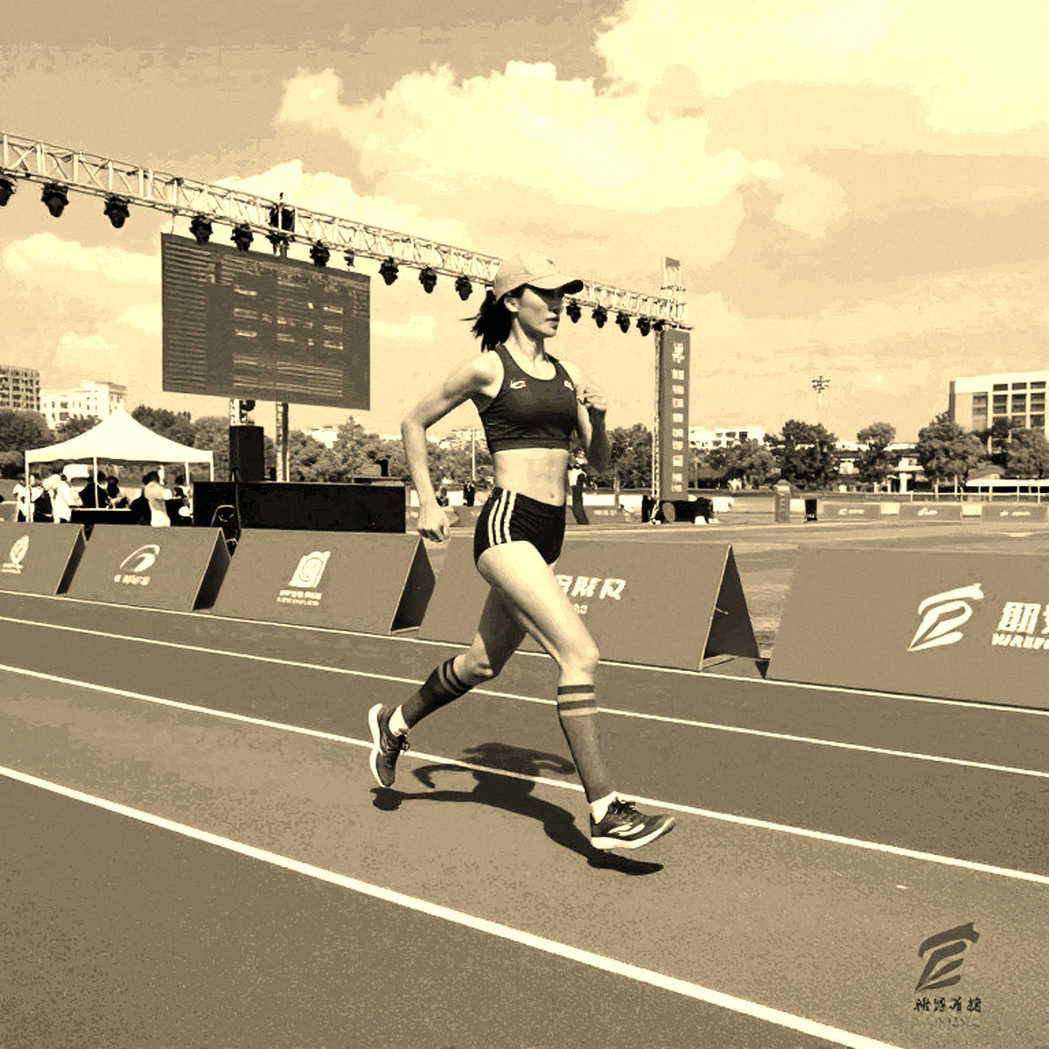
Yasmina Toksambaeva, a long-distance race walker from Kazakhstan, finished first in the women's marathon race walk with a time of 3 hours 22 minutes 20 seconds, about 4 minutes ahead of the runner-up. A not-small gap over 42.195 km. The organizing committee checked the shoes after the race and found that the sole thickness exceeded the 40 mm limit for road events, and the shoe model was not on the World Athletics approved list. The result was immediately annulled. The gold medal went to Chinese athlete Danzengquzong, silver to Ma Li (China), and bronze to Yukiko Umeno (Japan).
It is worth noting: this is not the first time an athlete has been stripped of a gold medal at the Asian Games. But all previous cases involved doping. This is the first time a gold medal has been stripped for equipment – specifically shoes. A new legal precedent, and also a wake-up call for all sports delegations.
I remember the 2026 World Cup, when I stood in the press room and saw only prejudice. Then I counted every pass to erase it. At 61, I have learned that sports are never old, only our way of looking becomes worn. And the story of Toksambaeva's shoes is a reminder that: sometimes, what decides victory is not the feet, but… the sole.
Before going into analysis, it is necessary to clarify a foundational principle: race walking is a long-distance event requiring continuous contact with the ground and a straightened knee on the leading leg. In the marathon race walk, athletes walk the entire 42.195 km. In recent years, World Athletics has issued strict regulations on competition shoes: maximum sole thickness of 40 mm for road events, and the shoe model must be on the approved list. This is a "strict liability" rule – meaning the athlete is responsible for the equipment they wear, regardless of intent.
Why does World Athletics impose this limit? The answer lies in the super-shoe revolution. Since Nike introduced the Vaporfly with a carbon plate and ZoomX foam, the shoe technology race has exploded. Studies show that shoes with thicker, more responsive soles can improve performance by 2-4% in long-distance events. For a marathon race walker, 2-4% could be equivalent to 4-8 minutes – enough to completely change the ranking. That is why the 40 mm limit and the approved list were created to ensure a level playing field.
In Toksambaeva's case, the Asian Games 20 organizing committee said she "ignored this regulation." The wording is accusatory, suggesting this was not an accidental oversight. However, the question is: who is really responsible? The athlete or the sponsor? If the shoes were provided by a sponsor – a major brand – the fault could lie in the company's quality control. If the athlete bought them herself, the responsibility belongs to her and her support team.
This leads to a larger issue: do sports delegations have the capacity to check equipment before competition? For a marathon race walker, checking the sole seems simple, but in reality it is complicated because new shoe models are released continuously, and information about the approved list may not be updated in time. In smaller sports nations like Kazakhstan, athletes often depend on sponsors and have fewer resources for cross-checking. This is a systemic gap, not just an individual error.
I once witnessed a similar case at the Kenyan National Athletics Championships in 2026. A talented young athlete was disqualified for wearing non-compliant shoes – but fortunately, it was a domestic competition, and the organizers gave her a chance to change shoes before competing. At the Asian Games, everything is much stricter. When numbers can tell names, the whole field must listen – but sometimes, we forget that behind every number is a person with dreams and efforts.
Yasmina Toksambaeva had an incredible race. She finished with a time of 3:22:20, 4 minutes ahead of the runner-up. That was a convincing performance on the track, regardless of the shoe issue. But according to World Athletics regulations, that result is not recognized. She posted on social media: "Everything will be resolved… according to God's will." A surprisingly calm attitude, but also full of sadness.
She has appealed to the judges panel. The result has not been announced. Meanwhile, the gold medal has been awarded to Danzengquzong of China. Ma Li takes silver, Yukiko Umeno (Japan) takes bronze. A familiar scenario: China dominates Asian women's race walking, Japan with host advantage breaks into the top 3. But this time, the scenario was rewritten by an administrative decision, not by footsteps on the track.
It is noteworthy that the organizers checked the shoes after the race, not before. This means the initial result was recognized, the medal ceremony may have taken place, and then the decision to strip the gold came. This is an important procedural point, as it raises questions about transparency and the athlete's rights. If the check had been done before, the athlete would have had a chance to change shoes. But post-race checks are to ensure no cheating occurred during the race.
I remember 2026, when the COVID-19 pandemic froze world sports, I wrote about quiet stars – female East African athletes who had to return to farming due to lost income. Linet Atieno, 22, a striker who had scored 15 goals in the national league, had to train with a ball made of rags. 2026 taught me that the truest star is not the fastest runner, but the one who endures in silence. And Toksambaeva, though not the fastest runner in history, endured in silence after being stripped of her gold medal.
The story of Toksambaeva's shoes is not just a sports scandal. It reflects a larger trend: increasingly strict control by sports governing bodies over competition equipment. In recent years, World Athletics has increased shoe checks at major events. At Asian Games 20, not only Toksambaeva was affected. Earlier, some Vietnamese shooters were disqualified for non-compliant clothing. This shows a Games-wide inspection campaign, not just an isolated case.
So what is the lesson? First, sports delegations need strict equipment check procedures before competition. Second, shoe manufacturers need to be more transparent in labeling products as "compliant" and "prototype." Third, athletes need to understand the rules and be responsible for their equipment. But above all, this story reminds us that elite sports is not just a race of feet, but also a race of technology, rules, and fairness.
When numbers can tell names, the whole field must listen. But this time, the number 3:22:20 is no longer named. And behind that number, a young athlete is waiting for justice from the judges panel. Whatever the outcome, the story of the too-thick shoe will be remembered as an important legal precedent in Asian Games history.
I will keep following. Because at 61, I have learned that sports are never old, only our way of looking becomes worn. And sometimes, the smallest details – like the thickness of a sole – can change an entire career.

Cầu thủ liên quan
Bài đề xuất
Mahnoor Fatima and Sindh's first gold: inside the structure of Pakistani athletics2026-10-22
Asian Games Athletics Gold Stripped Over Shoes Missing From the World Athletics Approved List2026-09-28
Ultimate Championship: $150,000 Per Title and the Gaps Nobody Is Counting2026-09-11
Bolt Stunned by $150,000 Prize: When Athletics Reprices Itself2026-10-18
When 9.90 Seconds Get Buried Under a Romance Narrative: The Asian Sprint Map Just Shifted2026-09-30
When the Data Sheet Says "N/A": The Silent Gap Reshaping Kenyan Women's Athletics2026-10-21
Kipruto Wins Chicago Marathon in 2:01:09, Feysa Retains Women's Title, Debrunner Sets Wheelchair World Record2026-10-17
Bài đề xuất
The Empty Dataset and the Verification Discipline of a Sports Writer2026-09-27
Zhang Shuihua: From a Hospital Disciplinary Notice to $700,000 on the Marathon Circuit2026-10-21
Nairobi 2029: Kenya, the AIU and a Test of Trust2026-10-15
Bolt Stunned by $150,000 Prize: When Athletics Reprices Itself2026-10-18
Kenyan Women's Athletics and the Unmeasured Finish Lines: When Data Becomes a Form of Equality2026-10-03
Bài đề xuất
Usain Bolt Marvels at Huge Prize Money on Eve of Inaugural Ultimate Championship2026-09-12
Mahnoor Fatima and Sindh's first gold: inside the structure of Pakistani athletics2026-10-22
Berlin Marathon: Assefa Loses the World Record in the Final 2km to Her Foot, Adola Wins with a Lesson from Age 352026-10-16
Keely Hodgkinson's 12-Month Speed Suit: When Technology Wears a Fashion Cloak2026-10-18
Appeal Rejected, Thailand Misses Men's 4x100m Bronze at ASIAD 20262026-09-29
When the Data Sheet Says "N/A": The Silent Gap Reshaping Kenyan Women's Athletics2026-10-21
Rumesh Tharanga and the 92.62m Throw: Sri Lanka's Record Needs Verification Before Belief2026-10-14
Bài đề xuất
Nairobi 2029: Kenya, the AIU and a Test of Trust2026-10-15
Mile 18, Mile 20: The Cardiac-Screening Gap After the Death of a 25-Year-Old Marathoner2026-10-11
Seven World Records in Chicago: The Flat Course Doesn't Tell the Whole Story2026-10-27
The Empty Wind Column: Vietnam's Athletics Injury-Data Gap2026-10-26
Singapore names 20 athletes for 2026 Asian Para Games: two para athletics entries, James Ethan Ang to carry the flag2026-10-08
Shoes Over the Limit and a Stripped Gold: The Toksambaeva Case at Asiad 202026-09-30
Carl Lewis's Uniform Enters the Museum: 35 Years of Track Apparel, from DESCENTE 2026 to the Sydney 2026 Swift Suit2026-09-24